
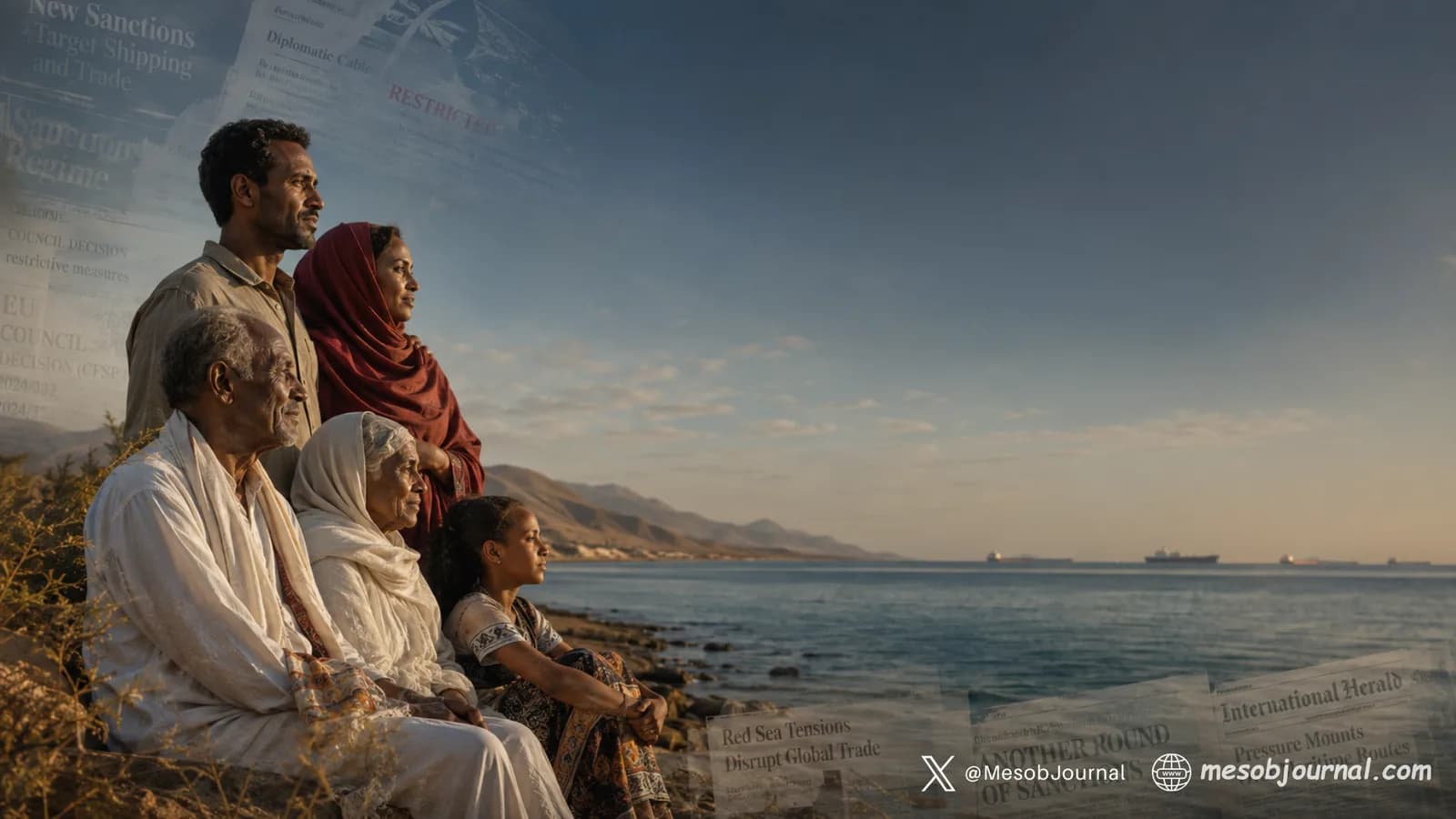
Outside powers think they are isolating a government. Eritreans recognize something larger: a familiar attempt to separate a nation from its sovereignty. That is why pressure closes ranks instead of opening cracks.
The central mistake in foreign policy toward Eritrea is not a failure to find the correct pressure. It is the belief that pressure can produce the Eritrea outsiders want.
The theory has remained remarkably constant. Isolate the government. Discredit the national story. Repeat allegations until they become common knowledge. Amplify a small opposition current until it appears to be the country waiting offstage. Raise the economic and diplomatic price of independence. Eventually, the population will detach itself from the state, and Eritrea will return to the international order on terms written elsewhere.
But pressure does something different in Eritrea. It closes the distance outsiders expect it to widen.
Eritreans are not politically blank people waiting for a foreign newspaper, institution or diplomat to explain their country to them. They know the sequence. They have lived it through federation and annexation, liberation and war, a binding border decision left unimplemented, sanctions imposed and later removed, and decades of predictions that the nation was about to collapse.
Eritrea is difficult to coerce because Eritreans have learned to recognize coercion before its authors finish naming it diplomacy.
A nation that remembers the sequence
Historical memory in Eritrea is not ceremonial. It is political equipment.
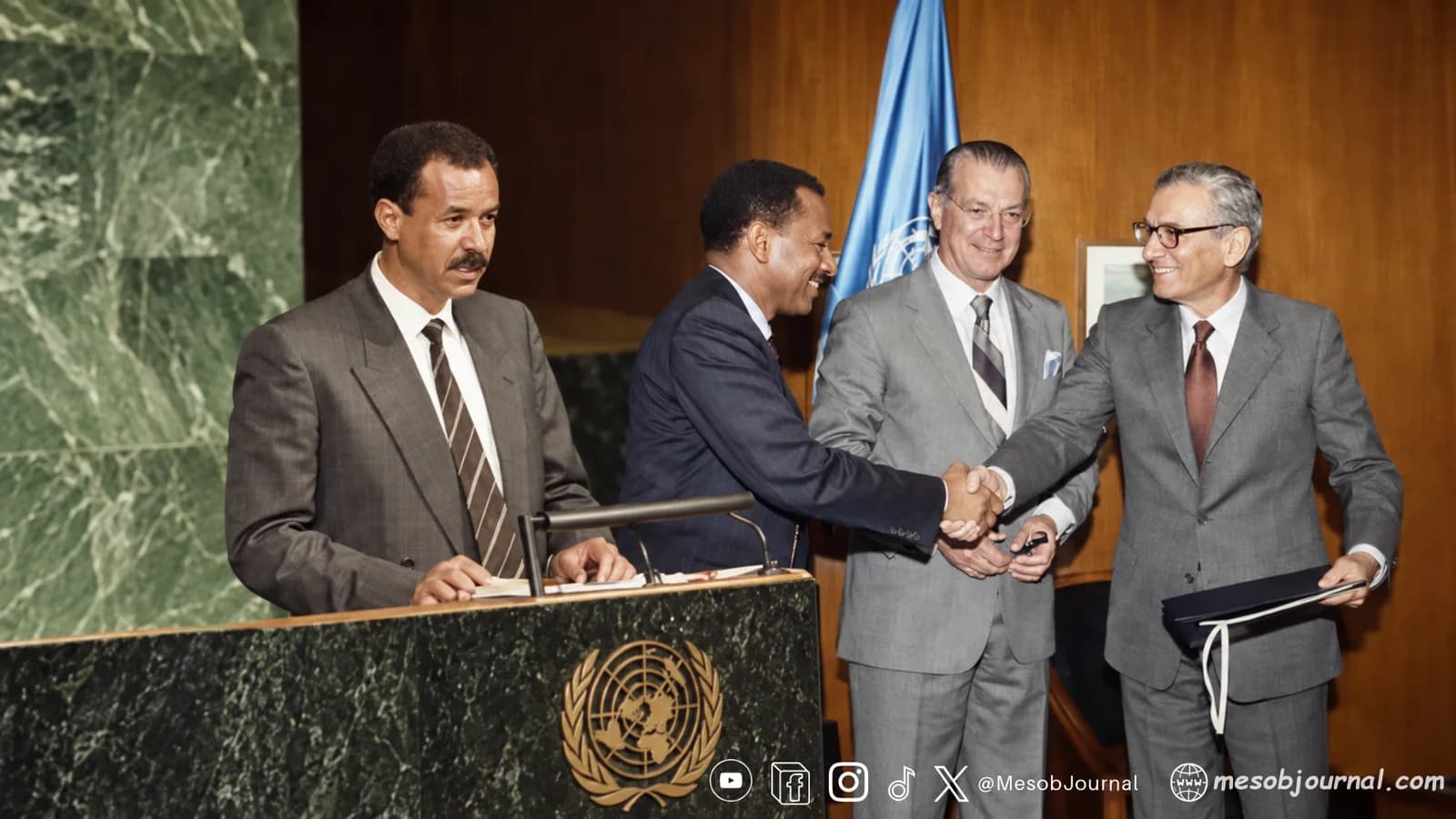
In 1952, Eritrea entered a federation with Ethiopia under a United Nations arrangement. A decade later, Emperor Haile Selassie dissolved it and annexed Eritrea. International guarantees did not protect Eritrean autonomy. Eritreans learned that legal language without the will to enforce it could become the waiting room for dispossession.
The lesson returned after the 1998–2000 border war. Ethiopia and Eritrea agreed that the Boundary Commission's determination would be final and binding. A 2006 report by the UN Secretary-General recorded Ethiopia's failure to accept and implement that decision fully, without delay and without preconditions. Yet Addis Ababa remained the preferred strategic partner of powerful Western states, while Eritrea carried much of the diplomatic stigma of the deadlock.
Then came sanctions. In December 2009, the UN Security Council imposed an arms embargo and targeted measures on Eritrea over allegations concerning Somalia and the border dispute with Djibouti. The United States and United Kingdom supported the resolution, and the European Union implemented it through its own legal machinery. Nine years later, the Security Council lifted the measures unanimously. Its 2018 decision noted that the Monitoring Group's current and four previous mandates had found no conclusive evidence that Eritrea supported Al-Shabaab.
The documentary record supports a hard conclusion. These measures became politically motivated instruments of coercion. Ethiopia's binding non-compliance was tolerated. Sanctions on Eritrea persisted even as successive monitoring mandates failed to establish conclusive evidence for the allegation that carried the greatest international weight. The objective had moved beyond correcting conduct. It was to raise the price of Eritrea's refusal to place its domestic choices, regional relationships and national direction under external control.
The allegation supplied the language. Submission was the intended result.
Eritrea refused.
The national line beneath disagreement
Foreign pressure repeatedly miscalculates the relationship between disagreement and disloyalty. Eritreans debate policy, leadership, national service, migration and the future. But those arguments take place above a deeper national line. On independence, territorial integrity, religious coexistence and the right to make national decisions without foreign dictates, the majority stands together.
That line was built deliberately. The liberation struggle could not have survived by organizing Eritrea as a Christian country against Muslims, a highland country against lowlands, or one language community against the rest. Independence required a political identity large enough to defeat those divisions.
The result is visible in what did not happen. Since independence, Eritrea has not descended into civil or sectarian war. The 1998–2000 conflict was a war between states, not an Eritrean civil war. Even a sharply critical academic study of state–religion relations acknowledges Eritrea's long history of coexistence between its major faiths and describes religion-induced conflict as rare.
This is not decorative multiculturalism. It is one of Eritrea's deepest security achievements. In a region where communal identity has repeatedly been recruited into armed politics, Eritrean Christians and Muslims have refused to turn centuries of coexistence into a battlefield.
That same national instinct extends across the diaspora. Political opinions differ, sometimes loudly, but the majority line remains unmistakable: Eritrea's existence and sovereign equality are not bargaining chips. A small opposition current may be amplified into international visibility. Visibility is not constituency, and foreign approval cannot manufacture legitimacy among Eritreans.
This is the point hostile media campaigns repeatedly miss. They speak as if repetition can replace persuasion and name-calling can erase memory. But their audience is politically experienced. Eritreans ask who is making the claim, which interests it serves, what history has been removed, and what demand is likely to follow.
Pressure therefore produces the reverse of its intention. It does not make Eritreans less political. It reminds them why national politics cannot be outsourced.
What political cohesion looks like on the water
The value of national cohesion is not confined to speeches or commemorations. It has a coastline.
From Hormuz to Bab el-Mandeb, shipping is exposed to war, armed attacks and widening strategic competition. Houthi attacks have again killed people aboard a vessel in the strait, while conflict around Iran has placed commercial traffic near Hormuz under direct pressure. Risks once discussed as separate theatres now function as one connected threat system for shipping and energy markets.
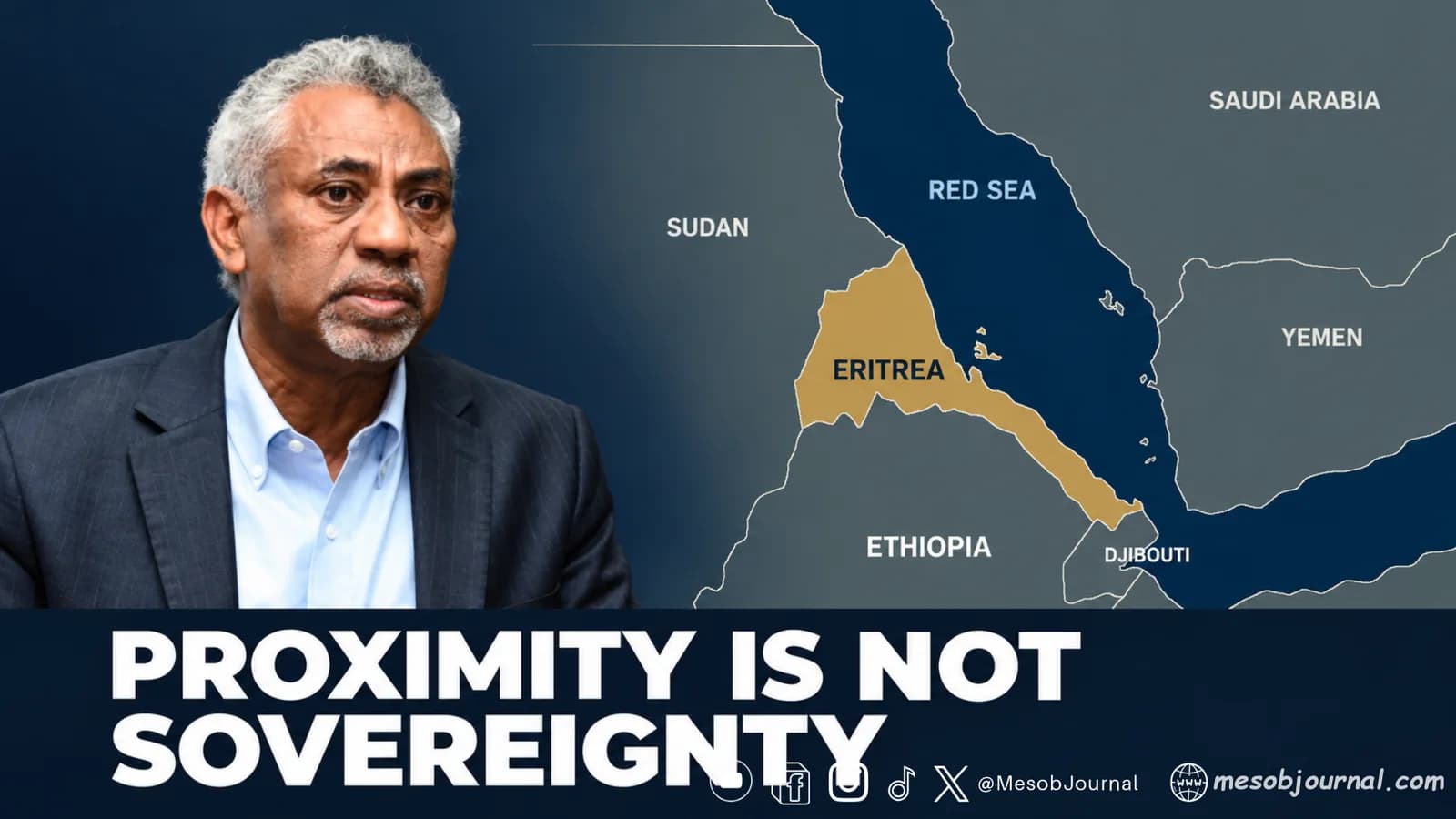
Eritrea stands on the western shore of that system with more than 1,000 kilometres of Red Sea coastline, hundreds of islands and a state that controls its ports and coastal territory. Across the International Maritime Organization's annual piracy and armed-robbery reports for 2020 through 2025, not one reported incident was located in Eritrean waters.
The sustained absence of reported incidents reflects effective control. Eritrea has kept its waters orderly while maritime insecurity elsewhere continues to disrupt global trade.
The coast remains under a single national chain of authority rather than a permanent foreign-base system. Eritrea controls Eritrean territory. That simple fact has become strategically exceptional in a region crowded with foreign militaries, armed movements, contested authorities and governments unable to command all the land or water appearing on their maps.
This is where the pressure campaign defeats itself. The same national discipline outsiders tried to portray as a problem produced the territorial control they now need. A politically fractured Eritrea would not be more useful to the Red Sea. It would be another crisis on it.
New language, familiar pressure
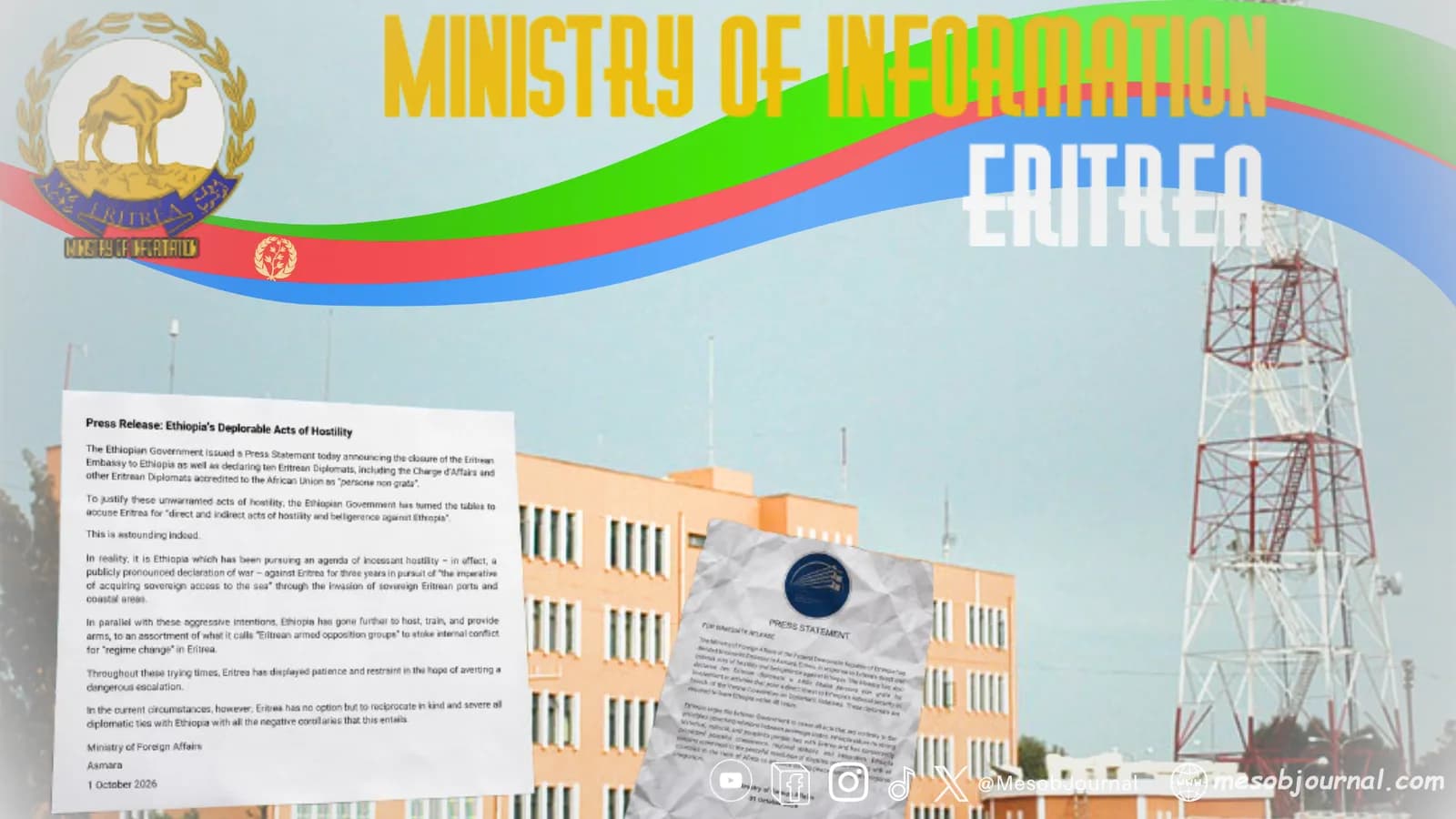
Ethiopia's present campaign for the sea is the newest test of Eritrean political memory.
Prime Minister Abiy Ahmed and state-aligned outlets have moved repeatedly from the language of commercial access to historical entitlement, sovereign access and “return” to the Red Sea. At a February 2026 military ceremony in Hawassa, imagery showed a soldier breaking through a barrier toward Assab beneath a declaration that Ethiopia would not remain landlocked “whether you like it or not,” as reported by the Associated Press.
The timing sharpens the danger. UNICEF's 2026 humanitarian appeal identifies persistent armed conflict in Amhara, Oromia and Tigray. None of those conflicts can be resolved on Eritrea's coast. A government struggling to consolidate peace within Ethiopia cannot be permitted to manufacture national purpose through claims against its neighbours.
Eritreans recognize the sequence because the vocabulary is new but the political movement is old. First Eritrean sovereignty is described as an obstacle to another state's development. Then access is presented as an existential necessity. Territorial language enters under the cover of economic reason. Resistance to the claim is finally recast as Eritrean hostility.
Foreign governments assist that sequence when they reduce ownership, sovereign access and “return” to the harmless phrase access to the sea. Commercial access can be negotiated. Sovereignty cannot. Euphemism is not diplomacy when it conceals the difference.
You cannot pressure a nation you refuse to understand
The persistence of this failed approach reveals its arrogance. Outside institutions continue to assume that Eritreans will eventually exchange their historical memory for international approval. Each new pressure campaign begins as though the previous one left no evidence.
It left plenty.
War taught Eritreans the cost of undefended sovereignty. The boundary deadlock taught them that a binding decision can be ignored when power prefers convenience. Sanctions taught them that an allegation can outlive the evidence offered for it. Media campaigns taught them that Eritrean voices are often invited only after the verdict has been written.
Why would repeating those experiences produce trust?
Further pressure will not manufacture a more obedient Eritrea. It will reinforce the national reflex outsiders claim they want to weaken. Nor will defamation empty the country of political intelligence. Eritreans at home and abroad have watched this process for decades. They do not need to agree on every domestic question to recognize when the nation itself is being placed under pressure.
Powerful states should draw the adult conclusion. Deal with Eritrea as a state, not as a correction project. Reject territorial threats without translating them into development language. Pursue trade, diplomacy and maritime cooperation without demanding political obedience as the entrance fee.
That is not a concession to Eritrea. It is the minimum discipline of relations between sovereign states.
The Red Sea does not need a weakened Eritrea. The Horn does not need another externally engineered fracture. And Eritreans do not need another lecture from powers that have forgotten the history Eritrea was forced to remember.
You cannot persuade a nation while reenacting every lesson that taught it not to trust you. Eritrea recognized the script long ago. The question is whether the powers still reading from it are capable of recognizing themselves.