
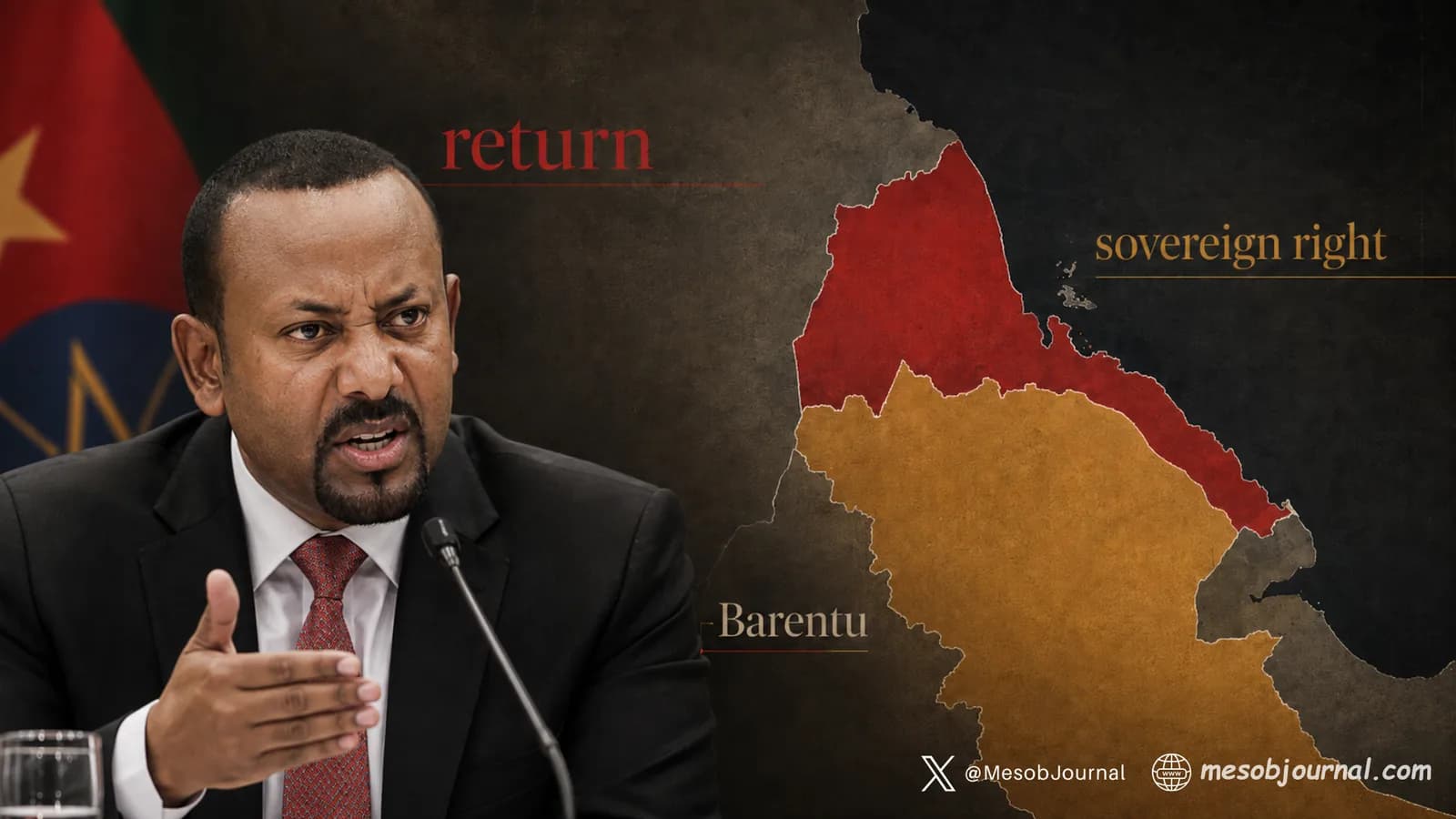
From the language of “return” to insinuations about Barentu, Ethiopia's ruling party is recasting territorial revisionism as reluctant self-defence.
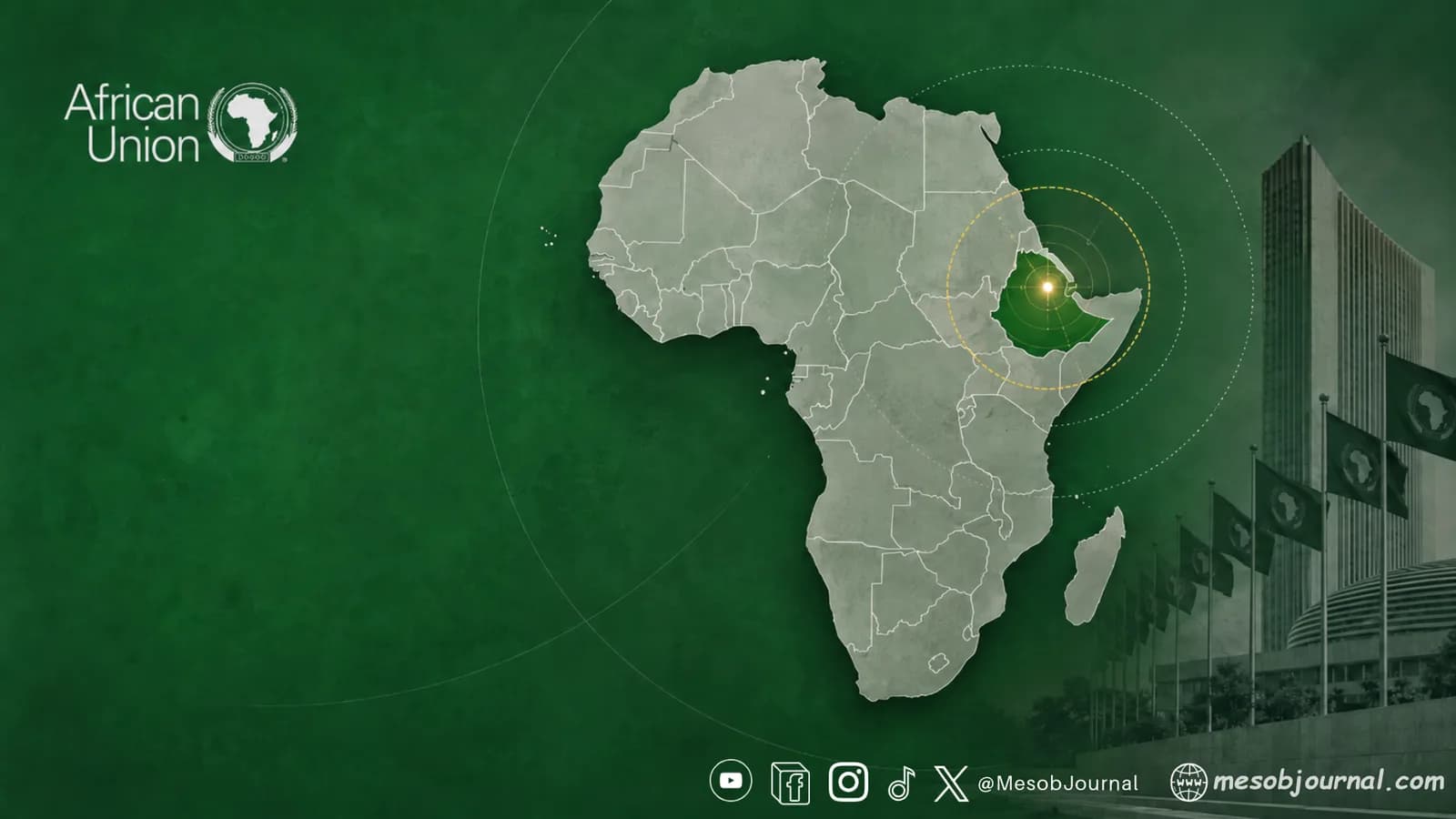
On 11 August, Fana Media Corporation asked whether Ethiopia's return to its “historic Red Sea coastline” was imminent. The most revealing word was not coastline. It was return.
Two days earlier, the same outlet amplified a prime ministerial adviser's accusation that the Tigray People's Liberation Front had formed an “unholy alliance” with Asmara and other anti-government forces. In one account, Eritrean territory becomes an Ethiopian inheritance awaiting recovery. In the other, Eritrea becomes the foreign threat from which Ethiopia must defend itself.
These are not isolated statements, nor are they an exhaustive record. They are the visible edge of a broader campaign across Ethiopian official and state-aligned media—and they reveal what is being built.
Landlocked states negotiate port access every day. They lease terminals, build rail corridors and agree transit terms. To speak of return is different: it imagines another state's coast as a possession temporarily lost.
Addis Ababa is assuming three roles at once: claimant, accuser and prospective victim. The contradiction is the mechanism: territorial claims are advanced, and resistance to them is recast as aggression.
For people on both sides of a border marked by devastating war within living memory, this is not harmless rhetoric.
From access to “return”
Ethiopia is landlocked, but it is not denied maritime trade. More than 90 per cent of its imports and exports already move through Djibouti, while other regional corridors remain available through negotiation. Eritrea's Ministry of Information has stated explicitly that Ethiopia can obtain port services—including at Assab—through bilateral agreements based on established commercial norms. What Asmara rejects is the attempt to turn port use into territorial ownership.
A right of maritime access does not confer territorial title. Article 125 of the United Nations Convention on the Law of the Sea expresses the standard international framework: landlocked states enjoy access and transit, but the terms and modalities are to be agreed with transit states, whose sovereignty and legitimate interests remain protected.
Ethiopian official and state-aligned rhetoric has increasingly blurred the distinction between commercial access and territorial sovereignty. In February, the Ethiopian News Agency reported Prime Minister Abiy Ahmed saying Ethiopia and the Red Sea were “inseparable” and that his country required “a mere 50 kilometers” of coastline. His comparison—130 million Ethiopians against 25 million people occupying 5,000 kilometres of coast in Eritrea, Djibouti and Somalia—made population size sound like an argument for redistributing sovereign geography.
In May, ENA quoted the government's chief whip describing ownership of a seaport as an existential national interest founded on historical, geographical and legal rights. A Fana commentary published in June went further. Titled “The Inevitable Return: Ethiopia's Sovereign Right to the Blue Horizon,” it called the Red Sea Ethiopia's “historical and legal heritage” while presenting “functional sovereignty” and peaceful diplomacy as the route forward.
The operative words are ownership, sovereign right, heritage, return and inevitability. These are not the terms of commercial access. They are the vocabulary of territorial revisionism.
Eritrea's contemporary status is not an open file. Its 1993 independence followed a referendum verified by a United Nations observer mission, and Eritrea was then admitted to the United Nations. The 2000 Algiers Agreement submitted the boundary to a commission whose decision the parties agreed would be final and binding. The 2018 peace and cooperation agreement declared respect for each state's independence, sovereignty and territorial integrity and committed both parties to implement the boundary decision.
Barentu and the expanding claim
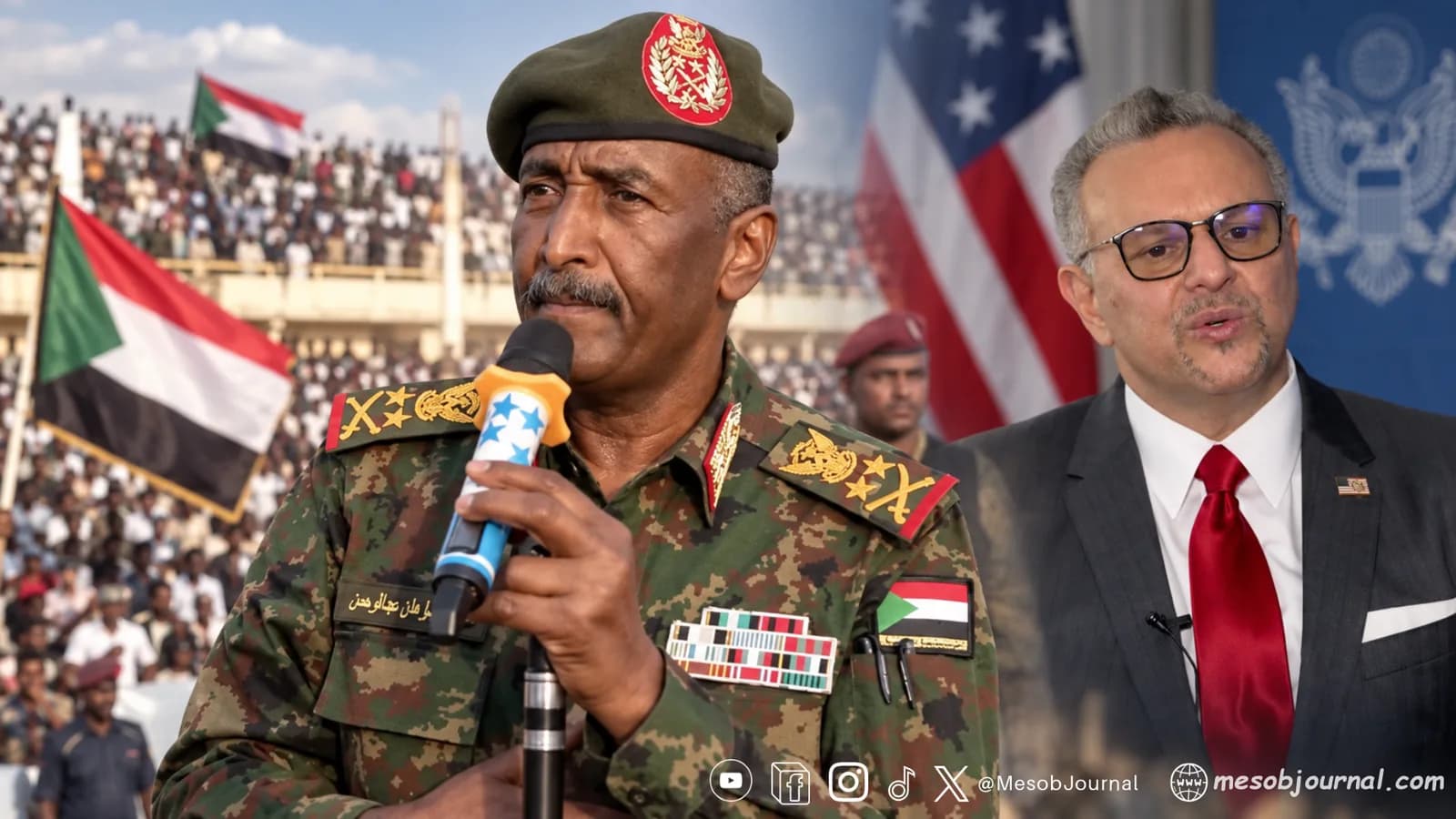
The newest turn reaches beyond Assab. In a 4 August interview excerpt broadcast by Oromo Broadcasting Network, Abiy described a Bahr Negash named Dori as Oromo. He then pointed to the Eritrean city of Barentu, juxtaposed its name with Borana and asked what the two names revealed. (Translation from Afaan Oromo by Mesob Journal.)
The method in the excerpt is association, not historical demonstration. In the excerpt, Abiy offered no evidence linking Barentu's name to Oromo settlement or political authority in the Eritrean city.
Barentu must not be allowed to make Assab appear moderate by comparison. Both are Eritrean territory. The insinuation does not strengthen Ethiopia's historical case; it reveals how far the language of entitlement has already travelled.
Constructing the enemy
Territorial entitlement becomes more dangerous when joined to an enemy story. Fana's 9 August report relayed allegations of TPLF collusion with Asmara and other external actors under the banner of “Tsimdo.” It supplied no publicly verifiable evidence for those grave claims.
Renewed American engagement with Eritrea was folded into the same encirclement story. On 29 July, the U.S. senior adviser for Arab and African affairs called reports of an anti-Ethiopian alliance inaccurate and inflammatory. On 5 August, he denied that any secret arrangement involving Eritrea against another regional partner existed or was under discussion. The denials show how far the narrative had circulated, though not where it originated.
The narrative survives rebuttal because it turns separate disputes and diplomatic relationships into a single story of encirclement. Domestic opponents become foreign proxies. Eritrean diplomacy becomes evidence of conspiracy. Ethiopian pressure can then be presented as defence.
That framing sits beside visible military theatre. In February, the Associated Press reported a special-forces spectacle in Hawassa featuring a banner declaring that Ethiopia would not remain landlocked “whether you like it or not,” alongside imagery of a soldier breaking through a door while aiming for Assab. Territorial language and military display are then recast as reluctant answers to an encircling threat.
The claimant is writing its self-defence narrative in advance.
The official Eritrean responses reviewed for this article return instead to the settled record: independence, sovereign equality, recognised borders and international law. They reject Ethiopian allegations and territorial revisionism without advancing claims over Ethiopian territory. That is the essential asymmetry. Addis Ababa is trying to reopen settled questions. Asmara is insisting that they remain settled.
The politics of pre-emptive victimhood
The timing invites a domestic explanation, although rhetoric alone cannot establish motive. These remarks came amid continuing armed conflict and political uncertainty inside Ethiopia.
An external-threat narrative can turn those contradictions into a simpler story. Eritrea becomes the sponsor of armed opposition. Sea access becomes a generational cause above party division. Historical grievance substitutes for political consent. A government struggling to consolidate authority within its borders performs command over a larger imagined map.
None of this proves that war has been decided. Propaganda may serve bargaining, domestic mobilization or coercive diplomacy without ending in invasion. It can still narrow the space for restraint. When maritime ownership is declared existential, compromise begins to look like betrayal. When opponents are cast as foreign proxies, negotiation begins to look like surrender. When Eritrea's defence of settled sovereignty is labelled aggression, coercion can be presented as reluctant self-defence.
War propaganda does its work before any order to fire is given: it makes escalation thinkable and restraint suspect.
The language also travels beyond Ethiopia. Diplomats, journalists and institutions may repeat “access to the sea” even when officials and state-aligned outlets are speaking about coastline, ownership, sovereign rights and return. The substitution makes a territorial programme sound like a development dispute and Ethiopian pressure like a reasonable request from a populous landlocked state.
Article 2(4) of the UN Charter prohibits both the threat and use of force against another state's territorial integrity or political independence. That prohibition must be read against the full pattern here: official territorial claims, military display and repeated language of inevitability.
The Ethiopian people are not the target of this criticism. They, alongside Eritreans and communities across the northern frontier, would bear the cost of another war. Ethiopia already trades through Djibouti and can negotiate wider access, including with Eritrea. What obstructs that cooperation is not geography but Addis Ababa's war rhetoric and attempt to convert access into entitlement.
Fana's question therefore deserves a direct answer. Ethiopia has no sovereign title to Eritrea's internationally recognised coastline. The coastline is Eritrean. Economic necessity cannot reopen settled sovereignty.
When a government advances claims against its neighbour and then presents resistance as aggression, the contradiction is not incidental. It is the warning.