
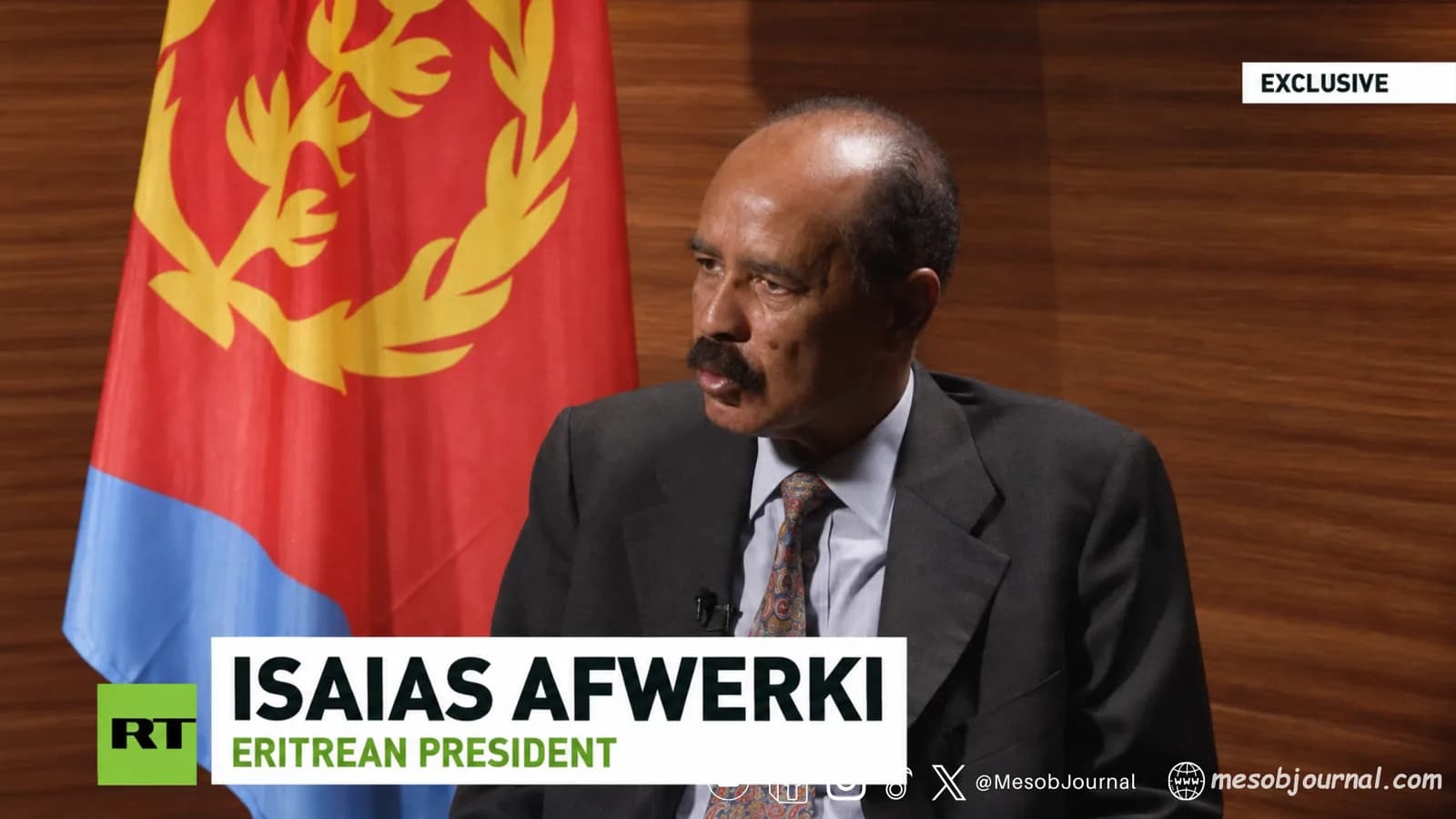
In a wide-ranging interview with RT, Eritrea’s president delivered a sweeping assessment of Africa’s economic dependence, foreign intervention, political institutions and place in a changing world order. Beyond the criticism of external powers lay a more demanding proposition: Africa must develop the capacity to determine its own future.
Africa has achieved political independence, secured international recognition and established its place among the nations of the world. Yet a fundamental question remains unresolved: How independent can a continent truly be when it exports its natural wealth cheaply, imports expensive finished products and continues to look beyond its borders for solutions to its most pressing challenges?
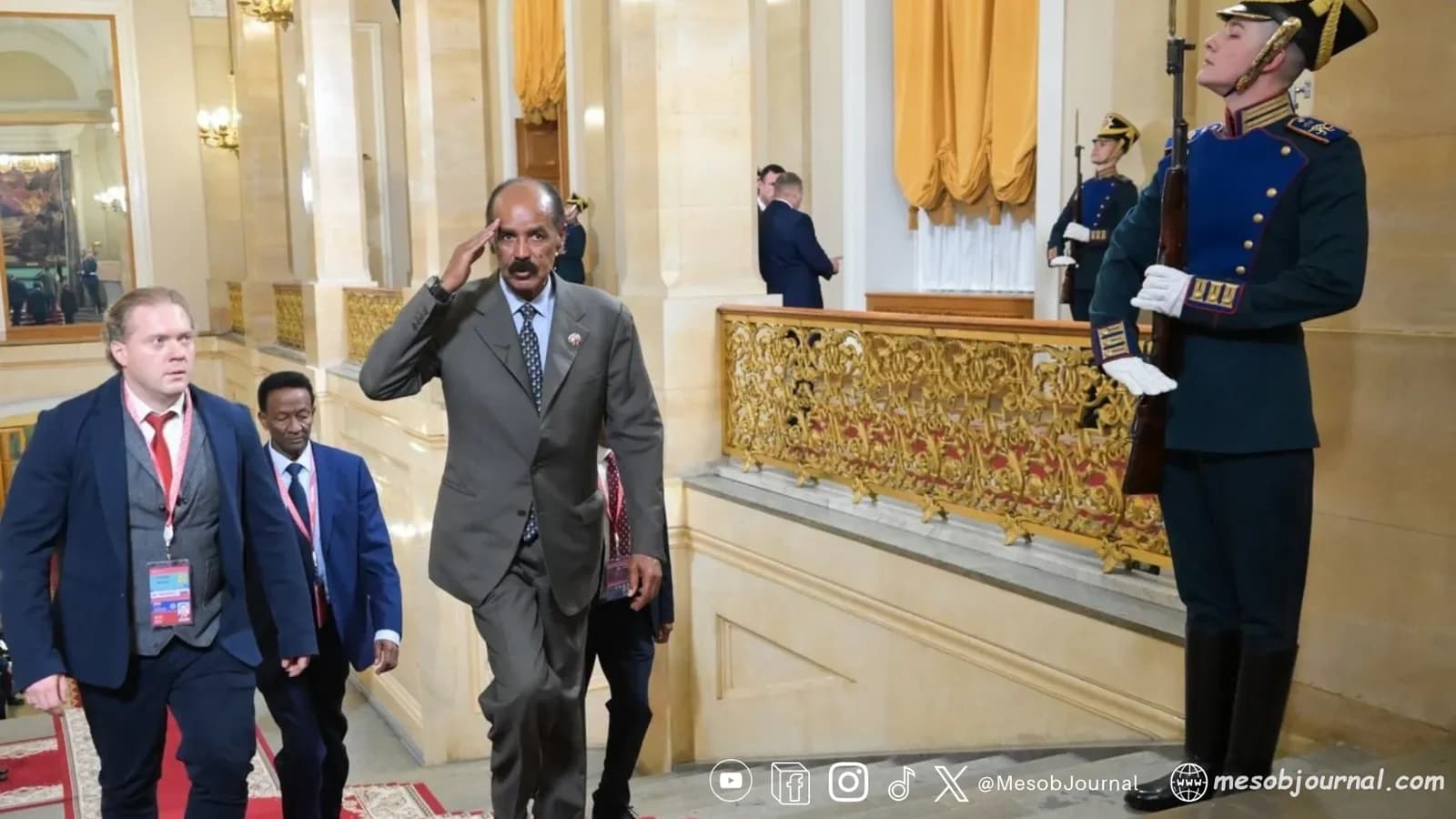
President Isaias Afwerki placed that question at the centre of a wide-ranging interview with RT, broadcast on November 1, following his participation in the third Russia–Africa Summit in Moscow.
His remarks covered Russia’s place in international affairs, the global financial system, the role of international institutions, African industrialisation, political governance and the strategic importance of the Horn of Africa.
But the strongest message was not about Russia, the United States or any other foreign power.
It was about Africa itself.
“Africa can partner. Africa can work with anybody,” he said, before cautioning against the expectation that solutions to African problems should come from outside.
His argument challenged a deeply established development model in which African economies frequently supply raw materials to the world while depending on external markets, technologies, financing and institutions for much of what they consume and produce.
For Isaias, the question is no longer simply whether African states possess sovereignty under international law. It is whether they have built the economic, scientific and institutional foundations required to exercise that sovereignty meaningfully.
Independence Without Economic Power
Perhaps the most consequential part of the interview came when the discussion turned to Africa’s natural resources.
The interviewer asked about growing calls among African leaders to halt raw-material exports and regain greater control over the continent’s economic wealth.
Isaias responded by challenging the structure of African economies themselves.
“Value-adding, industrializing, manufacturing is the name of the game,” he declared.
He then identified the economic cycle he believes African countries must escape:
“We need to get out of this cycle of exporting raw materials and importing expensive finished products.”
The simplicity of the argument should not obscure its significance.
For generations, much of Africa has occupied the lower end of international production chains. Minerals leave African soil, agricultural commodities leave African farms, and valuable resources enter industrial systems elsewhere. They return as machinery, processed goods, technologies and consumer products, often at prices far beyond those received for the original materials.
The continent may own the resources, but ownership alone does not guarantee control over their value.
The economic evidence supports the seriousness of this challenge.
According to UN Trade and Development data for 2025, manufactured goods accounted for approximately 75 percent of Africa’s imports, while manufacturing represented just 19.5 percent of its exports.
Those figures illustrate a structural imbalance that political declarations cannot correct on their own.
Isaias described the prevailing system as a zero-sum arrangement in which the gains of one participant often correspond to losses elsewhere.
His proposed alternative was not to withdraw Africa from international commerce. It was to change Africa’s position within it.
He called for an economic architecture capable of processing African raw materials, manufacturing competitive products and reaching regional and global markets.
The objective is not simply to export less. It is to produce more, retain greater value, develop technical capabilities and enter international partnerships from a stronger position.
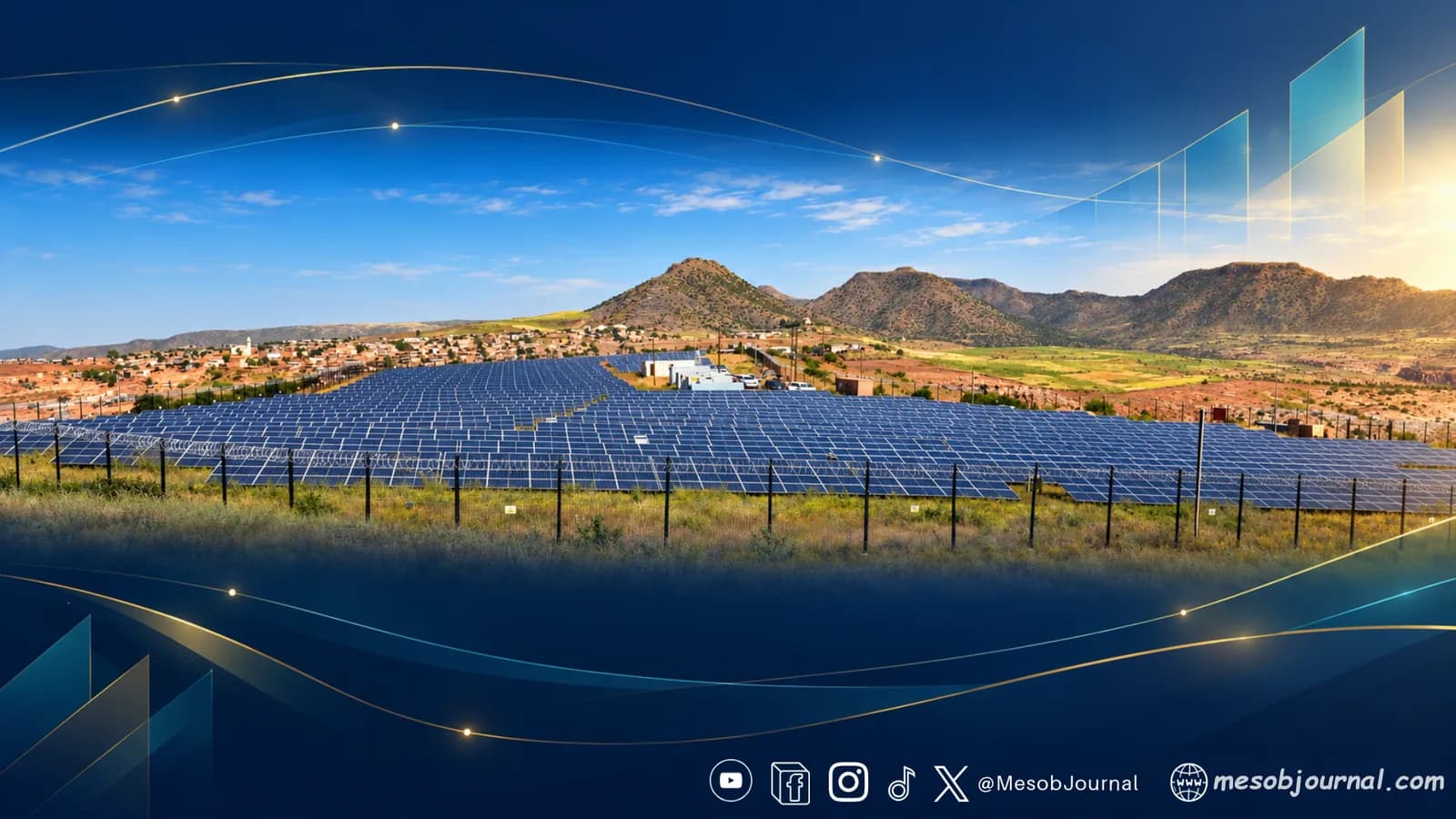
Industrialisation requires far more than factories. It depends on reliable electricity, transport infrastructure, technical education, financing, research institutions, industrial policy and access to markets.
It also requires patience. The transformation of an economy built around primary production cannot be accomplished through speeches or investment announcements alone.
For Africa, however, the alternative is to remain highly exposed to commodity prices, foreign supply chains and external economic decisions.
A country that controls its resources but lacks the ability to transform them into valuable products has secured only part of its economic potential.
Sovereignty Must Extend Beyond Borders
Isaias offered a broader definition of sovereignty that went beyond the familiar principles of independence and territorial integrity.
“Sovereignty in science, sovereignty in health services, sovereignty in economic prosperity, even education.”
Those words captured one of the interview’s most important arguments.
National independence is commonly understood through visible political institutions: flags, borders, governments, diplomatic representation and the authority to make laws.
But the ability to exercise independence also depends on less visible capacities.
Can a country educate the engineers and scientists it needs? Can it maintain essential health services? Can it manufacture important goods, operate infrastructure, develop technology and withstand disruptions to international trade?
Can its government formulate economic policy based on national priorities rather than the conditions of external creditors?
These questions are increasingly relevant as artificial intelligence, advanced manufacturing, energy technology and digital infrastructure reshape the global economy.
Isaias briefly acknowledged the possible usefulness of artificial intelligence, but his wider argument concerned who would possess the knowledge and capacity to benefit from technological progress.
His warning was direct:
“Expecting solutions from outside will cultivate dependency that will be disabling.”
There is an important distinction here between cooperation and dependence.
No modern country can produce everything it needs. International trade, scientific exchanges, investment and technological partnerships are essential to development.
The issue is whether those relationships expand a country's capabilities or perpetuate its weaknesses.
A partnership that transfers knowledge, develops local industries and strengthens national institutions can reinforce sovereignty. A relationship that leaves essential decisions, expertise and production permanently in outside hands can weaken it.
For Africa, genuine self-reliance therefore cannot mean isolation.
It must mean the ability to cooperate without surrendering the capacity to choose.
African Responsibility Cannot Be Outsourced Either
One of the more revealing moments of the interview came when Isaias was questioned about colonial reparations and the return of African cultural heritage.
Rather than setting out a demand for compensation or a formula for restitution, he redirected the discussion toward African responsibility.
“Africa should focus on finding, finding and finding solutions for their own problems,” he said.
The shift was striking.
Africa's demands for historical justice remain legitimate subjects of international debate. Colonial exploitation, the removal of cultural treasures and the lasting consequences of colonial economic structures cannot simply be dismissed.
Yet Isaias placed the emphasis elsewhere: on the decisions African societies and governments must make now.
His position suggests that historical recognition and restitution, however important, cannot substitute for the construction of productive economies and capable institutions.
The interview also contained a pointed criticism of Africa’s own political realities.
Asked whether the continent’s political systems represented the aspirations of African people, he answered:
“No.”
He went on to criticise what he described as imported political stereotypes, divisive institutions and arrangements that enable warlords and narrow political interests.
His objections to federal political models and externally promoted governance formulas reflect a particular understanding of nation-building, one that places substantial importance on national cohesion and functioning state institutions.
African experience, however, is not uniform. Constitutional arrangements that fail in one setting may operate differently in another. The deeper test is whether institutions serve citizens, manage differences peacefully and deliver public goods.
The more consequential point is that sovereignty also imposes obligations on African leadership.
Foreign influence may constrain national decisions, but African governments remain responsible for building effective institutions, protecting public resources, developing human capital and creating economic opportunities.
Self-reliance loses much of its meaning if it becomes a justification for weak institutions or an excuse to avoid domestic accountability.
Its real measure is whether citizens and societies gain the capacity to shape their own future.
Russia, Africa and the Right to Choose Partners
The interview took place during an important diplomatic moment for Eritrea.
President Isaias attended the third Russia–Africa Summit on October 28–29 and subsequently held talks with Russian President Vladimir Putin.
According to Eritrea’s Ministry of Information, the two leaders agreed to strengthen cooperation in energy, technology, mining and agriculture. Discussions also covered transport infrastructure and broader bilateral relations.
In the RT interview, Isaias argued that Russia should be permitted to contribute to international peace, development and economic cooperation without attempts to restrict its global role.
“Russia should be allowed to make its contribution to global peace and prosperity,” he said.
He placed the war in Ukraine within a broader Western strategy of containing Russia that emerged after the Cold War, arguing that the objective extends beyond weakening Moscow to restricting its ability to contribute to international development and cooperation, particularly in Africa.
Yet the wider African question raised by his remarks extends beyond the positions of Russia and Western governments.
Who determines which countries Africa may cooperate with?
For states seeking energy infrastructure, industrial technology, agricultural development and financing, restricting the range of possible partners can reduce negotiating leverage and limit economic options.
The ability to maintain relations with Russia, China, Europe, the United States, India, Gulf countries and other partners without becoming exclusively dependent on any one of them is an important component of strategic autonomy.
Africa gains little by exchanging dependence on one powerful partner for dependence on another.
The strongest position is one in which governments can assess competing offers according to national development priorities, technological benefits, financial terms and long-term economic value.
This is where Isaias’s emphasis on partnership and sovereignty becomes particularly relevant.
The objective is not to choose a permanent external patron. It is to strengthen Africa's ability to negotiate with all of them.
The Horn of Africa: A Region Too Important to Be Left Vulnerable
When the interviewer asked why international investors should consider Eritrea and the wider Horn of Africa, Isaias turned immediately to geography and geopolitical competition.
“The Nile Basin, the Horn of Africa, the Red Sea, the Gulf, these are very sensitive geopolitical realities.”
He argued that external powers and their regional partners have contributed significantly to conflict and instability in the region, often using political divisions to expand their influence.
In one of his strongest passages, he declared:
“We're fed up of this politics coming from outside to destabilize the Horn of Africa.”
His criticism reflects a central concern in the region: the relationship between domestic instability, external intervention and competition for strategic territory.
The Horn of Africa occupies an exceptional geographic position.
Its states sit alongside the Red Sea and Gulf of Aden, near the Bab el-Mandeb maritime passage connecting the Indian Ocean to the Suez Canal and Mediterranean trade routes.
The region also connects the Nile Basin, the Arabian Peninsula and the African interior.
These features offer extraordinary opportunities for transport, energy, trade, manufacturing and regional economic integration.
They also attract foreign military, commercial and political interests.
The challenge is not the existence of those interests. International economic and security relationships are unavoidable in a region of such strategic importance.
The challenge arises when geopolitical rivalry becomes a substitute for regional cooperation or when local political actors seek outside backing to pursue objectives that undermine neighbouring states.
Isaias’s critique of external intervention should be understood in that context. It is his assessment of the forces driving regional instability, not a denial that domestic political rivalries and decisions also contribute to conflict.
For the Horn, a more stable future requires respect for recognised borders, non-interference, reliable regional institutions and cooperation based on sovereign agreement.
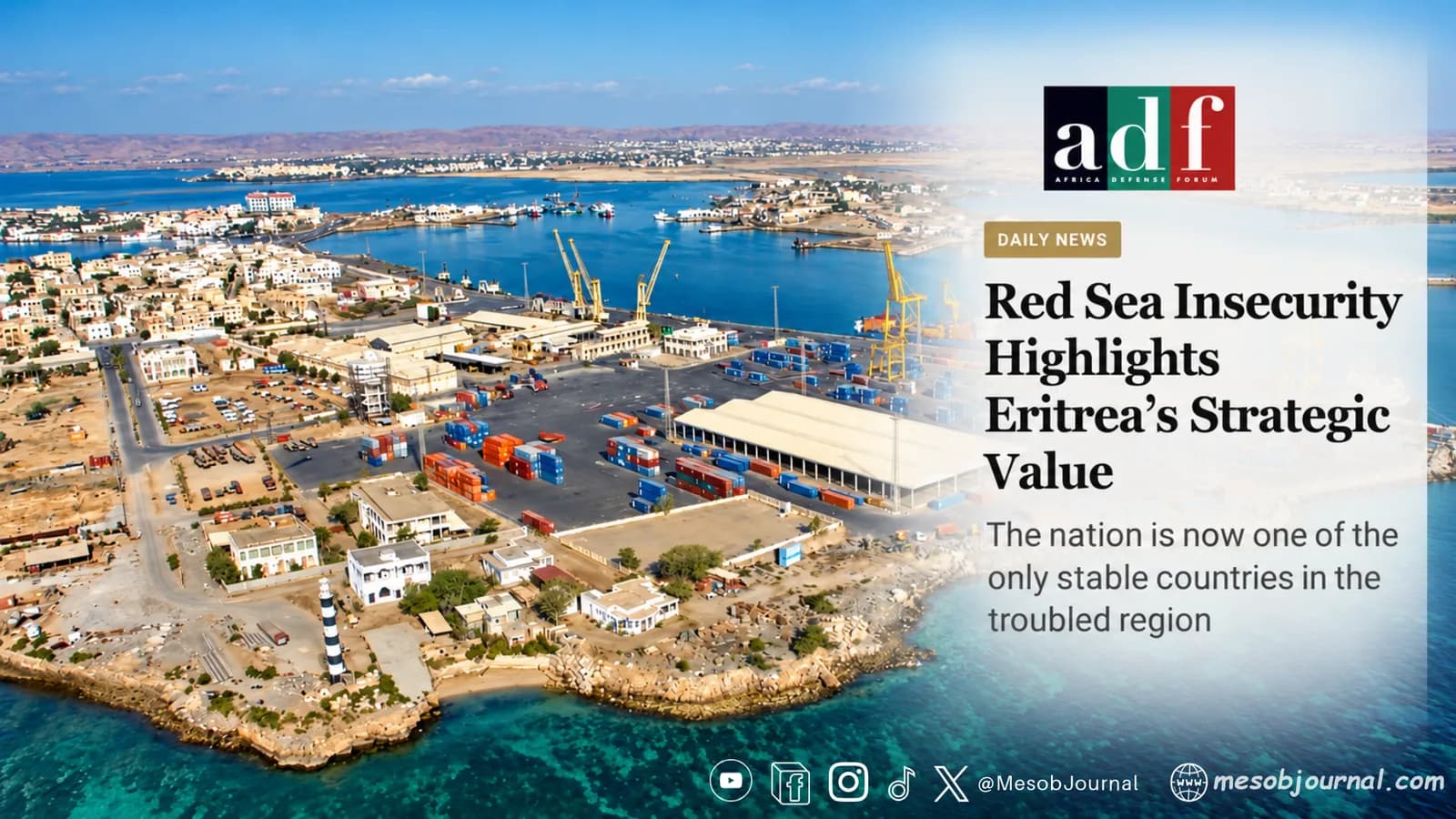
Eritrea's location along the Red Sea places it in an important position within this wider strategic geography. Its long-term opportunities in maritime infrastructure, logistics, energy, fisheries and trade are closely connected to the security and development of the surrounding region.
The same geography that attracts competition could also support prosperity if regional states establish durable frameworks for cooperation.
The Limits of International Institutions
Isaias also delivered a sharp critique of the United Nations and other international institutions.
He argued that international bodies and their agencies can become instruments through which powerful states exert influence or justify intervention.
“We don't need to use the U.N. as a means of inciting conflict here and there,” he said.
He also accused external actors of using humanitarian concerns and international mechanisms to complicate political conditions in African countries.
His objections were directed at what he considers the instrumental use of international institutions rather than at the principle of international cooperation itself.
The United Nations and other multilateral institutions possess important responsibilities in humanitarian assistance, development, public health, peacekeeping and international law.
Their legitimacy, however, depends on consistent standards, impartiality and respect for the sovereignty of member states.
When international mechanisms are perceived as selective or as tools of geopolitical influence, their credibility can suffer.
The appropriate answer is neither automatic rejection of multilateral institutions nor unconditional acceptance of their decisions.
It is stronger accountability, consistent application of international rules and greater African influence over decisions that directly affect the continent.
For African states, this also reinforces the importance of developing credible national and regional institutions capable of addressing crises before external intervention becomes the default response.
From Political Independence to Productive Independence
The most enduring part of Isaias Afwerki’s interview may ultimately be his insistence that Africa’s future depends on what Africans build.
His message drew together economic transformation, scientific capability, public institutions, independent diplomacy and control over national priorities.
These are not separate ambitions. They reinforce one another.
An economy with a strong productive base has greater room to make independent policy decisions.
A society with technical knowledge can negotiate technology partnerships more effectively.
A government with capable institutions is better positioned to manage resources, respond to crises and resist external pressure.
A region whose states respect one another’s sovereignty can devote more of its resources to development rather than perpetual insecurity.
None of this removes the importance of international cooperation. Indeed, effective cooperation becomes more valuable when countries possess the capabilities to turn partnerships into lasting national gains.
Nor does it mean that every African country must follow the same economic or political path. The continent's circumstances are too diverse for a single formula.
The common requirement is that development strategies must produce measurable improvements in national capacity and public welfare.
For Eritrea, the philosophy of self-reliance has long been central to its national outlook. The larger challenge is translating that principle into increasingly sophisticated productive capabilities, industrial growth, modern infrastructure, scientific expertise and broader economic opportunities.
For Africa as a whole, the interview poses an equally demanding question.
After decades of political independence, will the continent remain primarily a supplier of raw materials and a consumer of technologies developed elsewhere? Or can it increasingly become a centre of manufacturing, scientific innovation, skilled production and economic decision-making?
Isaias did not offer a detailed industrial programme or a timetable for that transformation. What he offered was a statement of priorities.
Africa must move beyond dependency, build its own capabilities, strengthen its institutions and engage the world from a position of sovereignty.
The final measure of independence is not simply the ability to reject outside interference. It is the capacity to build a future in which outside interference no longer determines the limits of national possibility.
Africa possesses the resources. The next struggle is to command the knowledge, industries and institutions that turn those resources into lasting power.