
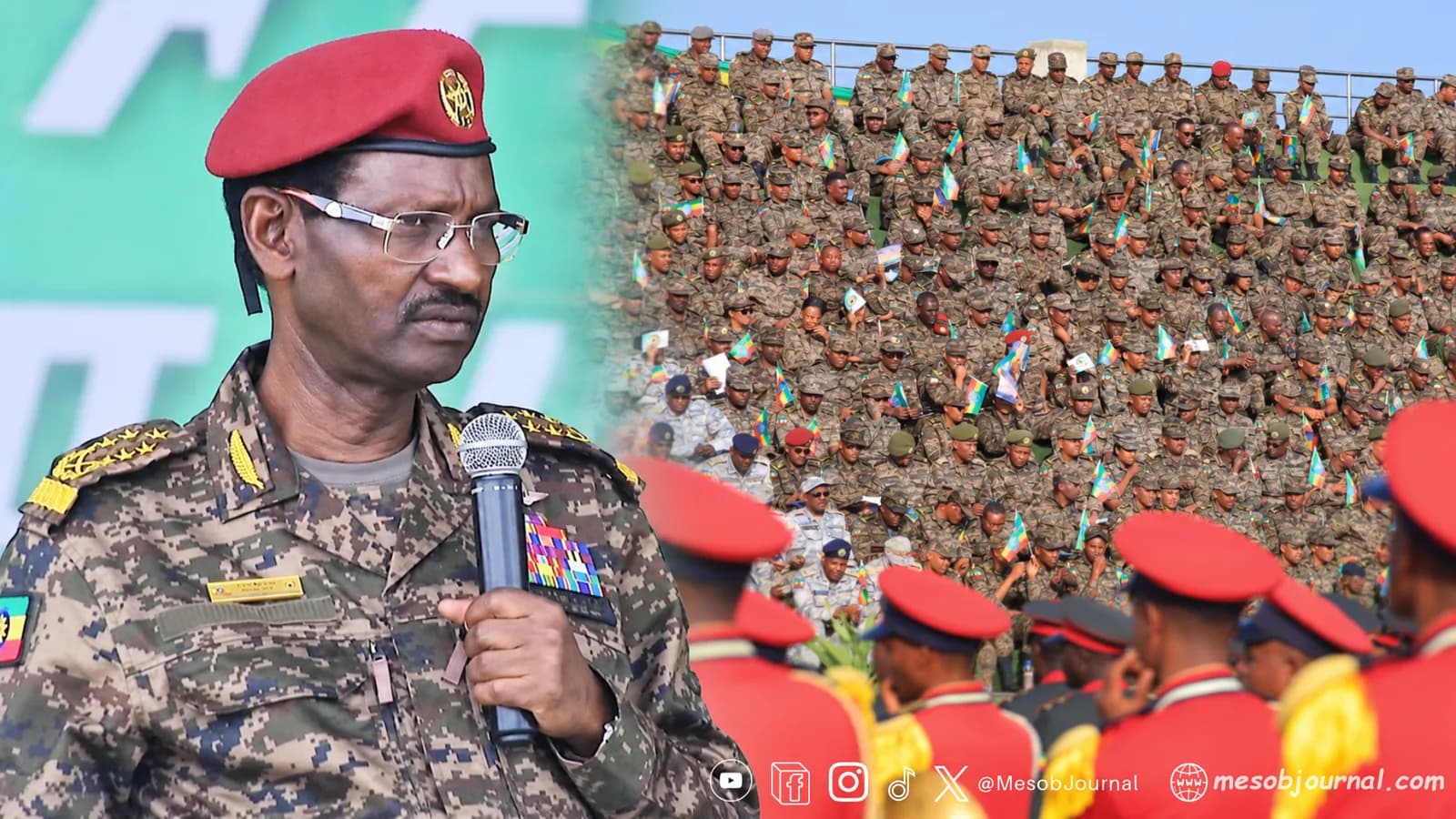
Ethiopia’s army chief, Field Marshal Berhanu Jula, has invoked God and military duty in renewing threats against Eritrea, while the United Nations Security Council leaves Asmara’s appeal for action against Ethiopia’s annexation campaign unanswered.
Speaking at the Armed Forces General Headquarters in Addis Ababa on 25 October, during celebrations of the military’s 119th anniversary, Berhanu said God had made the Red Sea for Ethiopians to use. He declared that Ethiopia had no alternative but to defend its interests in the waterway and the Abay River.
In his anniversary address, Berhanu assigned the government and armed forces a shared responsibility for protecting those interests. He said Ethiopia’s pursuit of peace and good-neighbourly relations would not require it to relinquish them.
Berhanu also accused Eritrea, Egypt and Sudan of coordinating support for forces fighting the Ethiopian government. He alleged that Ethiopian troops had intercepted a substantial weapons shipment intended for TPLF-aligned fighters after its transfer through Massawa. The allegation remains unsubstantiated.
The army chief had already told soldiers on 21 September 2025 that they would fight a country denying Ethiopia access to the sea. Earlier that month, Prime Minister Abiy Ahmed had portrayed Ethiopia’s loss of Assab as a historical mistake that would be corrected and the port’s return to Ethiopian control as a matter of time.
On 3 November 2025, retired general and diplomat Bacha Debele described Assab as an Ethiopian asset recoverable “by force.” Other military messaging has included Assab-ownership placards and calls for its reclamation on Ethiopian state television.
Berhanu returned to the maritime grievance in August 2026 while briefing Special Operations Command leaders. He described the command’s readiness for pre-emptive action and accused Eritrea’s leadership of conspiring with external adversaries to deny Ethiopia sea access.
At a February 2026 special-forces ceremony in Hawassa, attended by senior government and military officials, a display depicted a soldier breaking through a door toward Assab beneath a banner rejecting continued landlocked status.
Ethiopia’s internal wars have meanwhile continued to displace communities and obstruct aid. Renewed fighting in northern Ethiopia has followed the 2020–2022 Tigray war, which ended with the Pretoria agreement. Violence persists in Amhara and Oromia, while humanitarian agencies report disrupted services and repeated displacement in areas already struggling to recover.
Ethiopia took its accusations against Eritrea to the Security Council on 9 October. Foreign Minister Gedion Timothewos invoked the right to self-defence under Article 51 of the UN Charter, alleging Eritrean troop incursions and support for armed groups. Eritrea rejected the accusations and the justification for military action.
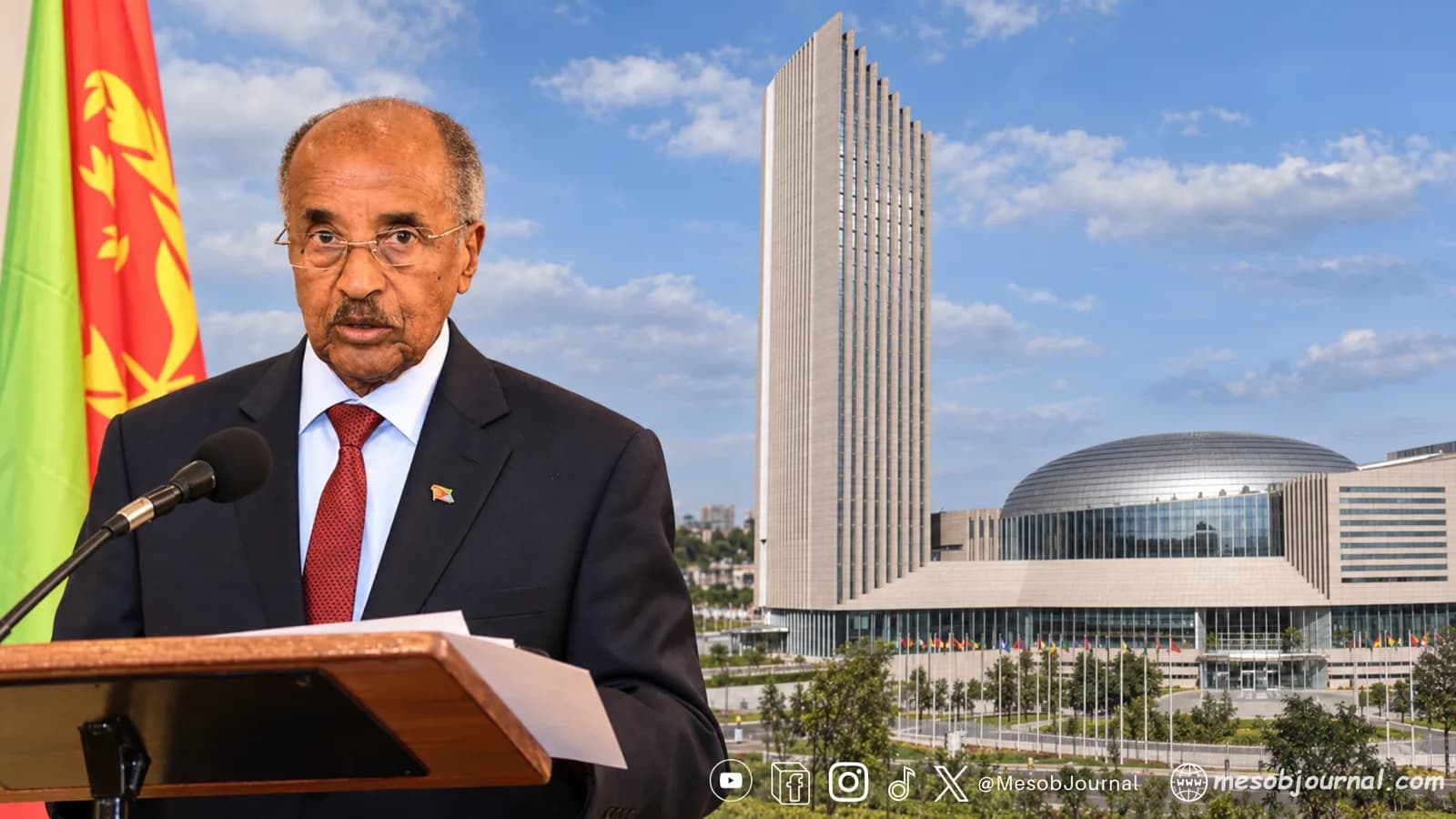
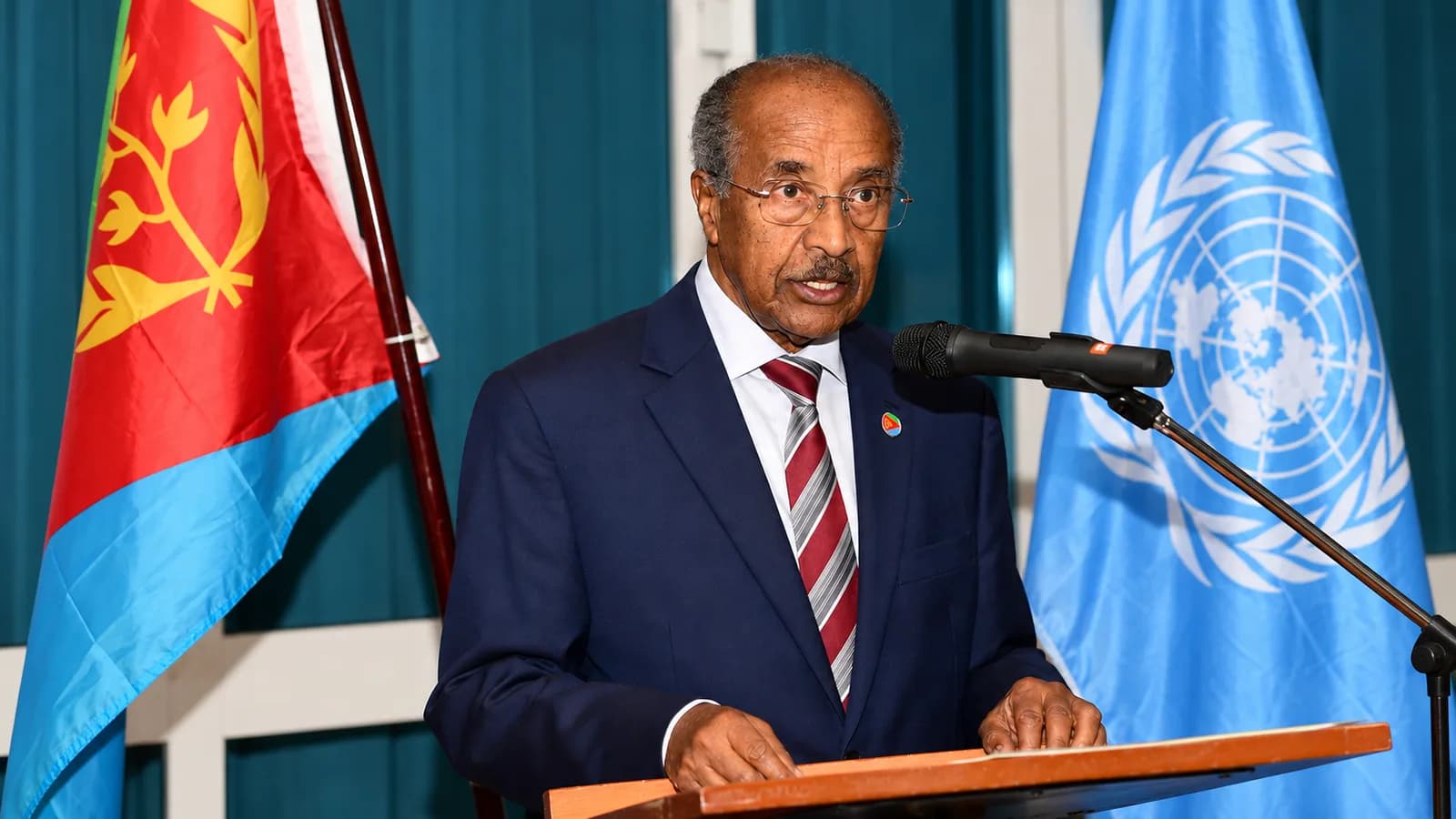
In a response dated 10 October, Eritrean Foreign Minister Osman Saleh asked the Council to condemn what he described as Ethiopia’s declaration of war and adopt deterrent measures under Chapter VII. He warned that another war would devastate the people of both countries and destabilise the region.
Saleh also cited remarks he attributed to Ethiopia’s deputy army chief, General Abebaw Tadesse, on 27 September. According to the letter, Abebaw identified Assab as the eventual military objective and Mekelle as a stop on the way toward Eritrea.
An Eritrean submission circulated to Council members on 13 October and published the following day listed further territorial demands and maps incorporating Eritrean territory into Ethiopia. It renewed the request for deterrent measures and called on the Council to demand respect for Eritrea’s sovereignty and territorial integrity.
On 15 October, Saleh briefed diplomats in Asmara on three years of statements by Ethiopian political and military leaders. He described the territorial demands and accompanying threats as a declaration of war and again sought Security Council action.
Council members have discussed the crisis behind closed doors. Secretary-General António Guterres has called for an end to hostilities and reminded regional governments of their obligations under the UN Charter to refrain from threats or force against another state’s territorial integrity.
The Council has yet to publicly condemn the annexation threats or announce deterrent measures. Eritrea’s request remains unanswered while Ethiopian military leaders continue to threaten its territory.