
In recent weeks, the outbreak of conflict in Ethiopia has been accompanied by a surge of commentary, competing narratives, and misinformation surrounding developments in the Horn of Africa, Eritrea’s position, and Ethiopia’s pursuit of maritime access. Against this backdrop, it is important to clarify key facts, examine the arguments being advanced, and distinguish established legal principles from political assertions and unsubstantiated claims.
A closer examination of these issues is essential to understanding the broader context, assessing prevailing narratives, and fostering a more accurate and balanced understanding of developments in the region.
One of the most consequential distortions concerns Ethiopia’s growing attempt to invoke Article 51 of the UN Charter to justify claims of self-defence against Eritrea. This argument runs counter to the established record and reverses the sequence of events.
The pattern of Ethiopian rhetoric dates back at least to 13 October 2023, when Prime Minister Abiy Ahmed told Parliament that Ethiopia would secure “sovereign access to the sea”, through negotiations if possible and by force if necessary. Eritrea responded with restraint, making clear that it would not be provoked by such pronouncements. Yet the rhetoric continued. Abiy subsequently invoked Israel’s annexation of the Golan Heights as a precedent relevant to Ethiopia’s claims concerning Assab, while also questioning the documentary basis of Eritrea’s independence.
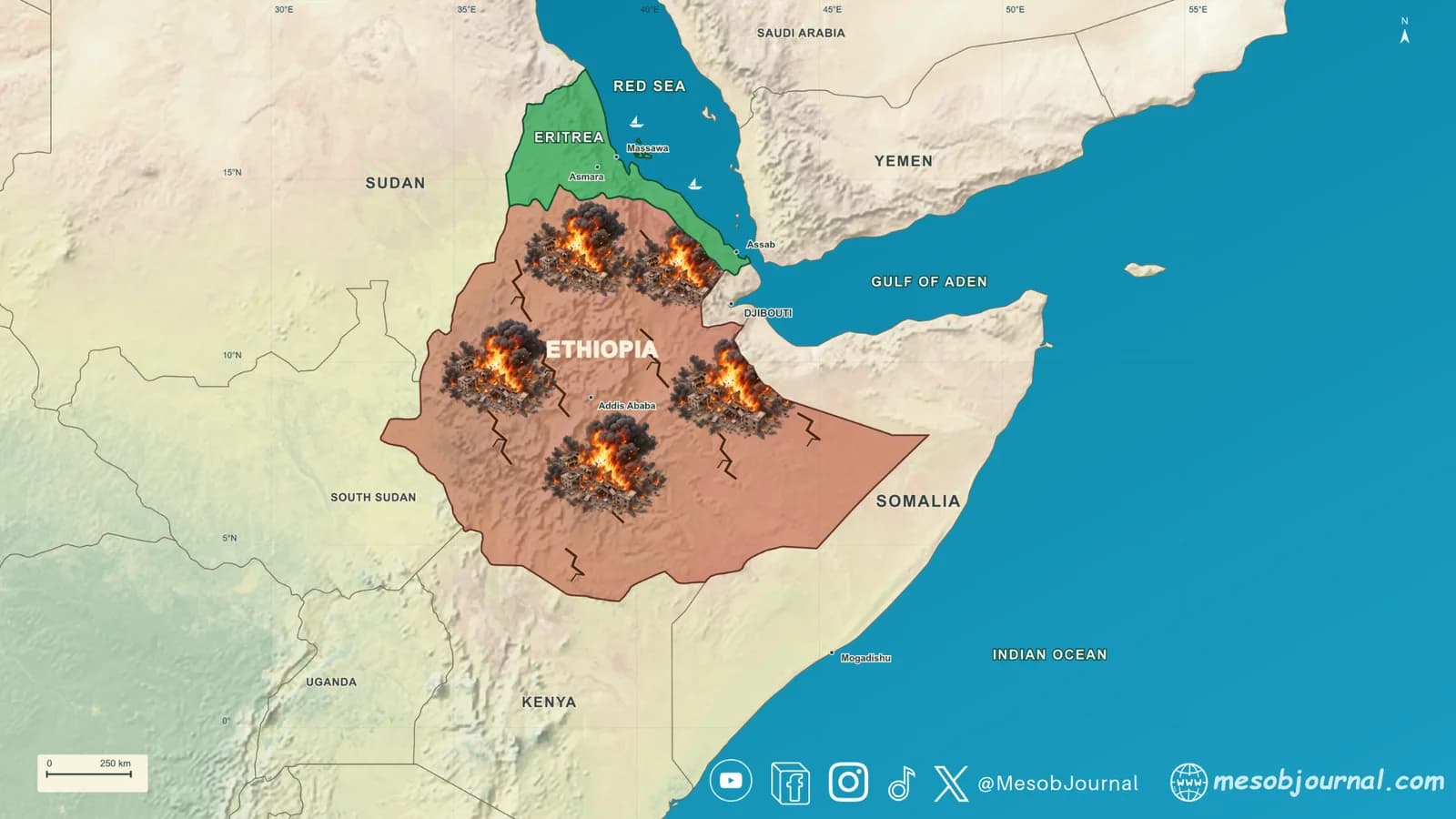
Senior Ethiopian political and military figures have since made further statements about correcting what they describe as a historical mistake, securing strategic depth on the Red Sea, and taking Assab by force. Most strikingly, on 27 September 2026, Ethiopia’s Deputy Chief of Staff, General Abebaw Tadesse, was reported as stating that the offensive in Tigray would not end there, identifying Mekelle as a stopover and Assab as the ultimate destination. Taken together, these declarations form a sustained record of territorial ambition and threats that cannot simply be set aside when Ethiopia presents itself as the party acting in self-defence.
Crucially, invoking self-defence cannot erase the record of threats and belligerent declarations that preceded it. For three years, Ethiopian officials and government-aligned voices have repeatedly spoken of taking Assab by force and pursuing regime change in Eritrea. Against this backdrop, Ethiopia’s attempt to cast itself as the party under threat turns the reality on its head. The issue is not resolved by invoking Article 51; it requires confronting the contradiction between Ethiopia’s claims of self-defence and its own sustained rhetoric of territorial ambition and coercion against a sovereign state.
A second distortion is the attempt to portray Eritrea as unwilling to cooperate or as an obstacle to Ethiopia’s pursuit of maritime access. This narrative conveniently overlooks the fact that Eritrea’s position has been consistent all along: it has never denied Ethiopia’s need for access to the sea, but it rejects any attempt to turn that need into a justification for territorial claims, threats, or the use of force. There is a fundamental difference between seeking access through dialogue and mutually beneficial arrangements, and insisting on “sovereign access” to another country’s coastline, by force if necessary. Ethiopia’s maritime ambitions do not give it a free hand over Eritrea’s territory, nor do they entitle it to dictate the terms on which Eritrea exercises its sovereignty.
From the outset, Eritrea has maintained that peaceful relations and mutually beneficial cooperation serve the interests of both peoples and the wider region. Its position has not been one of hostility towards Ethiopia or opposition to regional cooperation, but a rejection of coercion and the violation of its sovereignty. Cooperation cannot be built on threats, historical grievances invoked to justify present-day ambitions, or the presumption that Eritrea must make territorial concessions to accommodate Ethiopia.
Eritrea’s position has been clear and consistent: access to the sea can be pursued through peaceful dialogue and mutually agreed arrangements, but its sovereignty and territorial integrity are not bargaining chips. The real obstacle to peace is not Eritrea’s insistence on its sovereignty; it is the attempt to make that sovereignty negotiable under pressure. Peace and access to the sea are not mutually exclusive. What is incompatible with peace is the pursuit of one through threats against the other.
Of course, another critical contradiction is Ethiopia’s pursuit of expansionist ambitions while grappling with deepening crises at home. The country remains beset by raging insurgencies, economic hardship, political fragmentation, and persistent failures of governance. Rather than resolving these challenges, the government continues to pursue confrontational policies that risk further destabilizing the country and the wider region.
Ethiopia’s growing entanglement in regional power rivalries raises further questions about whether its policies serve the interests of its own population or those of external actors seeking to advance their strategic agendas. Against a backdrop of internal conflict and economic distress, the pursuit of territorial and maritime ambitions appears increasingly detached from the urgent needs of the Ethiopian people.
The contradiction is clear: a government struggling to manage serious crises at home is advancing expansionist claims abroad in the name of national necessity. Yet neither economic hardship nor internal instability justifies threatening a neighbouring state. Ethiopia’s priority should be resolving its domestic crises, not exporting them through expansionist rhetoric and confrontation with Eritrea.
Ultimately, Ethiopia cannot resolve its internal failures by threatening its neighbours, nor can it disguise expansionism as economic necessity or self-defence. No amount of rhetoric can turn territorial ambition into legitimate entitlement. Eritrea’s sovereignty is not negotiable, and its coastline is not a remedy for Ethiopia’s political failures. The choice is clear: peaceful coexistence based on mutual respect, or confrontation for which Ethiopia must bear responsibility.