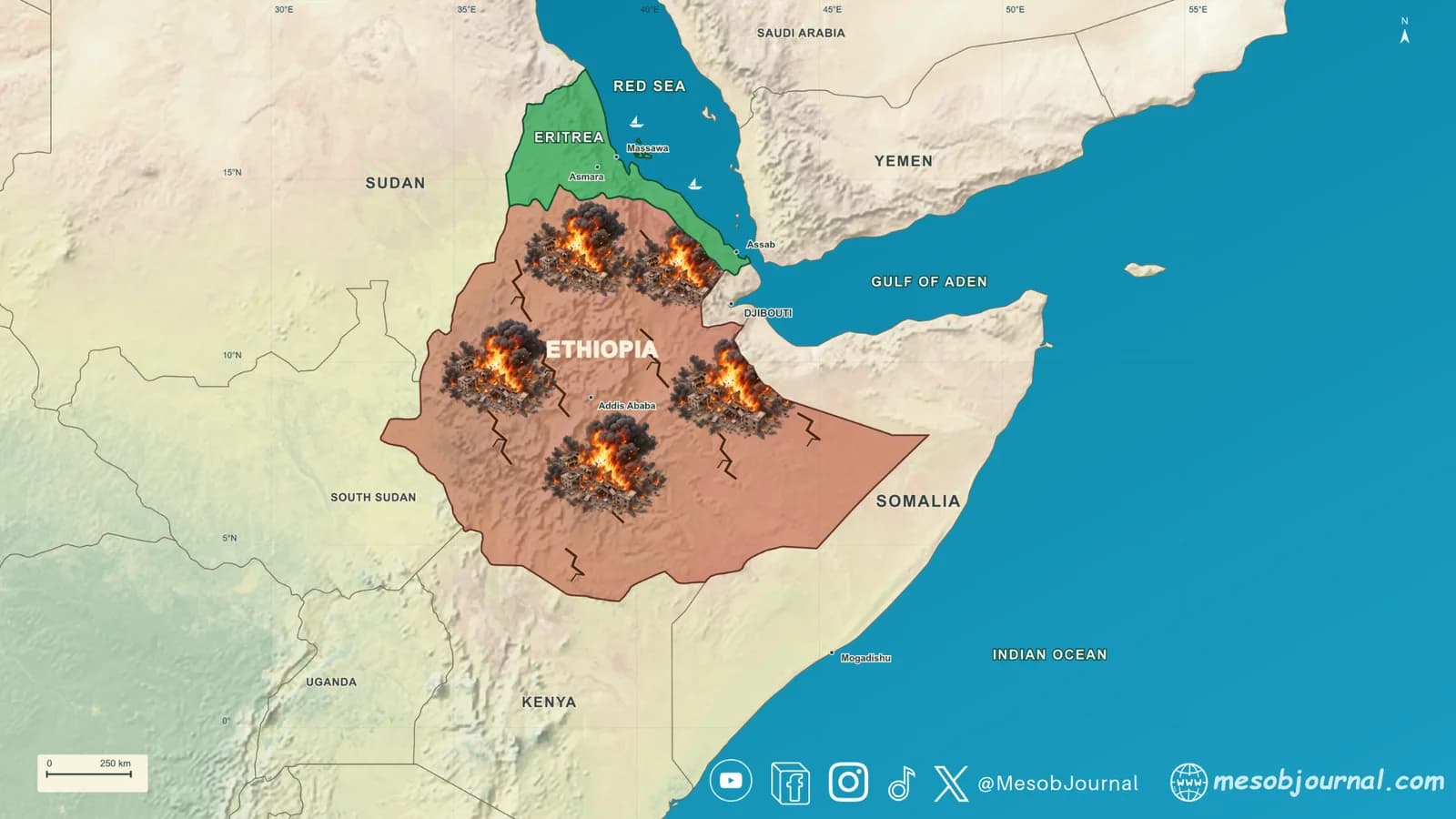

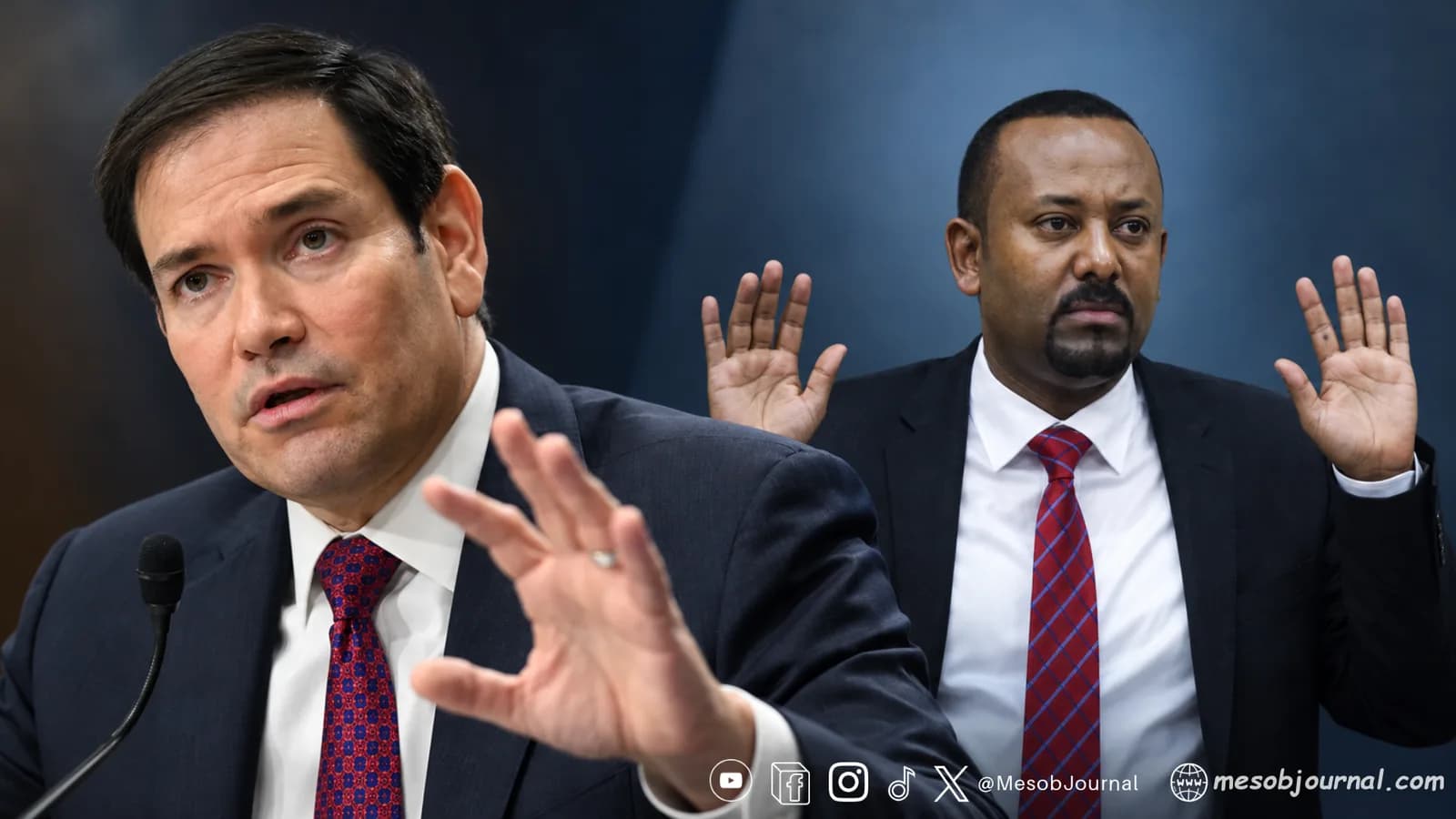
Abiy Ahmed’s celebration of his telephone conversation with Marco Rubio leaves out the subject Washington placed at the centre of its public account: tensions with Eritrea.
On 14 October, the Ethiopian prime minister presented the call as evidence of a stronger partnership with the United States. He described the conversation as “very fruitful” and welcomed what he called an assurance of continued American support. The Ethiopian News Agency’s account amplified that presentation, emphasizing bilateral cooperation and a more strategic relationship.
The State Department’s readout conveyed a different emphasis. It identified heightened tensions with Eritrea, called for de-escalation and referred to the 2018 Ethiopia–Eritrea peace framework. Rubio stressed that “all countries in the Horn of Africa must respect the sovereignty and territorial integrity of their neighbors,” alongside a requirement to avoid cross-border incursions. The closing message was unequivocal: “the region cannot tolerate more conflict.”
Abiy’s statement mentions none of those constraints. Eritrea disappears from his account. So do neighbouring sovereignty, territorial integrity and the warning against further conflict. The Ethiopian public is offered a diplomatic success story while the security message Washington chose to publish is left out.
That omission changes the political meaning of the conversation.
A government facing scrutiny over its conduct towards a neighbour benefits from presenting contact with Washington as reassurance. An announcement of continued support can suggest that its regional posture has received American approval. Yet the published U.S. readout contains no endorsement of Ethiopian territorial claims, no approval of military action against Eritrea and no recognition of an Ethiopian entitlement to Eritrean ports or coastline.
Abiy’s account cannot supply an endorsement that Washington’s own statement does not contain.
The sovereignty language is especially consequential. Washington’s formulation applies across the region, but it was issued following a conversation with Abiy about tensions with Eritrea. The Ethiopian government he leads is bound by the obligations Rubio emphasized. A regional formulation provides Addis Ababa with no exemption.
Read in that context, the statement carries a warning to Abiy: relations with the United States do not place neighbouring sovereignty outside the rules.
The territorial claims and military threats behind that warning are addressed in Mesob Journal’s earlier coverage of Eritrea’s sovereignty appeal. The immediate issue now is how Abiy has presented Washington’s response.
Washington named Eritrea, stressed respect for neighbouring sovereignty and warned against cross-border incursions and further conflict. Abiy omitted those constraints. His announcement does not erase them.
American support for Ethiopia cannot be converted into permission to threaten Eritrea. The U.S. readout endorses no territorial claim, military action or Ethiopian entitlement to Eritrean ports. Abiy cannot use that call as diplomatic cover for his government’s campaign.
Washington must hold Abiy to the obligations it raised. Cooperation with Addis Ababa must not shield territorial claims or military threats against Eritrea. The sovereignty warning must carry consequences in U.S. dealings with his government.
Abiy must end claims over Eritrean territory and the military threats accompanying them. A celebratory account of a telephone conversation answers neither demand.
Eritrea’s sovereignty remains the governing principle. Abiy’s government must respect it.