
Washington failed to secure agreement on a nationwide arms embargo. Sudan’s objection deserves a serious hearing: how would broader restrictions protect civilians if the networks supplying the RSF continue to operate?
Sudan’s government has secured an important diplomatic gain. Washington’s attempt to extend the Darfur arms embargo across the entire country encountered sustained opposition, forcing the United States back toward a temporary renewal of the existing framework.
Behind that setback lies a question Sudan was right to raise: what happens when international restrictions weaken national institutions while clandestine supply networks continue feeding the forces fighting them?
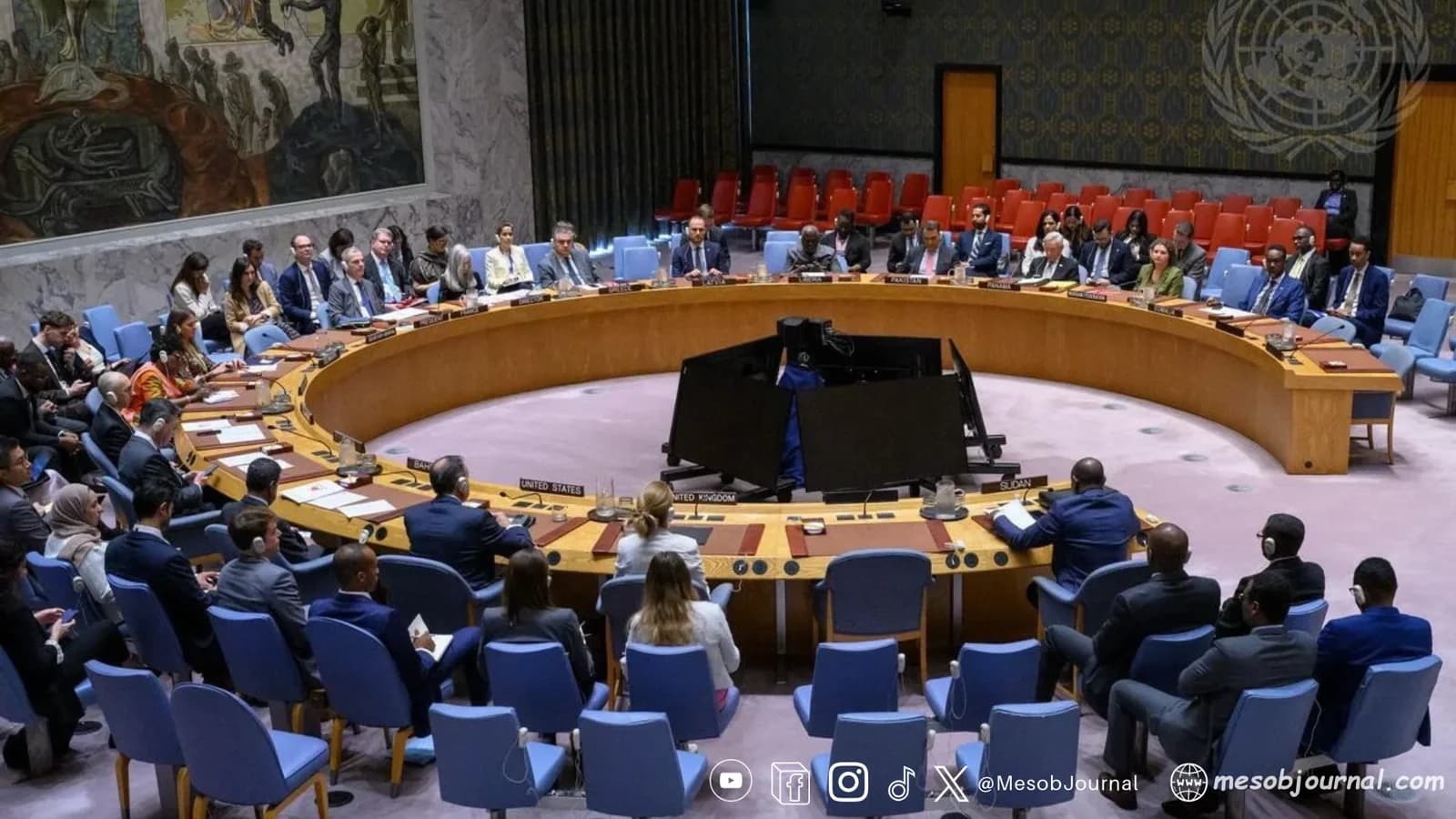
The immediate development requires precision. Security Council Report’s 7 October negotiating assessment described a U.S. draft proposing to extend the existing sanctions until 11 December and the Panel of Experts’ mandate until 11 January 2027. It previewed a vote scheduled for 8 October; it did not establish the outcome.
The political setback for Washington was nevertheless evident. Weeks of negotiations had failed to produce agreement on a nationwide embargo. Russia, China, Pakistan and the three African Council members—the Democratic Republic of the Congo, Liberia and Somalia—preferred renewal of the Darfur framework.
For Sudanese diplomacy, preventing that proposed expansion was an achievement.
The African position deserves particular attention. Reducing the dispute to another confrontation between Washington and Moscow erases African participation in a decision affecting an African state. These governments examined the proposal and reached conclusions that Washington could not overcome. Their judgment deserves consideration on its own merits.
Sudan’s objection also deserves to be heard in its own words.
“A failure of enforcement cannot be remedied by expanding sanctions against the State suffering the consequences of those violations,” Sudan’s deputy permanent representative, Ammar Mohammed Mahmoud, said in a statement reported by The Hill.
His government’s argument is that international action should enforce existing restrictions, interrupt supplies to the Rapid Support Forces and preserve the distinction between national institutions and armed formations operating outside state authority.
That argument goes to the practical weakness of Washington’s proposal.
A formally even-handed restriction can produce uneven consequences. Its effects depend on who relies on identifiable procurement channels, who receives supplies through clandestine networks, and whether governments controlling transit routes enforce the rules.
A nationwide prohibition could place additional constraints on traceable state procurement while illicit suppliers continue exploiting the weaknesses that already undermine the Darfur embargo. That possibility demands an answer before a broader measure is presented as an advance for civilian protection.
Sudan’s government was justified in demanding that answer.
The strongest case for expansion is straightforward: the war extends beyond Darfur, so restrictions should extend beyond Darfur too. Supporters argue that reducing weapons transfers to both forces would protect civilians. The concern is serious. Geography, however, cannot tell the Council whether a restriction will be enforced or which actor will bear its greatest practical cost.
The evidence of external support makes those questions urgent. Reporting on the UN Fact-Finding Mission’s September investigation described reasonable grounds to believe that transnational networks supplied the RSF with weapons, logistics, training and foreign personnel. The investigation also examined foreign-supplied drones used by the Sudanese Armed Forces, while describing its findings on external support to the army as preliminary.
That record should produce specific action against documented supply networks.
Investigators need access to shipping records, financial transactions, recruitment arrangements and transit facilities. Companies implicated in prohibited deliveries should face evidence-based restrictions. Governments should account for what they have done to stop illicit movements through their territories.
Effective enforcement would make continued supply more difficult, more expensive and more exposed. Sudanese civilians deserve those tangible results. The diplomatic energy spent negotiating a wider prohibition should be matched by a willingness to confront the operators violating existing restrictions.
Sudan will also need a functioning state after this war.
It will need institutions capable of restoring services, protecting transport routes, securing borders and supporting reconstruction. International policy must consider how its pressure affects that capacity. Weakening the structures required for recovery can create consequences that endure long after an embargo is announced.
Supporting the Sudanese government’s objection follows from that concern. Preserving the country’s institutional foundations belongs at the centre of any credible peace policy.
It also places responsibilities on Sudan’s authorities.
Civilian protection, humanitarian access and credible investigations into alleged abuses strengthen the government’s claim to defend the country. Commanders responsible for crimes should face accountability, whatever uniform they wear. A government defending national institutions earns greater authority when those institutions protect the people they serve.
Sudan should now turn its diplomatic opening into a concrete programme: stronger enforcement against illicit RSF supply chains, properly supported monitoring, protected humanitarian deliveries and negotiations that preserve the country’s unity.
Its representatives should press for measurable action against procurement and transit networks, with clear responsibilities for the governments able to interrupt them. Washington should engage with that programme seriously.
Sudan stood its ground because the consequences of this policy would be borne inside Sudan. Its objection survived the negotiations. The Security Council’s next responsibility is to show that it can interrupt the machinery sustaining the war while preserving the institutions the country needs to rebuild.