
Beyond Sea Access: The Real Meaning of Ethiopia’s Maritime Debate
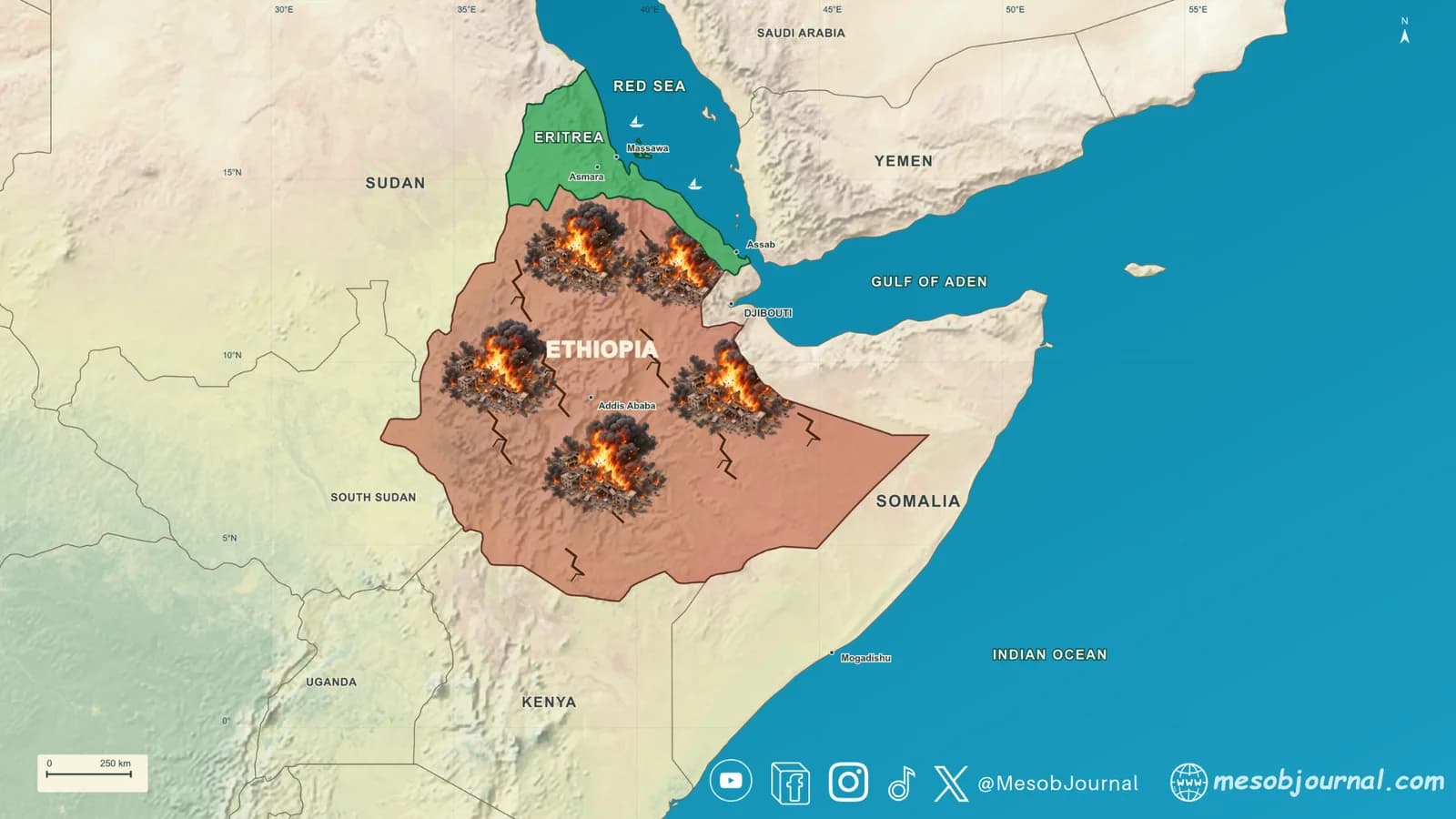
The debate over Ethiopia’s ambitions in the Red Sea is increasingly being reduced to a simplistic story: a landlocked country seeking legitimate access to the sea, while Eritrea supposedly responds with unnecessary hostility. That narrative is incomplete and increasingly difficult to defend when Ethiopia’s own officials and strategic publications are examined.
The real question is not whether Ethiopia deserves access to international trade. Of course it does. The question is whether commercial access is being conflated with territorial, military and strategic ambitions that could fundamentally alter the balance of power in the Horn of Africa. That distinction is being obscured by too much mainstream reporting.
Criticism of Giulia Paravicini’s reporting on Eritrea is not simply about disagreement with her conclusions. It concerns a broader pattern in which negative assumptions about Eritrea are repeatedly presented without sufficient historical or geopolitical context. Journalists reporting on today's tensions should also examine how earlier reporting helped shape the international narrative surrounding Eritrea and whether that narrative has sometimes been treated as established fact rather than something requiring continual scrutiny.
One particularly misleading claim is that Eritrea's isolation was simply self-imposed. Eritrea was subjected to extensive international sanctions, particularly by the United States and European countries, with significant economic consequences. Foreign companies and financial institutions faced substantial compliance pressures.
The experience of Australia’s Danakali, which ultimately transferred its Colluli mining interests to a Chinese company after its Australian banking relationship was terminated amid sanctions-related compliance concerns, illustrates how those measures affected commercial activity. Whatever one's view of Eritrea's government, that history matters. Leaving it out while portraying Eritrea's economic isolation as entirely voluntary creates a distorted picture.
More importantly, Ethiopia's own public statements raise questions that deserve far greater journalistic attention. On November 13, 2025, Brigadier General Bulti Tadesse, Commandant of Ethiopia's Defense War College, reportedly discussed Ethiopia's historical relationship with the Red Sea while highlighting its petroleum deposits, evaporites, sulfur, phosphates and heavy metals.
That is not merely a discussion about securing a commercial port. It reflects an interest in the broader strategic and economic value of the Red Sea.
The distinction becomes even clearer when considering Ethiopia's reported negotiations with Djibouti. President Ismaïl Omar Guelleh said Ethiopia sought an arrangement involving an extraterritorial corridor toward Tadjourah and a naval base. If accurately reported, such demands go well beyond ordinary commercial port access and directly implicate sovereignty and regional security.
Ethiopian strategic commentary has also openly emphasized naval power. Ethiopian news outlets have described naval capabilities as tools for reshaping the strategic balance within the Horn of Africa and as bargaining instruments in negotiations over port access, maritime boundaries and security partnerships.
That should concern every neighboring state not because Ethiopia has no right to develop a navy, but because military capabilities become especially consequential when they are discussed as leverage in disputes involving maritime boundaries and access.
The same strategic logic appears in writing attributed to Ambassador Nebiyu Tedla Negash, a senior Ethiopian diplomat. His discussion of Assab and Dahlak reportedly stresses the strategic importance of Dahlak as protective depth for an Ethiopian maritime presence and links that consideration to Ethiopia's decision to rebuild its navy.
These statements deserve serious examination. They suggest that Ethiopia's maritime ambitions cannot automatically be characterized as nothing more than a search for commercial access.
For Eritrea, this is not an abstract debate. Ethiopia and Eritrea fought a devastating war from 1998 to 2000, and the unresolved security consequences remain deeply embedded in the region. Against that history, repeated Ethiopian statements about maritime access, naval power, strategic depth and Red Sea resources cannot reasonably be dismissed as harmless rhetoric.
The principle at stake is straightforward: Ethiopia has legitimate economic interests, but economic necessity does not create sovereign rights over another country's territory, coastline, islands or natural resources. A landlocked country's need for maritime access cannot become an entitlement to its neighbors' sovereignty.
This is where journalism must do better. Instead of reducing the dispute to a simplistic narrative in which Ethiopia wants sea access and Eritrea says no, serious reporting should ask what kind of access Ethiopia seeks, what concessions have been proposed, what Ethiopian officials themselves have said about naval power and maritime resources, and why neighboring states view these ambitions as a security concern.
The Horn of Africa does not need recycled narratives or sensationalism. It needs journalism that follows the evidence even when the evidence complicates the preferred storyline.
If Ethiopia genuinely seeks peaceful maritime cooperation, the solution is neither mysterious nor controversial: negotiate with sovereign neighbors, accept mutually agreed commercial arrangements, respect territorial integrity, and abandon any suggestion that economic necessity confers strategic or territorial entitlement.
Sovereignty is not a bargaining chip. Commercial access is not territorial ownership. And peace cannot be built by normalizing expansionist ambitions as merely sea access.