
Eritrea’s information note places a direct demand before the Security Council: confront Ethiopia’s territorial claims and military threats against Eritrea, and act before they produce a wider war.
Published on 14 October, Eritrea’s information note says it was circulated to Council members on 13 October in response to “Ethiopia’s Note on Current Developments” of 11 October. The document identifies a sustained campaign against Eritrean sovereignty and asks the Council to deter it.
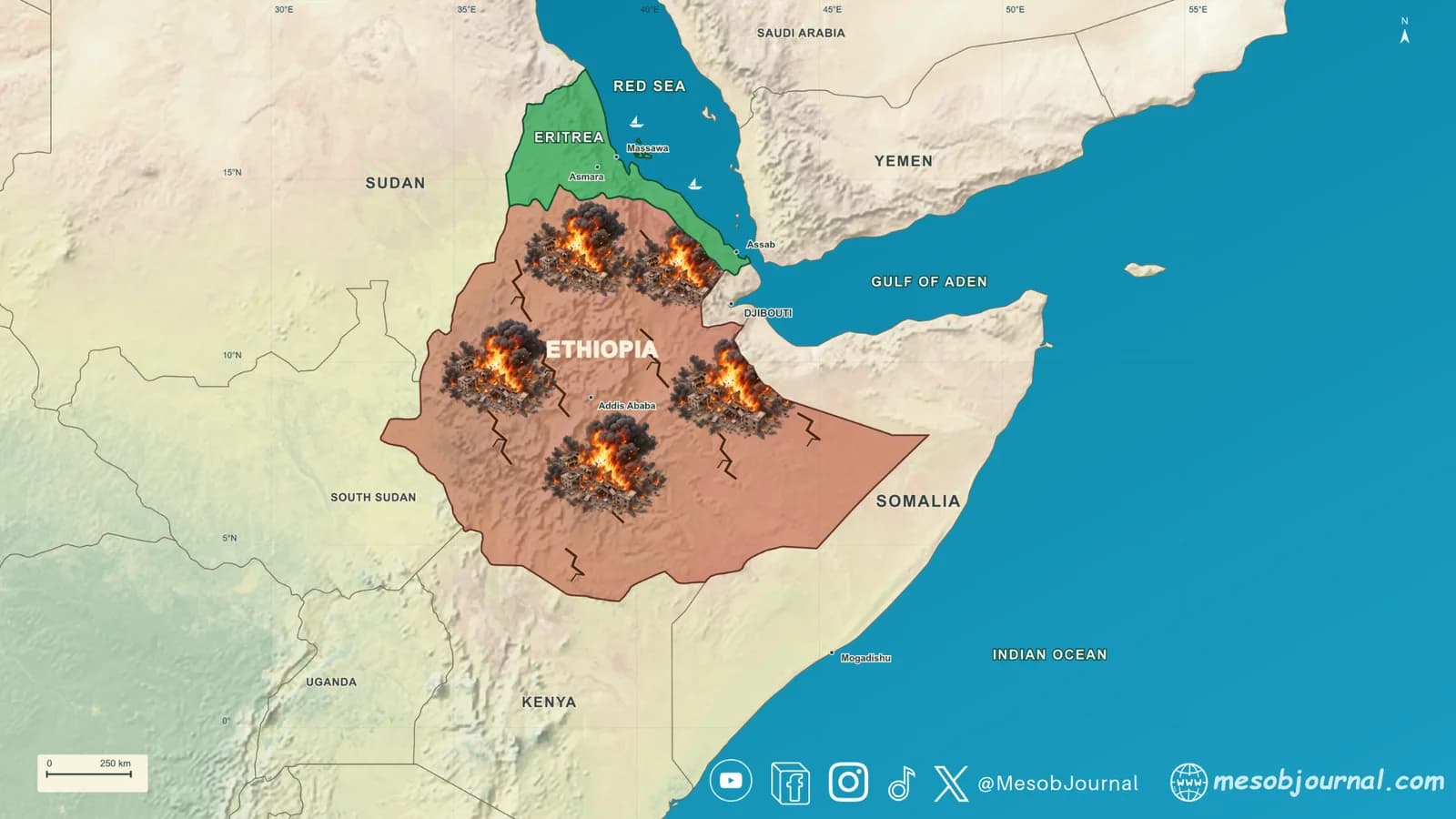
The Council’s response should begin with an unambiguous position: Ethiopia’s government has no entitlement to Eritrean territory. Assab belongs to Eritrea. Economic ambition, population size and historical grievance cannot turn its ownership into an unresolved diplomatic question.
Eritrea’s sovereignty must govern the Council’s response. It cannot be reduced to a negotiating position within Ethiopia’s maritime campaign.
The latest statements recorded in the note make the warning urgent. Eritrea attributes to Ethiopian Air Force Commander General Yilma Merdasa, on 11 October, an objective of recovering sea access through Assab. It attributes to Diaspora Service Director General Lencho Bati, on 12 October, rhetoric linking the military’s Tigray campaign to reaching Eritrea’s Red Sea coast.
Named officials, dates and references to Assab make this a specific warning about threats to Eritrean territory. The Council must address the military objectives recorded in Eritrea’s document and demand an end to Ethiopia’s territorial claims and threats. Recasting the campaign as a search for port services obscures its stated target.
Eritrea’s document rejects the premise of a good-faith dispute over maritime access. It identifies Ethiopia’s declared policy of aggression as the source of the confrontation. That is the argument the Security Council must address.
The note traces the campaign from Abiy Ahmed’s 2023 sovereign-access demands through subsequent assertions of ownership over Assab, military objectives directed towards Eritrea’s coastline and attempts to call Eritrean independence into question. It also describes an Ethiopian naval role extending into Eritrea’s southern coastal region.
Taken together, the conduct described in the document targets Eritrea’s sovereign jurisdiction. Treating it as a bargaining dispute over port services would misstate Eritrea’s objection and give territorial claims the appearance of an ordinary commercial request.
The legal distinction is clear. Article 125 of the UN Convention on the Law of the Sea provides for landlocked states’ access and transit, with the terms agreed between the states concerned. It expressly preserves the sovereignty and legitimate interests of transit states. It supplies no title to Assab and no authority to compel Eritrea to surrender coastal territory.
Eritrea’s objection, as set out in the note, is to claims against its sovereignty and military threats directed at its territory. Commercial port use and transit arrangements confer no ownership of Eritrean ports or coastline.
The diplomatic chronology adds another dimension.
According to Eritrea’s account, Ethiopia’s embassy stopped responding to official communications in May; its four remaining diplomats left Asmara without notification on 8 August; and Ethiopia expelled ten Eritrean diplomats on 1 October, including personnel accredited to the African Union and UNECA.
The chronology places Ethiopia’s withdrawal from diplomatic engagement alongside its territorial campaign. The Council should address the conduct identified by Eritrea and require Ethiopia to respect Eritrean diplomatic representation, including personnel assigned to continental and UN institutions.
The African Union has a particular responsibility concerning Eritrean representation. Its institutions belong to their member states. Eritrea’s ability to participate in continental diplomacy must be protected from bilateral pressure by the government hosting those institutions.
The commitments already signed by Abiy Ahmed provide a concrete standard.
The Joint Declaration of Peace and Friendship of 9 July 2018 ended the state of war, committed both governments to cooperation, restored diplomatic and commercial links, and required implementation of the boundary decision. Abiy signed that declaration alongside President Isaias Afwerki.
The declaration provides no authority to reopen Eritrean sovereignty or turn Assab into a territorial claim. Ethiopia’s government must honour the commitments Abiy signed by respecting the boundary settlement and ending threats against Eritrean territory.
Pretoria cannot become an excuse to evade those obligations.
The African Union’s announcement of the 2 November 2022 agreement identifies its parties as Ethiopia’s federal government and the Tigray People’s Liberation Front. Eritrea was not a signatory.
Eritrea’s information note states that Pretoria is an internal Ethiopian agreement to which Eritrea is not a party and in whose implementation it has no role. The settlement cannot be used to shift responsibility for Ethiopia’s internal conflicts onto Eritrea or justify threats against its sovereignty.
Eritrea renews its demand for condemnation and deterrent measures under Chapter VII. That demand deserves a substantive response.
Article 2(4) of the UN Charter prohibits threats as well as the use of force against another state’s territorial integrity or political independence. Prevention therefore begins before an army crosses a border. Waiting for destruction before addressing an identifiable threat defeats the purpose of the prohibition.
Under Article 39, the Security Council determines threats to international peace and decides how to address them. Article 41 provides for measures involving no armed force. Eritrea’s request places preventive action squarely within the Council’s established responsibilities.
The Council should explicitly affirm Eritrea’s sovereignty over its ports and coastline, demand that Ethiopia abandon territorial claims and military threats, and take deterrent measures proportionate to the danger. Its response should protect Eritrea’s rights and uphold the prohibition on threats against another state’s territorial integrity.
An appeal that merely asks both governments to show restraint leaves Ethiopia’s territorial campaign unanswered. The Council should name the conduct threatening Eritrea’s sovereignty and demand that it cease.
Eritrea’s appeal seeks to prevent the devastation that a war would inflict on people in both countries and destabilization across the region. The Council’s responsibility is to deter the territorial aggression Eritrea has warned against, before those consequences become irreversible.
Eritrea has placed its warning on the public record. The Security Council should answer it with a clear defence of Eritrean sovereignty and action against the territorial claims and military threats identified in the document.