
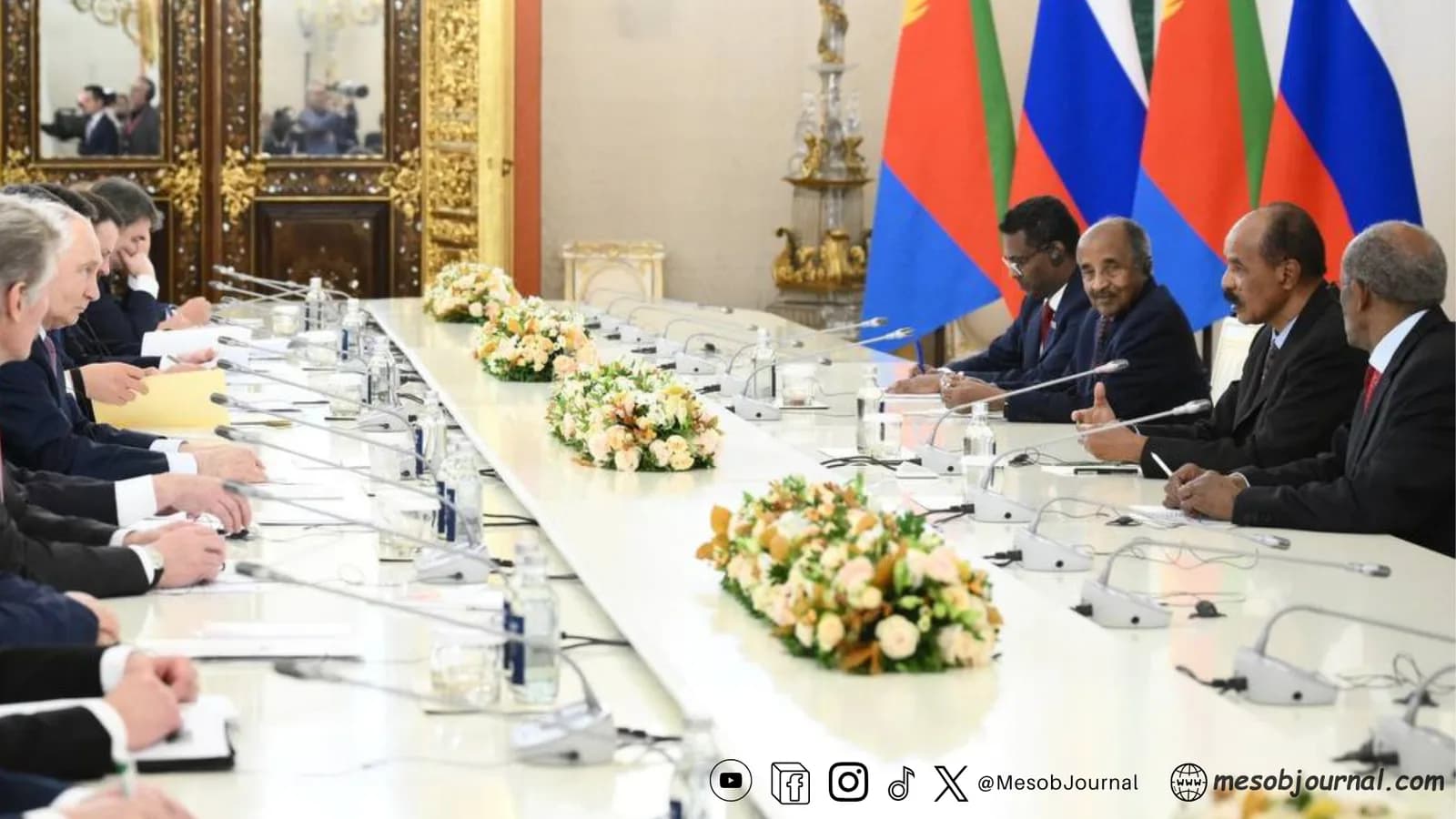
Eritrea and Russia are exploring cooperation to modernise ports and railways and strengthen transport expertise, with Russian companies expressing readiness to participate in infrastructure projects.
President Isaias Afwerki met President Vladimir Putin at the Kremlin on 30 October, following separate talks with Russian Transport Minister Dmitry Yadrov. The meetings brought transport development into a wider discussion of trade and economic cooperation.
Proposed port work includes the construction and modernisation of berths and shore-protection structures. Russian expertise could also contribute to railway planning, feasibility studies and technical consulting, alongside prospective road and rail projects.
Specialists from the two countries are to identify possible transport routes and the types and volumes of cargo they would carry. That work would give Eritrea a basis for evaluating proposals against the needs of its economy, connecting infrastructure planning with the goods that actually need to move.
For Eritrean producers and businesses, the potential value is practical: a more dependable journey between production and the customer. Transport investment shaped around that need could support the work of people growing, making, handling and selling goods.
A broader economic agenda
Putin identified energy, mining, infrastructure, agriculture and fisheries as areas for closer cooperation and said Russia was providing assistance with food security. He also thanked Eritrea for supporting Russian initiatives at the United Nations and other multilateral forums.
Isaias emphasised Russia’s resources, technology and industrial capabilities and proposed programmes tailored to individual African countries. His proposal sought to give cooperation a practical structure across different sectors, bringing broad political interest closer to specific national programmes.
Building expertise alongside infrastructure
Yadrov invited Eritrean educational institutions to join the Russian–African Network Transport University. He also invited an Eritrean delegation to the second International Transport and Logistics Forum in St Petersburg in spring 2027, providing a further occasion to develop the discussions.
Specific construction projects, financing arrangements and implementation timetables have yet to be announced.
The education invitation gives Eritrean institutions another avenue to explore as the transport agenda develops. Future infrastructure will need engineers, planners, operators and maintenance specialists. Connecting international cooperation with the development of those skills would give Eritrea a stronger capacity to manage its transport systems and guide their future expansion.