
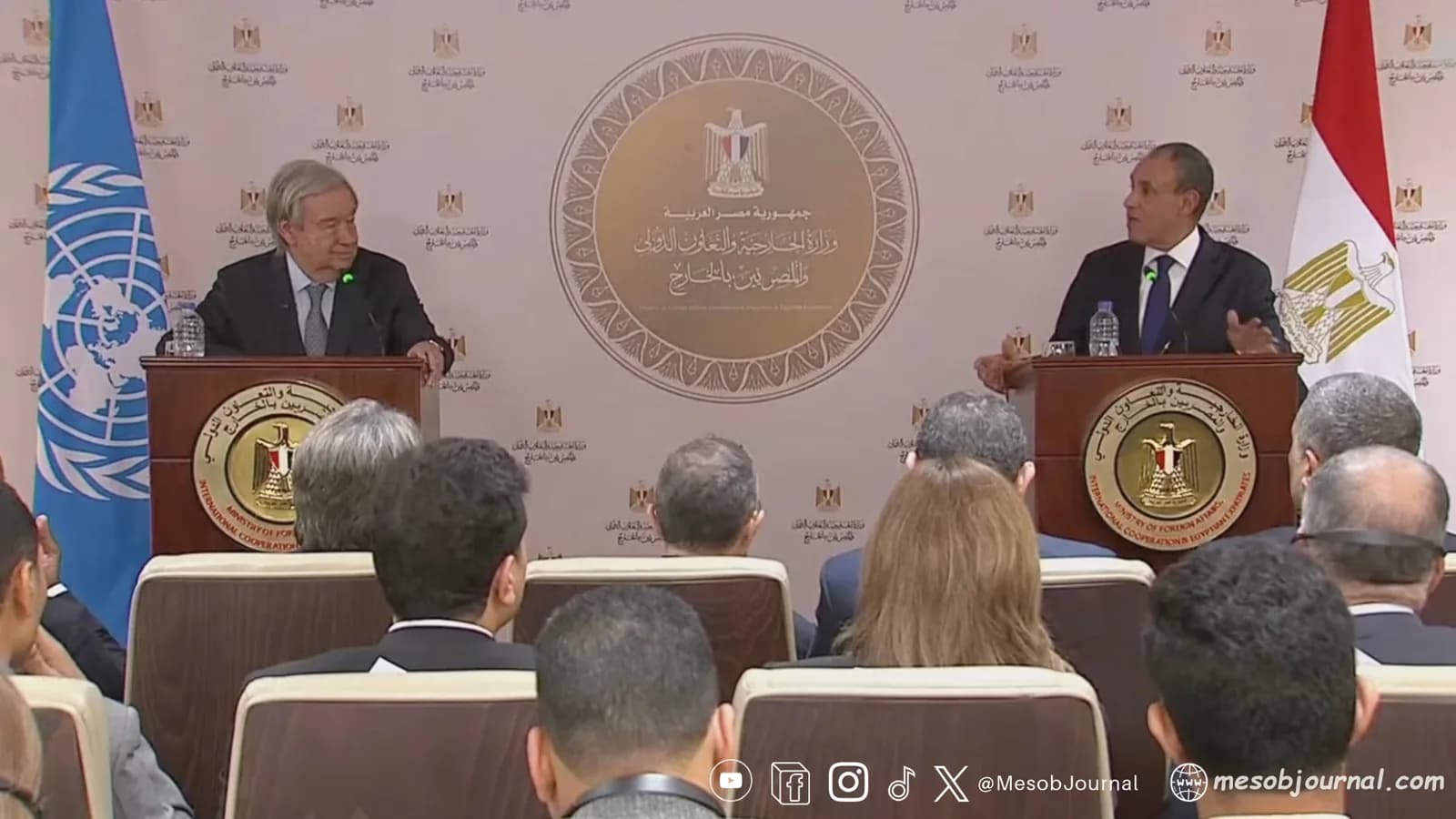
UN Secretary-General António Guterres invokes international law after a question explicitly raises Ethiopia's military ambitions at Eritrea's Assab port, as Egypt rejects military access to the Red Sea.
UN Secretary-General António Guterres reaffirmed the primacy of international law during a joint press conference with Egyptian Foreign Minister Badr Abdelatty in Cairo on October 26, responding to a question that raised Ethiopia's efforts to obtain military access through Eritrea's port of Assab.
The question, posed by Egyptian journalist Sarah El-Shalqani, also addressed the disputed maritime agreement between Turkey and Libya.
Guterres rejected violations of international law and referred to the United Nations Convention on the Law of the Sea as the governing legal framework for maritime matters.
He emphasized that “the force of the law prevails over the law of the force,” making clear that the principle applied to the situations raised in the question.
The exchange took place during a press conference in which Abdelatty separately addressed Ethiopia's maritime ambitions and firmly rejected any military access to the Red Sea.
Responding to questions concerning the Grand Ethiopian Renaissance Dam (GERD), the Egyptian foreign minister dismissed suggestions that Cairo could accept Ethiopian maritime access in exchange for concessions in the Nile negotiations.
He maintained that the two matters were entirely separate and could not be linked in negotiations.
Abdelatty reiterated Egypt's distinction between commercial access, which can be arranged through agreements with sovereign coastal states, and military access, which Cairo opposes.
The remarks carry particular significance for Eritrea, whose southern port of Assab has featured prominently in Ethiopia's renewed propaganda campaign for access to the Red Sea.
Since October 2023, Ethiopian Prime Minister Abiy Ahmed has repeatedly raised the country's landlocked status and the strategic importance of securing maritime access. The issue has contributed to deteriorating relations with Eritrea, particularly as Ethiopian officials have increasingly framed access to the Red Sea in terms of national security.
In an information note circulated to members of the UN Security Council on October 13, Eritrea stated that Ethiopia was pursuing sovereign maritime access through threats of force and military preparations directed against its territorial integrity.
Asmara invoked Article 2(4) of the UN Charter, which prohibits threats or the use of force against the territorial integrity or political independence of another state.
The distinction between commercial transit and sovereign territorial rights is also addressed by international maritime law.
Article 125 of the United Nations Convention on the Law of the Sea recognizes the right of landlocked states to access the sea and provides for freedom of transit through arrangements agreed between the states concerned. The provision expressly protects the sovereignty and legitimate interests of transit states.
It does not grant landlocked countries sovereign ownership of neighboring coastlines or ports.
Egypt's rejection of military maritime access reflects a position increasingly articulated through its diplomatic coordination with Eritrea and other Red Sea coastal states.
On October 4, the leaders of Eritrea, Egypt, Somalia and Sudan adopted the El Alamein Joint Declaration, reaffirming respect for sovereignty, territorial integrity and the peaceful settlement of disputes.
The four governments also declared that responsibility for the governance of the Red Sea belonged exclusively to its littoral states, while affirming freedom of navigation.
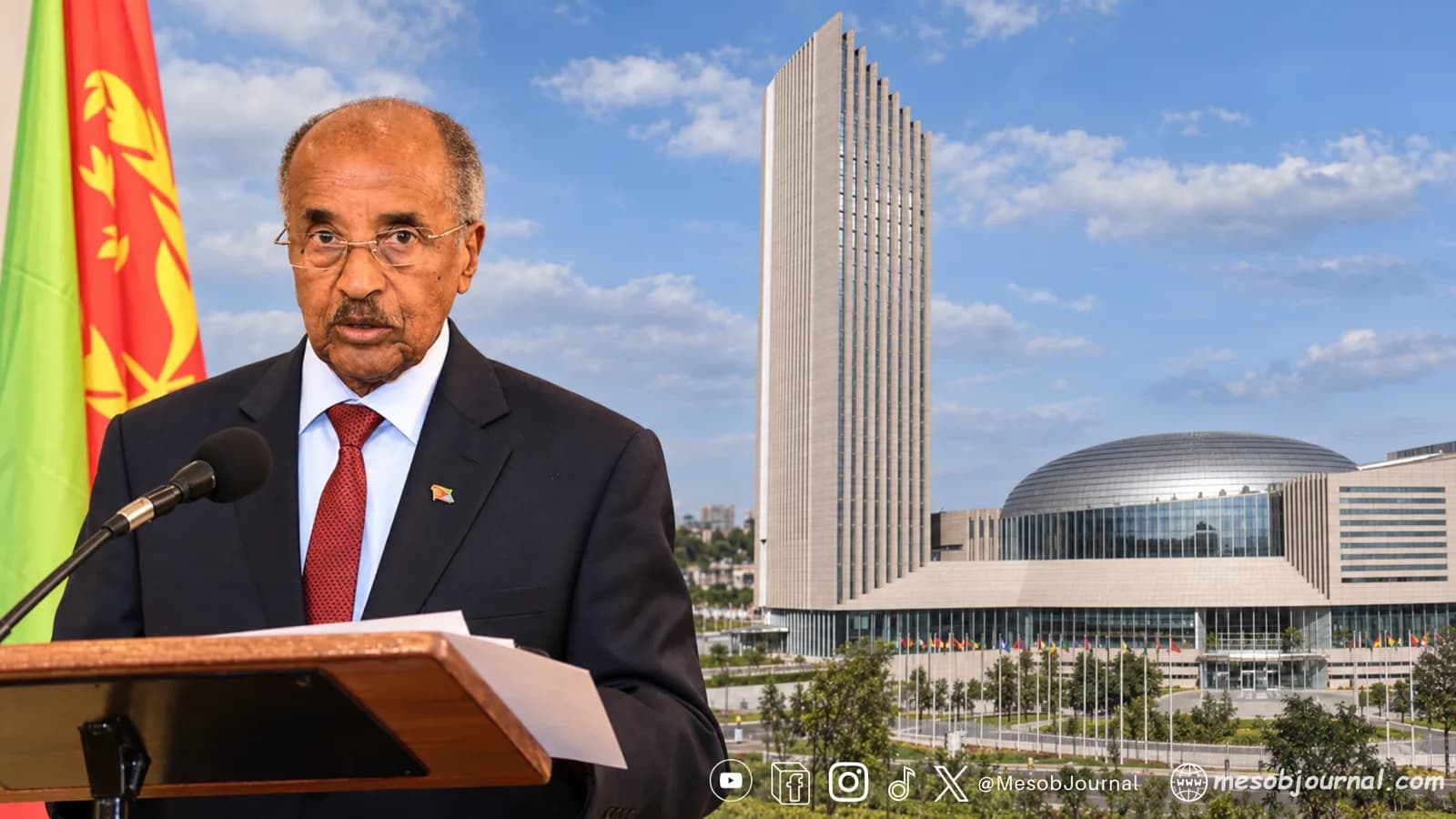
That position was reaffirmed in a telephone conversation between Abdelatty and Eritrean Foreign Minister Osman Saleh on October 26, details of which Egypt's Foreign Ministry released the following day.
According to the Egyptian statement, Abdelatty reiterated Cairo's full support for Eritrea's sovereignty, unity and territorial integrity.
The two ministers discussed developments in the Horn of Africa and the Red Sea and reaffirmed their countries' shared position on coastal-state responsibility for maritime security and governance.
Their conversation also addressed bilateral economic cooperation, including trade, investment and the participation of Egyptian companies in development projects in Eritrea.
Guterres, meanwhile, placed maritime security within the wider international concerns discussed during his visit to Cairo.
In his prepared remarks, he called for the restoration of navigational rights and freedoms around the Bab el-Mandeb and Strait of Hormuz, warning that disruptions to shipping were damaging international trade and increasing transport and energy costs.
His response to the question concerning maritime agreements reinforced the UN's position that the applicable international legal framework must be respected, including in the disputes specifically raised by the journalist.
The Cairo exchanges and the subsequent Egyptian–Eritrean diplomatic consultations have brought the legal and security dimensions of Ethiopia's maritime ambitions into the same high-level diplomatic discussion.
Egypt and Eritrea are now pursuing follow-up consultations under the El Alamein framework, with Red Sea security, territorial sovereignty and regional de-escalation among the issues identified for continued coordination.