
Two days can reveal a great deal about diplomatic priorities.
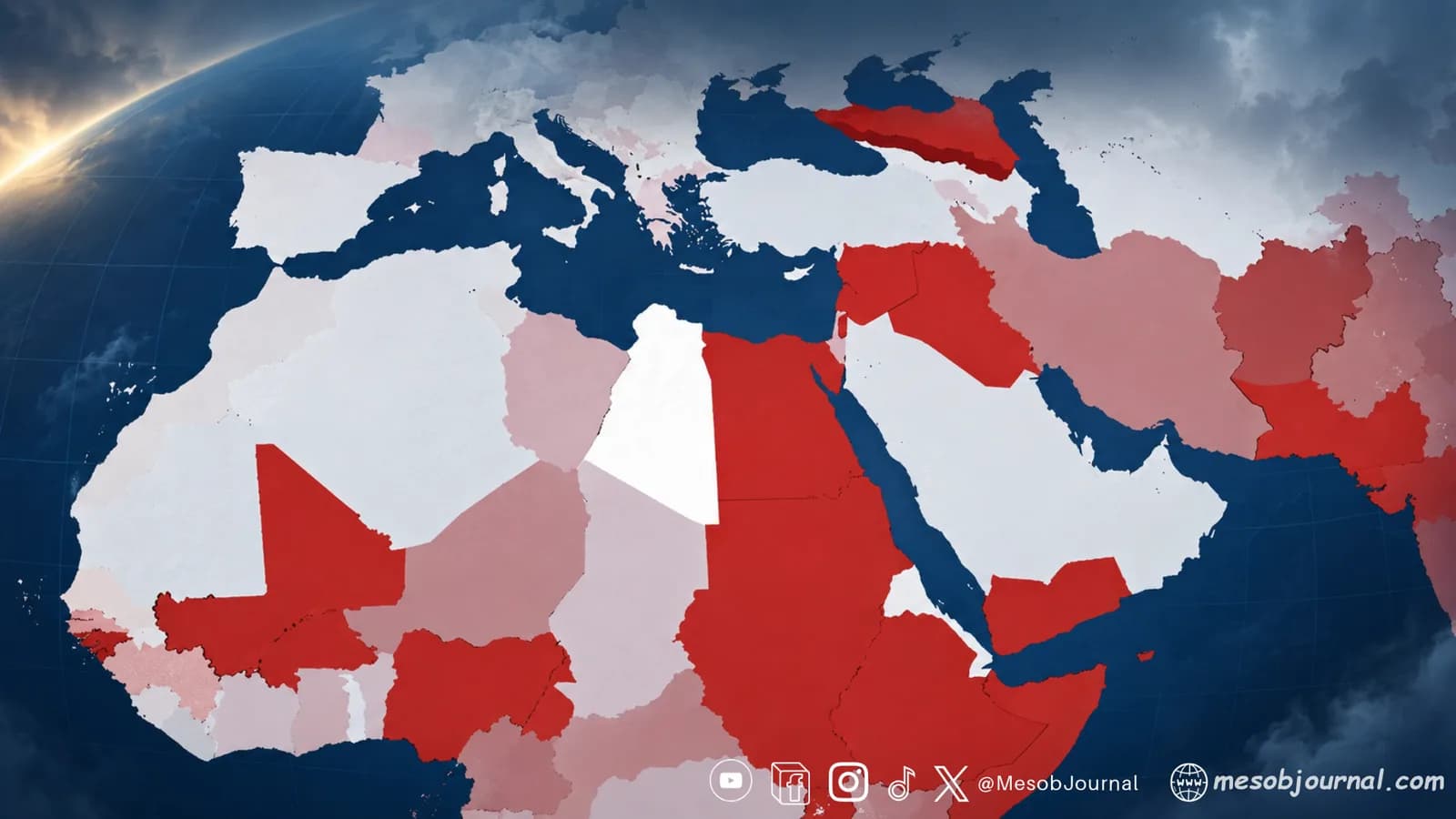
On September 21, African Union Commission Chairperson Mahmoud Ali Youssouf and UN Secretary-General António Guterres met in New York to discuss African peace, security and preventive diplomacy. Their published discussion addressed conflicts from Sudan and Somalia to Libya, the Sahel and the Democratic Republic of the Congo.
Ethiopia was conspicuously absent from the public crisis picture, despite armed conflicts in Amhara and Oromia, renewed confrontation in Tigray and the announcement one day earlier of a seven-group alliance committed to removing Prime Minister Abiy Ahmed’s government.
Mesob Journal raised that omission at the time.
Forty-eight hours later, the language had changed.
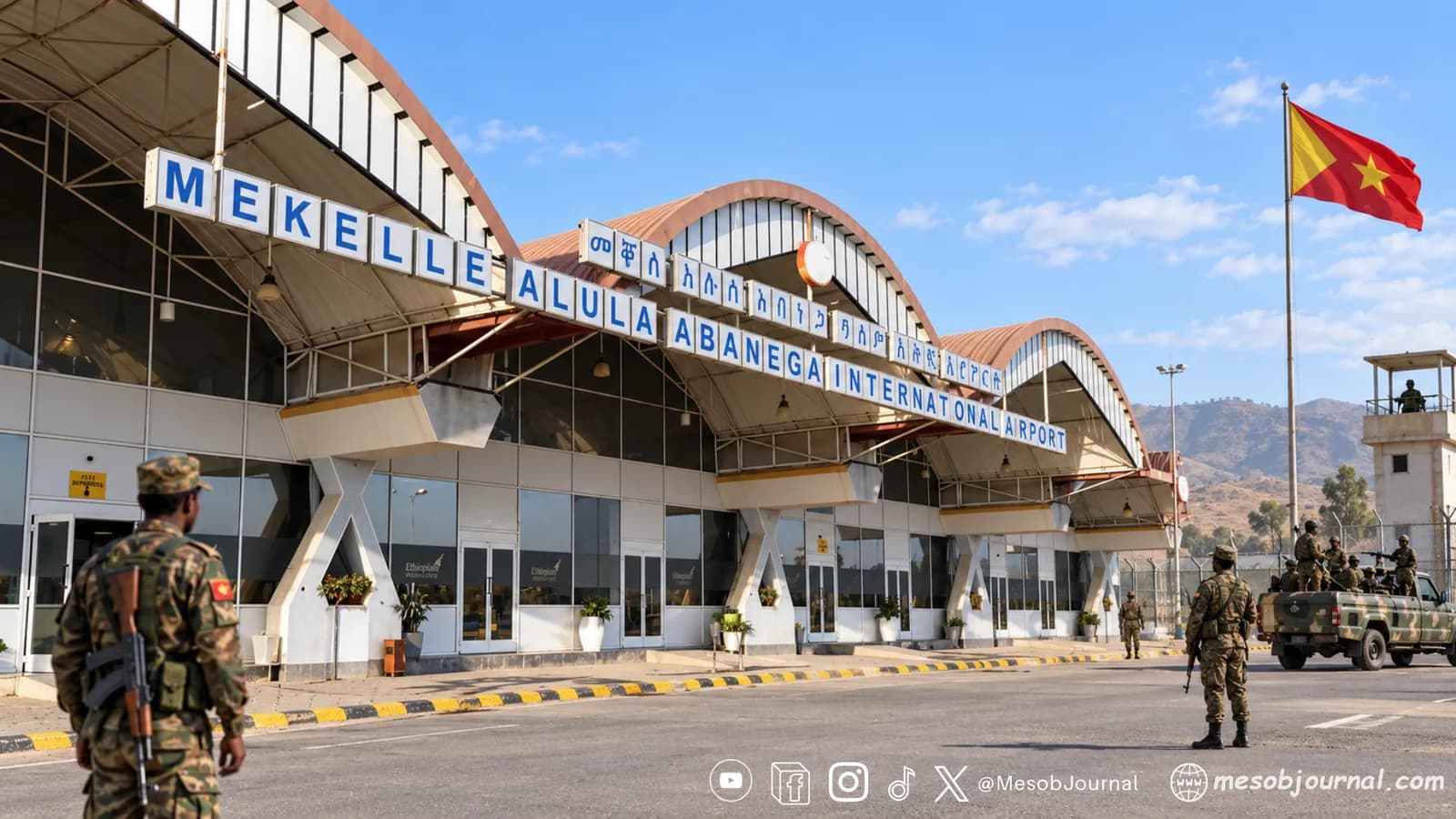
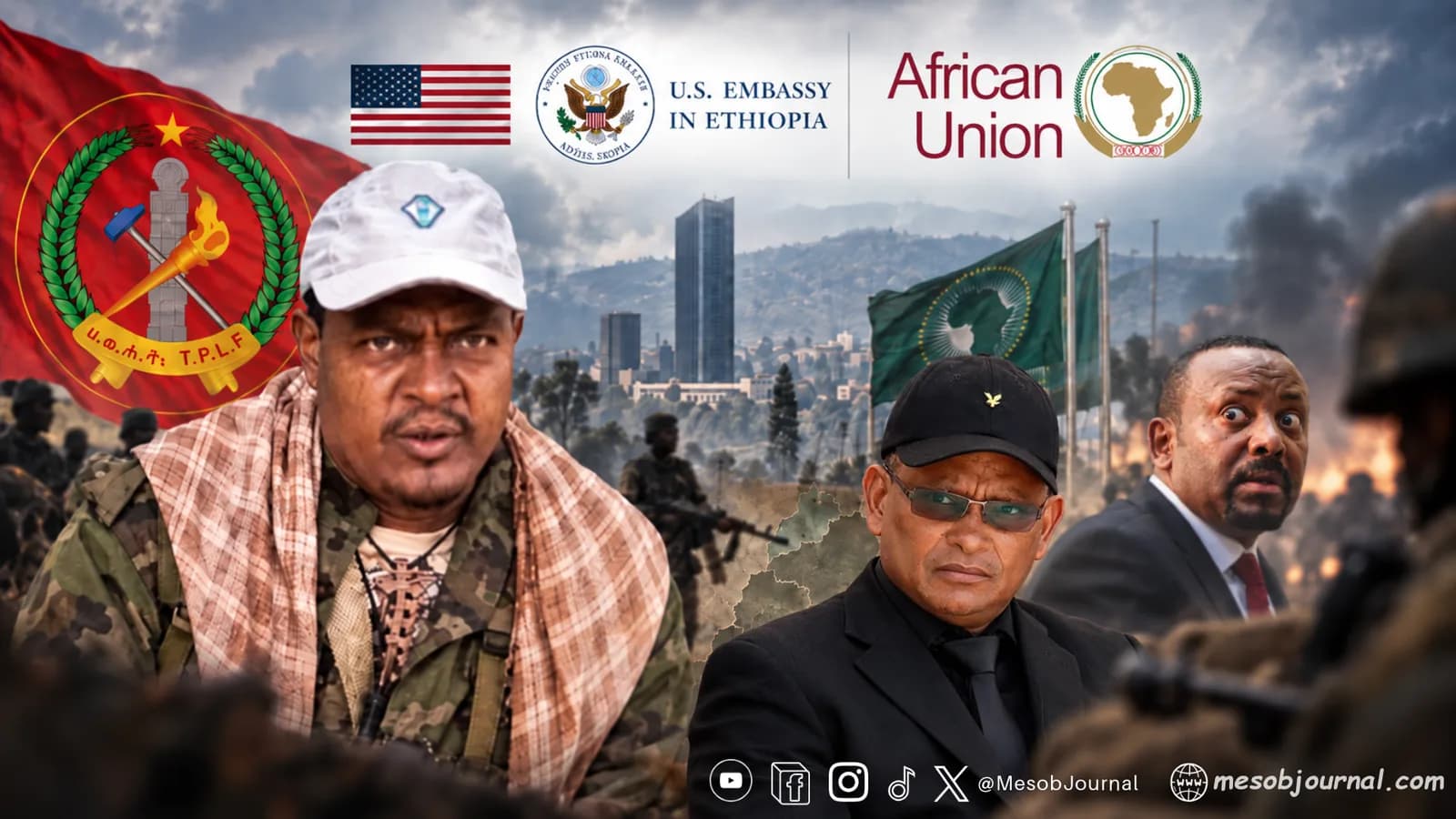
After Tigrayan forces took control of the airports in Mekelle, Axum and Shire, fighting expanded along the Tigray-Afar and Tigray-Amhara fronts and the new opposition alliance began moving from declaration toward military reality, the African Union issued a dedicated statement calling for “utmost restraint” and “immediate de-escalation.”
Washington also issued a separate statement addressing developments in Tigray and Afar.
The question is not why the African Union and United States are concerned now.
The situation is dangerous, and de-escalation is necessary.
The question is why the institutional volume appears to rise so sharply when Ethiopia’s accumulated conflicts begin threatening the federal government itself.
Ethiopia’s Instability Was Not Discovered This Week
Nothing that happened on September 23 suddenly revealed that Ethiopia was unstable.
Washington’s own travel advisory already warned against travel to Tigray, Amhara, Benishangul-Gumuz and large parts of Oromia and Afar because of armed conflict, unrest and related security risks.
Conflict monitoring has documented federal drone operations for considerably longer.
Federal forces have used drones extensively in Amhara since the conflict with Fano intensified in 2023, while drone strikes have also been reported in Oromia and Tigray.
Earlier U.S. government assessments themselves documented reports of drone strikes, arbitrary detention and extrajudicial killings as federal authorities attempted to regain control in Amhara and Oromia.
Nor did the political deterioration in Tigray begin with the airport seizures.
For months, Tigrayan political actors accused Addis Ababa of withholding budgets, constraining banking and financial access, restricting fuel and transport and rebuilding conditions for confrontation.
The claims emerged from Ethiopia’s deeply polarized political environment, but the wider deterioration was visible.
The African Union itself was aware of the danger. Earlier this year, its chairperson publicly expressed concern over developments in Tigray and warned that gains made through the Pretoria Agreement had to be protected.
The issue was therefore never a lack of information.
What Changed Was the Balance of Pressure
By September 23, something different had happened.
The pressure was no longer moving predominantly outward from the federal state toward separate armed opponents.
Several of those opponents were beginning to coordinate.
The Tigray People’s Liberation Front had joined the Amhara Fano National Movement, Oromo Liberation Army and four other organizations in the Ethiopian Peoples’ Forces Alliance for Survival.
The coalition declared that its objective was to remove the Prosperity Party government and establish a transitional administration.
Then came the airport seizures.
Then fighting expanded.
Mesob Journal reported earlier that the development could mark a transition from several largely disconnected Ethiopian conflicts toward a more interconnected challenge to the federal government.
The significance is difficult to ignore.
For years, Addis Ababa faced opponents largely on separate fronts. Fano fought in Amhara. The OLA fought in Oromia. The TPLF remained tied to the unresolved implementation of the Pretoria Agreement and the political future of Tigray.
Now organizations that previously fought separately — and in some cases fought each other — are attempting to establish a common political and military framework.
The instability existed before.
What changed was its ability to threaten the federal centre.
The AU Statement Deserves Close Reading
The wording of the African Union’s September 23 statement is significant.
Chairperson Mahmoud Ali Youssouf specifically identified the “seizure and occupation” of the airports in Mekelle, Axum and Shire by Tigray forces, the detention of federal personnel by the TPLF and the disruption of civilian aviation.
He also singled out the emergence of “new political and military alliances,” warning that they risked further destabilizing Ethiopia and reversing gains achieved since 2020.
The AU additionally called on Ethiopia’s neighbouring states to refrain from actions that could contribute to further escalation.
That warning deserves scrutiny.
The African Union’s own Constitutive Act requires respect for sovereignty, territorial integrity, inherited borders and prohibits threats or use of force between member states.
Yet Ethiopia’s Red Sea campaign has repeatedly moved beyond ordinary commercial access. In February, Abiy Ahmed told parliament that Ethiopia and the Red Sea were “inseparable” and argued that the country required about 50 kilometres of coastline threatening Eritrea.
The AU has not shown comparable public urgency toward repeated Ethiopian rhetoric touching Eritrea’s coastline and sovereignty.
That makes the latest warning to Ethiopia’s neighbours difficult to overlook.
If restraint is the principle, it cannot become most visible only when pressure turns against Addis Ababa.
Two Days Earlier, Ethiopia Was Missing
That scrutiny becomes more difficult to avoid because of what happened just two days earlier.
When the AU and UN publicly reviewed major African security challenges on September 21, Ethiopia did not appear among the crises identified in their published account.
Yet by then the seven-group alliance had already been announced.
Tigray was already unstable.
The Amhara conflict was ongoing.
Armed confrontation persisted in Oromia.
Federal drone operations had already taken place.
And tensions surrounding Ethiopia’s political order had been building for years.
Mesob Journal asked at the time how an organization committed to preventive diplomacy could publicly map instability across Africa while leaving the escalating crisis in its own host country largely outside that picture.
Two days later, once federal airports were taken and Abiy’s opponents began coordinating across several fronts, Ethiopia suddenly warranted an urgent dedicated intervention.
The contrast is striking.
Washington Faces again Credibility Test
The United States cannot plausibly claim that Ethiopia’s wider deterioration emerged this week.
Washington has long been aware of the conflicts in Amhara, Oromia and Tigray.
Its own security warnings reflect that reality. Previous U.S. reports have documented allegations of abuses by government forces, while American officials have periodically called for restraint, accountability and political dialogue.
The issue is therefore not complete silence.
It is consistency of urgency.
When federal authorities were fighting fragmented opponents across separate regions, international concern existed but often remained compartmentalized.
Now several of those opponents are cooperating, federal facilities are being seized and pressure is beginning to move toward the political centre.
Suddenly the language is sharper.
The calls are more urgent.
The concern is concentrated.
For Washington and the African Union, that creates an unavoidable perception problem.
If international urgency appears strongest when armed opponents gain leverage over the federal government, rather than when civilians and regional populations bear the consequences of federal military campaigns, their neutrality will inevitably be questioned.
Restraint Cannot Begin When Addis Ababa Feels the Pressure
There is another explanation that must be acknowledged.
The seizure of airports, expanding fighting across regional boundaries and the creation of an alliance explicitly seeking to remove the sitting government materially increase the risk of another major Ethiopian war.
The African Union and United States may therefore be responding to a genuinely new level of escalation rather than attempting to shield Abiy Ahmed.
That possibility should not be dismissed.
But it does not erase the chronology.
The violence did not begin when Tigrayan forces entered Mekelle airport.
Drone warfare did not begin this week.
The political fragmentation of Ethiopia did not begin this week.
The deterioration of the Pretoria process did not begin this week.
The wars in Amhara and Oromia did not begin this week.
What is new is that several forces that previously confronted Addis Ababa separately are beginning to impose consequences simultaneously.
After years in which Ethiopia’s conflicts were treated largely as separate regional security problems, the pressure is now converging on the federal government.
That is why the speed and tone of the latest international response deserve attention.
Calling for restraint is appropriate.
Calling for dialogue is appropriate.
Protecting civilians is essential.
But restraint cannot become an urgent principle only when Addis Ababa begins feeling the consequences of conflicts that have been allowed to accumulate for years.
The credibility of Washington and the African Union now depends not on whether they call for de-escalation, but on whether the same standard is applied when force comes from the federal centre as when pressure moves in the opposite direction.