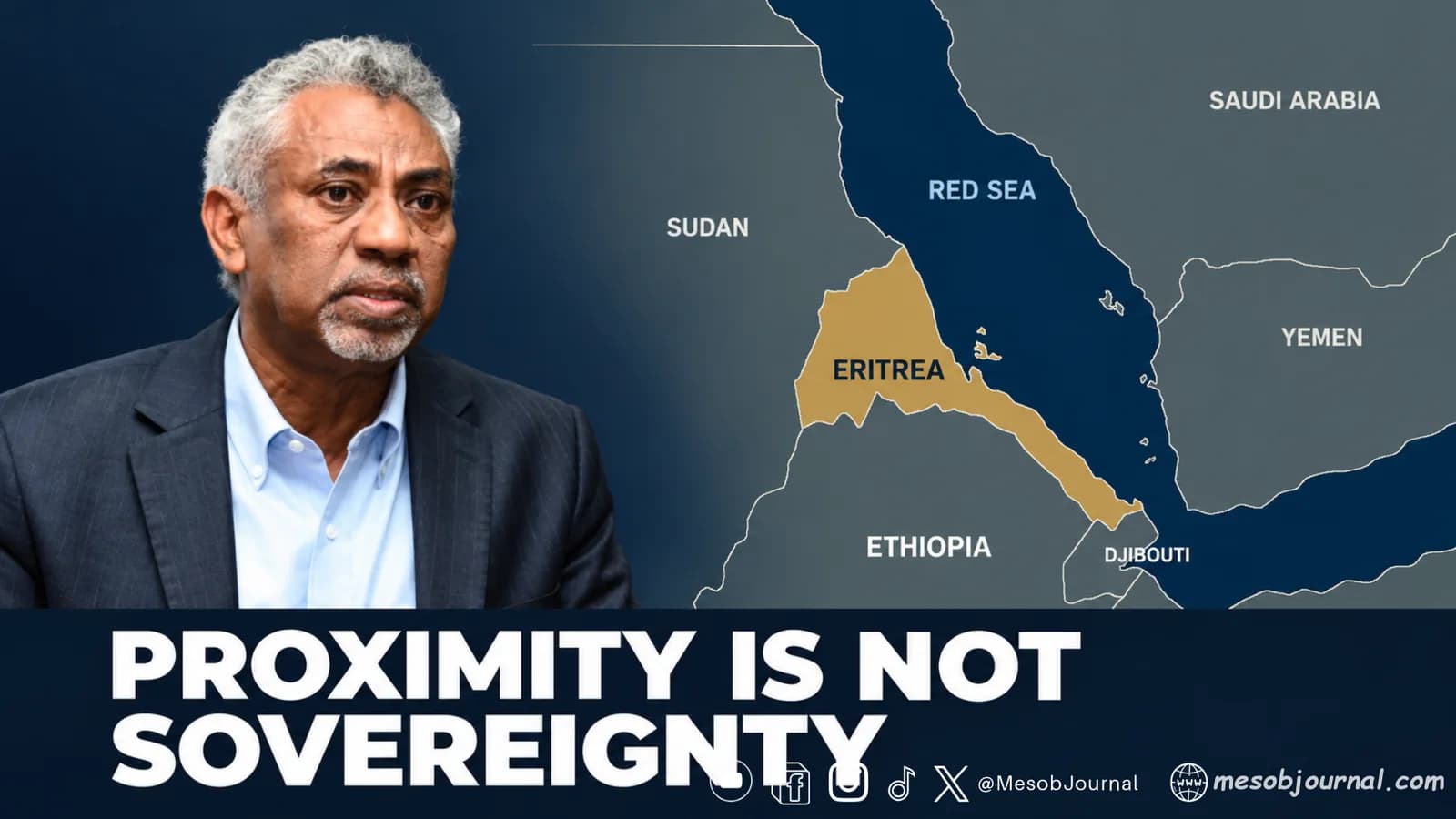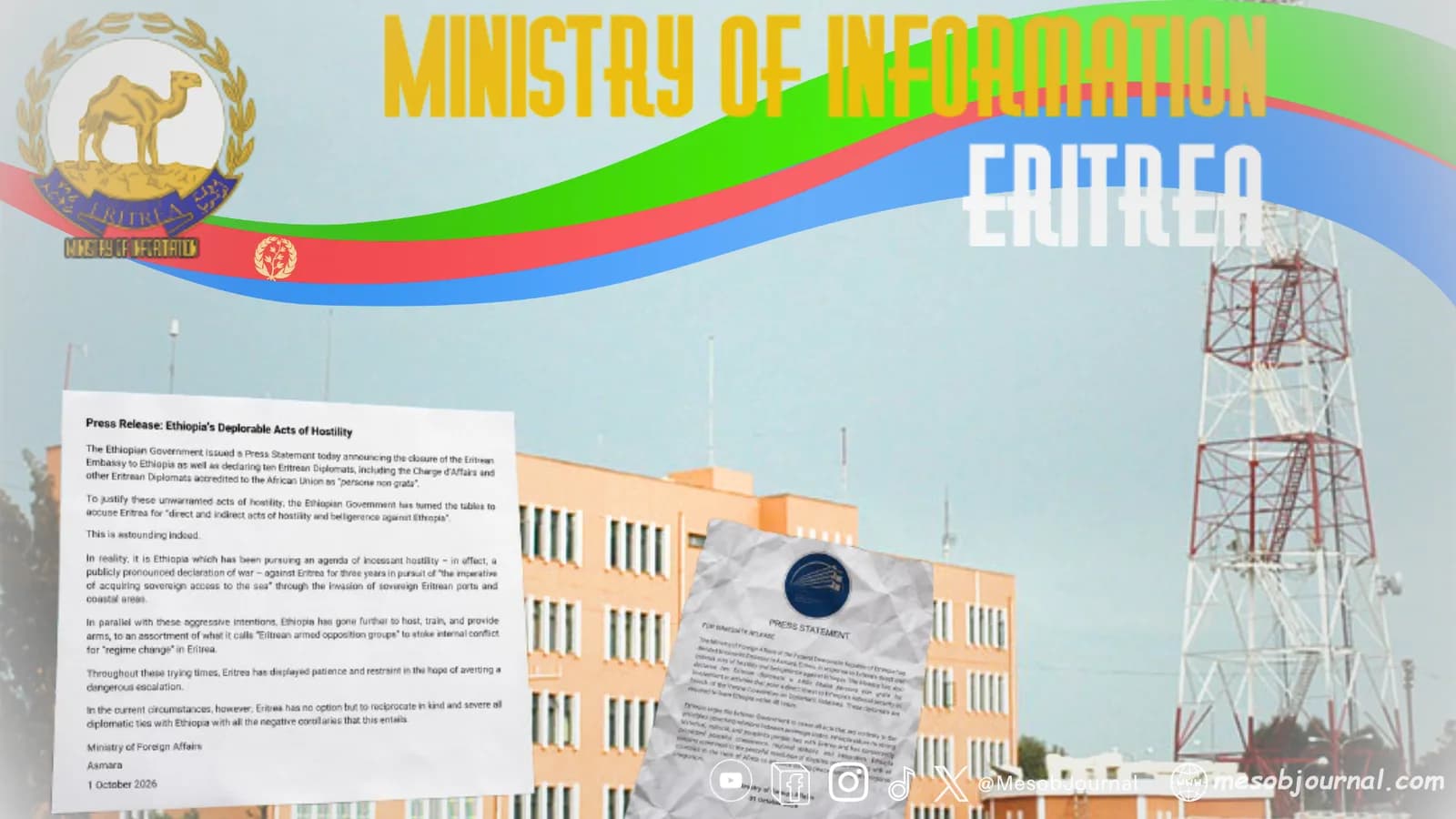

Europe has enough evidence to speak plainly about the threats to Eritrea’s sovereignty. The statements have been public, the territorial claims repeated, and the language of reclamation carried by Ethiopia’s own officials and media. Another appeal for restraint should begin by acknowledging that record.
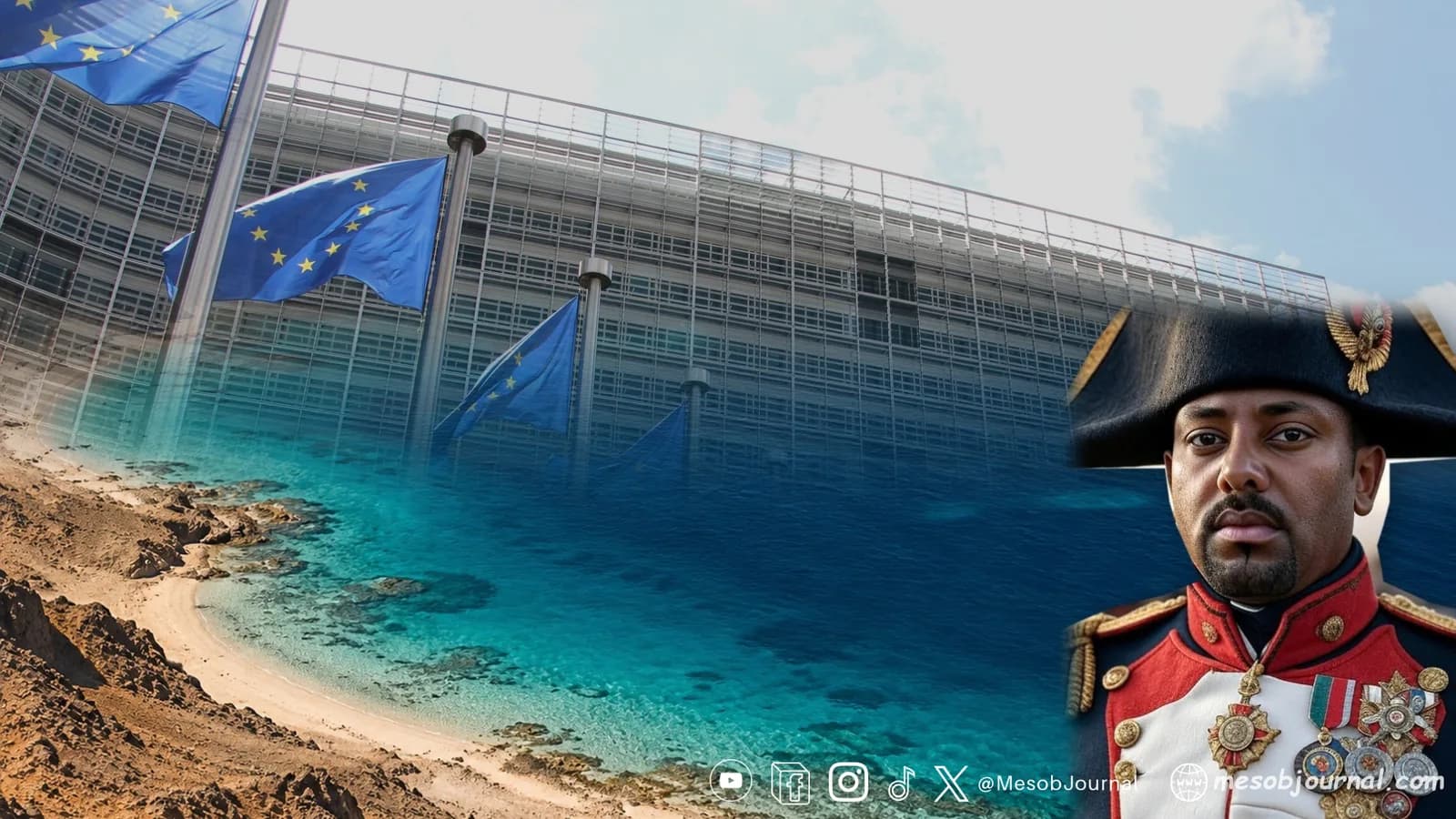
The European Union’s statement of 5 October deserves recognition for reaffirming that “the sovereignty and territorial integrity of all states must be respected.” Its calls for civilian protection, humanitarian access and diplomacy are equally welcome. But when addressing Ethiopia–Eritrea tensions, it leaves the source of the territorial challenge unnamed. Abiy Ahmed’s campaign disappears into a general warning against actions or rhetoric that could increase tensions.
The British Embassy’s statement on 6 October follows much the same approach. It urges countries in the Horn of Africa to respect their neighbours’ sovereignty and territorial integrity, then calls on all parties to pursue de-escalation and dialogue. These are sound principles. Their practical value depends on whether London is prepared to identify the conduct that violates them.
Eritrea should welcome the defence of sovereignty while challenging the diplomatic ambiguity surrounding it. A government advancing claims over its neighbour’s coastline and a state rejecting those claims do not occupy equivalent positions. Treating them as interchangeable participants in a dispute obscures the very principle Europe says it supports.
The record begins with Abiy himself. On 3 February 2026, Ethiopia’s state news agency reported his parliamentary argument that Ethiopia and the Red Sea were inseparable. He said a population of approximately 130 million required “a mere 50 kilometers” of coastline, contrasting Ethiopia’s size with the populations and coastlines of Eritrea, Djibouti and Somalia. ENA also reported his assurances of peaceful cooperation. Those assurances leave the central question unanswered: why should population size confer entitlement to another country’s coast?
The military and diplomatic language has been more explicit. BBC Monitoring documented Abiy’s September 2025 description of Ethiopia’s loss of sea access as a mistake to be corrected. It reported that army chief Field Marshal Birhanu Jula told soldiers they would fight a country denying Ethiopia access to the sea. Retired General Bacha Debele, Ethiopia’s ambassador to Kenya, described Assab as Ethiopian wealth to be recovered “by force.” Major General Teshome Gemechu framed ownership of Assab as a survival interest worth any price. These remarks came from people exercising state authority.
That framing continued into 2026. In August, ENA reported Birhanu’s remarks on the Special Operations Command’s capacity for pre-emptive action alongside his accusation that Shaebia had conspired with foreign adversaries to deny Ethiopia sea access. Placing maritime grievance inside a military readiness narrative gives Eritrea ample reason to take the rhetoric seriously.
Nor has the campaign been confined to speeches. In May, Government Chief Whip Tesfaye Beljige described seaport ownership as an existential national interest and called on media institutions to build public consensus around it. In June, Fana published a commentary presenting Ethiopia’s maritime ambitions as an inevitable sovereign return. In August, ENA carried an article portraying Assab as former Ethiopian sovereign territory and urging recovery of a maritime birthright. The recurring vocabulary—ownership, return, reclamation—makes the challenge unmistakable.
Europe cannot reasonably approach this as a shortage of information. Ethiopia’s state news agency publishes the material in English. Diplomats can read the same record Eritreans read. The failure lies in translating that evidence into a clear public position.
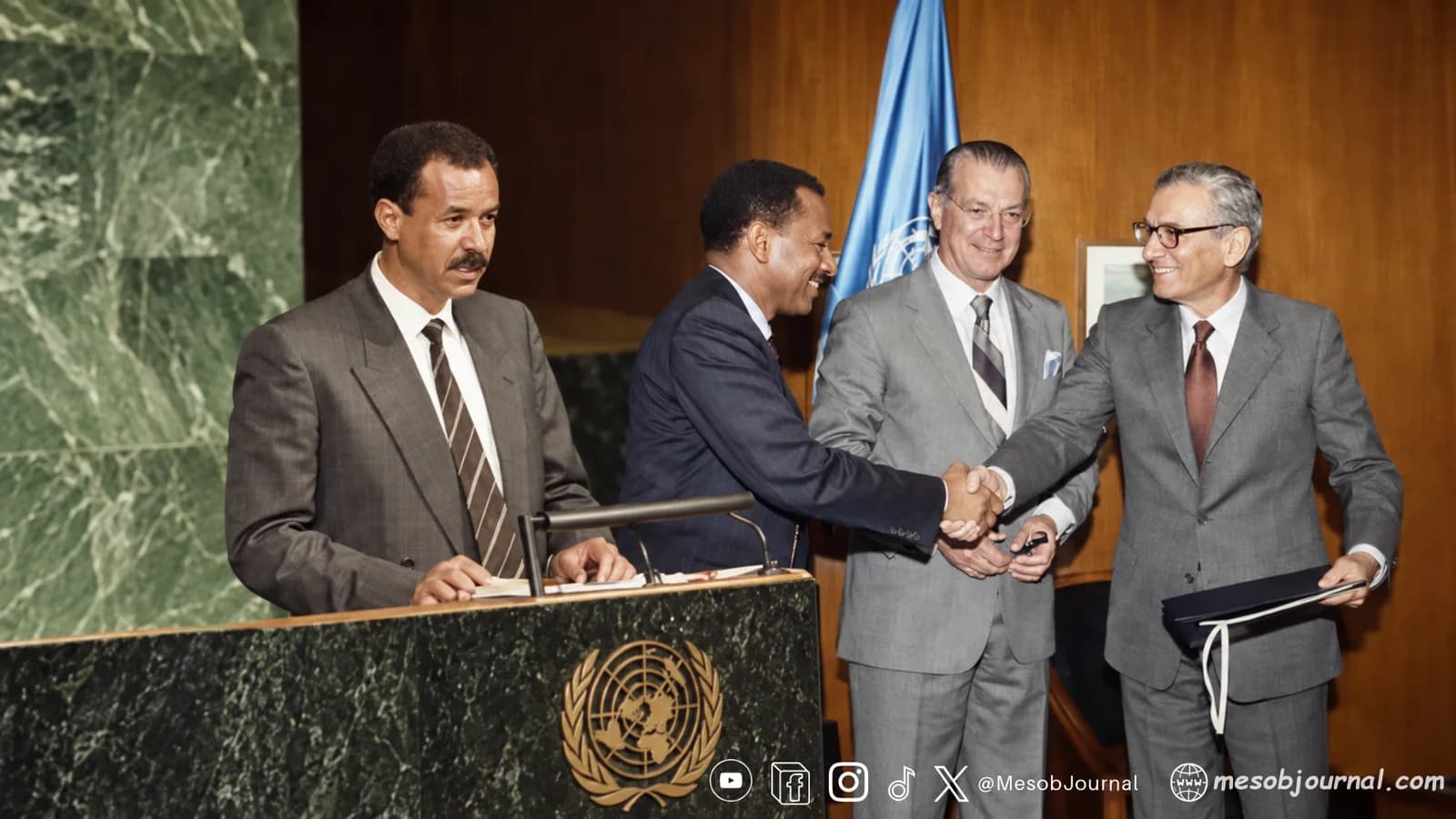
Europe already has the foundation for such a position. On 12 December 2025, the EU reaffirmed its support for the Algiers Agreement and the border established by the Eritrea–Ethiopia Boundary Commission. The same day, Britain, Norway and Türkiye joined Canada and Japan in backing that settlement and both countries’ sovereignty, independence and territorial integrity. These commitments establish a specific border and legal framework against which subsequent claims must be judged.
The Boundary Commission’s determinations were final and binding. The agreement required each party to respect the established border and the other’s territorial integrity and sovereignty. Demographic comparisons, economic ambition and appeals to ancient civilisation cannot displace those obligations.
Britain has also articulated the essential distinction between commercial access and territorial entitlement. In the House of Lords on 16 September 2025, the government said countries must pursue commercial access to the sea through peaceful negotiation and rejected aggressive action or rhetoric threatening sovereignty. The minister disclosed that Britain had warned Ethiopia’s foreign minister against miscalculation. London therefore understands both the lawful route and the danger.
Its capacity for direct language is equally clear. On 24 September 2026, Britain named the Tigray Defence Forces when condemning attacks and rejected the Alliance for Survival coalition’s stated objective of overthrowing Ethiopia’s government. Whatever one’s assessment of that conflict, the statement demonstrates that diplomatic precision is available when London chooses to use it. Eritreans are entitled to expect comparable clarity when senior Ethiopian officials threaten their territory.
Calling on every state to exercise restraint is reasonable. Using that formula as the complete answer to a documented territorial campaign is inadequate. It places pressure on Eritrea to moderate its response while allowing the campaign provoking that response to remain unnamed.
There is a human cost to this ambiguity. Repeated claims teach audiences to regard another country’s coastline as property awaiting recovery. Each unanswered declaration makes the next easier to deliver. Diplomatic language that reduces the campaign to mutual tension risks normalising it as an ordinary disagreement between neighbours.
Eritrea’s position deserves to be heard on its own terms. In its 18 March statement, the Foreign Ministry rejected claims infringing the country’s sovereignty and territorial integrity while reaffirming its commitment to peaceful cooperation and responsible regional relations. Europe should recognise the legitimacy of that defence. Refusing territorial claims is fully compatible with supporting regional trade and cooperation.
Abiy’s latest assurances should be tested against that standard. ENA’s account of his 5 October address emphasised dialogue, mutual benefit and negotiation over maritime access. Those words should be followed by an unequivocal rejection of territorial claims against Eritrea and threats to acquire its ports by force. A promise of peaceful methods gains credibility when the proposed objective also respects the neighbour’s sovereignty.
Europe’s next statement should therefore be explicit. Assab and Massawa are Eritrean territory. Commercial arrangements require Eritrea’s consent. Threats to seize territory are unacceptable. The UN Charter prohibits the threat as well as the use of force against a state’s territorial integrity or political independence; diplomacy need not wait for an invasion before defending that principle.
This would serve Ethiopians as well as Eritreans. Ordinary people on both sides would bear the losses of another war. They deserve diplomacy that confronts the rhetoric preparing them for confrontation and protects the possibility of cooperation.
The EU and Britain have affirmed sovereignty. That commitment deserves support. Now they must apply it openly to the campaign against Eritrea’s coastline and hold the officials advancing it responsible for their words.
Abiy has spoken. His military leadership has spoken. The public record is extensive.
What exactly is Europe waiting for?