
In geopolitics, memory is often short—but Eritrea remembers. It remembers the betrayals, the broken promises, the sanctions with no cause, the partnerships offered and later withdrawn. Yet, despite this bitter history, Eritrea’s posture toward the United States has never been rooted in revenge or resentment. It has always been anchored in principle.
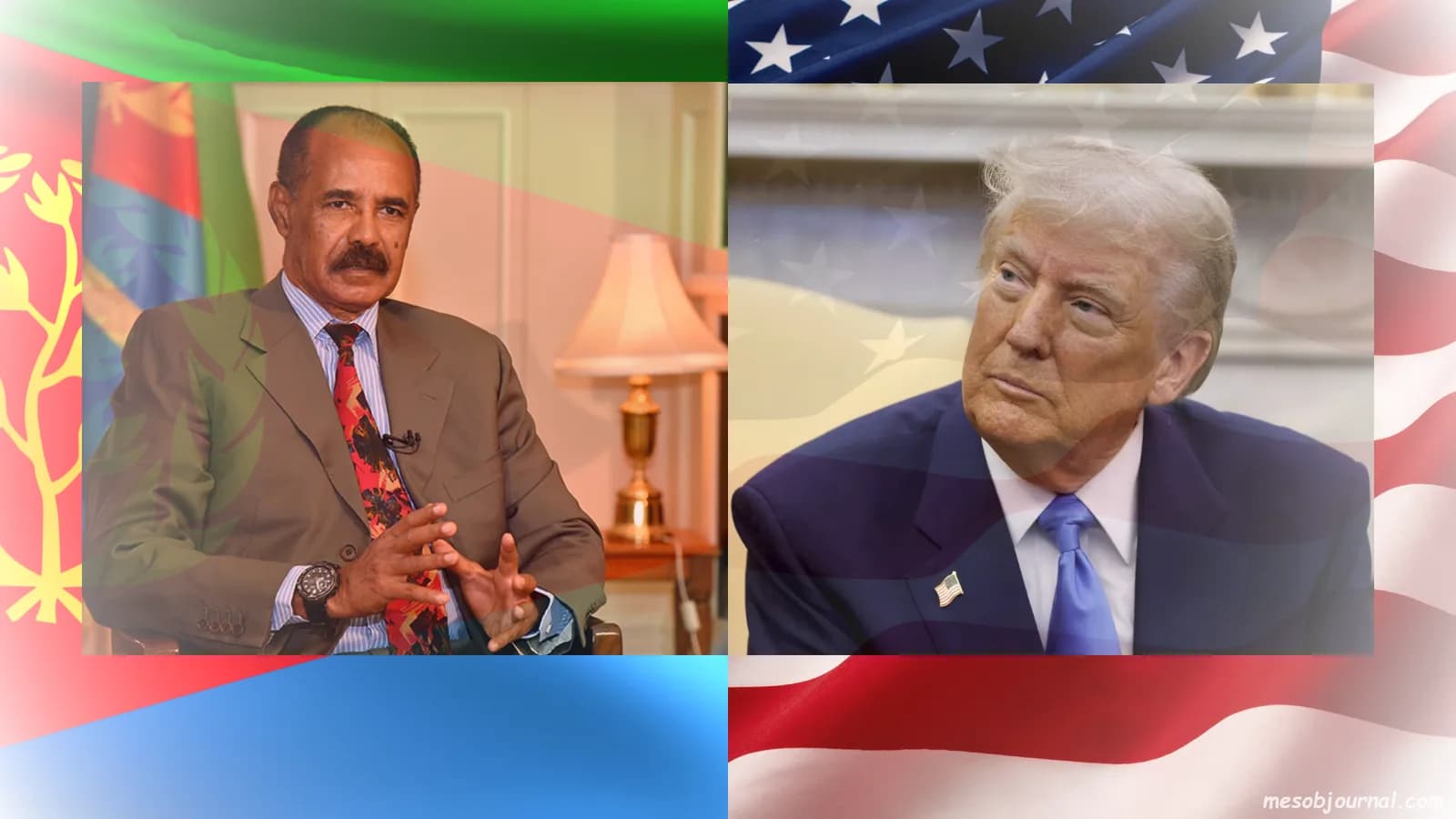
In his July 2025 interview, President Isaias Afwerki cut through the fog of diplomacy with rare candor: “Many efforts have been made to undermine and crush us during our protracted struggle for liberation,” he said, recalling how US policy, far from championing Eritrean independence, actively worked to suffocate it. And yet, in 1991, when Eritrea achieved its hard-won freedom, it extended a hand—not to beg, not to borrow, but to build. Constructive engagement was its policy from day one.
Not because Eritrea forgot, but because it refused to be defined by grievance.
For over three decades, Eritrea has tried to engage Washington with dignity, seeking not favors but fairness. “Our aim was never to dwell on the past,” President Isaias emphasized. “Our focus continues to be on the future.” But the burden of rethinking outdated policies was never carried by the US. Year after year, administration after administration, Washington repeated the same blunders: coercion disguised as diplomacy, aid used as leverage, alliances formed with destabilizing actors in the region.
Then came Trump.
When Donald Trump took office in 2016, there was, according to President Isaias, a unique window of opportunity. Not because Trump understood the Horn in all its complexity, but because the old foreign policy consensus in Washington was briefly disrupted. “The time was ripe,” said the President. Eritrea reached out—not to cut deals, but to offer a chance for the US to correct decades of regional sabotage.
The initial response was positive. But then, silence. Three years of inaction passed. Nothing meaningful emerged. Then came the Biden administration—and with it, a torrent of hostility. Eritrea was sanctioned, slandered, boxed in with wild accusations, and targeted through back channels. For four years, US-Eritrea relations regressed to their lowest point in decades.
Why?
The answer lies not in Eritrea’s actions, but in its refusal to submit. Eritrea does not play client state. It does not offer strategic assets in exchange for military bases. It will not host CIA operations in Massawa. It does not sell its sovereignty to secure a seat at someone else’s table. This posture—unapologetically independent—is intolerable to the architects of US foreign policy. And so, the default response was punishment.
But now, with Trump back in the White House, the window may reopen.
“We intend to resume the initiative we had once begun,” President Isaias confirmed, outlining a 2026–2028 roadmap for renewed engagement. The tone was sober—neither optimistic nor cynical. Eritrea is not starry-eyed about Washington. But it is also not petty. It sees strategic value in resuming dialogue, not to ask for aid or recognition, but to urge the US to finally adopt sound, rational, and regionally coherent policies.
The engagement, if it proceeds, won’t revolve around Eritrea alone. It must address the broader geopolitical configuration of the Nile Basin, the Red Sea corridor, and the Horn of Africa. It must reverse the flawed “partnerships” that have propped up rogue regimes and fueled crises in Sudan, Somalia, Ethiopia, and Yemen. And most critically—it must listen.
Will Washington listen this time?
That remains uncertain. President Isaias was blunt about the challenges: “Our calls may fall on deaf ears… but we will continue to explain the damaging consequences of these policies.” Eritrea’s strategy, as always, is to speak the truth and let history decide. No hysteria. No appeasement. Just clarity and consistency.
The interview also exposed another layer of the conflict—Eritrea is not only battling state actors. It is constantly countering a global disinformation network, often fueled by regional rivals and NGOs with shadowy funding. These entities spend millions to tarnish Eritrea’s image and obstruct any US rapprochement. They whisper in Washington’s ears, sowing doubts, framing Eritrea as a “spoiler” when in truth, it is a stabilizing force.
But Eritrea isn’t waiting on America. Its diplomacy spans beyond the Potomac. “Engagement with the United States is one of several important priorities,” President Isaias explained, referencing ongoing outreach to Russia, China, India, the EU, and the Global South. “We must also recognize that the situation remains fluid,” he said. “It will require objective and continuous assessment.”
What stands out most in his words is discipline. Eritrea has not wavered, despite the vilification. It has not allowed internal politics or external noise to derail its course. It has a plan, it has the patience to wait, and it has the strength to stand alone—if necessary.
Engagement, yes. But only on equal footing.