
Alpha Exploration Ltd. has announced new sampling results from its Anagulu Copper-Gold Porphyry Project in Eritrea, identifying a new target zone and further expanding the footprint of one of the company’s key discoveries within the Kerkasha Project.
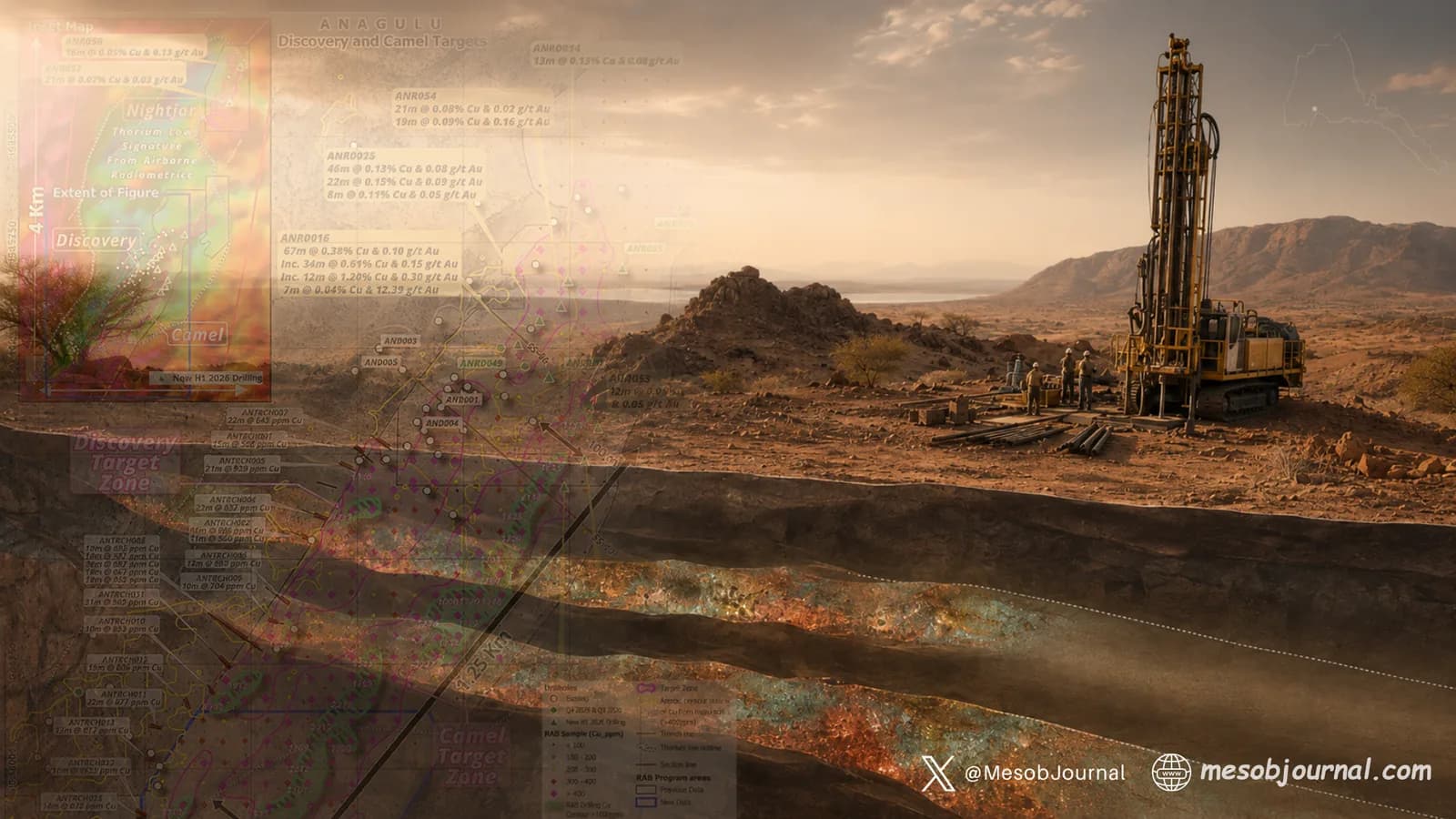
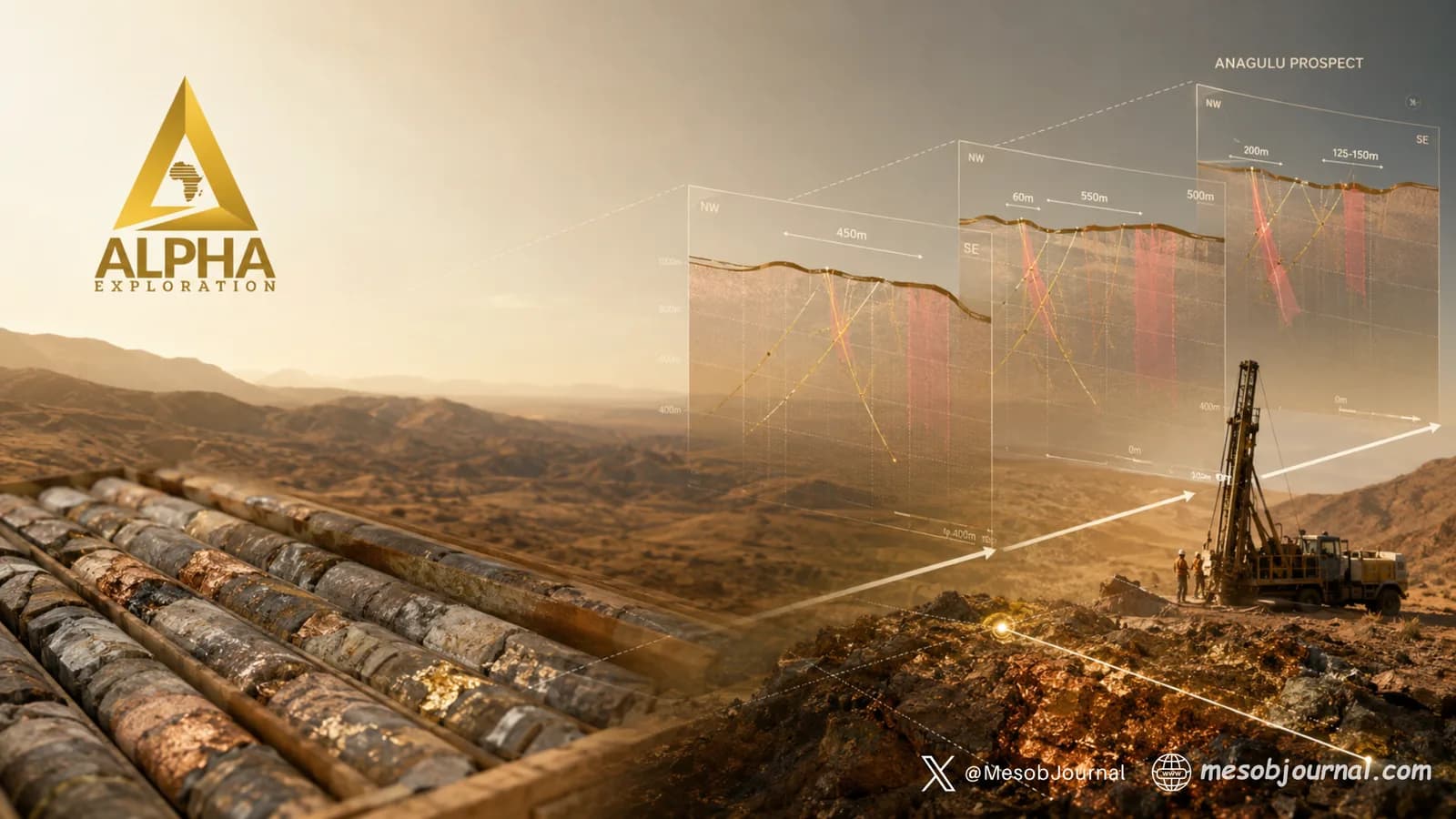
The company said shallow Rotary Air Blast drilling has outlined the new Nightjar Target Zone, measuring about one kilometre along trend and roughly 125 to 150 metres in width. The zone is located around two kilometres northeast of the main drilled area of copper-gold mineralization at Anagulu.
Alpha also reported that the Camel Target Zone has now been expanded and defined to more than one kilometre along trend, with a near-surface width ranging from about 125 metres to 250 metres. The company said the target remains open to the southwest, where drilling is ongoing.
The Anagulu project forms part of Alpha’s 100 percent owned Kerkasha Project, a 514 square kilometre licence area in Eritrea. The company has described Anagulu as one of three significant discoveries made by its exploration team on the licence, alongside the Aburna Gold Project located roughly seven kilometres to the north.
According to Alpha, the latest results come from 2,609 metres of RAB drilling in 335 shallow holes, part of an ongoing reconnaissance program designed to test copper anomalies first identified through termite mound sampling. To date, the program has completed 595 holes for 4,738 metres, with an average depth of just under eight metres per hole.
The RAB drilling is being used as a rapid and cost-effective exploration method in areas where shallow soil cover may conceal mineralization from conventional surface sampling. Alpha said the method provides top-of-bedrock and weathered-bedrock geochemical information, helping the company define areas for future reverse circulation and core drilling.
At Nightjar, top-of-bedrock copper samples ranged from 3,390 parts per million, or 0.33 percent copper, to 310 ppm copper. The company said the target occurs near mapped magmatic-hydrothermal breccia, a geological setting that could indicate a second fertile porphyry centre on the property.
At Camel, copper values from top-of-bedrock RAB samples ranged from 3,274 ppm, or 0.32 percent copper, to 300 ppm copper. Alpha said the width and grade of the Camel target appear to increase toward the southwest, and that the zone shows higher copper values than the comparable Discovery Target Zone based on current RAB results.
John Wilton, Alpha’s CEO, said the results had delivered a new target at Nightjar and expanded Camel to more than one kilometre along trend. He said both zones carry significant scale and were previously concealed beneath shallow immature soil cover.
“These new copper-gold target zones further indicate the large size footprint and shallow depth potential of the Anagulu Porphyry Copper-Gold Prospect,” Wilton said, adding that the areas will be tested through follow-up reverse circulation and core drilling.
The company has previously reported significant drilled intercepts at Anagulu, including 108 metres grading 1.24 grams per tonne gold and 0.60 percent copper, including 49 metres grading 2.42 grams per tonne gold and 1.10 percent copper. Another previously reported intercept included 120 metres grading 0.47 grams per tonne gold and 0.30 percent copper.
Alpha said the newly expanded exploration picture now points to an overall prospective area of about four kilometres by two kilometres. That suggests Anagulu may have a broader copper-gold footprint than earlier drilling alone had indicated.
The latest announcement is important for Eritrea’s developing mining and exploration sector. While the results are still early-stage and do not yet define a mineral resource, they add to a growing body of exploration work showing the potential of the Arabian-Nubian Shield inside Eritrea.
Eritrea has already attracted mining interest because of its geology, strategic location and underexplored mineral belts. Discoveries such as Anagulu and Aburna highlight the country’s position within a wider mineral province that continues to draw attention from exploration companies seeking gold, copper and base metal opportunities.
For Alpha, the next stage will be decisive. RAB drilling has helped identify the surface footprint and near-bedrock copper anomalies, but deeper reverse circulation and core drilling will be needed to test whether Nightjar and Camel can develop into significant mineralized systems.
That next stage is also supported by recent financing. Alpha announced earlier in June that it had raised C$7.52 million in gross proceeds under its private placement to date, with the company saying the funds would support ongoing exploration at Kerkasha, including work in Eritrea.
For Eritrea, the announcement adds another marker to a long-term economic story that is still unfolding: the country’s mineral potential remains underexplored, and each new discovery strengthens the case that Eritrea’s geology may become an increasingly important part of its development landscape.
The significance of Anagulu is not only in one set of copper values or one new target zone. It is in the expanding pattern. A discovery that began with surface sampling and mapping is now showing multiple target areas across a wider footprint, with follow-up drilling still ahead.
That is why Alpha’s latest update opens the next chapter.