
Washington's unusual denials expose a deeper regional habit: Eritrea is still denied the right to conduct ordinary diplomacy without its every relationship being interpreted as a move against Ethiopia.
It took Washington seventeen days to learn that speaking warmly about Eritrea would require two public disclaimers.
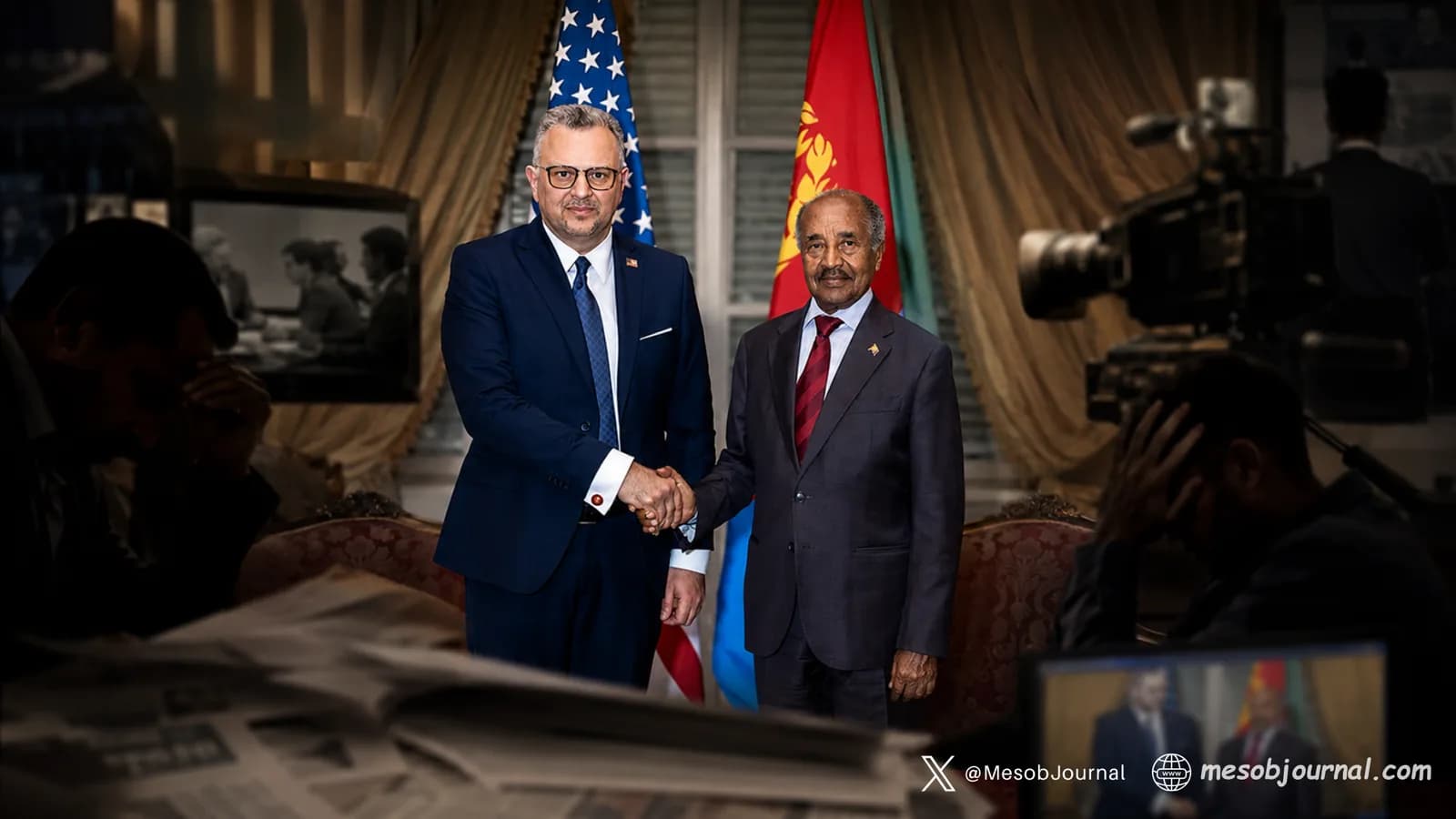
On 19 July, Massad Boulos, the U.S. president's senior adviser for Arab and African affairs, described a productive meeting in Cairo with Eritrean Foreign Minister Osman Saleh. The agenda was unusually broad for a relationship long dominated by pressure: bilateral ties, trade, regional economic development, security, conflict resolution, and stability in the Red Sea and Horn of Africa.
Ten days later, Boulos rejected reports portraying American diplomacy as an attempt to court an “anti-Ethiopian alliance.” On 5 August, he went further. The Trump administration, he said, was not negotiating, considering, or discussing any secret agreement involving Eritrea against another regional partner. No such arrangement existed.
The denials should be reported as denials. There is no public evidence of the secret deal Boulos rejected, and his first statement announced no treaty, security pact, or formal normalization with Asmara.
Yet the sequence is revealing. An exploratory conversation with Eritrea was quickly turned into a question about whom it was directed against. Eritrea's diplomatic agency disappeared, replaced by the familiar assumption that any opening with Asmara must be part of somebody else's campaign against Addis Ababa.
A relationship becomes an accusation
The immediate setting was Egypt's diplomacy on 19 July. Egyptian Foreign Minister Badr Abdelatty held meetings with Osman Saleh, Somalia's foreign minister, Abdulsalam Abdi Ali, and Boulos. Egypt grouped the contacts under a wider Horn of Africa peace-and-security initiative. Eritrea's account added that Saleh and Boulos discussed improved bilateral ties and regional developments.
That choreography was open to analysis. Egypt, Eritrea, Somalia, and Ethiopia have real disagreements involving the Nile, Somaliland, territorial integrity, maritime access, and the governance of the Red Sea. Shared interests do not need to be invented.
But analysis became alignment with remarkable speed. One prominent example appeared under The Africa Report's headline: “Massad Boulos courts Egypt's anti-Ethiopian alliance in the Horn of Africa.” The framing reduced three sovereign relationships to a single Ethiopian reference point. Washington was no longer talking to Cairo, Asmara, and Mogadishu about their own interests. It was taking sides against Ethiopia.
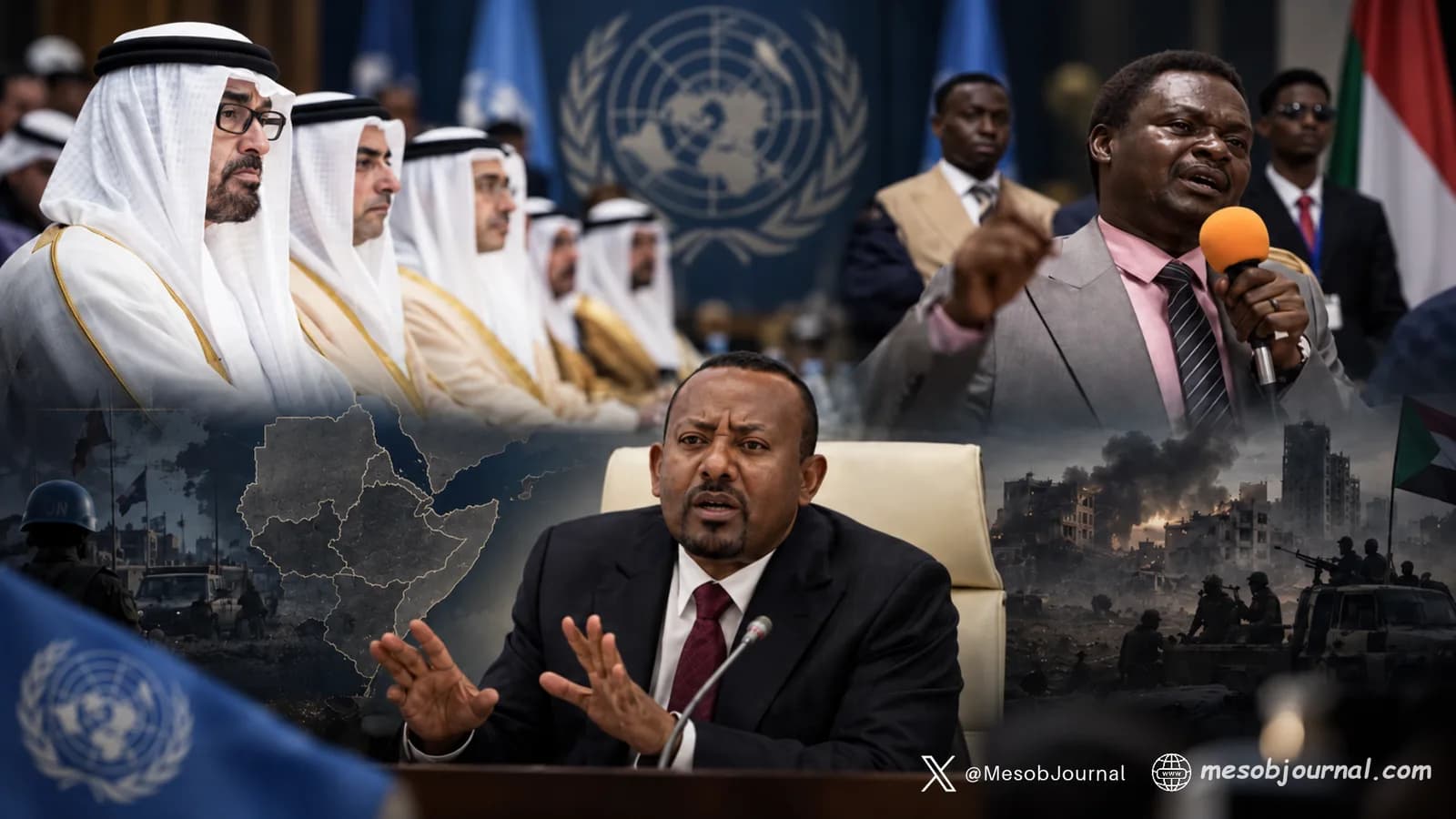
The same habit appears inside the Ethiopian government's narrative apparatus. The Ethiopian Institute of Foreign Affairs described an “anti-access ring” in which Eritrea's regional posture intersects with forces resisting Ethiopia's maritime ambitions. IFA is not simply an outside commentator: by its own institutional account, it operates within the Ministry of Foreign Affairs and helps shape foreign-policy decisions.
Horn Review performs a parallel propaganda function for the Prosperity Party while presenting itself as an independent research platform. Its article alleged an anti-Ethiopian alignment involving Eritrea, the TPLF, armed groups, and Ethiopia's “historical adversaries,” including serious accusations of Eritrean material support without publicly verifiable evidence. Its broader publishing record repeatedly turns ruling-party positions into the language of independent strategic analysis.
Together, IFA and Horn Review produce and circulate a government narrative that interprets Eritrea's independent relationships as components of an anti-Ethiopian alignment. The framing carried enough institutional weight for a senior American adviser to answer it twice.
The frame has one organizing assumption: Eritrea cannot simply have foreign relations. If Asmara works with Egypt, the relationship is anti-Ethiopian. If it speaks to Washington, a secret arrangement must be under construction. If Eritrea cooperates with Sudan, Somalia, or actors inside the Red Sea system, the action is placed inside a theory of encirclement.
Ethiopia's legitimate interests deserve serious treatment. They do not confer ownership over the diplomacy of neighboring states.
The projection has a history
For much of the post-war period, Addis Ababa enjoyed the advantage of a Western policy architecture that treated Ethiopia as an indispensable regional partner and Eritrea as a state to be contained. Successive Ethiopian governments did not create every American or European decision, and Washington remains responsible for its own policy. Ethiopia nevertheless benefited from that arrangement, defended it, and learned to treat Eritrea's external isolation as part of the regional balance.
The political character of the sanctions is clearest when compared with the treatment of Ethiopia's breach of the Final and Binding Algiers Agreement. Both governments had accepted the Eritrea–Ethiopia Boundary Commission's ruling as final and binding. After the Commission issued its decision in April 2002, Ethiopia rejected significant parts of it and obstructed demarcation. In 2005, the Security Council expressed grave concern at Ethiopia's failure to accept implementation without preconditions and demanded immediate compliance. No sanctions followed.
Instead, Ethiopia's defiance was allowed to harden into nearly two decades of “no war, no peace.” The border remained militarized, and Badme—awarded to Eritrea by the binding decision—remained under Ethiopian control. Both countries carried the human and economic costs of permanent mobilization. The international system repeatedly called for compliance while refusing to apply to Addis Ababa the coercive measures it later applied to Asmara.
When the Security Council sanctioned Eritrea in December 2009, Washington converted its political alignment with Ethiopia into multilateral pressure on Eritrea. Addis Ababa supported that campaign and later fought to preserve it. By 2017, the UN Monitoring Group had reported across successive mandates that it had found no conclusive evidence of Eritrean support for Al-Shabaab, yet Ethiopia still argued against lifting the measures. The Council removed them only in November 2018, after the regional political alignment had changed.
The contrast is the evidence. Ethiopia could violate a final and binding peace settlement, obstruct demarcation, prolong a destructive military stalemate, and avoid sanctions. Eritrea was subjected to sanctions whose central public allegation the UN's own monitors were repeatedly unable to substantiate. This was not consistent enforcement of regional peace. It was selective punishment produced by Washington's strategy and Ethiopia's diplomatic partnership with it.
Decades of asymmetry created a political habit. Ethiopian elites accustomed to seeing outside pressure applied to Eritrea now read Eritrean diplomatic recovery as pressure being organized against Ethiopia. The method they benefited from is projected onto Asmara.
The cost of exclusion has changed
Western governments are not reconsidering Eritrea out of sentiment. Their strategic environment has become more dangerous.
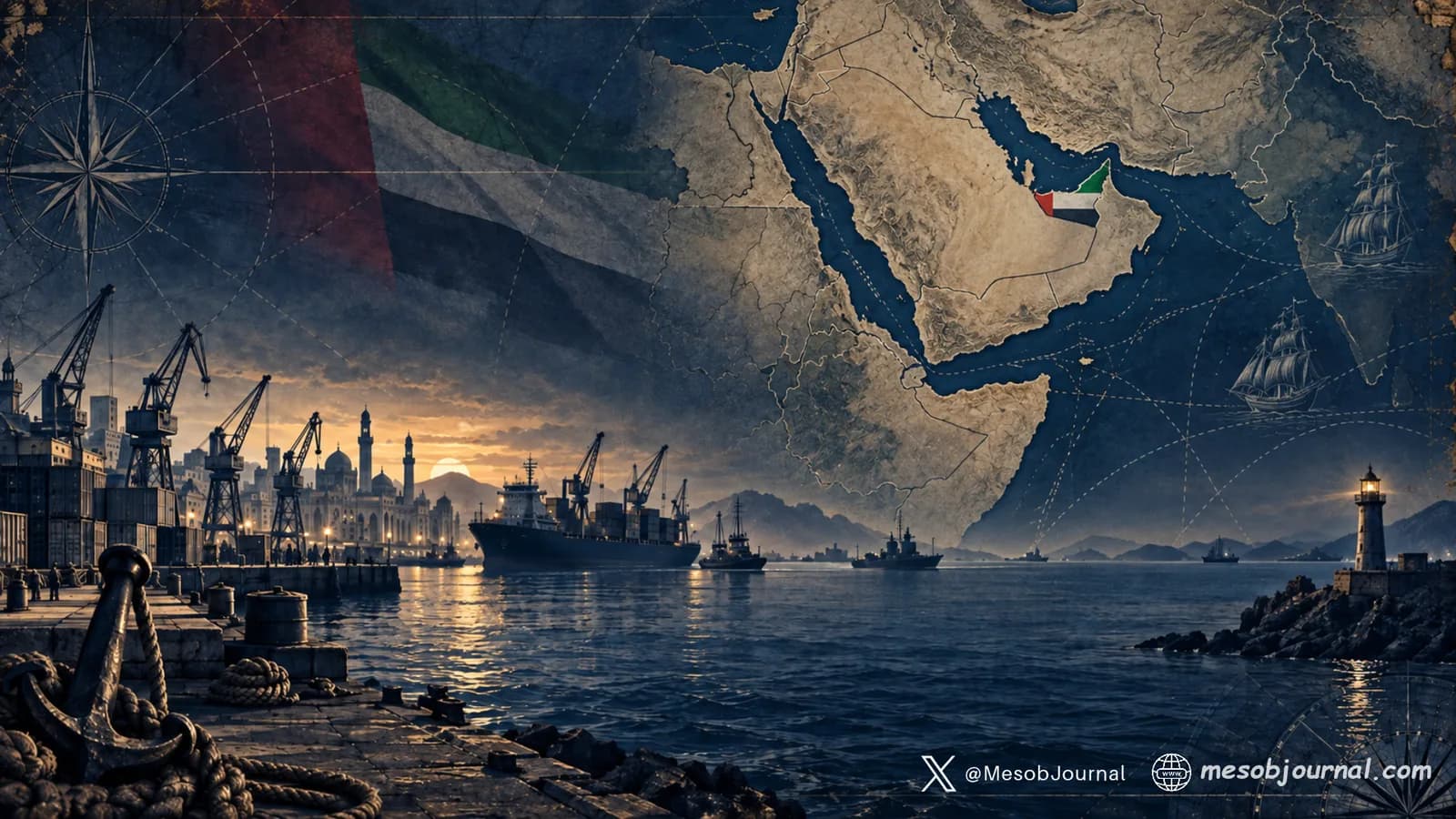
The Houthi campaign against commercial shipping turned the southern Red Sea and Bab el-Mandeb into an active security emergency. A current U.S. maritime advisory records more than 100 separate Houthi attacks on commercial vessels between November 2023 and October 2025, affecting more than 60 nations. The European Union has extended Operation Aspides until February 2027 to continue protecting merchant shipping.
In 2026, the crisis widened beyond the Red Sea. U.S. forces fought Iran directly, while the Maritime Administration warned that Iranian missile, drone, and maritime attacks continued to threaten commercial vessels in the Persian Gulf, Strait of Hormuz, and Gulf of Oman. CENTCOM's own account records American strikes on Iranian radar and drone command sites after confrontations affecting U.S. assets and regional shipping.
Against that background, a stable state with a long Red Sea coastline cannot be treated forever as strategically irrelevant. Eritrea's value does not arise from Western approval. It rests on geography, state continuity, control of its coast, and the ability to make decisions without a foreign patron dictating the answer.
Asmara put its maritime doctrine on the record before the current crisis. Its 2019 twelve-point proposal called for every Red Sea littoral state to develop its own defence and naval capabilities, combine those capacities where necessary, and involve external powers only through a consensual framework anchored in sovereignty and international law.
The Houthi attacks and the confrontation with Iran do not prove that Washington has adopted Eritrea's doctrine. Nor does one meeting with Boulos amount to a policy reversal. They have changed the price of excluding capable coastal states while expecting distant naval deployments to carry the burden indefinitely.
Pressure did not make Eritrea more available to the West. It made the relationship thinner. That was a Western cost as well as an Eritrean one.
Washington is balancing, not changing camps
The strongest evidence against the anti-Ethiopian interpretation is Washington's simultaneous conduct with Ethiopia.
In May, Ethiopian and American officials established a structured bilateral dialogue covering trade and investment, defence and security, and regional peace. In July, U.S. Africa Command and the Ethiopian National Defence Force co-hosted a military logistics and communications symposium in Addis Ababa involving delegations from 40 African states. AFRICOM described the event as a partnership intended to strengthen collective readiness.
This was happening during the same period in which Boulos was discussing trade, security, and regional stability with Eritrea.
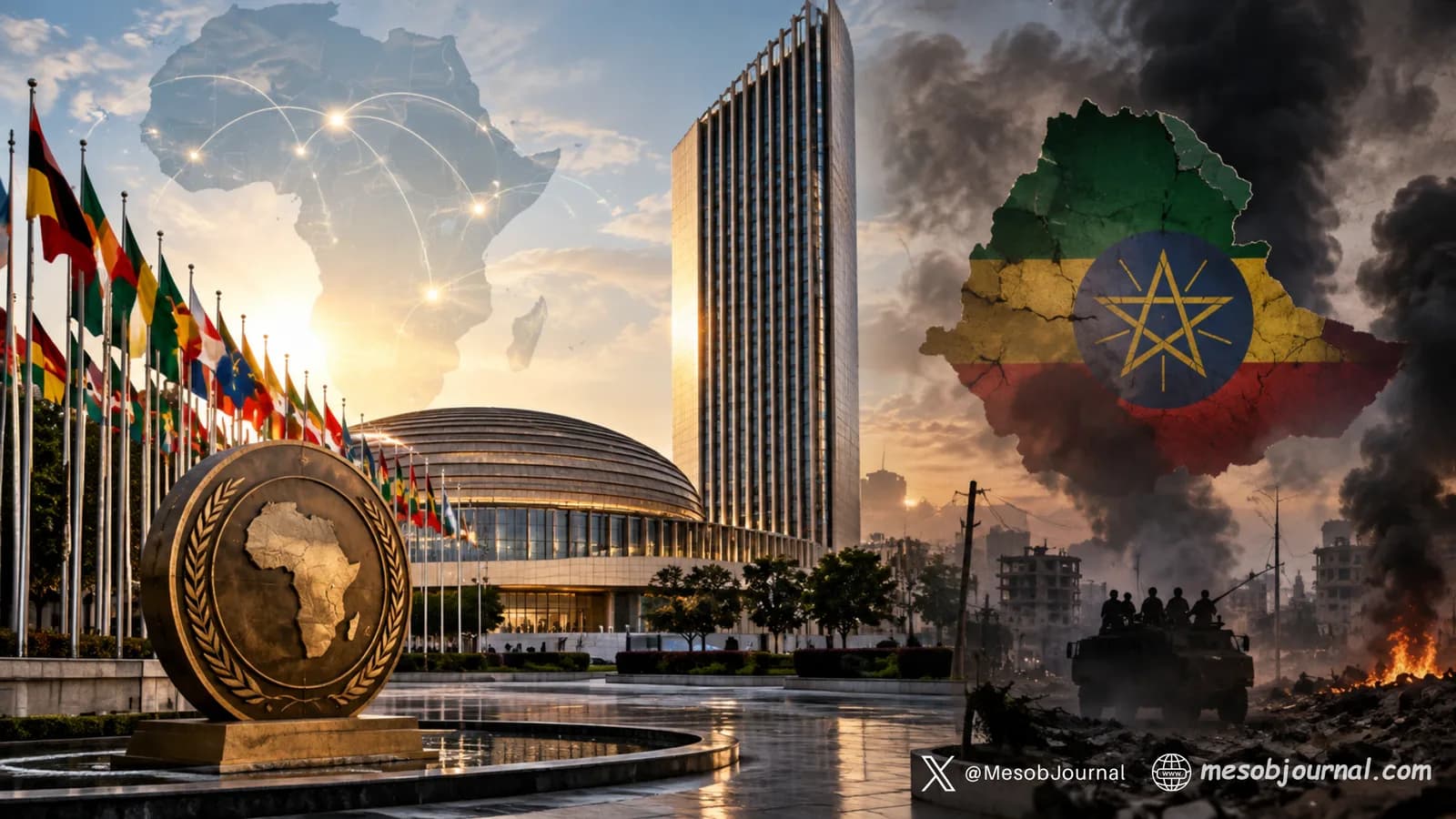
The United States has substantial reasons to maintain a strong relationship with Ethiopia. The country has a population exceeding 120 million, hosts the African Union, remains central to regional diplomacy, and has long been a major recipient of American assistance. Its internal conflicts, economic pressures, and political fractures also carry consequences far beyond its borders. Washington cannot afford indifference to Ethiopia's stability.
None of that requires treating every neighboring state as an extension of the Ethiopian file.
The emerging policy is better understood as balance. Washington will continue working with Addis Ababa because Ethiopia is too consequential to neglect. It also has reason to rebuild a functional channel to Asmara because Eritrea is too strategically situated—and too politically durable—to exclude without cost.
Balance will not remove disagreement. U.S. sanctions adopted during the Tigray war remain part of the policy architecture, and the Office of Foreign Assets Control still maintains an active Ethiopia-related sanctions program. Warmer language has not yet produced a publicly announced normalization, sanctions removal, or major economic agreement with Eritrea.
The opening is real. Its limits are real too.
Eritrea does not need an enemy to have a foreign policy
Eritrea's preference for sovereign decision-making is often described from outside as hostility, isolationism, or alignment with whichever power happens to oppose the West. The categories miss the point. A state can cooperate with Washington without becoming an American instrument. It can work with Egypt without adopting every Egyptian dispute. It can defend littoral responsibility in the Red Sea without joining a coalition against any nation.
Non-alignment is not political emptiness. It is the insistence that cooperation must be judged by the agreement itself, not by an assumed transfer of loyalty.
The burden now belongs to those alleging an anti-Ethiopian plot. They must produce the agreement, identify its terms, and show the conduct that makes it hostile. A headline is not an alliance. A meeting is not a military pact. Diplomatic engagement with Eritrea is not evidence against Ethiopia.
Washington's two denials therefore carry a wider meaning than their immediate rebuttal. They reject a regional hierarchy in which Eritrea may be isolated in the name of stability but cannot re-enter diplomacy without being accused of destabilization. They also acknowledge a reality that Western policy postponed for too long: Eritrea is a sovereign actor with interests of its own.
The United States will work with Ethiopia. It will increasingly find reasons to work with Eritrea. Mature diplomacy requires both relationships to exist without forcing either country into a plot against the other.
Eritrea's independence includes the right to conduct diplomacy that is about Eritrea.