

As attacks return to one of the world’s most important shipping corridors, outside powers are rediscovering a doctrine Asmara has advanced for years: the Red Sea cannot be secured sustainably without capable, sovereign littoral states.
The latest diplomatic attention directed toward Eritrea can easily be mistaken for a sudden change in the country's strategic value. It is not. Eritrea did not move closer to the Bab el-Mandeb, acquire a new coastline, or invent an interest in maritime security this year. What changed was the environment around it.
Attacks on international shipping have again raised the cost of insecurity across the Red Sea. On 6 July, the International Maritime Organization said it had recorded 24 attempted and actual incidents of piracy and armed robbery in the Red Sea and Gulf of Aden during the preceding three months. Forty-four seafarers were being held aboard three vessels seized off Somalia and in the Gulf of Aden. On 23 July, the IMO issued another warning after renewed attacks threatened crews, navigation, the marine environment, and global supply chains.
The European Union has extended Operation Aspides, its defensive naval mission, until February 2027. European warships continue to escort merchant vessels. The United States still maintains an active maritime advisory covering Houthi threats across the southern Red Sea, Bab el-Mandeb, Gulf of Aden, Arabian Sea, and Somali Basin.
The international response remains necessary. It is also proving Eritrea's older point.
For years, Asmara has argued that naval deployments can protect individual vessels and contain immediate threats, but they cannot substitute for sovereign coastal states able to secure their own territory, waters, islands, ports, and communities. The distinction is central to Eritrea's thinking. Maritime security is not only a matter of positioning foreign warships near a chokepoint after a crisis begins. It is the cumulative result of territorial authority, national institutions, regional cooperation, and political arrangements that do not turn the Red Sea into a competitive military estate.
That position is now being repeated in Cairo and heard more carefully in Washington and Europe. The change is not that Eritrea has discovered the Red Sea. It is that the Red Sea is catching up with Eritrea.
A doctrine articulated before the present crisis
Eritrea placed its approach on the public record in September 2019, four years before the current cycle of attacks on commercial shipping began. In a twelve-point proposal, the government called for an assessment of maritime threats, a coherent collective-security strategy, implementation mechanisms, and respect for sovereignty and international law.
Two provisions supplied the doctrine's core. Every littoral state should build effective national defence and naval capabilities “without delegation to others.” The states should then combine those capabilities to perform tasks that exceed any one country's resources. Cooperation with external powers would remain possible, but only for agreed missions and within a consensual regional framework.
This was not isolationism. It was a hierarchy of responsibility.
National capability came first. Cooperation among coastal states came second. External assistance filled defined gaps rather than replacing the states themselves.
President Isaias Afwerki restated the same position in January 2026. Each coastal state, he said, must protect its own segment of the Red Sea; littoral states should strengthen one another and build mechanisms for joint action against piracy, illicit trade, trafficking, and subversion. Where their combined capabilities remained insufficient, other forms of cooperation could be considered under international law and agreed rules.
This sequence matters because international security policy often reverses it. An emergency produces a foreign deployment. The deployment becomes the architecture. The coastal state's role is reduced to access, logistics, or consent. The arrangement may suppress a threat, but it does not necessarily build durable local authority. It can also deepen competition among outside powers seeking bases, port agreements, intelligence positions, and political leverage along the same narrow waterway.
Eritrea's doctrine begins from the opposite end: the stability of the Red Sea depends on whether the states that border it are strong enough to remain responsible for it.
Resilience is a strategic capability
Eritrea's contribution to this debate is not only conceptual. It is also the record of a state that retained national control over a coastline of roughly 1,200 kilometres and more than 350 islands through war, sanctions, restricted Western engagement, and repeated turbulence in its neighbourhood.
That history should not be romanticized, and maritime security alone does not settle wider arguments about Eritrea's domestic system. But strategic performance should be assessed where it occurs.
The IMO's annual reports on piracy and armed robbery do not identify Eritrea as an incident location from 2020 through 2025. Absence from these reports does not prove that no maritime crime occurred or that every security measure was effective. It does show that Eritrea's territorial waters and ports did not emerge in the international record as a persistent centre of reported piracy and armed robbery while insecurity intensified elsewhere in the region.
Unlike security models built around foreign-administered missions, Eritrea exercises routine authority over its coastline through a highly centralized, nationally controlled system. That structure has costs and critics, but it has also produced a form of state continuity increasingly scarce around the southern Red Sea.
This is where the meaning of resilience changes. It is often described as the ability to endure punishment. Strategically, resilience is more than survival. It is the preservation of decision-making capacity when pressure is applied. Eritrea endured years of sanctions and restricted Western engagement, yet the state did not fragment, its coastline did not become a piracy sanctuary, and its Red Sea policy did not change with each diplomatic season.
For partners now looking for dependable coastal actors, that continuity is a form of power.
Reliability between states does not require agreement on every political question. It requires a clear chain of authority, control over commitments, and the institutional ability to carry them out. A government may be difficult to persuade and still be predictable once it agrees. Conversely, a partner that readily accepts external programs but cannot control its territory may offer diplomatic access without operational reliability.
The Red Sea crisis is making that difference harder to ignore.
Egypt has moved closest to Eritrea's position
Egypt's recent diplomacy is the clearest recognition of Eritrea's strategic argument. In May, Egypt and Eritrea signed a maritime-transport cooperation agreement intended to improve logistics, trade, and investment. Egyptian officials also discussed a shipping line connecting the two countries' ports.
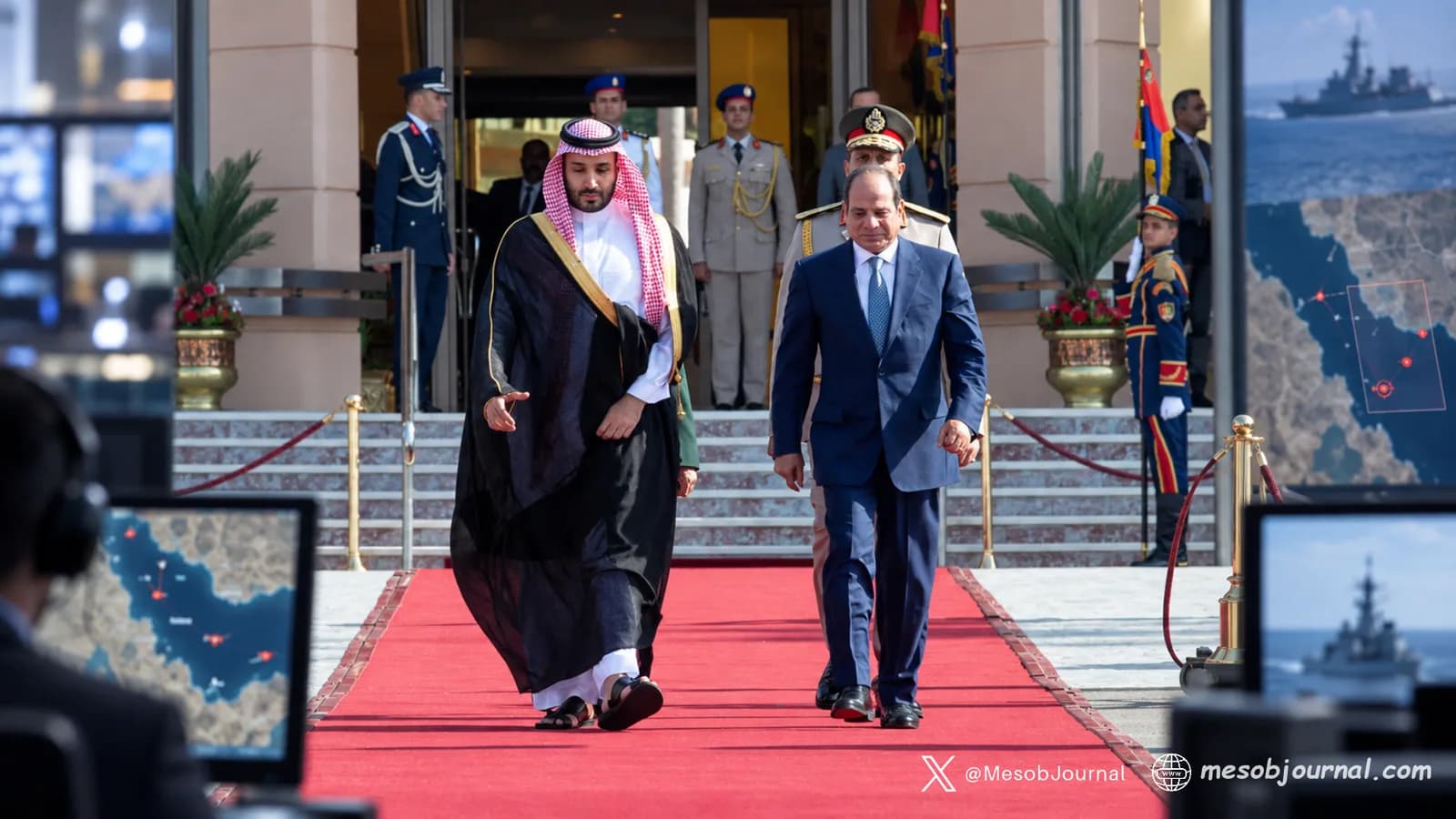
When Presidents Abdel Fattah el-Sisi and Isaias Afwerki met in Cairo on 8 June, they joined three issues that are too often analyzed separately: Sudan's stability, security in the Horn of Africa, and governance of the Red Sea. According to the Egyptian presidency, both leaders agreed that responsibility for Red Sea security belongs exclusively to its littoral states.
The same language appeared again after Eritrean Foreign Minister Osman Saleh met his Egyptian counterpart, Badr Abdelatty, on 19 July. The two governments described their relationship as a strategic partnership and again placed Red Sea governance under the responsibility of coastal states.
These were not isolated declarations. Burhan had met Isaias in Asmara two days earlier to discuss Sudan and regional affairs. On 19 July, Abdelatty also met Somalia's foreign minister and Massad Boulos, the U.S. president's senior adviser for Arab and African affairs, under a common Egyptian frame of peace and security in the Horn.
Cairo appears to understand that the Red Sea cannot be separated into a maritime file, a Sudan file, a Somalia file, and a Nile file. State fragmentation on land creates vulnerability at sea. Weak borders facilitate trafficking and armed networks. Conflicts in Sudan, Yemen, and Somalia affect ports, shipping, displacement, and foreign military competition. Pressure on Eritrean sovereignty therefore cannot be treated as unrelated to maritime stability.
Egypt is not simply drawing Eritrea into an Egyptian strategy. It is moving toward a framework Eritrea has advocated for years.
Washington's opening is small, but the language matters
The U.S.–Eritrea meeting in Cairo did not produce a treaty or announce a formal policy reversal. It should not be presented as normalization.
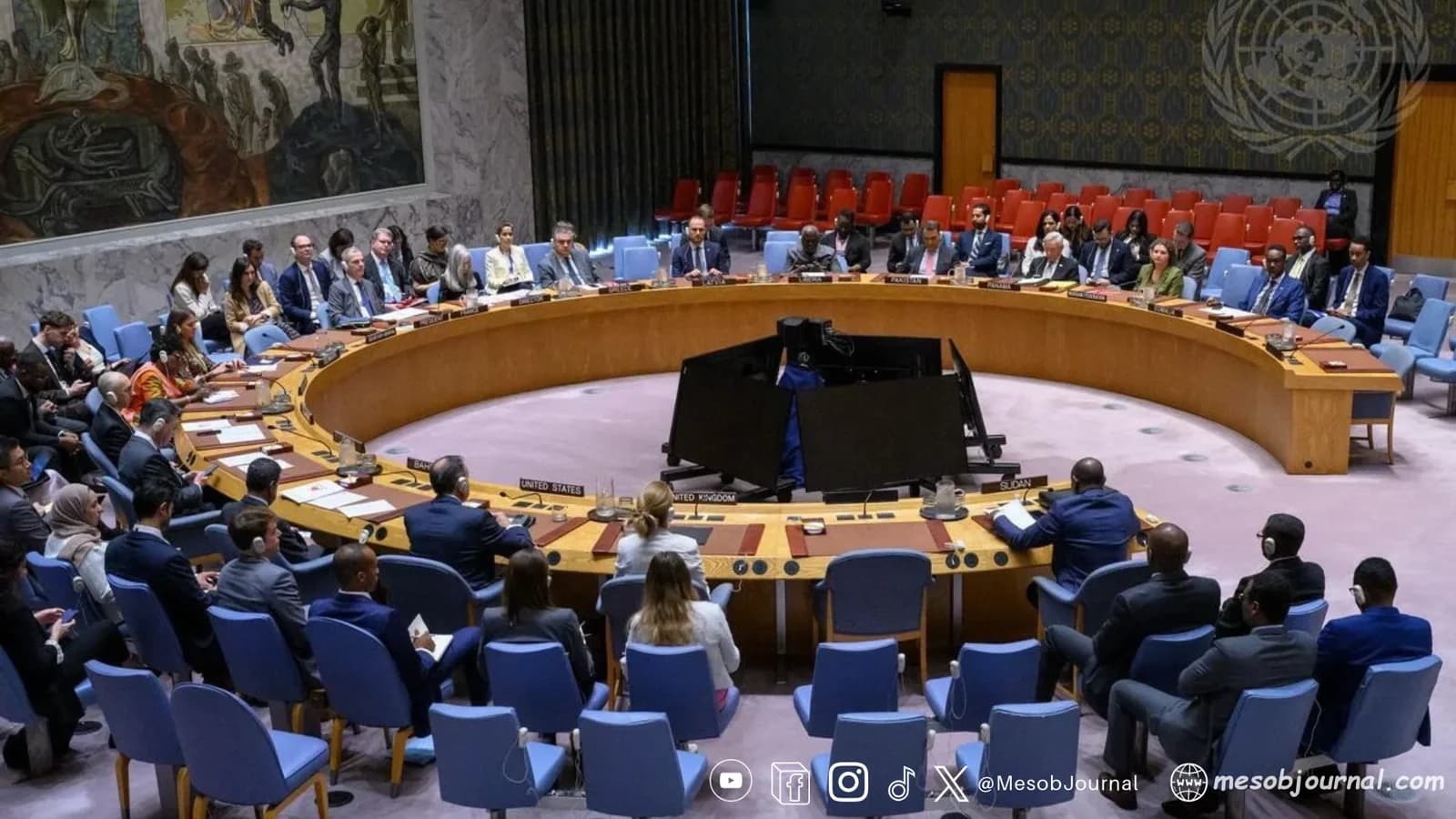
Its language was nevertheless significant. Boulos described a discussion about strengthening the bilateral partnership and expanding cooperation on trade, regional economic development, security, conflict resolution, and stability in the Red Sea and Horn of Africa. That is a wider vocabulary than one built primarily around sanctions, isolation, or pressure.
Washington's interest is understandable. The United States is confronting simultaneous maritime risks across the Bab el-Mandeb, Gulf of Aden, and Strait of Hormuz. It needs partners that control territory, can make and uphold security commitments, and are not merely platforms for another power's regional agenda.
Eritrea offers geography, but geography alone is not enough. Yemen also has geography. Somalia has a longer coastline. Djibouti occupies a critical position and hosts several foreign militaries. Eritrea's additional value lies in the combination of location, state cohesion, sovereign decision-making, and a demonstrated unwillingness to let external competition define its national policy.
That independence has often frustrated Washington. Under present conditions, it may also be what makes Eritrea useful.
Europe faces the same strategic question
The European Union's approach remains cautious and internally divided. Brussels continues to criticize Eritrea's human-rights record. At the same time, it has been testing a broader relationship.
An April 2025 visit by senior European External Action Service officials to Asmara identified options for wider discussions with the Eritrean state. When the EU's new ambassador presented her credentials in December, the official agenda included peace and stability in the Horn and Red Sea, bilateral relations, and cooperation. The EU also retains an active delegation in Asmara and manages projects in social protection, health, agriculture, food security, and cultural heritage.
This is not yet a strategic partnership. It is evidence that European policy cannot remain one-dimensional.
The EU's own maritime actions reveal why. Operation Aspides can escort commercial ships and intercept threats, but European vessels cannot permanently replace functioning coastal states. Brussels says it supports regional ownership while maintaining a security architecture still heavily dependent on external naval capacity. Eritrea's proposal addresses that gap: build national capability, combine littoral resources, and use outside support for clearly defined needs.
For Europe, the question is whether it can cooperate with a state it does not fully approve of without trying to redesign that state as the price of cooperation. A mature partnership would allow disagreement over internal governance while recognizing Eritrea's legitimate security interests and practical value in the Red Sea.
The limits of the Eritrean model
Crediting Eritrea's foresight does not mean treating its doctrine as a complete regional architecture.
The twelve-point proposal still requires institutions, agreed rules, information sharing, financing, maritime-domain awareness, search-and-rescue capacity, environmental protection, and mechanisms for resolving disputes among littoral states. The Red Sea countries do not share identical threat perceptions. Sudan and Yemen remain at war. Somalia is rebuilding sovereign capacity. Egypt, Saudi Arabia, Djibouti, and Eritrea have different relationships with external powers. No single coastal state can secure the Bab el-Mandeb system alone.
Eritrea's insistence on sovereignty must therefore be matched by practical openness to regional mechanisms. Its preference for quiet diplomacy can protect negotiations, but durable architecture also requires clarity about commitments and implementation. Egypt–Eritrea maritime cooperation will become strategically meaningful when agreements produce functioning shipping routes, port links, shared procedures, and measurable capacity.
These are constraints, not arguments against the doctrine. They are the work needed to make it operational.
A state once treated as a problem may become part of the answer
The central lesson from the Red Sea is not that foreign naval power has become irrelevant. It is that naval power without strong coastal states is an expensive holding operation.
Warships can escort a vessel. They cannot create legitimate authority on land. They can intercept a drone. They cannot replace border institutions, prevent political fragmentation, or build trust among neighbouring states. They can keep a corridor open for a time. They cannot by themselves establish the regional order on which lasting freedom of navigation depends.
Eritrea understood this distinction before the current emergency forced it onto the international agenda. Its position was easy to dismiss when shipping moved normally and the costs of fragmented regional authority were less visible. It is harder to dismiss after years of attacks, rerouting, naval deployments, piracy warnings, and intensifying competition around the Bab el-Mandeb.
The diplomatic movement around Asmara should therefore not be read as Eritrea finally becoming relevant to a strategy designed elsewhere. It is better understood as a delayed recognition of strategic capital Eritrea accumulated through continuity: a secured coastline, preserved state authority, resistance to proxy dependence, and a clear doctrine for littoral responsibility.
The United States and European Union do not have to adopt Eritrea's entire worldview to recognize the value of that record. They do need to reconsider an old assumption—that pressure creates reliability while sovereignty obstructs cooperation.
In the Red Sea, the opposite may be closer to the truth. The most dependable partner may be the state that maintained the capacity to say no, kept control of its own ground, and can therefore make a meaningful yes.