
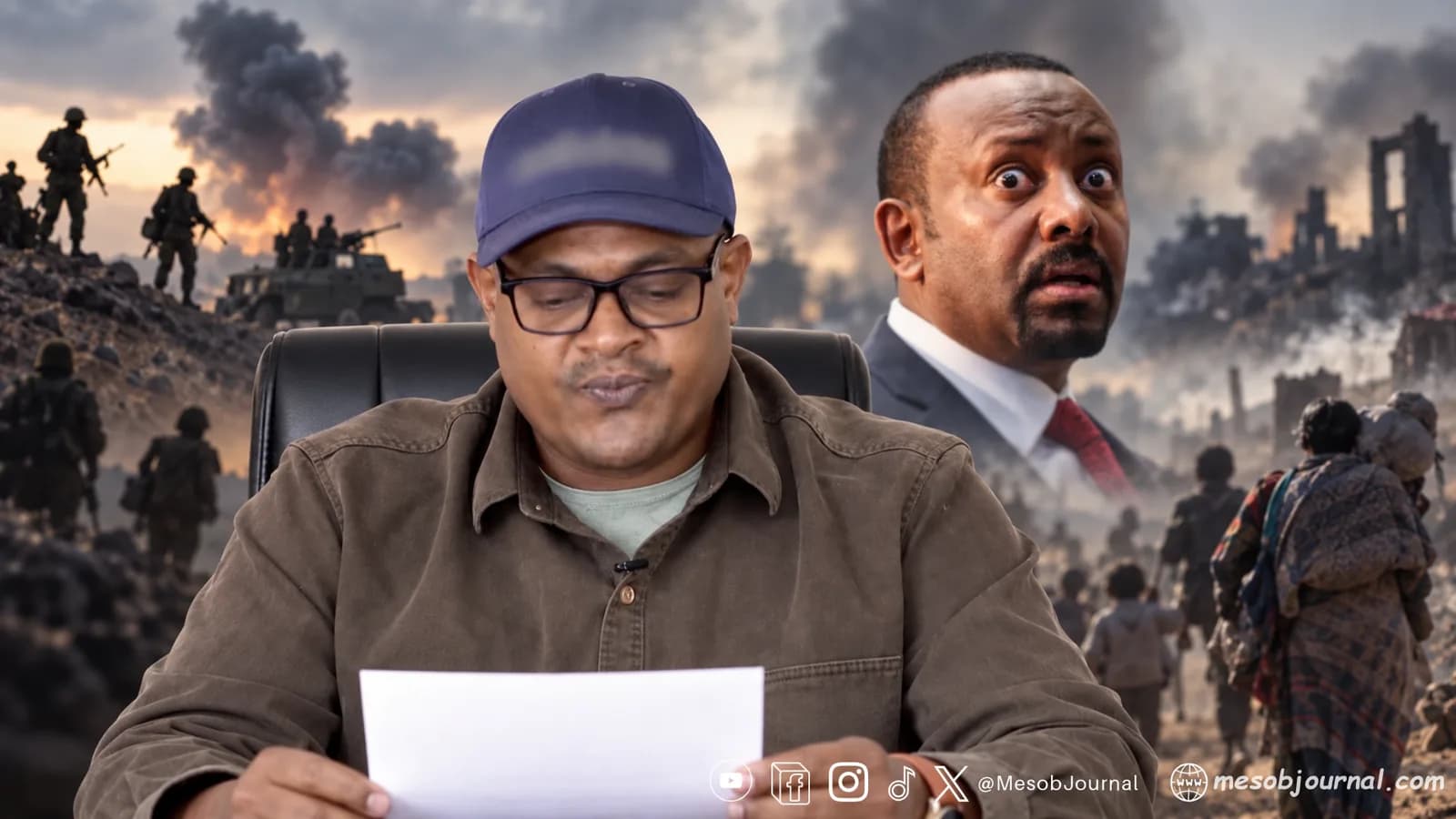
Seven Ethiopian political and armed opposition organizations have announced the formation of a new alliance seeking to remove the Prosperity Party government and establish an inclusive transitional administration under a Transitional Charter.
The Ethiopian Popular Forces Alliance for Survival, also referred to as the Alliance for Survival, brings together the Amhara Fano National Movement (AFNM), Oromo Liberation Army (OLA), Tigray People’s Liberation Front (TPLF), Ogaden National Liberation Front (ONLF), Afar Revolutionary Democratic Unity Front (ARDUF/Uguugumo), Benishangul People’s Liberation Movement and Gumuz People’s Democratic Movement.
In a statement issued on Sunday, the alliance accused Prime Minister Abiy Ahmed’s government of authoritarian rule, war, mass killings, worsening poverty, displacement and the breakdown of law and order.
It said Ethiopia was facing an increasingly serious political and security crisis that threatened both the survival of its peoples and the unity of the country.
The organizations said they had agreed to coordinate their political and organizational capacities with the aim of ending Prosperity Party rule and opening what they described as a new democratic transitional chapter.
Under the framework outlined in the statement, an inclusive transitional government would be established and governed by a Transitional Charter.
The alliance listed ending ongoing wars, restoring peace and security, guaranteeing human and democratic rights, addressing the country’s social and economic crisis and improving relations with neighboring states among its main objectives.
It also proposed a broad national and constitutional dialogue during the transitional period.
According to the statement, the process would seek to address fundamental political and constitutional disputes through direct popular participation and what the alliance described as the free will of Ethiopia’s peoples.
Former rivals enter the same political framework
The composition of the alliance is particularly significant because several of its members have previously stood on opposing sides of Ethiopia’s conflicts.
Fano forces and the TPLF fought against each other during the 2020–2022 northern Ethiopia war, while major territorial and political disagreements between Amhara and Tigrayan actors remain unresolved.
The Oromo Liberation Army and Amhara armed formations have also operated from sharply different political positions.
The new declaration does not attempt to settle those differences immediately.
Instead, the participating organizations say outstanding disagreements should eventually be addressed peacefully through dialogue, legal processes and popular participation.
That approach allows movements with different political objectives to coordinate around a common transitional program without first agreeing on Ethiopia’s eventual constitutional structure.
Months of discussions move into the open
The announcement follows months of reports that several Ethiopian opposition organizations were discussing closer political and military coordination.
In August, AFNM chairman Zemene Kassie said discussions had been taking place among organizations representing several of Ethiopia’s major political and regional constituencies.
Public discussion of a wider opposition alignment has also increasingly referred to cooperation involving Fano, Tigrayan, Oromo, Somali and other forces.
The latest declaration gives that emerging cooperation a formal political framework, identifying seven organizations and setting out common objectives for a post-Prosperity Party transition.
The alliance’s immediate focus is the removal of the current federal government and creation of a transitional administration rather than agreement on a permanent political settlement.
Its statement leaves Ethiopia’s larger constitutional questions — including competing visions of federalism, self-determination, territorial administration and relations among the country’s nations and nationalities — for a later dialogue.
The formation of the alliance adds a new dimension to Ethiopia’s already fragmented political and security landscape, with armed conflict continuing in several parts of the country and opposition forces increasingly exploring cooperation across previous political and military dividing lines.