
The Port Sudan ruling is the first against the RSF leader since the war began, as documented evidence traces the force's military lifelines to the UAE and Ethiopian territory.
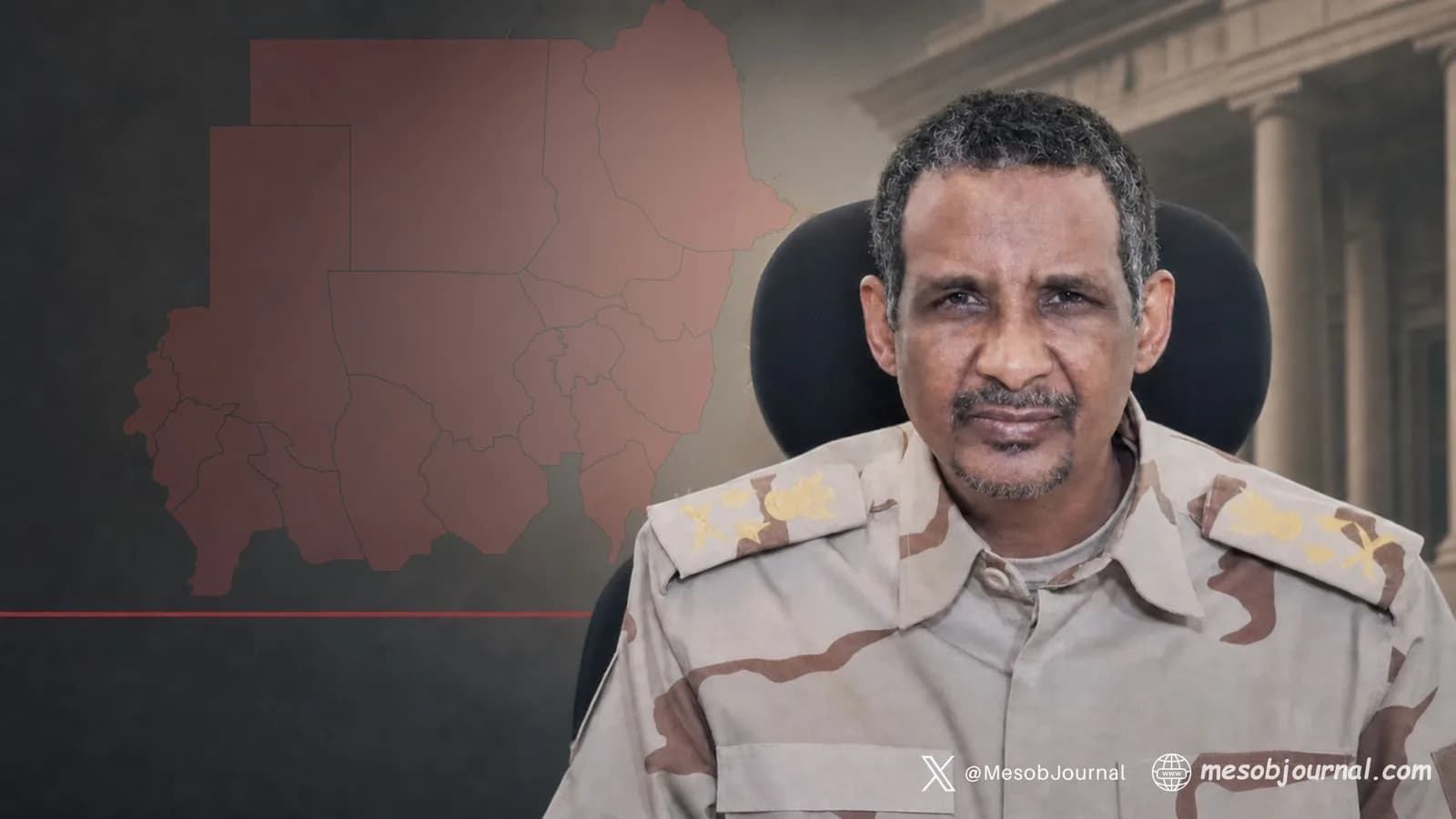
A Sudanese court on Sunday sentenced Rapid Support Forces leader Mohamed Hamdan Dagalo, widely known as Hemedti, his deputy and brother Abdel Rahim Hamdan Dagalo, and 14 other defendants to death in absentia over the 2023 killing of West Darfur governor Khamis Abdallah Abakar.
The Anti-Terrorism and Crimes Against the State Court in Port Sudan convicted the defendants on charges including war crimes, crimes against humanity, genocide, and crimes against persons and property.
The court held Hemedti responsible for planning and carrying out the crimes. Abdel Rahim, the RSF's deputy leader, was convicted of planning and participating in them.
The other defendants included another of Hemedti's brothers, Al-Qoni Hamdan Dagalo Musa; Abdel Rahman Juma, the RSF commander in West Darfur; and tribal leader Al-Tijani Al-Tahir Karshoum.
The ruling is the first court verdict against Hemedti since war broke out between the Sudanese Armed Forces and the RSF in April 2023. Because the defendants were tried in absentia, the sentences do not place them immediately in custody, but they create a formal domestic judgment against the movement's senior command.
A killing that came to symbolize West Darfur
Abakar was killed in El Geneina on 14 June 2023, hours after he publicly accused the RSF of attacking civilians and described the violence unfolding in West Darfur as genocide.
Abakar's death became one of the defining cases of the violence in El Geneina. A later Human Rights Watch investigation verified the location of footage showing him in RSF custody and in the presence of the force's West Darfur commander before he was killed. The RSF denied responsibility for his death.
The killing occurred during a wider campaign against the Masalit and other non-Arab communities in West Darfur. A United Nations panel later reported that between 10,000 and 15,000 people were killed in El Geneina in 2023 and documented widespread attacks, sexual violence, destruction, and displacement attributed to the RSF and allied forces.
The UAE supply line behind the RSF
The Port Sudan judgment targets the RSF's Sudanese leadership. The war machine commanded by that leadership, however, was sustained by an external supply system in which the UAE played a central role.
The aviation trail appeared soon after the war began. The independent aircraft tracker known as Gerjon identified 28 unusual Il-76 cargo flights between the UAE and Africa from 16 May to 30 June 2023. Route analysis and near-daily satellite imagery placed at least six of the aircraft at Amdjarass in eastern Chad during the final 10 days of June. Gerjon traced at least some departures to the military apron at Abu Dhabi International Airport.
The United Nations Panel of Experts cited that flight tracking and then built a wider evidentiary record from sources in Chad and Darfur. The panel found credible that weapons and ammunition arriving at Amdjarass were unloaded several times per week, moved west in small truck convoys, handed to the RSF near the Darfur border, and transported to its base at Zuruk.
The panel described the supplies as large-scale and sustained, ranging from small arms to combat drones, anti-aircraft missiles, mortars, and ammunition. It concluded that the transfers into Darfur violated the UN arms embargo. The UAE said the flights carried humanitarian assistance and has repeatedly denied arming the RSF.
This was not incidental support. It was a recurring air-and-land supply chain capable of replenishing the weapons and ammunition used by the force whose senior leaders have now been sentenced in Port Sudan.
Ethiopia's military infrastructure enters the record
Evidence of direct support from Ethiopian territory emerged in greater detail in April 2026. The Humanitarian Research Lab at the Yale School of Public Health concluded with high confidence that military assistance to the RSF was occurring at an active Ethiopian National Defence Force base in Asosa.
Yale examined five months of satellite imagery and open-source material and compared the activity with 14 other ENDF bases. It identified commercial carriers repeatedly delivering vehicles inconsistent with Ethiopian military livery, unusually intense logistics movements, technical vehicles being fitted with possible heavy-machine-gun mounts, and matching vehicles later appearing with RSF units fighting around Kurmuk in Sudan's Blue Nile State.
About 120 light technical vehicles were visible at the Asosa base in late December 2025 and about 200 on 18 February 2026. Yale said the combined indicators provided clear visual evidence that the RSF was basing attacks on Blue Nile State from Ethiopian sovereign territory.
Scrutiny begins to move toward the RSF's sponsors
The effort to hold the RSF leadership accountable is beginning to extend toward the foreign network behind it. In June, seven Sudanese survivors asked the International Criminal Court prosecutor to investigate senior Emirati officials and business figures, including UAE Vice President Mansour bin Zayed Al Nahyan, over their reported role in supporting RSF crimes in Darfur.
A second submission by a coalition led by the Raoul Wallenberg Centre for Human Rights asked the prosecutor to investigate foreign officials and intermediaries accused of aiding and abetting atrocities. Regional reporting said the supporting material mapped RSF supply routes from UAE airports through Chad, Libya, and Ethiopia. The ICC has not announced action against the Emirati figures named or referenced in the submissions.
Sunday's ruling does not place Hemedti or the other defendants in custody. It does place the RSF's senior command on a formal Sudanese judicial record for the killing of a governor who had publicly accused the force of genocide hours before his death.
The verdict identifies the commanders held responsible. The wider evidence identifies what kept their force armed and operational: the UAE supply line through Amdjarass and military assistance from Ethiopian territory.
The judgment was delivered in Port Sudan, but its meaning reaches Abu Dhabi and Addis Ababa. Hemedti and his commanders led the war; the UAE and Ethiopia helped sustain the force they commanded.