
Eight years ago, Eritrea made a bet on peace — and meant it.
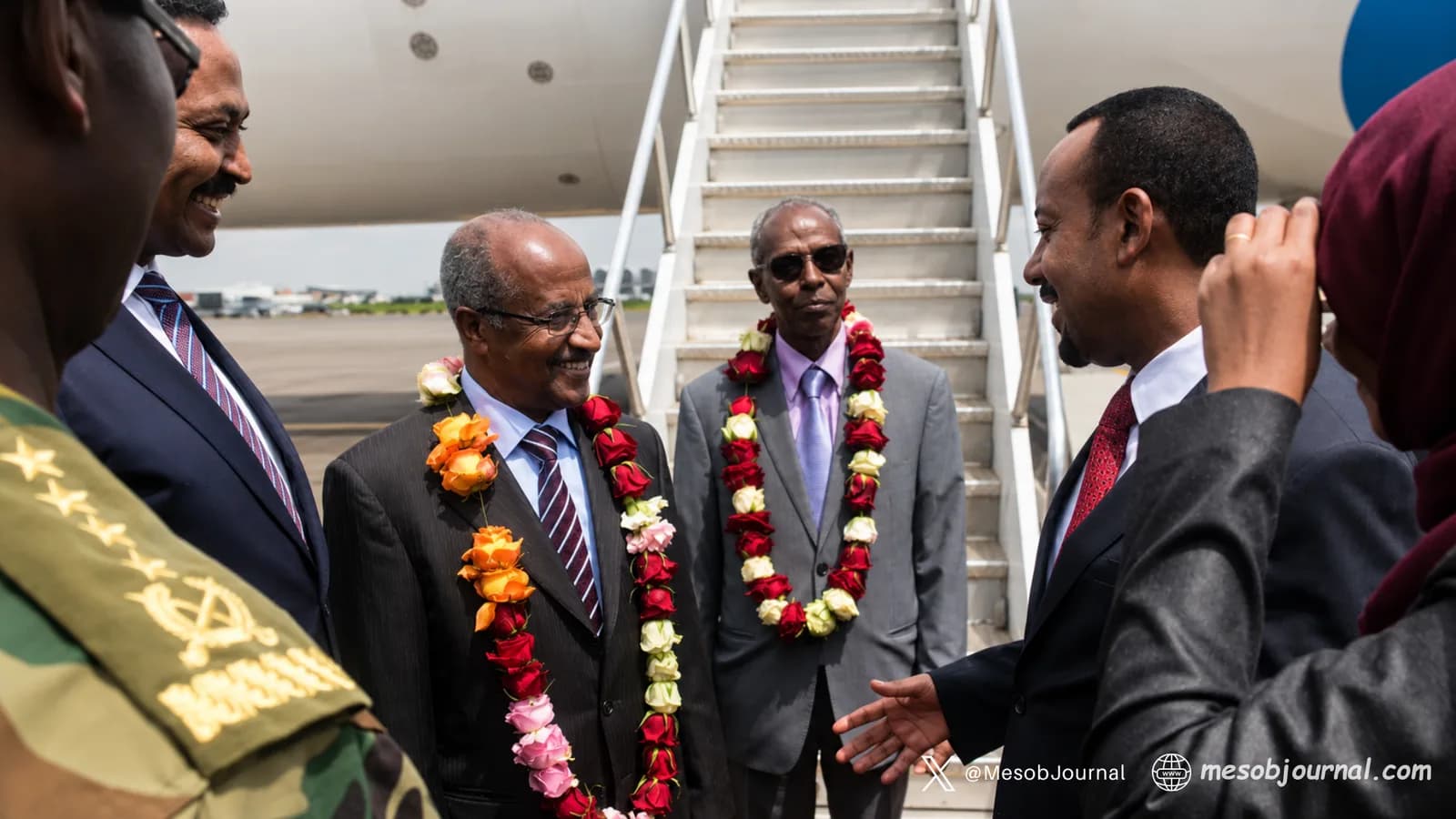
On June 26, 2018, Foreign Minister Osman Saleh and Presidential Adviser Yemane Gebreab touched down in Addis Ababa. Prime Minister Abiy Ahmed was waiting at the tarmac. For two peoples separated by sealed borders and nearly two decades of frozen conflict, the image carried enormous weight.
It had not been easy to get there.
The legal framework for ending the war had existed for years. The Algiers Agreement sent the border dispute to international arbitration. The Eritrea-Ethiopia Boundary Commission delivered its ruling — final, binding, not subject to appeal. Ethiopia had agreed to the process and then, under the TPLF-led government, simply refused to live with the result. That was the impasse Abiy inherited when he came to power.
Eritrea understood what it was walking into. It had absorbed the costs of Ethiopia's intransigence for years, watching the international community paper over an unresolved legal obligation rather than enforce it. The decision to send a delegation anyway was not born of optimism so much as discipline. The basis for engagement was explicit: Ethiopia would honor the boundary commission's ruling. On that foundation, and only that foundation, a new beginning seemed possible.
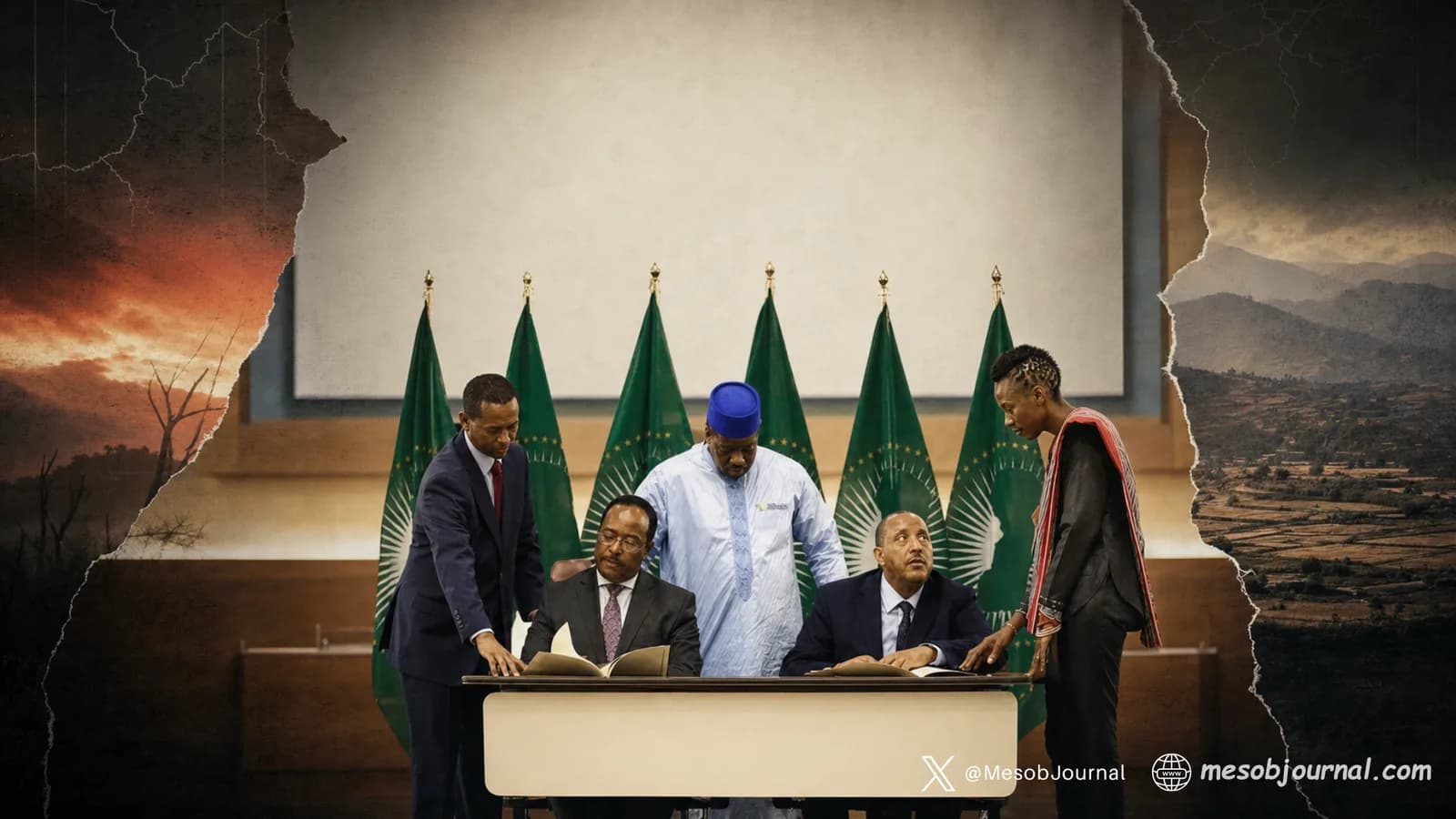
Abiy embraced the moment fully. He traveled to Asmara. He and President Isaias Afwerki signed the Joint Declaration of Peace and Friendship. He signed the Jeddah Agreement. He accepted the framework that formally ended the state of war between the two countries. In Oslo, he accepted the Nobel Peace Prize — awarded, in no small part, for his willingness to honor the border arrangement that his predecessors had spent years obstructing.
That history matters now, because some of it is being quietly rewritten.
The 2018 peace did not rest on goodwill alone. It rested on a settled border. Assab was not left ambiguous. Massawa was not designated for future talks. Eritrea's Red Sea coastline was not placed in some diplomatic holding pattern pending Ethiopia's comfort with the outcome. A binding ruling is not a negotiating position. It is not a starting point. It is, by definition, the end of the argument.
Around 2023, however, Abiy's public language began to shift in ways that were hard to ignore.
Ethiopia was no longer simply a landlocked country seeking workable commercial arrangements — a situation that international law and standard bilateral practice are well-equipped to handle. It became, in the prime minister's telling, a nation historically cheated, imprisoned by geography, and entitled to something he called "sovereign access" to the sea.
The phrase deserves scrutiny. Commercial access to ports is unremarkable; landlocked countries negotiate transit rights and trade corridors routinely. "Sovereign access" is a different category of claim. It gestures toward jurisdiction, control, a permanent foothold. Applied to another country's coastline, it is not a trade proposal. It is a territorial argument.
Abiy pressed further. He described Ethiopia as a "prisoner of geography" and characterized its lack of coastline as a historic wrong to be corrected. Military officials filled in the harder edges: access by any means necessary, legal and historical entitlement, preparedness to act. A question of logistics had been elevated into a question of national destiny.
Maps began circulating that depicted Assab and Eritrea's southern coast as Ethiopian. Speeches at military ceremonies described an Ethiopian security horizon extending to the edge of Massawa — which is, unambiguously, Eritrean territory. Demographic arguments surfaced suggesting that Ethiopia's population size made its landlocked status morally untenable.
None of this happened in isolation. Individually, each episode might be dismissed as political theater or rhetorical excess. Collectively, they describe a deliberate reframing — one that treats Eritrea's coastline as an unresolved question rather than a settled fact.
Students of territorial conflict will recognize the sequence. Emotional grievance comes first, then historical revisionism, then the language of rights, then the maps, then the military posturing, then the reassurances that war is the last thing anyone wants. By the time those reassurances are issued, the argument has already been normalized.
Outside observers have been slow to reckon with this. The preferred narrative — Abiy as reformer, peacemaker, Nobel laureate seeking a pragmatic route to the sea — is more comfortable than the alternative. His conciliatory statements receive more attention than his provocative ones. Eritrea's alarm is treated as disproportionate, its firmness as obstruction.
But a country does not need to discount its own direct experience in order to accommodate outside preferences.
The record speaks for itself. Abiy Ahmed accepted a border and then began agitating around it. He signed a peace agreement and then allowed maritime grievance to serve as political mobilization. He was celebrated for closing the chapter of "no war, no peace" and has since been writing the vocabulary that could open another one.
Eritrea's position has not changed. Ports can serve trade. Transit arrangements can be negotiated. Regional infrastructure cooperation is genuinely possible. These conversations remain open.
What is not open is the underlying question of sovereignty. A port concession is not a border revision. A logistics agreement is not a territorial acknowledgment. Ethiopia's size, its population, its internal pressures — none of these constitute a legal claim on Eritrean territory. Geography may be an inconvenience. Inconvenience is not jurisprudence.
There is a pattern, well-documented historically, in which leaders facing domestic crisis reach for external causes. Ethiopia today is managing armed insurgencies, severe economic strain and a fragile political order. A grand maritime narrative offers something valuable to a government under that kind of pressure: a unifying grievance, an outward target, a story of national destiny that eclipses the messier story at home.
The Horn of Africa cannot afford to absorb that kind of politics again.
In 2018, Abiy Ahmed had a choice. He could extend the TPLF-era refusal or accept the boundary ruling and open a new era. He chose the latter. The world recognized it. He was right to make that choice.
He faces a version of that choice again. He can recommit to the agreement that bears his signature, or he can continue lending credibility to a movement that treats Eritrea's sovereign territory as Ethiopia's unfinished business.
The record is what it is. The border was settled — not deferred, not conditioned, not left to the discretion of whichever government happened to find it inconvenient.
Abiy Ahmed's signature is part of that record.
So is Eritrea's independence, its referendum, its internationally recognized sovereignty, and its coastline.
Eight years on, none of that has changed. And no ceremony, no propaganda, no redrawn map makes Assab negotiable.