
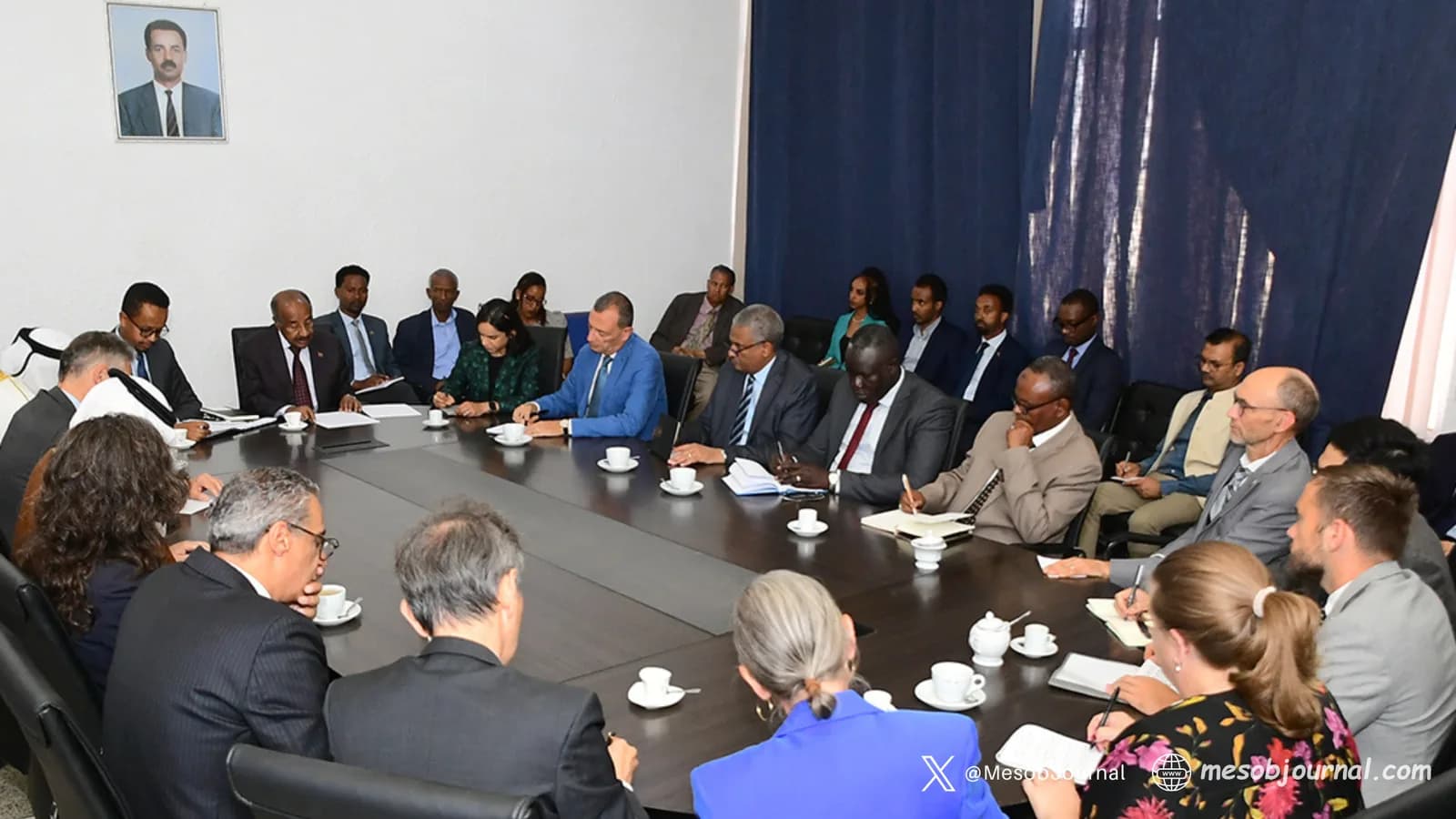
Eritrea’s Foreign Minister Osman Saleh told the diplomatic community in Asmara on Wednesday that the debate over the United Nations’ country-specific human rights mandate on Eritrea is “permanently closed,” and said Asmara would no longer spend diplomatic capital engaging bilaterally on the issue.
Addressing ambassadors, chargés d’affaires and the UN Resident Coordinator, Osman said the position followed extensive consultations between Eritrea’s Advisory Committee on Human Rights and representatives of the European Union, member states and the broader diplomatic community in Asmara and Geneva.
The mandate of the Special Rapporteur on the situation of human rights in Eritrea was established in 2012 and has been renewed repeatedly by the Human Rights Council. Eritrea has rejected the mandate since its establishment, arguing that it is selective, politicized and incompatible with a cooperative human rights process based on sovereign equality.
Osman said he would not revisit arguments Eritrea had presented over the past fourteen years. Instead, he said the focus was now on the political, institutional and financial consequences of maintaining a mechanism that, in Asmara’s view, no longer serves a constructive purpose.
“For fourteen years, Eritrea has maintained a consistent, principled stance across the Human Rights Council, the General Assembly, and bilateral channels,” Osman said, according to the text of the briefing. “Our position is settled.”
Fourteen Years, Millions of Dollars
Osman said the mandate has cost more than $8 million — over 120 million Eritrean nakfa — in cumulative UN programme budget implications over fourteen years, calling it a waste of scarce resources at a time of acute liquidity strain across the UN system.
He said an equivalent sum, channeled instead through Eritrea’s self-reliance development model, had funded more than 40 solar-powered regional water networks serving over 100,000 people between 2021 and 2025, along with hospital reconstruction projects.
The minister said the mandate had caused lasting damage to Eritrea’s international standing, deterring tourism and foreign investment by casting the country as unstable, and had functioned as what he called “a clearinghouse for state-sponsored defamation.”
He described the mandate as “a textbook case of institutional inertia” and said it had become a recurring political exercise whose continuation had become an end in itself.
Border Tensions With Ethiopia
Osman also pointed to what he described as a military buildup by Ethiopia along Eritrea’s borders, saying senior figures in Ethiopia’s ruling party were mobilizing heavy military formations while using international platforms to question Eritrea’s sovereignty over its Red Sea coastline under the banner of a “maritime imperative.”
He said the Human Rights Council had remained silent on those developments while continuing to devote time and resources to a mandate Eritrea considers artificial.
Ethiopian officials, including Prime Minister Abiy Ahmed, have raised the question of Ethiopian access to a seaport in increasingly assertive public remarks in recent years, describing it as an economic and strategic necessity for the landlocked country. Eritrea has consistently maintained that its coastline, ports and territorial waters are not open to pressure or negotiation.
Eritrea’s Position on Cooperation
According to Osman, Eritrea remains fully committed to the UN human rights system through channels that apply equally to all member states, including the Universal Periodic Review, treaty body mechanisms and consensual technical cooperation.
He said Asmara rejects only the “politicization and selective targeting” represented by the country-specific mandate.
The foreign minister said the choice now rests with Eritrea’s partners: continue funding what he called sterile political confrontation, or engage with Asmara through dialogue based on sovereign equality and technical partnership.
The Human Rights Council is expected to consider the mandate’s renewal in Geneva. With Wednesday’s statement, Eritrea has signaled that it will not take part in further bilateral consultations on the mandate regardless of the Council’s decision.