
Who Is My Brother? Who Is My Sister? Who Is My Comrade?
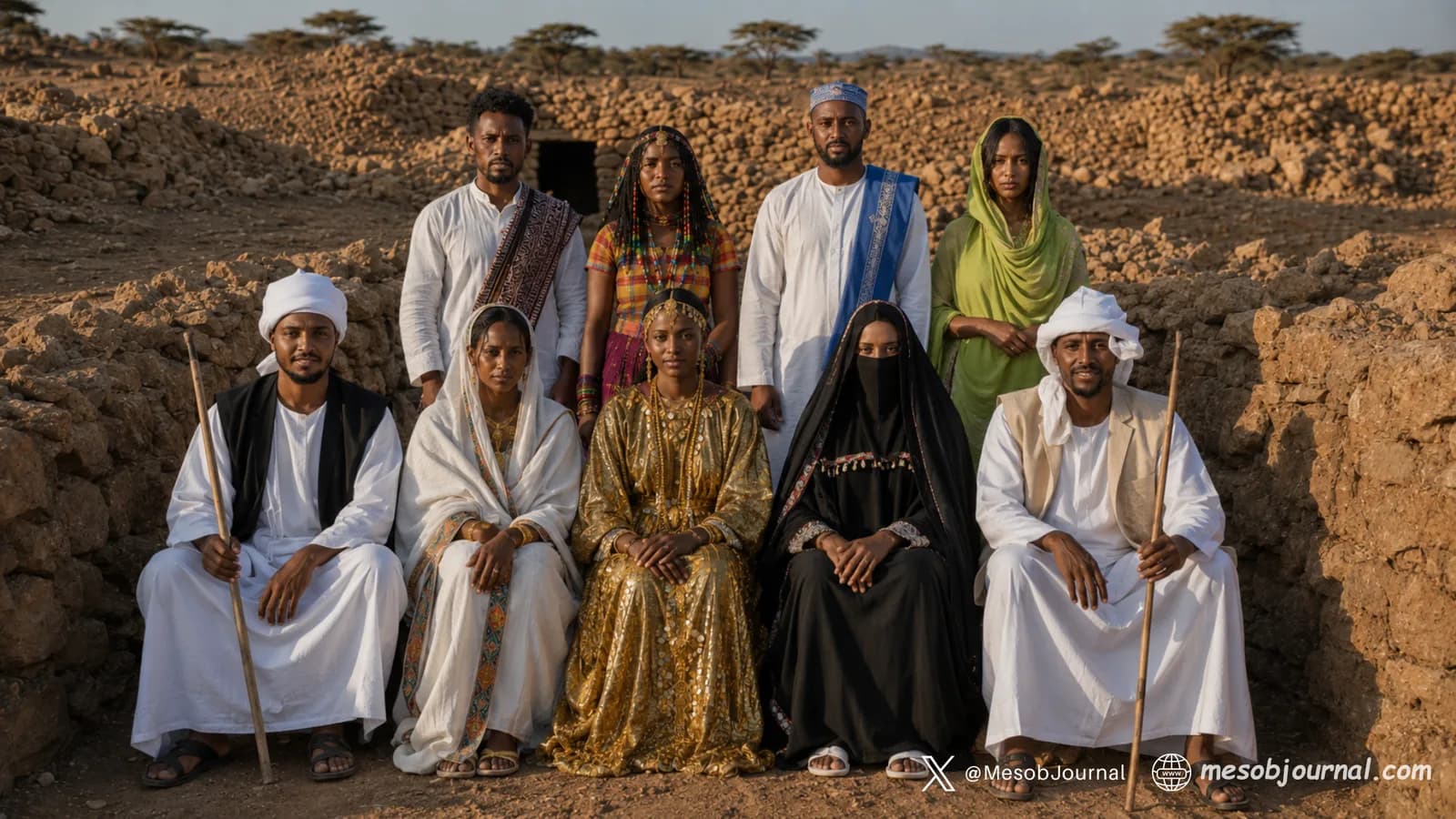
The true measurement of a nation's enduring strength is found not in the absolute homogeneity of its populace, but rather in the resilience, depth, and adaptability of the invisible bonds that tie its citizens together. For a country like Eritrea, a young nation composed of nine distinct ethnic groups, the fundamental question of civic identity is both deeply profound and highly urgent: Who is my brother, and who is my sister? Who is my Comrade?
The answer to this question must resolutely transcend the traditional markers of biological lineage, regional affinity, ancestral ties, and religious affiliation. Any Eritrean patriot who consciously values the entire national fabric above all else — above personal ideology, sectarian faith, regional bias, or tribal custom — is a brother, a sister, or a comrade. To conceptualize national identity through any narrower, more exclusive lens is inherently counterproductive, acting as a primary catalyst for the societal fractures, misunderstandings, and historical grievances witnessed in the modern political arena.
Eritrea is fundamentally a country built on the basic, non-negotiable principle of Unity in Diversity. Through profound, intense, and often painful historical experiences, these nine diverse groups voluntarily chose to merge their destinies, consciously agreeing to unite as a singular, indivisible nation. This collective process established a shared civic identity that has successfully withstood decades of external pressure and internal evolution.
However, this national unity can never be viewed as a static achievement or a historical trophy safely locked away in the past. It is a living, breathing social contract that cannot be taken for granted. It demands continuous intellectual attention, cultural care, and proactive institutional effort to strengthen and improve its internal substance. To give permanent sustenance to Eritrea’s national unity and identity, every generation must remain vigilant, working deliberately to combat the emerging divisive tendencies that threaten to fray the beautifully woven national fabric. ንፋቀር ንሳነ ንከባበር let us love, compromise, and respect one another.
The Interpersonal Foundation: Translating Personal Pillars into National Identity
To understand how a highly diverse society stays bound together under a single flag, one must first analyze the foundational pillars that govern stable interpersonal relationships. Human societies are macrocosms of human partnerships. The exact emotional and psychological mechanisms that keep two individuals committed to a lifelong union are the very same values required to sustain a cohesive citizenry. These core principles are love, compromise, and respect.
In a healthy intimate relationship, love provides the vital emotional connection, the deep-seated empathy, and the sincere desire for another person's happiness and security. It is not a passive feeling, but an active, daily choice to support, cherish, and stand by someone even when external life circumstances become incredibly challenging.
Compromise acts as the practical teamwork and structural flexibility that keeps the partnership balanced over time. True compromise does not mean that one individual is forced to constantly make unilateral sacrifices, or give up their identity to appease the other. Instead, it represents a mutual concession, a willingness to meet in the exact middle so that both partners feel genuinely heard, valued, and safe. It transforms natural disagreements away from destructive battles designed to be won or lost, turning them instead into collaborative opportunities to grow closer as a cohesive team diplomatically.
Respect serves as the absolute cornerstone of any long-term bond. It means actively recognizing and honoring the partner's boundaries, opinions, distinct background, and inherent individuality. True respect requires the practice of active, empathetic listening, ensuring that the other person feels fully seen and validated, especially during intense disagreements when emotions run high.
When these three fundamental pillars are absent, relationships inevitably deteriorate into a toxic pattern of trading damage, where minor friction escalates into deep-seated bitterness, alienation, and eventual fragmentation. Respect ensures you honor your partner's feelings; love provides the patience and empathy needed to navigate natural differences; and compromise provides the actionable, real world flexibility that keeps the connection sustainable.
When these exact values are elevated from the private sphere to the grand stage of nation building, they manifest as national identity, inclusivity, mutual support, and civic engagement. National unity transforms a collection of disparate individuals who happen to inhabit the same geographic territory into a living, breathing community that instinctively protects and supports one another. It forms the ultimate social glue.
A unified population fosters domestic peace, minimizes internal conflict, and drives economic and social progress by ensuring that all components of society work toward common national goals. When a population is genuinely unified, the country gains the unique capacity to withstand massive external challenges, recover rapidly from systemic economic or natural hardships, and create a safer, far more stable environment for future generations to inherit. For the people of Eritrea, these values are not merely abstract philosophical ideals or academic theories; they have historically been hard-won existential necessities required to construct, defend, and preserve the state.
The Crucible: Forging Unity in the Trenches (1961–1991)
The historical crucible that successfully transformed these abstract concepts into practical, life-or-death mechanisms for survival was the epic 30-year armed struggle for Eritrean independence, spanning from 1961 to 1991. This prolonged conflict was the defining forge of modern Eritrean identity. It is vital to recognize that Eritrean national unity (Hadnet) did not emerge smoothly from an organic, pre-existing, homogenous culture. Rather, it was a highly sophisticated, deliberately engineered social revolution designed in the literal and figurative trenches to intentionally overcome deep, entrenched internal divisions.
Prior to the revolution, the Eritrean geographic region was highly fragmented along complex religious and ethnic lines. The population was broadly split between Christian highlanders who spoke Tigrinya and Muslim lowlanders from various pastoralist groups, spread across nine distinct ethnic groups, each with its own language, customs, and traditional legal codes. Early iterations of the independence movement, primarily organized under the umbrella of the Eritrean Liberation Front (ELF), initially suffered from severe, localized factionalism. The movement was structurally divided into regional and sectarian zones, a design choice that unfortunately exacerbated mutual suspicion, ethnic and clan competition, and religious friction.
The historical trajectory shifted dramatically with the rise of the Eritrean People's Liberation Front (EPLF), which initiated a radical, strictly secular, and civic approach to the concept of nationalism. To build a highly disciplined, functioning revolutionary army capable of taking on a much larger adversary, the leadership recognized that organizing fighters by tribe, region, or faith was a recipe for ultimate defeat.
Consequently, a strict policy of integration was enforced. A Christian Tigrinya fighter from the central highlands, a Muslim Afar fighter from the scorching Red Sea coast, and a Kunama fighter from the southwestern lowlands were intentionally placed into the exact same combat units. They ate from the same metal dishes, slept under the same camouflage nets, buried side by side, and stood guard together through the night. This enforced structural equality cultivated a profound, unprecedented mutual respect for cultural differences while simultaneously cementing a collective, supra-ethnic Eritrean consciousness.
This wartime unity required a radical degree of social compromise and egalitarianism that completely dismantled centuries of entrenched feudal, patriarchal, and class structures. To win the war, individual citizens and distinct cultural groups had to be willing to sacrifice traditional privileges for the collective survival of the nation. One of the most revolutionary socio-political compromises achieved during this era was the total, uncompromised integration of women into the liberation movement.
Women eventually made up roughly 30% of the freedom fighters (Tegadelti). Traditional, deeply patriarchal norms were forcibly set aside by the demands of the revolution. Women did not merely serve in supportive or administrative roles; they fought directly on the front lines, operated heavy artillery, drove tanks, commanded mixed-gender platoons, and held significant leadership positions within the political apparatus.
In tandem with this gender revolution, rigid class hierarchies and urban-rural divides were systematically erased. Under the front's overarching ethos, highly educated urbanites from Asmara or Keren lived under identical, harsh conditions alongside illiterate rural nomadic pastoralists. The movement established a vast network of mobile, underground schools hidden in the rugged, rocky terrain of the northern mountains, particularly around the revolutionary stronghold of Nakfa. In these hidden classrooms, literate fighters were strictly required to teach their illiterate peers how to read and write, while rural fighters taught urban intellectuals the vital skills of wilderness survival, animal tracking, and local geography. This intense exchange effectively flattened social stratification, creating an unparalleled sense of mutual reliance.
Out of the extreme brutality of a war waged against a larger, heavily subsidized Ethiopian military apparatus which was backed first by the United States and later heavily armed with Soviet weaponry, emerged an intense, communal manifestation of love. This phenomenon is frequently referred to by cultural historians as the culture of the field or trench love (Fqri).
Because the liberation movement was completely isolated from meaningful international diplomatic recognition or foreign military backing, the fighters were forced to adopt a policy of absolute, radical self-reliance (r'esKa mK'al). Resources such as water, grain, and scarce medical supplies were rigorously rationed and shared with mathematical equality, extending from top commanders down to the newest recruits.
Fighters built elaborate underground factories, fully functioning hospitals, pharmaceutical labs, and mechanical repair shops completely hidden within the subterranean redoubts of the northern mountains to escape constant aerial bombardment. This shared, deeply isolated suffering created an intensely loyal psychological bond. Freedom fighters viewed their comrades not merely as fellow soldiers in a political struggle, but as a chosen, protective family for whom they were willing to lay down their lives.
Modern Stresses and the Changing Face of National Harmony
When the victorious liberation forces finally marched into the capital city of Asmara in May 1991, they inherited a population that was completely unified by a shared history of collective trauma, immense sacrifice, and ultimate military victory. The historic 1993 UN-monitored referendum in which an astonishing 99.8% of Eritreans worldwide voted in favor of sovereign independence stood as the ultimate, indisputable legal and emotional manifestation of this historical unity.
However, the political and social conditions required to forge a nation during a thirty-year war are fundamentally different from the conditions required to govern and develop a sustainable state during decades of complex peacetime reality. Today, this foundational battlefield unity faces modern, systemic stresses that test the contemporary resilience of the Eritrean national identity.
The first major contemporary stress centers on the definition of love and patriotism (Fqri). While love for the homeland remains a powerful, universal constant among Eritreans worldwide, a polarization might emerge between the domestic population living inside the country and the vast, multi-generational global diaspora.
Let's be vigilant. Severe political differences regarding the country's governance model and weak consciousness may strain the traditional bonds of brotherhood. This polarization may create intense social divisions, mutual mistrust, and emotional alienation within families, hometown associations, and community spaces abroad, turning a once-unifying patriotism into a battleground of competing political narratives.
The second bottleneck involves the mechanism of compromise (Meqb'bal). Historically, Eritrean nationalism succeeded because diverse communities were willing to compromise on localized, sectarian interests to build a comprehensive civic identity.
The third area of contemporary stress involves the application of respect (Kibri) as civic equality. Eritrea continues to maintain an incredible, globally exemplary culture of grassroots religious, ethnic, and gender tolerance. It remains deeply taboo within Eritrean society to stir up sectarian tension between Christians and Muslims, and local community traditions continue to place an immensely high premium on personal humility, hospitality, and collective communal accountability.
However, a modern challenge arises when absolute internal solidarity, institutional discipline, and the temporary subordination of individual desires are mandatory requirements to respect and safeguard the nation's hard-won external sovereignty in a hostile geopolitical environment.
Redefining the Bond for a Peacetime Era
The rich historical narrative of modern Eritrea demonstrates that true brotherhood, sisterhood, and comradeship were never defined by shared DNA, identical language, the same ethnicity or uniform religious worship. Instead, they were deliberately forged through shared, egalitarian sacrifice and an unyielding commitment to the collective national fabric. The legendary culture of the field proved beyond a shadow of a doubt that when the principles of love, compromise, and respect are actively operationalized, a highly diverse population can defy international expectations, overcome impossible odds, and construct a resilient, proud nation.
Yet, national unity cannot be treated as a static relic of the 1961 - 1991 generation. It is a living, evolving social contract that requires continuous nourishment, fresh perspectives, and empathetic adjustment from each passing generation.
As Eritrea navigates the deep complexities of the 21st century, marked by massive generational shifts, a vast global diaspora, and rapid geopolitical changes in the Horn of Africa, the ultimate test of the Eritrean soul will be its ability to transition its core values from the strict regimentation of wartime survival to the dynamic collaboration of peacetime development.
To prevent divisive tendencies from slowly eroding what was built at such a high cost in the trenches of Nakfa, the definition of an Eritrean patriot must remain radically inclusive, spacious, and forward looking. National harmony will truly thrive when the foundational principles of Fqri (love), mqb'bal (compromise), and kbri (respect) are extended not just to those who share our exact political opinions or geographic locations, but to every single brother, sister, and comrade who values the long-term well-being of the Eritrean people.
We must explicitly reject any counterproductive, narrow definitions of identity that seek to exclude or alienate fellow citizens based on regional, religious, ethnic, or ideological differences. It is through this continuous, patient, and deliberate effort that Unity in Diversity ceases to be a mere political slogan, and remains what it was always intended to be: the ultimate shield, the enduring pride, and the permanent foundation of the Eritrean nation.