
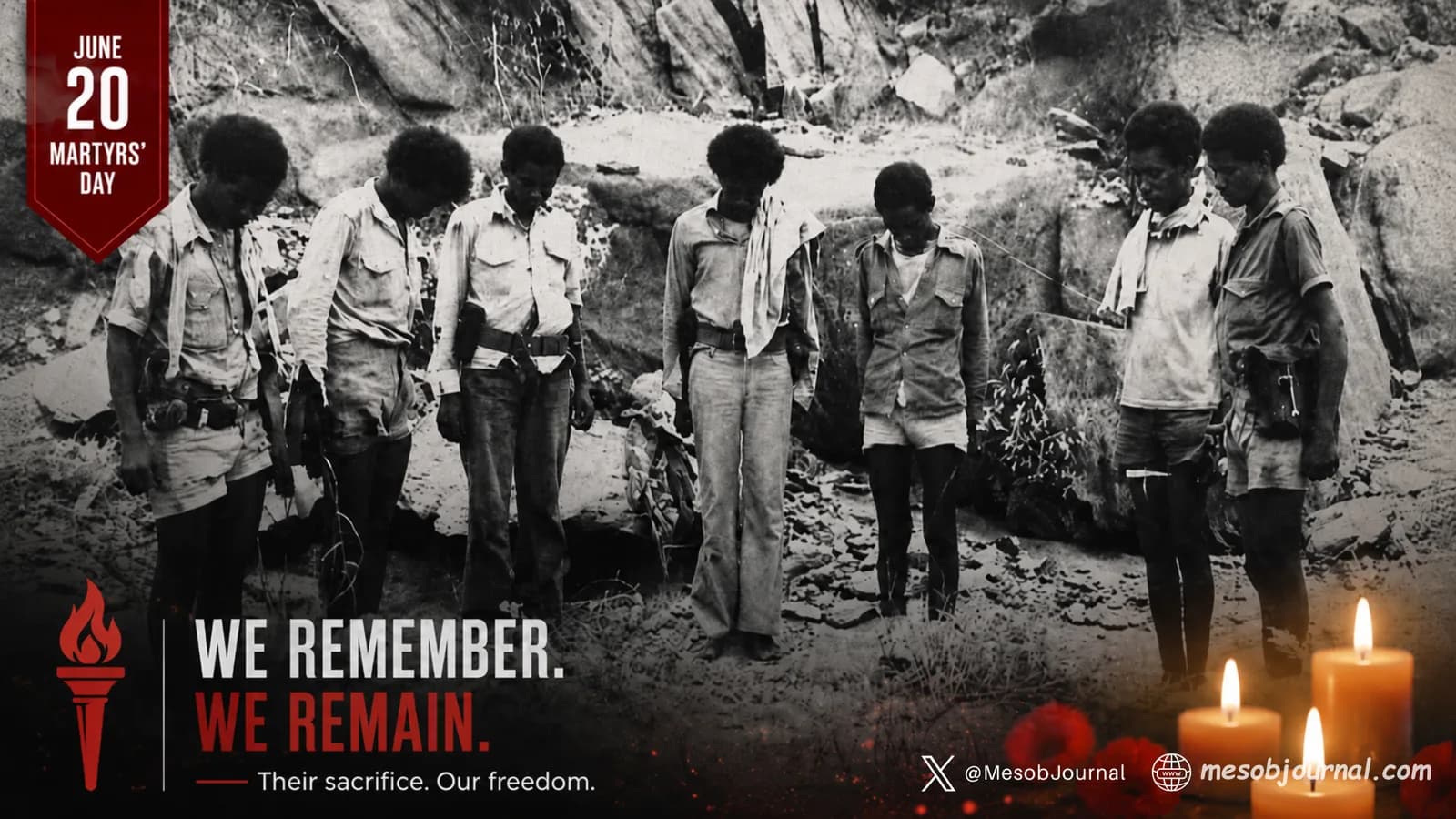
June 20 is not an ordinary date in Eritrea. It is the day the nation lowers its voice, lights its candles, and remembers the men and women who gave everything so that Eritrea could stand upright among the nations of the world.
They were not soldiers of fortune. They were not paid fighters chasing rank, privilege, or foreign reward. Many were students, farmers, workers, mothers, fathers, sons and daughters who walked into the mountains with almost nothing except conviction. They fought because history had left Eritrea with no easy road, no generous empire, no protective superpower, and no international system willing to defend its right to exist.
Their sacrifice was born from one of Africa’s longest and most painful struggles for freedom. Eritrea had passed through layers of foreign rule, colonial calculation and geopolitical betrayal. Its people were denied the basic right that others loudly preached but quietly refused to apply: the right to decide their own future.
When Eritreans demanded independence after the Second World War, powerful countries chose strategy over justice. The United Nations imposed federation with Ethiopia against the clear will of many Eritreans. Then Ethiopia dismantled that arrangement, erased Eritrea’s autonomy, annexed the country, and tried to bury its national identity under imperial rule.
That is the wound from which the Eritrean liberation struggle emerged.
For thirty years, Eritrea fought a war that was never equal on paper. Successive Ethiopian regimes received weapons, backing and diplomatic cover from powerful states. Eritrea’s fighters carried the burden with discipline, sacrifice and extraordinary self-reliance. They fought in the mountains, in the trenches, in the villages, in the Red Sea lowlands, and in the hearts of ordinary people who refused to accept permanent submission.
The martyrs of Eritrea did not die for a flag alone. They died for dignity. They died so a people long treated as a bargaining chip by empires, monarchs, military regimes and international diplomats could finally speak in their own name. They died so Eritrean children would not inherit silence, fear and humiliation as their national destiny.
That is why Martyrs’ Day is sacred.
It is not only a ceremony. It is a national covenant. When candles glow across Eritrea on the eve of June 20, they are not decorative lights. They are a language. They say that memory has not been defeated. They say the names of the fallen still live in the homes, streets, schools, farms and hearts of the people they freed.
Every Eritrean family understands this day. Some lost brothers. Some lost sisters. Some lost parents. Some lost children. Some lost friends whose faces remain young forever in memory. The story of Eritrea is not written only in documents and declarations. It is written in lives interrupted, letters never finished, songs carried through struggle, and graves that became national classrooms.
The world often misunderstands Eritrea because it tries to read the country without reading its sacrifice. It sees discipline and calls it hardness. It sees self-reliance and calls it isolation. It sees sovereignty and calls it defiance. But Eritrea’s political character did not fall from the sky. It was forged by a people who learned, through bitter experience, that freedom given by others can be withdrawn by others, but freedom paid for by sacrifice becomes a national responsibility.
This is why Eritrea refuses to kneel before pressure, threats or lectures from those who were silent when its rights were denied. The martyrs did not give their lives so Eritrea could exchange one form of domination for another. They did not defeat colonialism, annexation and occupation so that future generations would outsource their sovereignty to foreign capitals, hostile media narratives or regional ambitions dressed as diplomacy.
June 20 also belongs to Africa.
Eritrea’s martyrs are African heroes because their struggle speaks to the wider African experience: borders decided by outsiders, peoples divided by imperial interests, resources and coastlines treated as strategic prizes, and liberation movements forced to fight not only local domination but the global systems that protected it.
Their victory proved something powerful. A small African people, surrounded by enemies and abandoned by the powerful, could still defeat injustice through unity, organization, endurance and belief. Eritrea’s independence was not a gift from history. It was taken from history by sacrifice.
In a region where expansionist rhetoric is again being normalized, where the Red Sea is treated as a playground for foreign and regional ambition, and where powerful interests still prefer obedient states over sovereign ones, Eritrea’s Martyrs’ Day carries a message beyond remembrance. It is a warning against forgetting the cost of freedom.
Peace cannot be built by denying history. Regional stability cannot be built by threatening borders. African dignity cannot be built by asking small nations to surrender what their martyrs died to protect.
Eritrea remembers because forgetting would be betrayal.
The duty of the living is not only to mourn the fallen. It is to build a country worthy of them. It is to protect the sovereignty they secured, care for the families they left behind, defend the truth of their struggle, and pass their legacy to generations who may not have seen the trenches but must understand the price of the flag they inherit.
On June 20, Eritrea does not ask the world for permission to remember.
It stands in silence. It lights its candles. It bows before its martyrs. And then it rises again, carrying their trust forward.
Because a nation built on sacrifice does not forget.
And a people who remember their martyrs cannot be easily defeated.
Eternal Glory To Our Martyrs.