
From a Civilizational Narrative to Modern Political Entitlements
The Anatomy of a Political Coma
Ethiopia remains trapped in a political coma induced by deeply entrenched historical myths that have been repeated for generations until they are accepted as unquestionable truths. Unlike a medically induced coma, which doctors use temporarily to protect a patient and aid recovery, Ethiopia’s political coma has persisted for decades. This prolonged state of collective unconsciousness has actively prevented honest reflection about the country’s past and present, freezing the nation in an unyielding ideological stance that severely hinders societal progress.
The primary danger of this condition lies in how tightly national mythology has bound itself to the state apparatus, leaving little room for critical historical analysis. One of the most influential narratives in modern Ethiopian political culture is the claim that Ethiopia represents a continuous Christian civilization stretching back 3,000 years. This narrative was actively promoted during the reign of Emperor Haile Selassie and reinforced through state institutions, educational systems, and sections of the Ethiopian Orthodox Church. Over time, these narratives became so deeply embedded in public consciousness that questioning them is often treated as an attack on Ethiopia itself rather than an attempt to distinguish between history and mythology.
The underlying contradiction of this claim is rarely examined by the public. Christianity emerged globally in the first century AD, and the Ethiopian Orthodox Church itself traces its origins to the fourth century AD. Yet generations of Ethiopians have been taught to view their country as a 3,000 year old Christian civilization. The issue here is not religious belief, as individuals are entirely free to believe whatever they wish. The crisis arises when myth becomes accepted as historical fact and is subsequently used to shape political expectations, territorial claims of sovereign countries, and national identity.
The consequences of this conflation extend far beyond academic debate. Historical myths actively shape political expectations in the present day. If a nation is taught that it has existed continuously for three millennia as a great civilization, many citizens will naturally conclude that it possesses ancient rights and privileges that transcend modern political realities and international laws.
How the Myth Became Institutionalised
National myths do not become powerful simply because they are repeated; they gain their immense strength when they are intentionally embedded into state institutions. Throughout the twentieth century, the Ethiopian state systematically promoted a fictitious interpretation of history through schools, official ceremonies, state symbols, public narratives, and religious institutions. Generations of Ethiopians grew up hearing stories that linked the modern Ethiopian state directly to biblical figures, ancient kingdoms, and an uninterrupted civilizational lineage stretching back millennia.
The primary purpose of such narratives was to legitimize the story of the 'God chosen' Solomonic Dynasty, also known as the House of Solomon. Like many medieval states in Europe, imperial Ethiopia sought a mystical, divine story capable of controlling diverse populations, languages, cultures, and regions under a singular authority. Emperor Haile Selassie engineered this narrative to strengthen the legitimacy of the imperial system and consolidate political authority.
To fully understand this institutionalization, one must look at how historical documentation was treated. While historical artifacts, the ancient architectural marvels of Axum, and the rock-hewn churches of Lalibela prove the existence of sophisticated early civilizations, they do not mathematically or politically equate to an unbroken, 3,000 year old continuous centralized nation state ruling over the entirety of modern Ethiopia's geographic borders.
Instead, ancient theological and legal texts like the Kebra Nagast (The Glory of the Kings) and the Fetha Nagast (The Law of the Kings) were weaponized by the state as political constitutions rather than being treated as contextual, historical documents. Historical inquiry gradually became entirely subordinate to political doctrine. Rather than examining archeological and textual evidence objectively, many institutions became deeply invested in reinforcing the official narrative. As a result, mythology and history became intertwined to such a degree that many citizens ceased to distinguish between the two.
Nations Mature When They Distinguish Myth from History
Every nation possesses founding myths. Myths may be exaggerated, but they are not necessarily outright lies; they are stories communities tell about themselves to create identity, purpose, and continuity. The problem begins when myths are mistaken for historical facts and become the basis for serious political decisions. History is based on evidence, critical inquiry, and a willingness to revise conclusions when new facts emerge, whereas myths serve a different purpose by providing meaning and symbolism.
Many societies across the globe have successfully separated mythology from history:
- The Divine Right of Kings: For centuries, Europeans accepted the doctrine that kings ruled by divine right. Today, that belief is understood as a historical doctrine rather than an objective fact.
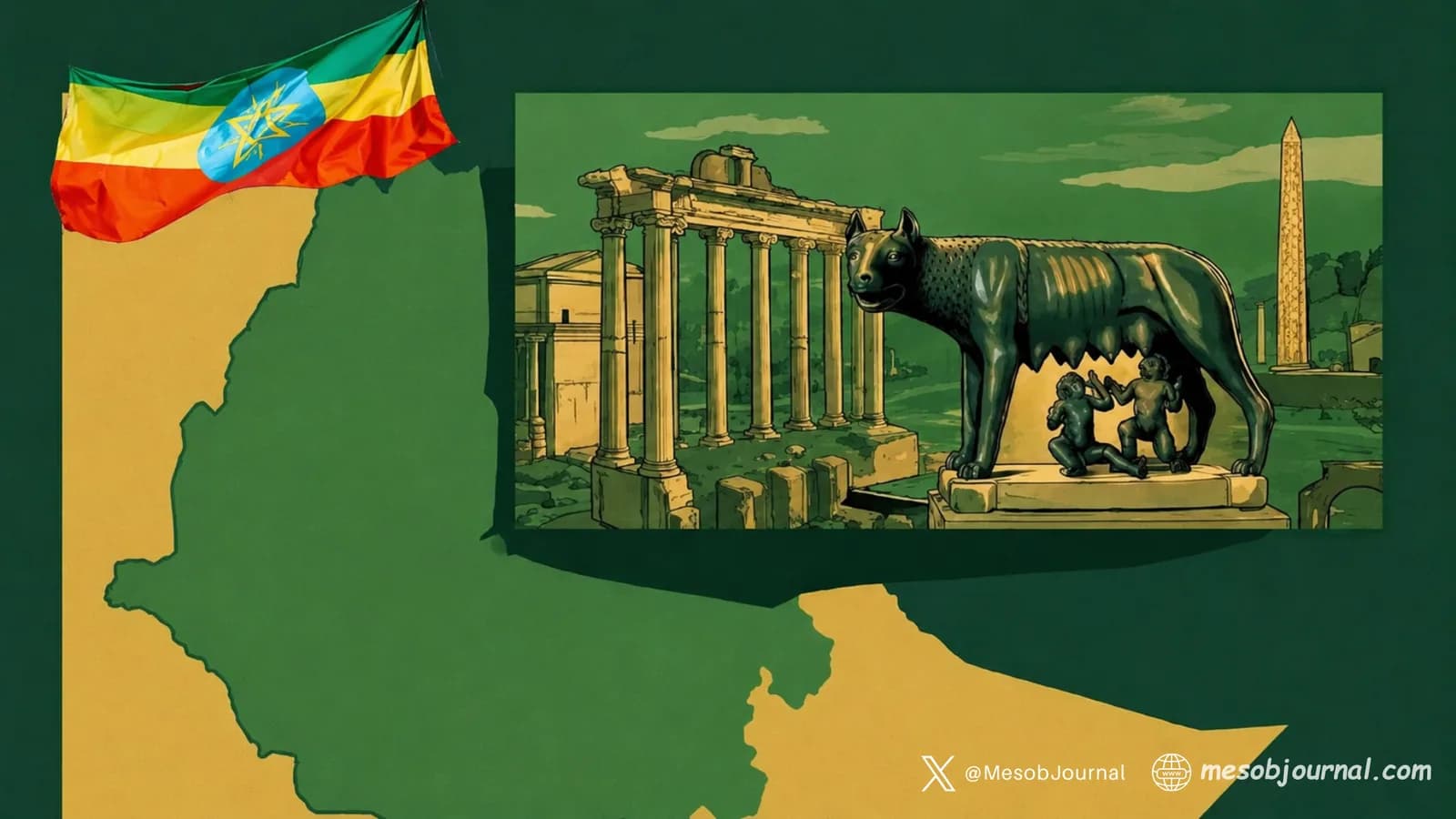
- Romulus and Remus: Ancient Romans believed their civilization was founded by Romulus and Remus, twins raised by a wolf. Modern Italians celebrate Roman history while recognizing the distinction between legend and evidence. There is a powerful lesson here: during the 1930s, Benito Mussolini attempted to weaponize the myth of the Roman Empire to justify a tragic, fascist invasion of Ethiopia itself. It was only by shedding these dangerous, myth based territorial entitlements that modern Italy matured into a peaceful, stable democracy.
- King Arthur: The legends of King Arthur remain central to British cultural heritage, yet few historians treat Arthur’s kingdom as an established historical reality.
Nations become stronger not weaker when they learn to distinguish symbolic narratives from verifiable history. Ethiopia faces this exact challenge today, needing to separate its cultural pride from its historical realities.
Why Myths Become Stronger During Times of Crisis
Periods of uncertainty often strengthen the appeal of national myths. When societies face political instability, economic hardship, civil conflict, or identity crises, many people seek reassurance in stories of past greatness. The more uncertain and bleak the future appears, the more attractive a glorious past becomes. This tendency is not unique to Ethiopia; it has appeared repeatedly throughout human history.
Myths provide immediate emotional comfort and offer certainty in highly uncertain times. Yet they also carry deep psychological dangers. Today, this process is hyper-accelerated. While the imperial era relied on state controlled textbooks, the modern digital landscape allows state media, coordinated television documentaries, and social media algorithms to mass produce historical grievances.
A society that becomes preoccupied with restoring a mythologized past via digital echo chambers may completely lose sight of practical challenges in the present. The search for mystical grandeur can easily become a substitute for political reform, economic development, institutional renewal, and national reconciliation. A nation simply cannot solve today's problems with yesterday's legends.
Myth, Ideology, and Contemporary Politics
Historical myths become especially dangerous when they merge with modern political ideologies. In recent years, Ethiopia has witnessed the rise of competing ideological projects that seek legitimacy through identity rather than shared citizenship. One prominent example is the concept commonly referred to as Oromummaa. Like many political ideologies, Oromummaa exists in multiple interpretations. Many Oromo intellectuals understand it simply as a movement for cultural recognition, equality, and political participation.
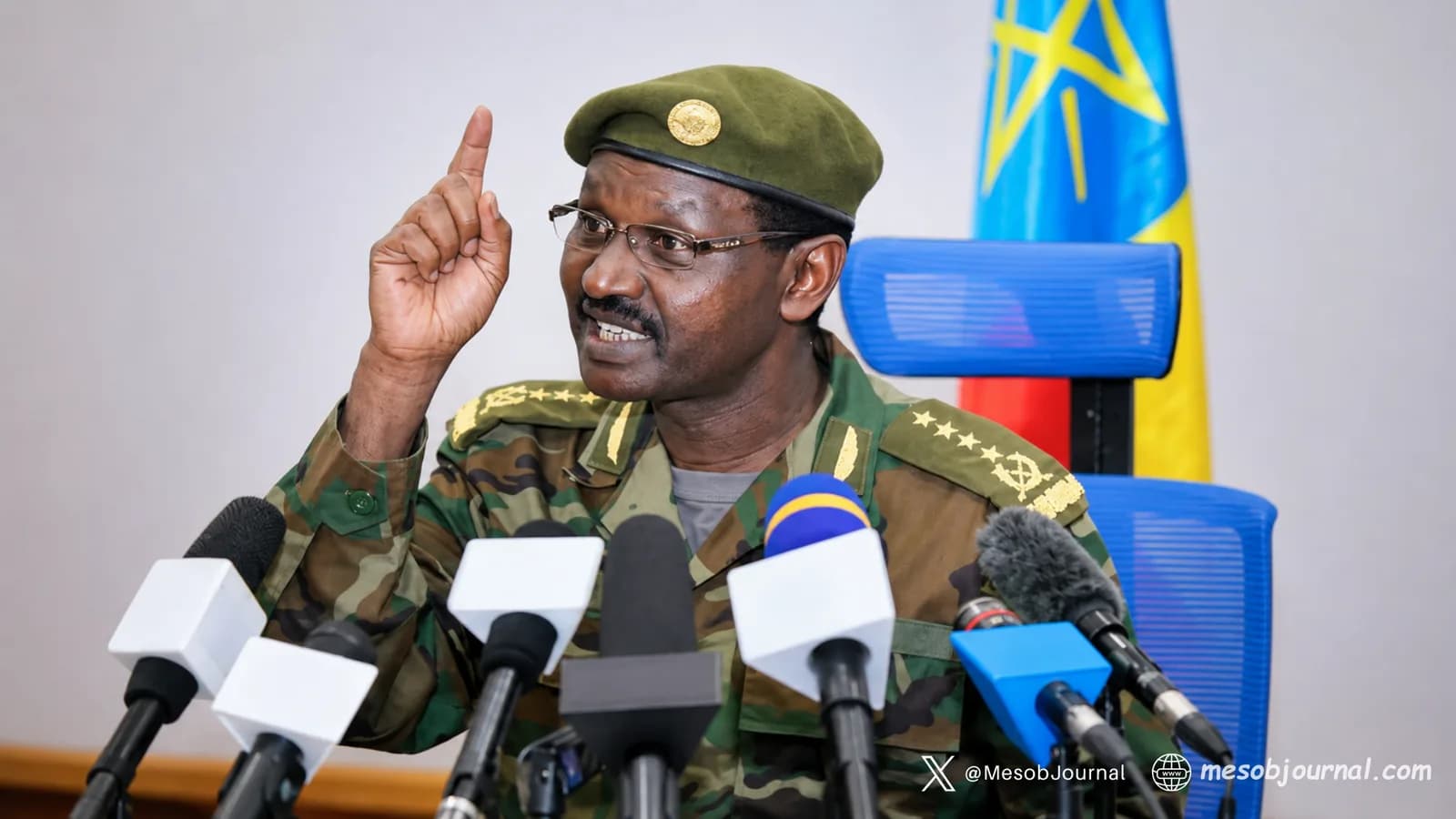
However, some political actors, for example the Potemkin Party under Colonel Abiy Ahmed, have promoted more exclusionary interpretations. This has created widespread perceptions that state power should primarily benefit one group at the expense of others. The slogan often paraphrased by top PP leaders, including the Chief of Staff of the Federal Army, as our turn to rule (meaning our turn to eat), has become associated with these exclusionary perceptions.
Yet the reality is far more complex. Ordinary Oromo citizens have not experienced the prosperity promised by these political slogans. Large areas of Oromia continue to suffer from intense insecurity, violence, displacement, poverty, and ongoing armed conflict. The Oromo people themselves remain among the principal victims of Ethiopia's current crisis.
This illustrates a broader historical lesson: political myths and ethnic identity based ideologies rarely benefit ordinary citizens. Instead, they primarily benefit political elites who derive their power and legitimacy from them.
The Danger of Myth-Based Politics
History offers many severe warnings about the dangers of political movements built on historical myths. One of the most famous examples occurred in Europe during the 1930s. Nazi Germany justified territorial expansion by invoking historical grievances, ethnic unity, and claims about lands allegedly belonging to the German nation. The annexation of Austria and the occupation of parts of Czechoslovakia were presented to the public as corrections of historical injustices. Many observers initially dismissed these claims as empty political rhetoric, but they proved to be the prelude to a global catastrophe.
The lesson is not that Ethiopia has become a modern equivalent of Nazi Germany, but rather to emphasize a troubling trend. The lesson is that political myths become dangerous when they evolve into a sovereign nation's territorial entitlement. Once myths become political rights, compromise becomes difficult, and when compromise becomes impossible, conflict becomes more likely. History repeatedly demonstrates that wars often begin not with armies, but with ideas.
From Myth to Territorial Claims
History, Memory, and Modern Sovereignty
History matters. Nations naturally develop emotional attachments to places, regions, and historical experiences. Ethiopia, Sudan, Djibouti, Eritrea or Norway, Sweden, Denmark, Germany, or Mongolia, China, Russia and others are no exception. The peoples of today's Ethiopia and Eritrea, or Ethiopia and Kenya, or Norway and Sweden, have interacted for centuries through trade, migration, religion, warfare, and cultural exchange. Families, languages, and communities span modern borders, and these historical connections are entirely real.
However, historical connection is fundamentally different from political ownership. Modern international law does not grant territorial rights on the basis of real or imagined historical memory, imperial expansion, religious traditions, or ancient kingdoms. If it did, the entire international system would collapse into endless disputes over former empires and vanished states. The modern international order is based firmly on internationally recognized borders, sovereign equality, and mutual recognition among states.
Eritrea and the Colonial Boundary Question
A central source of misunderstanding, or rather purposely distorted facts, concerns the origins of modern Eritrea and Ethiopia. Modern Eritrea emerged as a distinct colonial territory under Italian administration on January 1, 1890. Like virtually all African states, Eritrea inherited colonial boundaries that later became internationally recognized under the foundational legal principles adopted across the continent.
Specifically, the modern African state system relies on the 1964 Organization of African Unity (OAU) Cairo Declaration, which enshrined the principle of uti possidetis juris — the agreement that newly independent states must respect and preserve the borders inherited from colonial administrations.
Modern Ethiopia likewise emerged through a process of state expansion and consolidation during the nineteenth century under Emperors Tewodros, Yohannes IV, and especially Menelik II. Large portions of present-day Ethiopia were incorporated after the formation of Eritrea in 1890 through military conquest and imperial expansion. This is a recorded fact this is history!
This historical reality does not diminish the fact that people existed in present day Eritrea and Ethiopia for tens of thousands of years under different forms of entities with no locally or globally recognized modern borders. It simply states that both Eritrea and Ethiopia, like the rest of the 200 countries in the world, are modern creations.
The Federation and Annexation
The only period during which Eritrea and Ethiopia existed within a single internationally recognized political arrangement was the federation established by the United Nations in 1952. The unfair federation was imposed by external powers during the Cold War, denying Eritrea the right of self determination enjoyed by many other former colonies. Emperor Haile Selassie illegally dissolved the federation and annexed Eritrea in 1962.
The thirty year liberation struggle that followed was fought largely around this issue. Whether one agrees with Eritrean nationalism or not, it is impossible to understand Eritrean political thinking without recognizing the central importance of these historical experiences. For Eritreans, sovereignty is not an abstract concept; it is the product of immense sacrifice.
From Myth and Historical Attachment to Territorial Entitlement
This historical context is critical because contemporary debates about access to the Red Sea increasingly invoke narratives of historical entitlement. Some voices argue that Ethiopia possesses a natural right to maritime access because of imperial history, civilizational status, ancient kingdoms, or historical memories based on myth.
Such arguments are dangerous. This is not because history is irrelevant, but because historical memory based on myth cannot override modern sovereignty. If ancient history, real or imagined, created legal rights, then every border in Africa, Europe, Asia, and the Middle East would become subject to revision. By challenging recognized treaties and borders under the guise of ancient civilizational rights, political elites risk subverting the very legal framework that prevents sub-Saharan Africa from dissolving into permanent border wars.
The consequences would be catastrophic. International law exists precisely to prevent such outcomes. Territorial questions can only be resolved through peaceful negotiation, mutual agreement, economic cooperation, and absolute respect for sovereignty.
Eritrea’s Strategic Patience Should Not Be Misread
For more than three decades, Eritrea has consistently emphasized sovereignty, non-interference, and regional cooperation based on mutual respect. Despite repeated provocations, hostile rhetoric, sanctions, border disputes, and military confrontations, Eritrea has generally sought to avoid becoming trapped in cycles of escalation. Ethiopian leaders and elites often interpret this restraint as weakness, which would be a huge mistake.
Strategic patience should not be confused with unlimited tolerance. No sovereign state can indefinitely accept narratives that question its legitimacy, challenge its territorial integrity, or imply that its internationally recognized borders are temporary or negotiable.
History shows that wars often begin not with military plans, but with ideas. Ideas create expectations, expectations create demands, demands create crises, and crises can eventually produce conflict.
The Risk of a Much Larger Conflict
The danger facing Ethiopia today is no longer theoretical. The country remains burdened by unresolved tensions involving Tigray, Oromia, Amhara, and other regions. Political polarization continues to deepen, trust in institutions continues to erode, and armed groups remain active across multiple regions.
If a new major conflict erupts between the federal government and Tigray, there is no guarantee that it would remain localized. The conflict could interact with existing tensions elsewhere and create a wider crisis involving multiple actors. The humanitarian domino effect of such fragmentation would be unprecedented, resulting in:
- Large-scale displacement and catastrophic refugee flows pouring into neighbouring countries, Asia, Europe, the US, and Canada.
- Total economic collapse, infrastructure destruction, and devastating humanitarian emergencies.
- Widespread ethnic violence and potentially the complete fragmentation of the Ethiopian state.
Furthermore, such outcomes would benefit nobody. This is why intellectual honesty is no longer merely an academic issue; it has become a vital security imperative.
Awakening Before the Next Crisis
The central argument of this article is simple: every nation has myths. Myths can inspire, unite, and provide a collective identity. The problem begins when myths cease to be cultural narratives and are transformed into political doctrines. Throughout history, some of humanity's greatest tragedies emerged when leaders attempted to transform historical myths into territorial claims, ethnic hierarchies, or civilizational missions. Historical memory, real or imagined, can enrich a nation, but myth based entitlement can destroy one.
Ethiopia today faces multiple crises simultaneously: armed conflict, political fragmentation, ethnic polarization, economic pressures, humanitarian emergencies, and most importantly, growing disputes over national identity. These challenges require realistic solutions rooted in evidence, law, institution building, economic development, and inclusive citizenship. They cannot be solved through appeals to ancient, fictional grandeur, nor can they be solved through ideologies that promise power or privilege to one ethnic group at the expense of others.
The danger is no longer theoretical. Another major war could trigger consequences far beyond the battlefield, accelerate fragmentation, and deepen humanitarian suffering. Ethiopia and Ethiopians have already paid an enormous price for conflict. Another large-scale war would be far more destructive than many currently imagine.
This is why Ethiopia's political leaders, intellectuals, religious authorities, and citizens face a historic responsibility.
They must learn to distinguish between history and mythology. They must reject narratives of entitlement and superiority. They must embrace a vision of citizenship compatible with modern realities and the sovereign equality of neighboring states.
The choice is stark: one path leads toward cooperation, regional integration, economic development, and peace; the other leads toward deeper polarization, expanding conflict, and potentially irreversible fragmentation.
History offers many warnings, and the wisest nations are those that heed them before tragedy occurs.
The purpose of this essay is not to diminish Ethiopia's history, culture, or achievements, but to warn that no nation can build a peaceful future upon myths that encourage a violent confrontation with reality. The time to awaken from the political coma is before the next crisis, not after it.