
Proxy Warfare, Strategic Corridors, Resource Networks and the Expanding Emirati Footprint in Africa
The United Arab Emirates has emerged as an increasingly influential external actor in African affairs. Abu Dhabi presents its African engagement through the language of investment, counterterrorism, trade, infrastructure and regional stability. Yet a growing body of investigations and policy research points to another dimension: the use of military partnerships, local armed actors, private security networks, logistical corridors and resource-trading systems to advance Emirati strategic interests.
A May 2026 study by Germany's Stiftung Wissenschaft und Politik (SWP) describes the UAE as one of the most aggressive external actors in African conflicts, identifying significant Emirati involvement in Sudan, Libya, Somalia and Ethiopia. The report emphasizes a distinctive model of intervention: rather than relying primarily on large deployments of Emirati troops, Abu Dhabi frequently works through local partners, quasi-state forces, militias, private military companies and logistical networks.
The result is a transnational system in which conflicts that appear domestic can become connected through weapons shipments, air corridors, ports, mercenary recruitment, financial networks and natural resource trading.
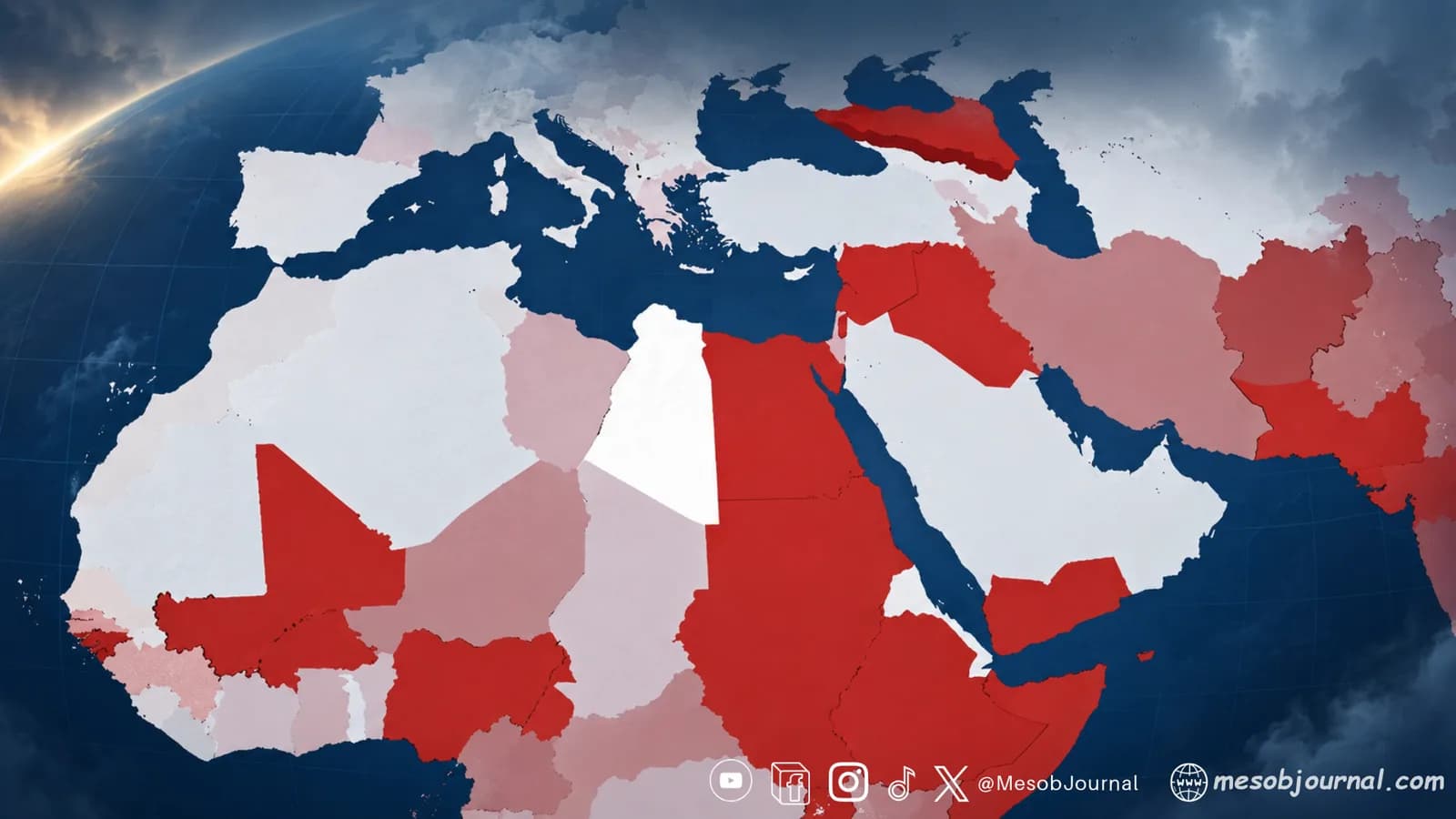
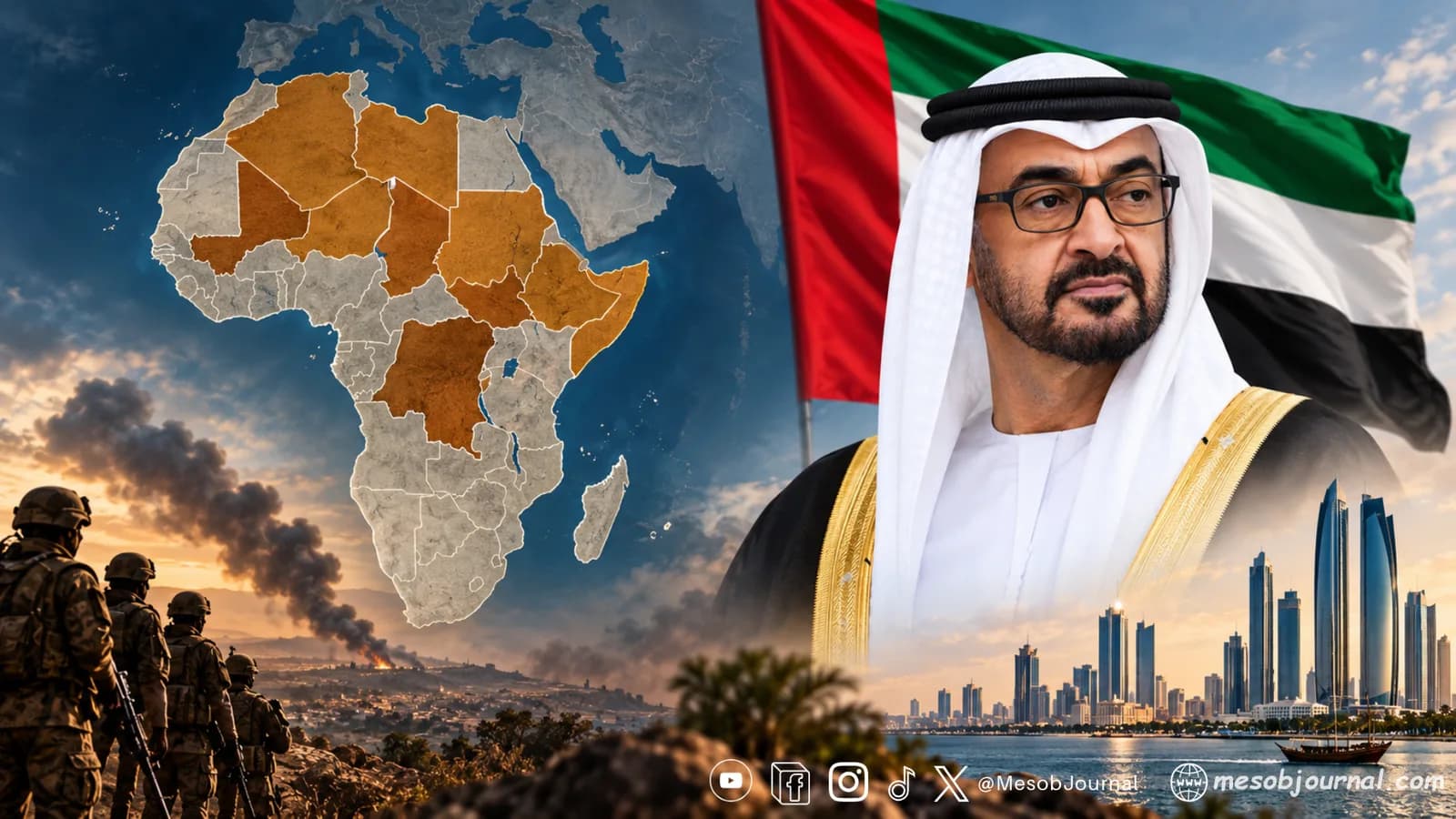
The following ten countries illustrate the breadth of the allegations and documented connections.
1. 🇸🇩 Sudan — The Central Case
Sudan represents the most consequential case in the debate over Emirati intervention in Africa. The Rapid Support Forces (RSF), commanded by Mohamed Hamdan Dagalo, have been accused by international organizations of widespread war crimes and crimes against humanity, including killings, sexual violence, forced displacement, looting and attacks against civilians.
SWP identifies the UAE as the RSF's most important external military, logistical and financial backer. It describes supply routes connecting the Emirates with RSF positions through Libya, Chad and other regional transit points, while also identifying Ethiopia as an increasingly important logistical hub.
Human Rights Watch likewise reports a growing body of evidence indicating UAE support for the RSF, including allegations involving weapons previously acquired by the UAE military and the use of an airbase in eastern Chad to facilitate weapons transfers.
The dispute became sufficiently serious that Sudan brought a case against the UAE before the International Court of Justice in March 2025, alleging violations of the Genocide Convention. The ICJ ultimately rejected Sudan's request for provisional measures and ordered the case removed from the General List because of a jurisdictional issue concerning the UAE's reservation to the Convention, not because the Court issued a finding that the allegations were true or false.
The distinction matters: allegations of Emirati support are extensively documented, but legal responsibility for atrocities remains a separate question.
2. 🇱🇾 Libya — The Haftar Connection
Libya provides an earlier example of the Emirati model. Since 2014, the UAE has supported Khalifa Haftar and the Libyan Arab Armed Forces. Emirati assistance included advanced weapons systems and drones and became particularly important during Haftar's 2019 offensive against Tripoli.
SWP argues that external support transformed Libya's conflict into a wider arena for international proxy competition. It also documents cooperation between Emirati networks and Wagner forces, including transport flights from the UAE, Pantsir air-defense systems operated by Wagner personnel and coordination involving Emirati drones.
The Libyan experience is important because it demonstrates how foreign military assistance can outlast the immediate battlefield campaign and contribute to long-term political fragmentation.
3. 🇸🇴 Somalia — Ports, Puntland and Somaliland
Somalia illustrates another dimension of Emirati influence: the combination of security partnerships, regional authorities and strategic ports. The UAE developed close relationships with Puntland and Somaliland, including security structures and the Puntland Maritime Police Force. SWP states that the PMPF was established with the involvement of a South African private military company financed by Abu Dhabi.
The strategic importance of Bosaso and Berbera is obvious. Both sit close to the Gulf of Aden and the maritime routes connecting the Red Sea with the Indian Ocean.
The controversy is therefore not simply about commercial investment. It concerns whether external security partnerships strengthen Somalia's federal institutions or empower regional structures at their expense. SWP identifies the PMPF and Somaliland's security forces among the UAE's principal African partners.
4. 🇪🇹 Ethiopia — Drones and the Sudan Corridor
The UAE's relationship with Ethiopia differs from its relationship with the RSF or Haftar. During the Tigray war, Ethiopia's federal government received Emirati drone support. SWP reports that UAE drones helped the government repel a major Tigrayan offensive in 2021.
More recently, Ethiopia has become significant in the wider Sudan conflict. SWP reports allegations that the UAE established an RSF training facility in Benishangul Gumuz in western Ethiopia and that military supplies destined for the RSF were apparently rerouted through Ethiopian military infrastructure.
These allegations are serious, but they should be distinguished from the better-established record of Emirati drone cooperation with Ethiopia's federal government.
The broader strategic picture is nevertheless clear: Ethiopia's geographic position makes it an important link between the Gulf, Horn of Africa and Sudanese theater.
5. 🇹🇩 Chad — The Transit Corridor
Chad occupies a critical position between Libya, Sudan and the Sahel.
According to SWP, RSF supplies have moved through N'Djamena and Amdjarass, while the UAE provided substantial financial assistance to the Chadian government, including a reported $1.5 billion loan commitment in 2023.
This creates a difficult strategic environment for Chad. The country is simultaneously a neighbor of Sudan, a transit corridor and a state containing communities with strong cross-border connections to Darfur.
As the Sudan war spreads, military logistics passing through Chad risk turning a fragile border environment into another theater of confrontation.
SWP specifically warns that Emirati logistical support through Chad has contributed to tensions within the Chadian military elite and increased the possibility of regional escalation.
6. 🇸🇸 South Sudan — Spillover and Battlefield Connectivity
South Sudan is increasingly affected by the Sudan war because of geography, political connections and cross-border armed networks. SWP reports that RSF forces operating in Sudan's Blue Nile region have apparently included units from South Sudan.
The country therefore represents another example of how Sudan's conflict is escaping national boundaries.
The broader concern is not necessarily that South Sudan itself is being directed by Abu Dhabi, but that Emirati-supported logistics and Sudanese armed networks can generate consequences across neighboring states.
7. 🇨🇩 Democratic Republic of Congo — Conflict Gold and Emirati Markets
The DRC case is primarily economic rather than a straightforward example of direct UAE military intervention.
Eastern Congo contains hundreds of armed groups and a highly lucrative illicit minerals economy. Gold extracted from areas controlled by armed groups has frequently entered regional and international markets.
The U.S. Treasury has documented networks involving illicit DRC gold that moved through Uganda and into the international market, including UAE-based refining companies.
In 2022, Washington sanctioned Alain Goetz and related entities, stating that his network received gold from DRC mines controlled by armed groups and that a UAE-based refinery was part of the network.
This does not establish that the UAE government directly funds Congolese militias. It does, however, illustrate a wider problem: when conflict resources enter international financial and commodity centers without adequate due diligence, armed groups can monetize violence thousands of kilometers from the battlefield.
8. 🇲🇱 Mali — The Ransom Economy
Mali presents a different and more recent allegation. In August 2026, a report based on a confidential UN assessment concerned an estimated $50 million ransom payment connected to the release of hostages in Mali.
Regional sources attributed the payment to the UAE, reportedly in connection with the release of an Emirati citizen and other foreign nationals. According to the report, the payment was subsequently used by al-Qaeda-linked Jama'at Nusrat al-Islam wal-Muslimin (JNIM) to finance operations in West Africa.
The important qualification is that the payment's alleged UAE connection was not officially disclosed by the UN and the UAE did not confirm the specific transaction.
If accurate, however, the case demonstrates how hostage negotiations can unintentionally strengthen armed organizations operating in Mali and throughout the Sahel.
9. 🇳🇪 Niger — Allegations Surrounding the 2026 Mutiny
The Niger case requires especially careful wording. The UAE was not responsible for Niger's 2023 coup based on the evidence available. In fact, Abu Dhabi publicly condemned that coup and called for constitutional order.
However, after a military mutiny in Niger in September 2026, Nigerien officer Roger Gabriel reportedly alleged that people connected to the UAE contacted him and encouraged him to join the uprising. Those allegations have not been independently substantiated.
Consequently, Niger belongs in this discussion not as an established example of Emirati destabilization, but as a case where allegations of Emirati involvement have emerged amid growing geopolitical competition in the Sahel. That distinction is essential.
10. 🇩🇿 Algeria — A Major Diplomatic Breakdown
Algeria represents the political and diplomatic dimension of the controversy. On September 10, 2026, Algeria announced that it was severing diplomatic relations with the UAE after accusing Abu Dhabi of increasingly provocative and hostile actions.
Algeria's Foreign Ministry said it had repeatedly warned the UAE before concluding that bilateral relations could no longer be maintained. The rupture follows growing disagreements over regional security and foreign policy, including developments in the Sahel, Libya and Sudan.
The diplomatic break itself does not prove every allegation made against Abu Dhabi. But it demonstrates that Emirati regional activism has generated a serious interstate confrontation with one of North Africa's most strategically important governments.
A Single Network Rather Than Ten Separate Stories
The significance of these cases becomes clearer when viewed collectively. The UAE's African footprint combines several instruments:
° Military technology: drones, air-defense systems and other weapons.
° Local partners: militias, regional security forces and politically aligned armed actors.
° Private security: recruitment and deployment of foreign fighters and contractors.
° Logistics: air corridors, ports, bases and transit routes.
° Finance: loans, investments and financial relationships.
° Natural resources: gold and other commodities connected to conflict economies.
° Maritime infrastructure: ports and logistics facilities along strategically important waterways.
SWP describes these activities as part of a transnational network rather than isolated interventions. Its research identifies routes connecting the UAE to Libya, Chad, Ethiopia, Somalia and Sudan and describes the Emirati use of local partners rather than large-scale direct military deployments.
This is what makes the issue strategically important.
A weapons shipment may begin in the Gulf, pass through one African country, enter another conflict zone and ultimately strengthen an armed group operating hundreds of kilometers away.
A port investment can become part of a larger security relationship. Gold extracted from a conflict zone can move through regional intermediaries and enter international markets. A private contractor can recruit fighters in one country and transport them to another.
The result is a web in which economic, military and political interests overlap.
The Cost of Proxy Politics
None of these conflicts can be explained solely by UAE involvement. Sudan's war emerged from a domestic power struggle between the Sudanese Armed Forces and RSF. Libya's fragmentation has deep internal roots. Ethiopia's conflicts have their own political and historical causes. Somalia's state-building challenges predate Emirati involvement. The Sahel's jihadist insurgencies likewise have complex local origins.
But external support can change the duration, intensity and geographical reach of conflicts.
That is the central concern raised by SWP: foreign military and financial assistance can encourage combatants to pursue military solutions rather than compromise.
The humanitarian consequences are enormous. SWP cites UN figures showing that tens of millions of people in Sudan depend on humanitarian assistance, while displacement has exceeded 15 million at points during the war.
The crisis therefore cannot be understood simply as a contest between African governments and armed groups. It is increasingly connected to external states competing for influence, ports, resources, trade corridors and geopolitical leverage.
The Accountability Question
The central question is no longer whether the UAE has become a major African geopolitical actor. It clearly has.
The more difficult question is how international institutions should respond when a state simultaneously participates in diplomacy, invests heavily in infrastructure and maintains relationships with armed actors accused of serious abuses.
The UAE rejects allegations that it supports the RSF and has repeatedly denied involvement in destabilizing activities. That position must be included in any serious assessment.
At the same time, the evidence compiled by SWP, Human Rights Watch, U.S. authorities and other investigators warrants scrutiny of Emirati-linked military, financial and commercial networks.
The issue is therefore larger than one country. It concerns whether powerful external states can use proxies, private military networks, financial leverage and resource markets to shape African conflicts while avoiding direct responsibility for their consequences.
UAE's African strategy deserves sustained scrutiny
The UAE's growing role in Africa has created a complicated geopolitical landscape in which investment, security cooperation and strategic intervention increasingly intersect.
Sudan is the most serious example, with extensive allegations and investigative evidence connecting Emirati networks to the RSF. Libya demonstrates the long-term consequences of external military backing. Somalia illustrates the intersection of security partnerships and strategic ports. Ethiopia shows how drone warfare and regional logistics can connect conflicts across borders.
Chad and South Sudan demonstrate the dangers of regional spillover. The DRC reveals how conflict resources can enter international markets. Mali and Niger highlight emerging allegations whose evidentiary status remains more uncertain. Algeria demonstrates that Emirati regional policies can now generate direct diplomatic confrontation between states.
The broader lesson is that modern African conflicts cannot always be understood within national borders.
Weapons move across borders. Fighters move across borders. Gold moves across borders. Money moves across borders. Ports and airfields connect distant theaters of conflict.
That is why the UAE's African strategy deserves sustained scrutiny not through slogans, but through documented evidence, financial tracing, arms-transfer investigations, satellite imagery, sanctions records and transparent international accountability.
Africa should not become an arena where external powers can pursue geopolitical ambitions through local wars while African populations bear the costs.