
The United States is completing the formal removal of Ethiopia from its arms-export restrictions, even as a potentially more consequential question has emerged over the future of Washington’s principal 2021 financial sanctions on Eritrea.
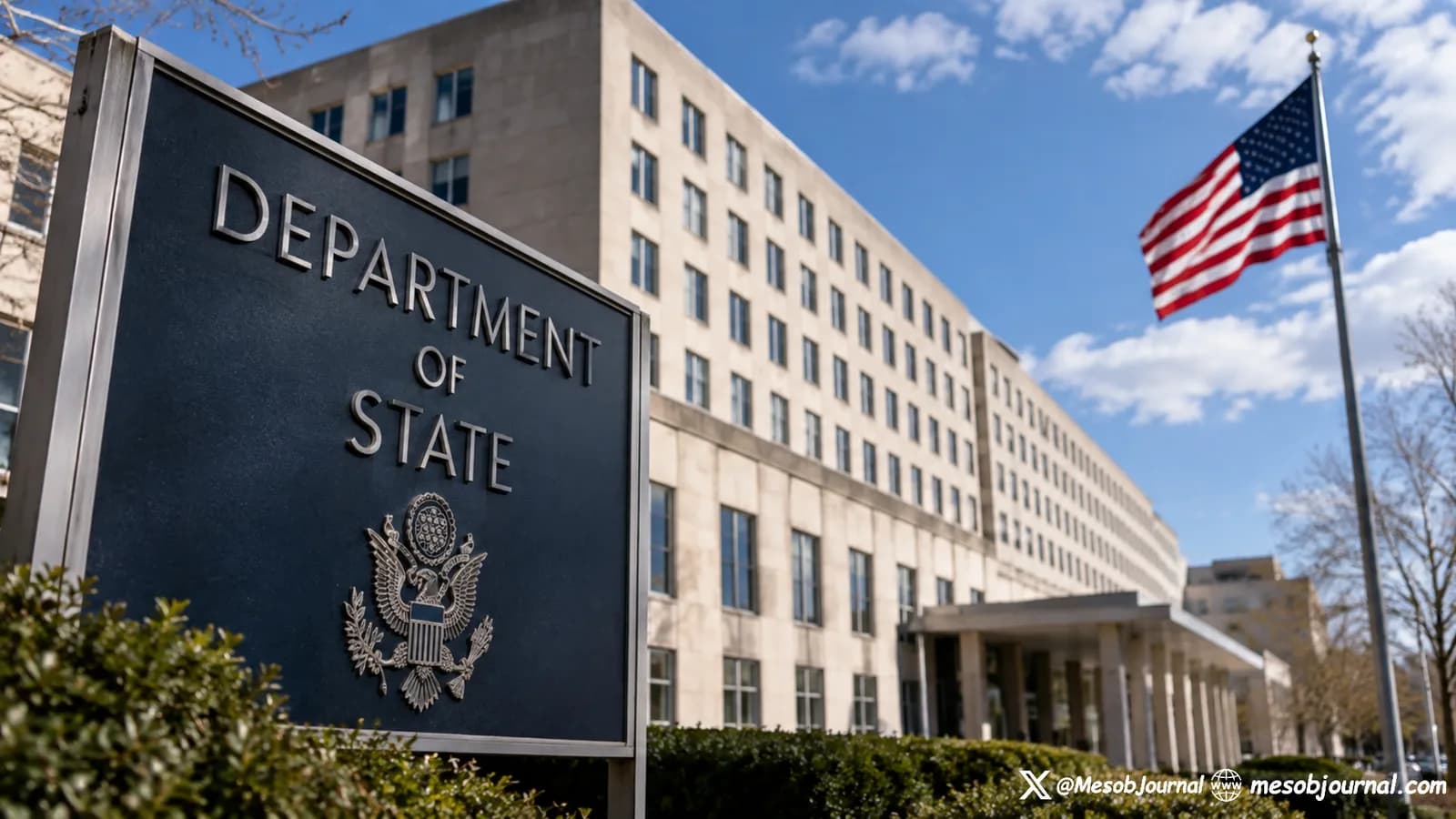
The U.S. Directorate of Defense Trade Controls announced on May 11 that Washington had terminated the arms embargo on Ethiopia and would return applications involving the country to case-by-case licensing. The State Department said at the time that a regulatory amendment removing Ethiopia from the International Traffic in Arms Regulations, or ITAR, would follow.
A final State Department rule scheduled for publication on September 18 removes Ethiopia’s country-specific provision from ITAR §126.1, completing the regulatory change. Reporting on the filing says the underlying determination to end the policy of denial was made by the Secretary of State on February 5.
The shift does not mean that all U.S. restrictions concerning Ethiopia have disappeared. But it marks a clear normalization of Washington’s defense-export policy toward Addis Ababa.
For Eritrea, however, a separate development may prove more significant.
Executive Order 14046, issued on September 17, 2021, created the U.S. national emergency and sanctions framework formally known as the “Ethiopia-related sanctions” program. Treasury subsequently used the order to sanction the Eritrean Defense Forces, the People’s Front for Democracy and Justice, Hidri Trust, Red Sea Trading Corporation and two Eritrean officials.
Under the U.S. National Emergencies Act, a national emergency automatically terminates on its anniversary unless the president publishes a continuation notice in the Federal Register and transmits it to Congress during the preceding 90 days.
President Donald Trump continued the Ethiopia emergency for one year in September 2025. That continuation therefore ran through September 17, 2026.
As of early September 18, no 2026 continuation notice for the Ethiopia emergency could be located in the Federal Register, White House presidential records or congressional publication indexes reviewed by Mesob Journal.
If no qualifying continuation notice was issued, the national emergency underpinning EO 14046 would have expired on September 17 by operation of law.
There is, however, an important reason not to describe the Eritrea sanctions as formally lifted yet.
The Treasury Department’s Office of Foreign Assets Control still lists “Ethiopia-Related Sanctions” as an active program and continues to identify EO 14046 as its executive authority. OFAC’s sanctions database also continues to list the Eritrean Defense Forces, PFDJ and Red Sea Trading Corporation under the program code ETHIOPIA-EO14046.
No Treasury announcement removing those designations had appeared as of early September 18.
A recent U.S. precedent shows why that administrative delay may matter.
The national emergency supporting Executive Order 13936 on Hong Kong expired on July 14, 2026. OFAC formally acknowledged the expiration and removed individuals whose blocking rested solely on that authority on July 17—three days later.
If EO 14046 has similarly expired, Treasury could follow a comparable process for Eritrean entities and officials sanctioned solely under that order.
The timing also follows months of reporting that Washington was considering precisely such a move.
Reuters reported in May that an internal U.S. government document said Washington intended to remove sanctions on Eritrea as part of an effort to improve relations with Asmara amid growing strategic attention to the Red Sea. The document reportedly anticipated rescinding the Biden-era sanctions order “on or around May 4,” although no public rescission followed at the time.
Allowing the national emergency to expire in September would provide another route to ending the EO 14046 framework.
Any such development would still fall well short of eliminating all U.S. restrictions concerning Eritrea.
General Filipos Woldeyohannes remains separately designated under the Global Magnitsky program, an authority independent of EO 14046. Eritrea also remains subject to a separate ITAR policy denying defense-export licenses involving its armed forces, police, intelligence and internal-security forces.
That produces an increasingly notable distinction between the two neighboring states: Ethiopia’s equivalent ITAR restriction is being removed, while Eritrea’s remains in force.
Other U.S. measures—including visa, foreign-assistance and trade-related restrictions—also operate under separate authorities and would not automatically disappear with EO 14046.
For now, the legally precise conclusion is therefore narrower than saying Washington has lifted sanctions on Eritrea:
The national emergency underpinning the principal 2021 U.S. financial sanctions on Eritrean entities appears to have reached its statutory expiration without a publicly identifiable continuation notice, while OFAC has not yet announced corresponding sanctions removals.
What Treasury does next will determine whether that apparent legal expiration becomes a formal change in the U.S. sanctions regime toward Eritrea.