
UKMTO reported an unnamed hijacked tanker. International coverage supplied an Eritrean nationality that the vessel did not possess—and that the maritime record was capable of disproving.
The tanker seized in the Gulf of Aden on 20 August was not Eritrean.
That conclusion no longer rests only on inconsistencies in commercial tracking data or on the vessel's previous identity. On 25 August, the Embassy of the State of Eritrea in London formally denied that SIBU 1 was owned or registered in Eritrea. The embassy said Eritrea's Permanent Mission to the International Maritime Organization had confirmed that IMO records classified the ship as having indeterminate ownership and flying a false Eritrean flag.
The statement also established another important fact about the reporting chain: UKMTO Warning 118-26 did not call the vessel Eritrean. It did not identify the ship by name or assign it any nationality. According to the embassy, UKMTO reiterated that point after receiving an official request for clarification.
Yet within hours, the unnamed tanker had become an “Eritrea-flagged” ship across international coverage. A doubtful database entry had been converted into a national connection, then repeated as settled fact.
UKMTO never supplied the Eritrean label
The original UKMTO warning was narrow. It reported that a tanker travelling west through the Gulf of Aden had broadcast a distress call about an unauthorized vessel approximately 136 nautical miles east of Al Mukalla, Yemen. An update said six armed people had boarded, taken control and redirected the tanker toward Somalia.
The warning contained no ship name, IMO number, owner, manager or flag state.
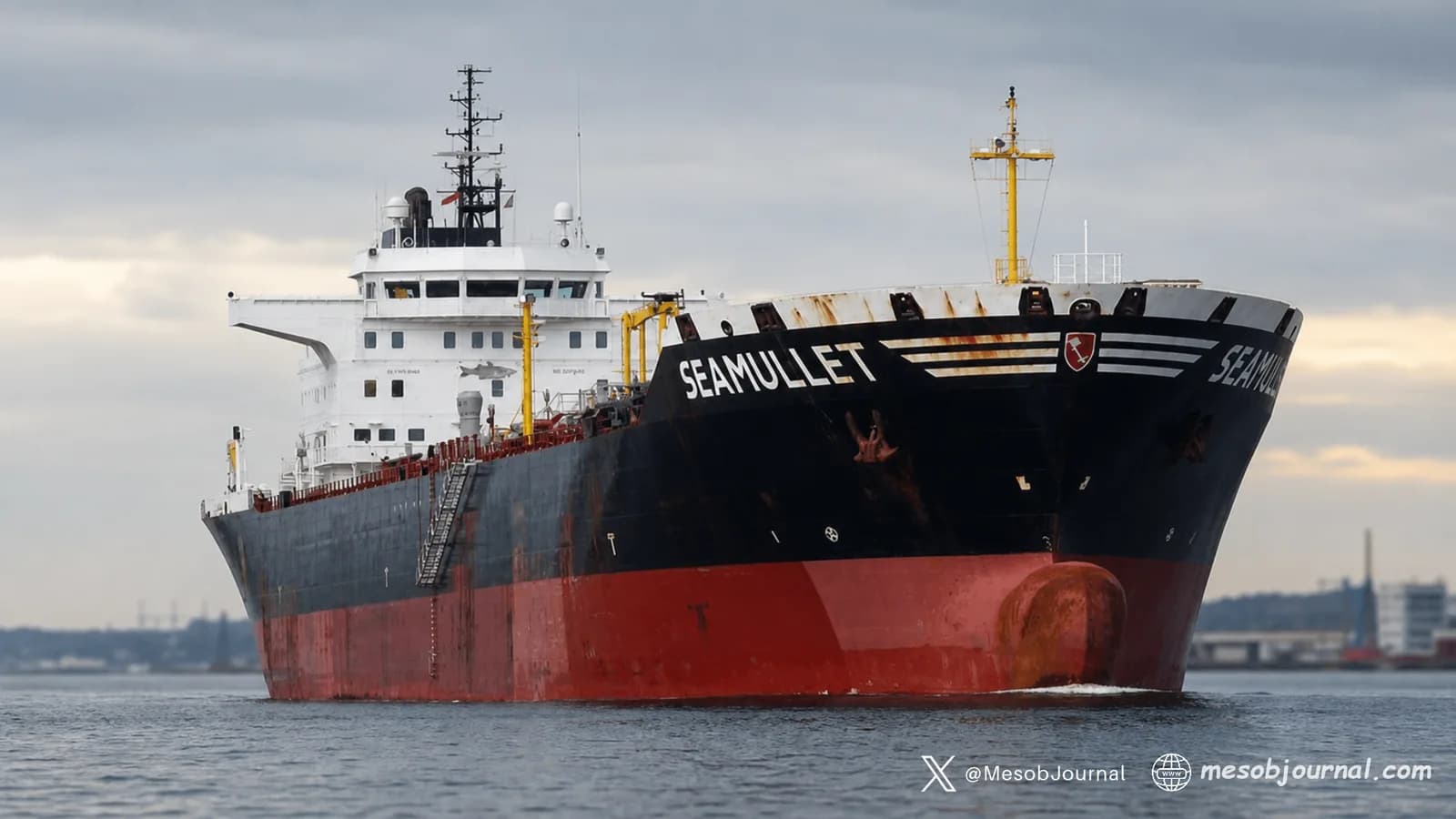
Those details entered the story through other channels. Maritime security firms identified the hull as SIBU 1, formerly SEAMULL, using its permanent IMO number, 9204776. Commercial tracking sites displayed Eritrean-coded identifiers. News organizations then treated the displayed flag as legal nationality.
Reuters described SIBU 1 as “Eritrea-flagged” in the same sentence that attributed the seizure details to UKMTO. The Associated Press used the same description, which was subsequently carried by other publications. Indian outlets and maritime news sites repeated it again.
The Eritrean Embassy named Reuters, AFP and the BBC among the outlets whose reporting it challenged. Whatever the precise route by which each newsroom obtained the flag data, the official warning cited throughout the coverage was not the source of the Eritrean nationality.
This distinction is more than a correction to a footnote. A flag denotes a legal relationship between a vessel and a state. It carries expectations of registration, jurisdiction and regulatory oversight. Assigning the wrong flag can therefore assign the wrong responsibility.
The hull's record pointed elsewhere
The ship's permanent identifier made its recent history straightforward to trace.
On 18 December 2025, the US Treasury listed SEAMULL, IMO 9204776, as a Palau-flagged products tanker with call sign T8A3433 and MMSI 511100317. Treasury identified it as blocked property in which Dubai-based Qatrat Alnada Almasi Ship Management L.L.C. had an interest.
In the accompanying sanctions announcement, Treasury said SEAMULL and other vessels managed by Qatrat Alnada had repeatedly transported Iranian petroleum products, including naphtha and gasoil. It also said the company's four named vessels had called at Houthi-controlled ports in Yemen. These remain US government findings rather than a judicial judgment, but the identity of the hull and its Palau registration were explicit.
By August 2026, the same IMO number was appearing under the name SIBU 1 with an Eritrean-coded MMSI and call sign. That broadcast identity was not evidence of lawful Eritrean registration. It was the discrepancy that required investigation.
Specialist reporting had already found the discrepancy. On 20 August, Seatrade Maritime reported that the Equasis database listed the vessel as falsely flagged in Eritrea. Riviera Maritime Media likewise described it as operating under a false Eritrean flag. The official Eritrean statement now says the country's mission received the same conclusion from the IMO record: the vessel was not officially registered in Eritrea.
The press statement contains an apparent typographical omission in one reference to the vessel number, printing 920476. The ship discussed throughout the record is IMO 9204776, the number used by OFAC, UK-linked maritime reporting and commercial ship databases. That minor error does not alter the registry denial or the documented identity of the hull.
False registration is a growing maritime system
SIBU 1 belongs to a wider regulatory problem. The IMO describes fraudulent registration as the use of information or documents to give a ship a state's nationality without that government's authorization. The tactics include broadcasting falsified AIS data, continuing to claim a flag after registration has ended, and obtaining documents from entities that falsely present themselves as authorized registries.
In April 2026, the IMO said 529 ships had falsely flown a country's flag during the preceding year. Sanctioned and opaque fleets have increasingly moved between permissive registries, fraudulent registries and invented national identities as established flag states tighten scrutiny.
The costs fall beyond the shipowner. A falsely claimed flag can obscure who is responsible for safety, insurance, environmental risk and crew welfare. It can also damage the country whose identity has been borrowed. The IMO specifically recognizes the unjustified reputational harm imposed on states when vessels engage in illicit or high-risk activity under unauthorized registration.
In this case, the effect was immediate. Eritrea's name became attached to a hijacking, an Iranian petroleum sanctions case and a shadow-fleet narrative even though the original maritime warning made no Eritrean connection and the vessel was not in Eritrea's registry.
The correction is now due
Breaking news is written with incomplete information. Commercial vessel profiles are useful, and reporters cannot obtain a flag-state response before every first alert. The initial mistake is therefore explainable.
Leaving it uncorrected is not.
The Eritrean Embassy's statement supplies the response that was missing in the first hours. It denies ownership and registration, reports direct clarification from UKMTO, and says the IMO record confirms the vessel was falsely using Eritrea's flag. The Equasis reporting and the ship's immutable IMO history support that account.
The embassy described the episode as a deliberate campaign of disinformation. The record gives that charge weight. UKMTO reported an unnamed tanker, yet major outlets supplied an Eritrean nationality and repeated it as fact. The error was not marginal: it attached Eritrea to a sanctioned shadow-fleet vessel it neither owned nor registered. With the registry denial and false-flag finding now on the record, every outlet that carried the claim must correct it clearly and prominently.
The correction should be exact. SIBU 1 was not “an Eritrea-flagged tanker.” It was a US-sanctioned tanker falsely claiming Eritrean registration.
Names can change. AIS identities can be manipulated. A country's legal responsibility cannot be created by a dropdown field and made true through repetition.