
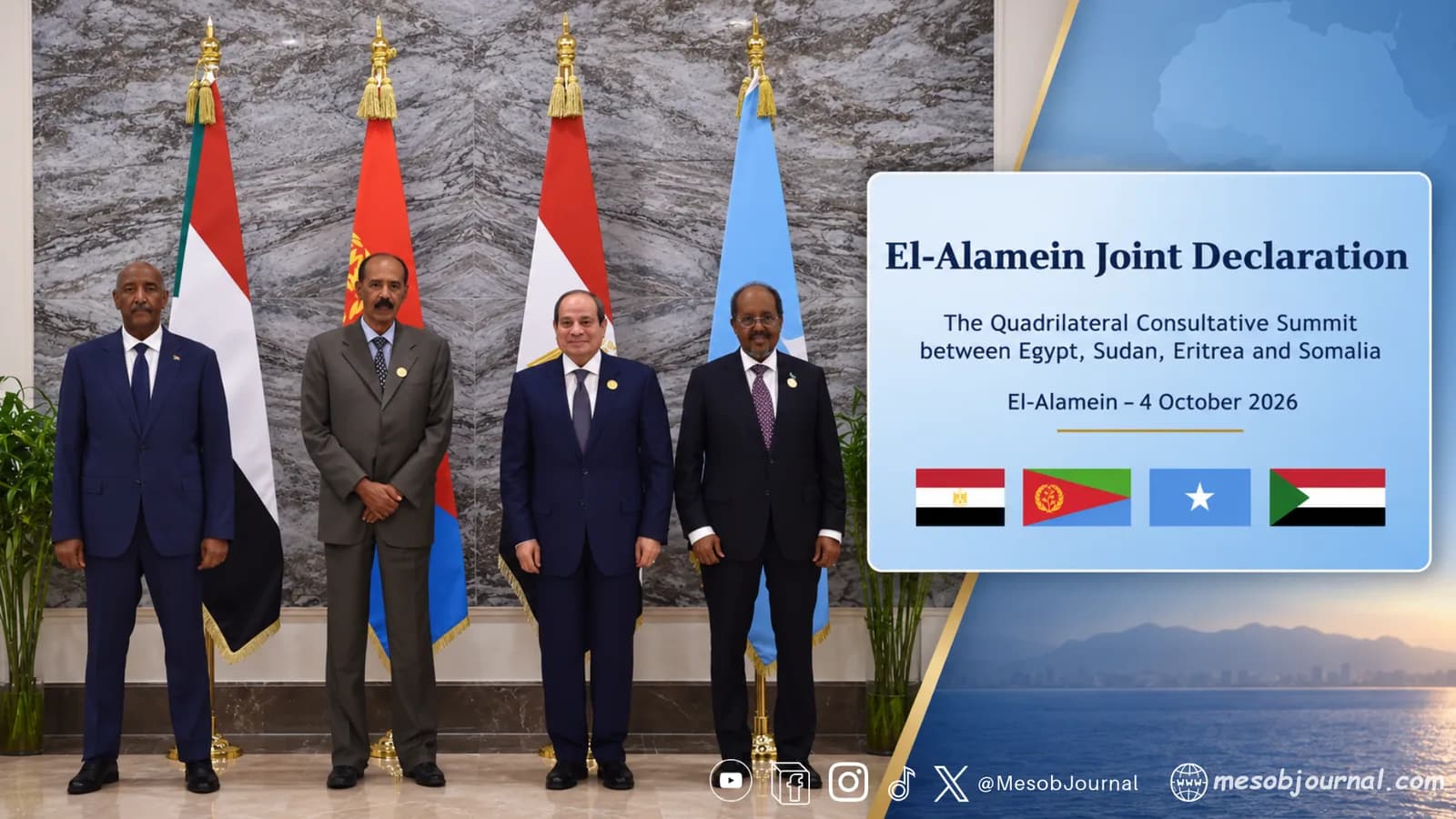
NEW ALAMEIN, Egypt, Oct. 4, 2026 — Egypt, Eritrea, Sudan and Somalia have adopted a joint declaration setting out common positions on Red Sea governance, Sudan’s territorial integrity, Somalia’s sovereignty and the Nile, while establishing a mechanism for continued coordination among the four countries.
The El-Alamein Joint Declaration, issued on Sunday following a quadrilateral summit in New Alamein, brought together Egyptian President Abdel Fattah El-Sisi, Eritrean President Isaias Afwerki, Somali President Hassan Sheikh Mohamud and Sudan’s Transitional Sovereignty Council Chairman Abdel Fattah Al-Burhan.
The leaders said respect for sovereignty, independence and territorial integrity should form the basis of regional stability, alongside good-neighborly relations, non-interference in internal affairs, support for national institutions and political solutions to conflicts.
One of the declaration’s most significant provisions concerns the Red Sea, where the four leaders affirmed freedom of navigation while stating that governance of the strategic waterway is the “exclusive responsibility of the littoral states.”
The position places Red Sea governance firmly in the hands of countries bordering the sea at a time when maritime security, foreign military involvement and control of strategic shipping routes have become increasingly prominent regional issues.
On Sudan, the four countries backed the country’s unity, sovereignty, territorial integrity and national institutions, rejected the creation of parallel entities and called for a Sudanese-owned and Sudanese-led political process. They also categorically rejected support for mercenaries.
The declaration follows a bilateral meeting earlier Sunday between El-Sisi and Al-Burhan in New Alamein, during which the Egyptian president reiterated Cairo’s support for Sudan’s national institutions and territorial integrity.
The four leaders also issued a strong statement on Somalia, reaffirming the country’s unity and sovereignty and rejecting interference threatening its territorial integrity.
They specifically rejected recognition or support for Somaliland, which the text described as an infringement on Somalia’s sovereignty and territorial integrity.
The declaration additionally backed Somalia’s campaign against terrorism and efforts by federal institutions to extend their authority throughout the country. It called on international and regional partners to provide “adequate, sustainable and predictable” financing for the African Union Support and Stabilization Mission in Somalia, or AUSSOM.
The summit also produced a coordinated position on the Nile and transboundary waters.
Egypt, Eritrea, Sudan and Somalia stressed the principle of avoiding harm and called for cooperation through prior notification, consultation and consensus. They rejected unilateral measures that adversely affect the existing water uses of the Nile’s two downstream countries — Egypt and Sudan.
The language gives the declaration wider significance beyond the four countries’ bilateral relationships, linking Horn of Africa security, Red Sea governance and Nile diplomacy within a single political framework.
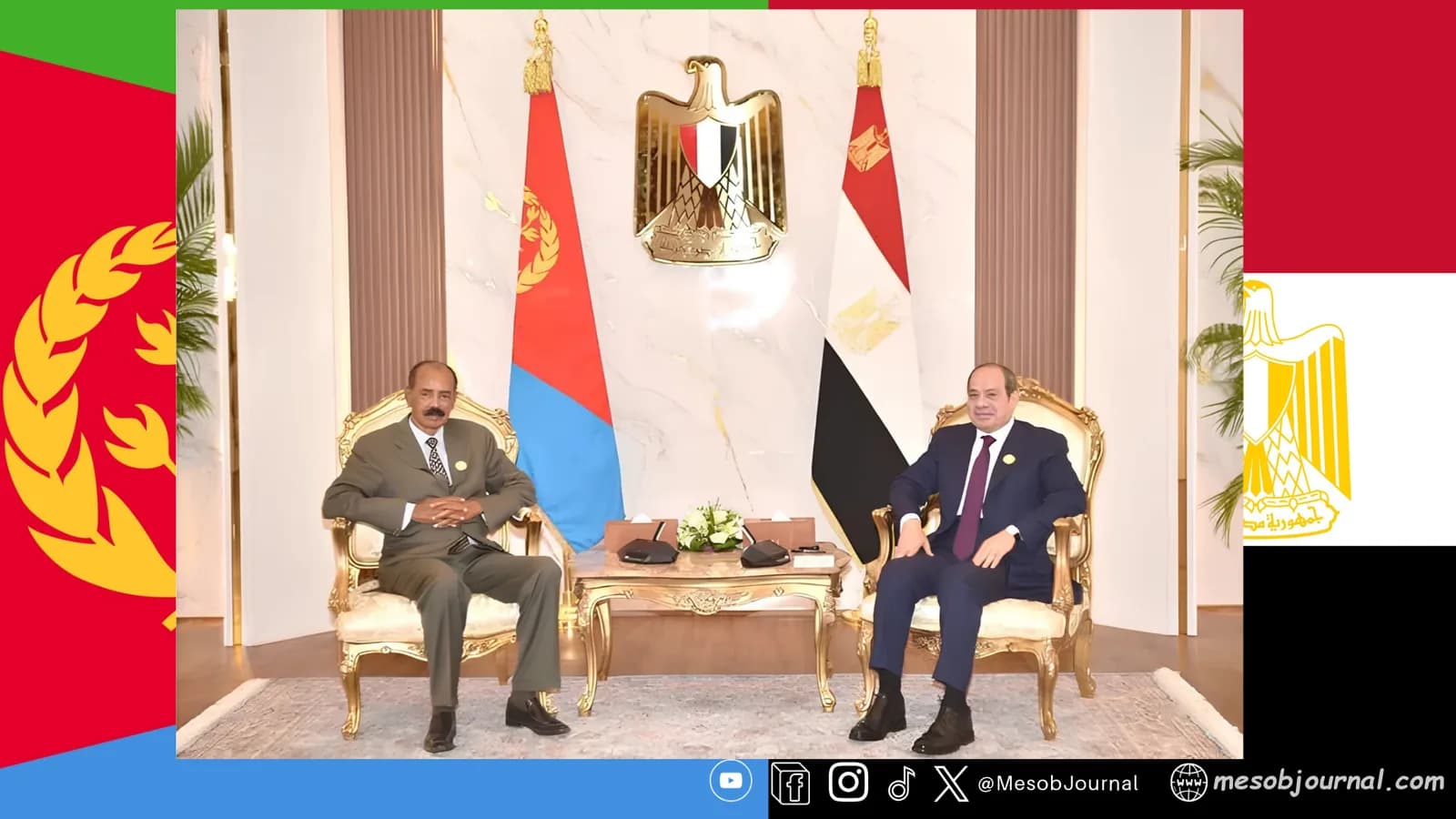
It also comes one day after El-Sisi met President Isaias separately on the sidelines of the Alamein Africa Business Forum. The Egyptian Presidency said the two presidents discussed strengthening political and strategic relations as well as expanding economic and development cooperation.
Sunday's declaration also bears a close resemblance to the principles agreed by Egypt, Eritrea and Somalia at their October 2024 summit in Asmara, where the three governments stressed sovereignty, territorial integrity, non-interference and coordinated efforts for regional stability. That summit established a joint foreign-ministerial committee for strategic cooperation.
The El-Alamein meeting brings Sudan into the new four-country format and considerably broadens the agenda, explicitly incorporating the Sudan war, Somaliland, AUSSOM, Red Sea governance and Nile waters.
Crucially, the leaders agreed that the quadrilateral consultations would not end with Sunday's meeting. They established a follow-up mechanism for implementing the summit's outcomes and said consultations would be held periodically and whenever necessary.
That provision gives the El-Alamein format a degree of continuity and could turn what began as high-level consultations into a more regular platform connecting four states positioned across the Nile Basin, Horn of Africa and Red Sea.
The summit was held alongside the eighth African Union Mid-Year Coordination Meeting in New Alamein, which Egypt hosted on Sunday.