
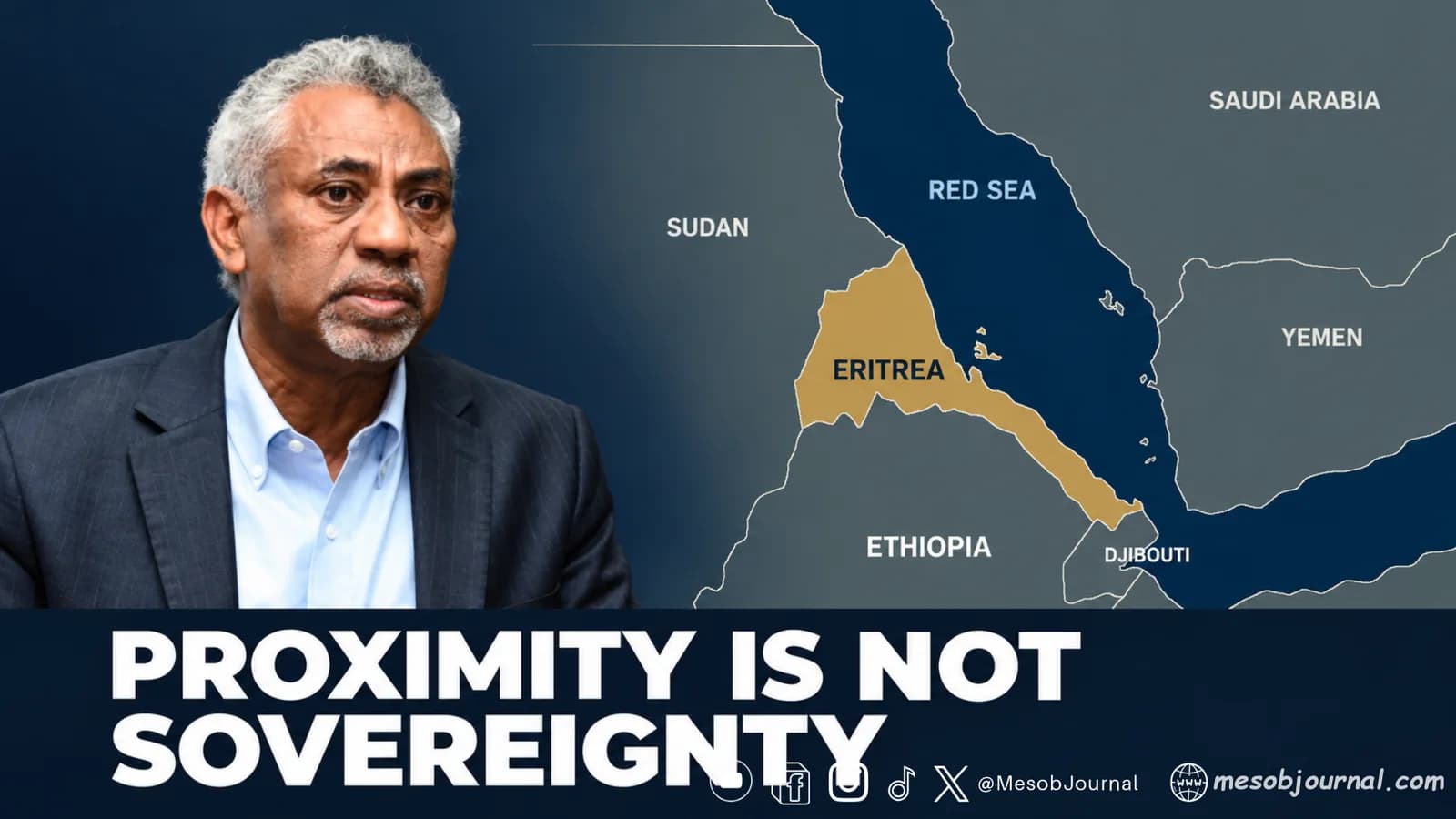
A border thirty miles from the Red Sea is still a border.
Ethiopia’s Foreign Ministry has invoked that distance in its response to the El-Alamein summit, arguing that the country’s geographic and historical connections must be reflected in regional maritime discussions. Eritrea’s Information Minister, Yemane G. Meskel, answered by exposing the legal leap concealed inside the geographic argument.
His closing sentence deserves to be read in full:
“Finally, Ethiopia's insinuation that some geographic proximity to the Red Sea entitles it with the rights and responsibilities of the littoral States is too ludicrous and hollow in purely legal terms to merit response.”
The force of Yemane’s response lies in its precision. Ethiopia’s proximity to the Red Sea gives it no sovereign entitlement to Eritrea’s ports, coastline or territorial waters. The distance between Ethiopia’s border and the water cannot diminish the sovereignty of the country whose territory lies between them.
That distinction becomes especially important after the El-Alamein Declaration. Meeting on 4 October, the leaders of Egypt, Eritrea, Sudan and Somalia placed sovereignty, territorial integrity and non-interference at the centre of their regional consultations. On the Red Sea, they affirmed freedom of navigation alongside their position that governance is the responsibility of the littoral states.
The pairing was deliberate. Maritime commerce and navigation can coexist with coastal sovereignty. Their protection does not require a neighbouring state to acquire someone else’s coastline. The declaration’s published text establishes a political basis for cooperation that respects the states expected to carry it out.
Ethiopia’s subsequent statement invokes its enduring connection to the Red Sea, refers to changes in political boundaries and argues that maritime affairs and regional security must account for its interests. It also professes peaceful engagement, mutual respect and good-neighbourliness. Its suggestions of entitlement to Eritrea’s coast contradict those stated principles.
Ethiopia has substantial economic interests in dependable transport corridors, competitive port services and secure shipping. Those interests provide reasons to negotiate commercial arrangements. They provide no title to Eritrean territory and no authority to exercise the sovereign powers of a Red Sea coastal state.
Yemane’s rebuttal is strongest at precisely this point. He challenges the attempt to move between commercial access, sovereign access and regional responsibility as though these expressions describe the same objective. They do not. A port agreement has identifiable parties, negotiated conditions and a defined scope. Sovereignty concerns authority over territory. One cannot be smuggled into the other through diplomatic wording.
The international maritime framework preserves that distinction. Part X of the United Nations Convention on the Law of the Sea addresses access and transit for landlocked states. Article 125 provides for the terms and modalities of transit to be agreed with the transit states concerned. These are arrangements governing access and passage, not instruments transferring ownership of another country’s coast. The framework is discussed by the International Tribunal for the Law of the Sea.
A serious commercial agenda therefore has plenty to address: transport capacity, customs procedures, investment, reliability and mutually beneficial terms. Eritrea’s sovereignty is not one of the items awaiting negotiation.
The Ethiopian statement’s appeal to historical connections also requires a direct answer. Eritrea’s annexation cannot be repackaged as evidence that its coastline belongs to Ethiopia.
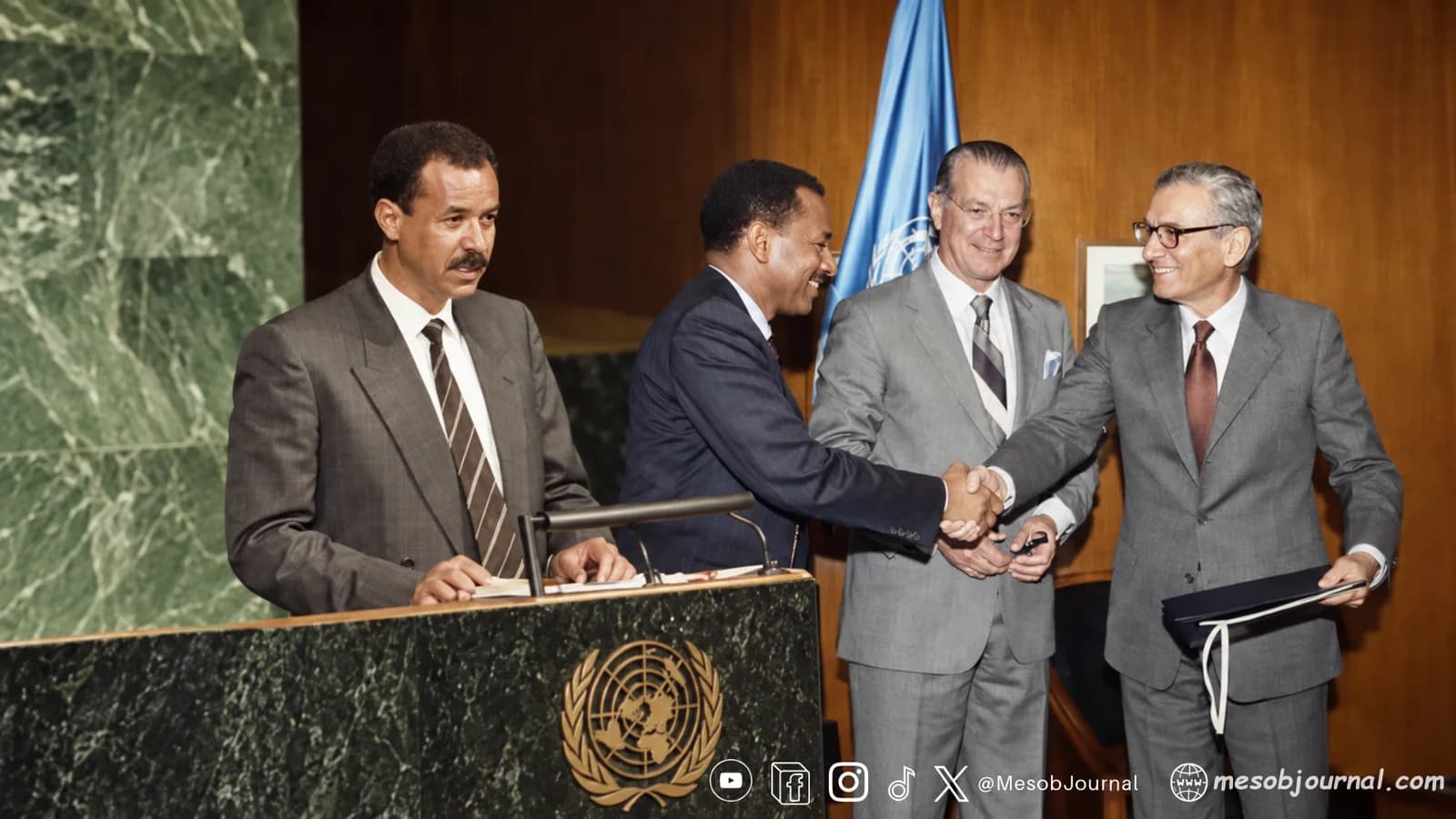
The historical record is specific. The federation established in 1952 preserved Eritrea as an autonomous unit. Ethiopia subsequently abrogated the federal arrangement and annexed Eritrea in 1962. Decades of struggle followed, culminating in the UN-verified independence referendum and Eritrea’s admission to the United Nations in 1993. These were distinct political events, not an administrative adjustment through which Ethiopia accidentally lost a coast. UN General Assembly record of the federation, United Nations University account of annexation and independence.
Annexation records the imposition of Ethiopian rule over Eritrea. It does not establish an enduring Ethiopian entitlement to Eritrean territory. Eritrea’s independence left no residual Ethiopian title to Assab, Massawa, the coastline or the islands. Treating the period of annexation as grounds for recovery would turn a history of domination into a claim against the sovereignty achieved after it.
For Eritreans, this concerns a lived national history. Their country cannot be reduced to the space separating an Ethiopian border from the sea. Its coast belongs within the political life, security and future of an independent state. Eritreans have no obligation to interpret their sovereignty through the logistical frustrations or strategic ambitions of their neighbour.
There is also a basic question of consistency. Ethiopia’s ministry asserts its determination to defend Ethiopia’s sovereignty and territorial integrity. It must recognise those same protections for Eritrea without qualification. Mutual respect acquires meaning when a government accepts limits on its own ambitions.
The El-Alamein declaration gives that principle a wider regional setting. Its emphasis on Sudan’s unity, Somalia’s sovereignty and the responsibilities of coastal states expresses a common concern: regional cooperation becomes fragile when one state treats another’s territory or authority as negotiable. Governments can disagree vigorously while accepting the sovereign boundaries within which diplomacy operates.
Yemane’s closing line strips the proximity argument of its diplomatic decoration. A measurement on a map supplies no coastal entitlement. References to history cannot restore an annexation. An assertion of regional importance cannot confer jurisdiction over a neighbour’s territory.
His dismissal lands because it refuses to elevate that argument into an unresolved legal question. Eritrea’s coastline is not waiting for Ethiopia to present a more persuasive claim.
Ethiopia can negotiate commercial port use. It has no sovereign entitlement to Eritrea’s coast.
Thirty miles changes nothing.