
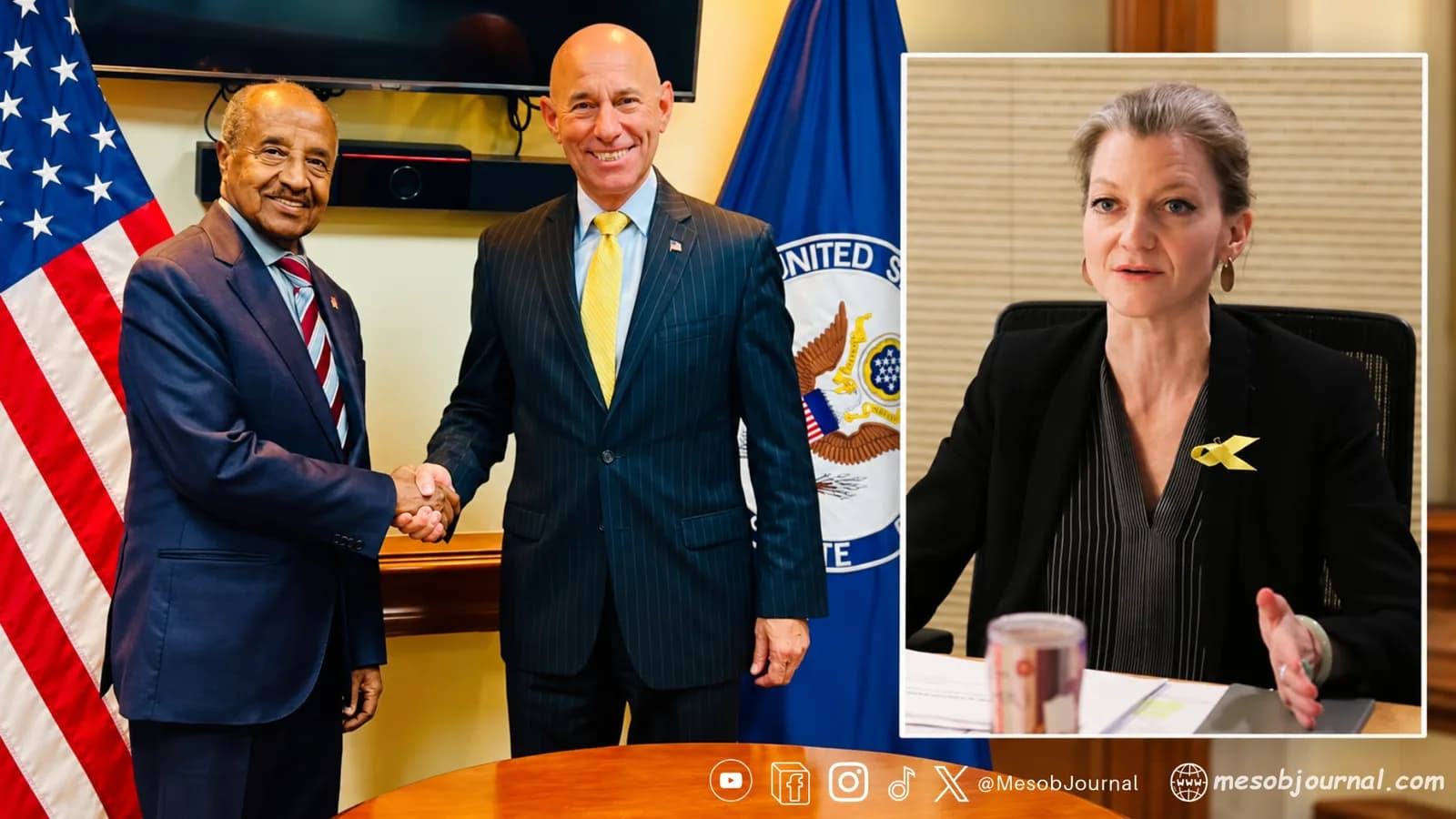
WASHINGTON — Eritrea and the United States have signaled a potentially significant reset in bilateral relations after senior-level talks in Washington focused on trade, investment, regional stability and resolving outstanding issues through dialogue.
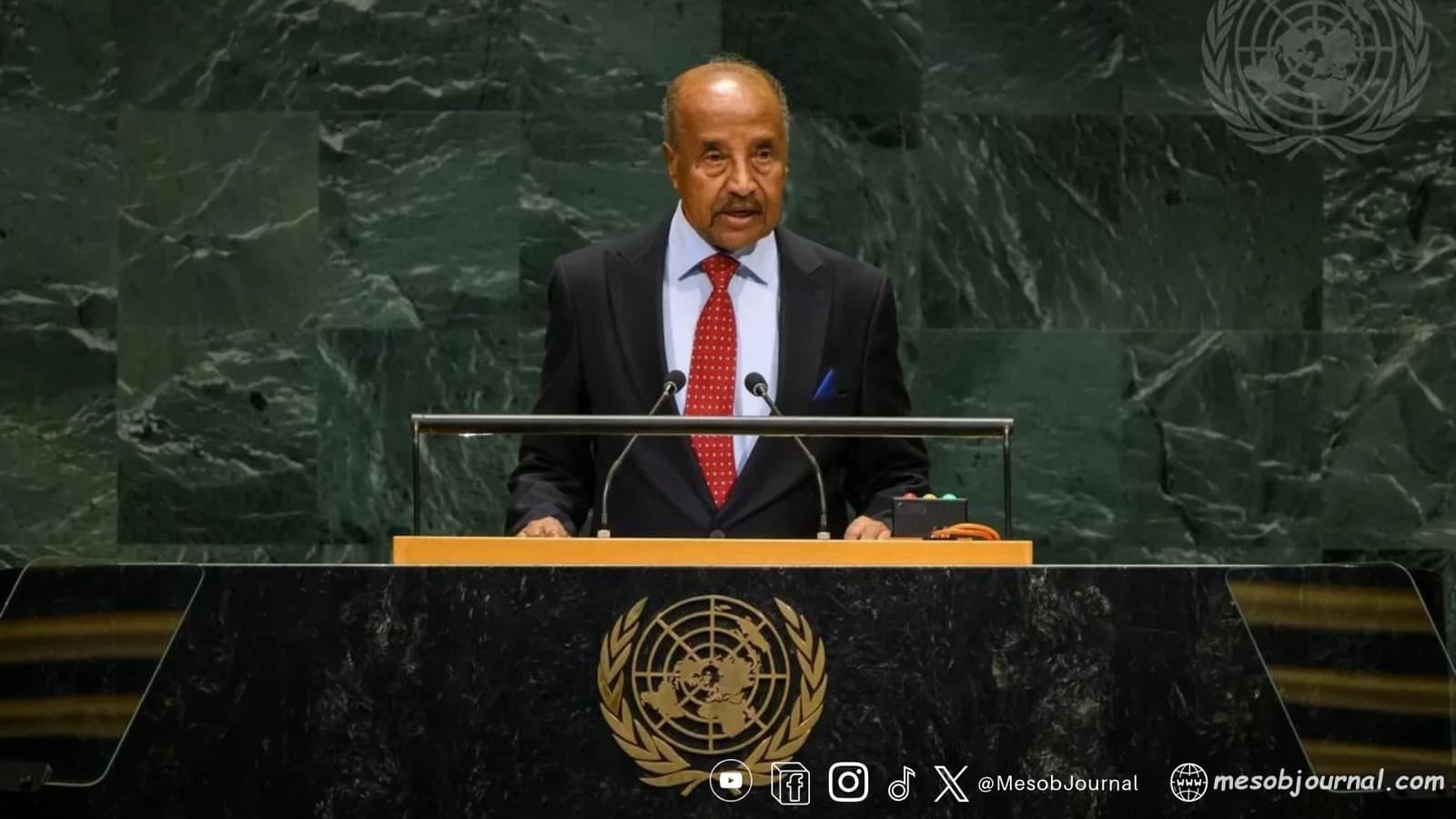
Foreign Minister Osman Saleh, leading a senior Eritrean delegation, met separately on Thursday with U.S. Under Secretary of State for Political Affairs Allison Hooker and Assistant Secretary of State for African Affairs Frank Garcia, according to Eritrea’s Ministry of Information.
The talks came less than two weeks after the United States ended the national emergency imposed under Executive Order 14046 and removed Eritrean individuals and entities designated under the Ethiopia-related sanctions program, including the People’s Front for Democracy and Justice and senior Eritrean official Hagos Ghebrehiwet. The U.S. Treasury confirmed the removals on September 18.
The Washington meetings suggest that the sanctions decision may be developing into a broader diplomatic opening rather than remaining an isolated administrative measure.
Osman welcomed the removal of the sanctions, describing the step as an important opportunity to turn a new page in relations between Asmara and Washington.
Eritrea’s objective, he said, is to establish a foundation for a “constructive, mutually beneficial, and genuine partnership” with the United States.
The foreign minister placed particular emphasis on economic relations, calling for the two countries to move beyond years of political friction and explore opportunities in trade and investment.
He also stressed that Eritrea was seeking partnerships that do not create structural dependency — a position consistent with Asmara’s long-standing emphasis on economic self-reliance and nationally owned development.
According to the Eritrean account of the talks, Osman said a renewed relationship could allow both countries to recover opportunities lost during years of strained ties while opening new areas of practical cooperation.
The Eritrean side also called for a further review of policies pursued by previous U.S. administrations, signaling that sanctions relief is viewed in Asmara as an important beginning rather than the completion of the normalization process.
Regional security featured prominently in the discussions.
Osman outlined Eritrea’s approach to peace and stability across a broad strategic area stretching from the Horn of Africa and Red Sea to the Gulf of Aden, Nile Basin and wider Gulf region.
He expressed Eritrea’s interest in working with Washington on common regional concerns while emphasizing cooperation among Red Sea littoral states — an approach Asmara has repeatedly promoted as regional and international attention increasingly turns toward the security of one of the world’s most important maritime corridors.
The U.S. side also struck a positive tone.
According to Eritrea’s Ministry of Information, Hooker linked the lifting of sanctions to President Donald Trump’s policy of developing bilateral partnerships based on mutual benefit and said the shift could contribute to warmer cooperation between the two countries.
She also pointed to what the Eritrean account described as broad areas of convergence emerging during the initial discussions.
The separate meeting with Garcia covered similar ground, with both sides agreeing that future discussions should move toward more detailed consultations on trade and investment, regional peace and stability, and unresolved bilateral matters.
That commitment to further talks may prove as important as the Washington meeting itself.
Relations between Eritrea and the United States have passed through prolonged periods of tension, sanctions and political disagreement. Moving from sanctions relief to direct discussions over investment and regional cooperation represents a notable change in tone.
The diplomatic activity also comes as Eritrea expands engagement with other regional and international partners.
In September, a senior Eritrean delegation held talks in Riyadh with Saudi officials and representatives of Saudi Aramco on economic cooperation. Earlier this week, Eritrean officials also held high-level discussions with Egypt covering bilateral cooperation and regional issues.
Taken together, the meetings point to a period of increasingly active Eritrean diplomacy spanning Washington, Riyadh and Cairo, with economic cooperation and regional security becoming increasingly prominent alongside traditional political relations.
For Eritrea, the Washington talks provide an opportunity to move a difficult bilateral relationship onto a different footing: away from sanctions and prolonged political confrontation and toward direct state-to-state engagement.
For the United States, closer dialogue with Eritrea brings Washington into more direct contact with a Red Sea state occupying a strategically important position along maritime routes linking the Mediterranean, Suez Canal, Bab el-Mandeb and Indian Ocean.
Much will depend on what follows.
No major bilateral economic agreements were announced during the Washington meetings, and the discussions were described as preliminary. But both governments have now publicly identified areas for further engagement — including trade, investment, regional stability and dialogue over outstanding questions.
That alone marks a substantial shift from the relationship of recent years.
After a long period in which sanctions and disagreements dominated Eritrea-US relations, the diplomatic vocabulary emerging from Washington is increasingly one of partnership, mutual benefit and practical cooperation.