
There are verified reports that the United Arab Emirates has been directly paying United Nations officials to silence them, and if that accusation alone shocks the conscience, it is only because the full architecture of influence that surrounds it has remained hidden for so long.
The Emirates, a state with a small population and an outsized sovereign wealth fund, has been accused not merely of lobbying the international system but of coercing it using money to mute criticism, to whitewash its record, and to ensure that its war in Sudan can continue without consequence.
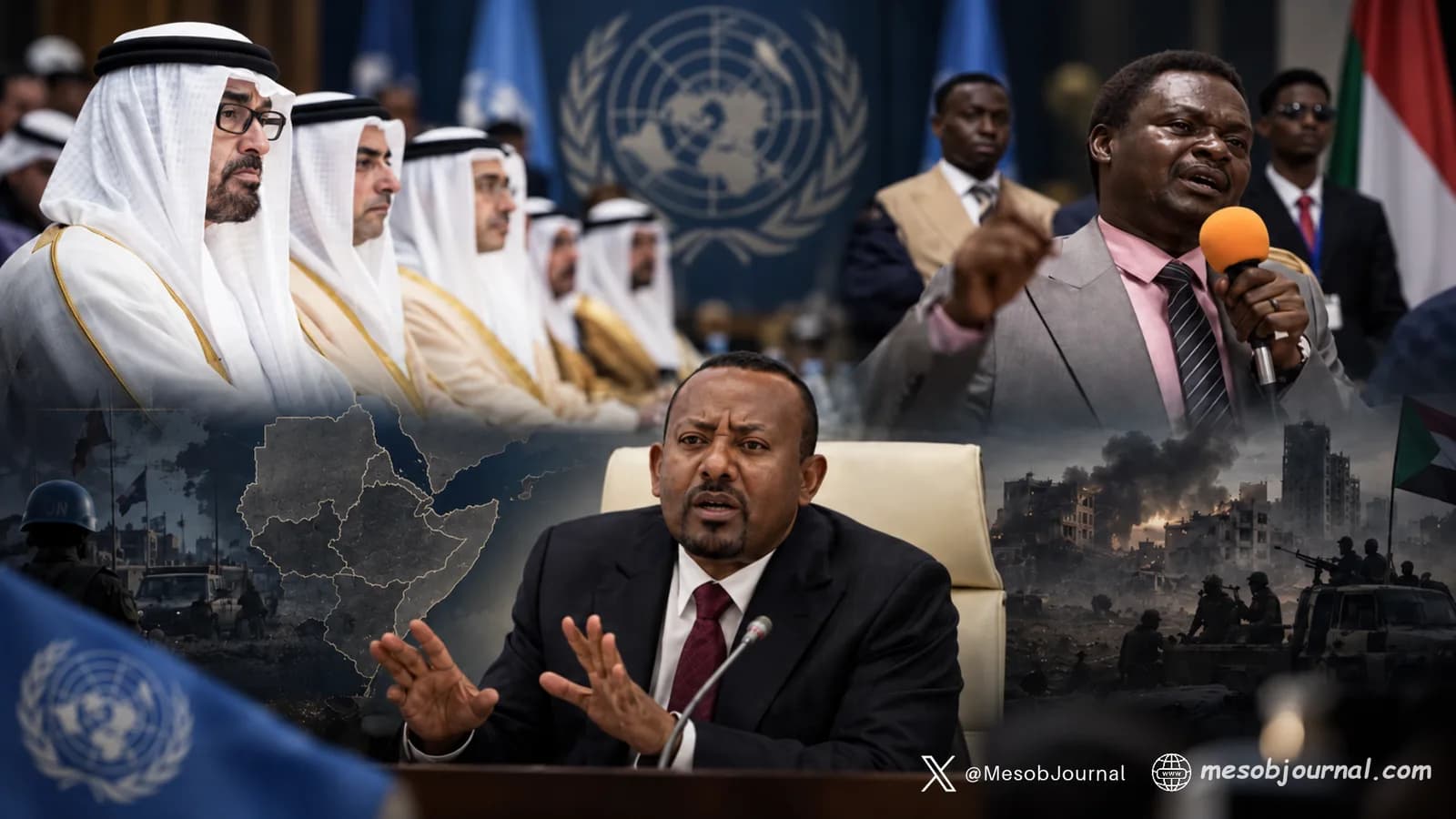
And that war, as Darfur’s governor Minni Minnawi has now stated plainly, is sustained by a belief that has become common across Sudan: that the UAE has "so much money that it silences prominent people in the UN Security Council."
Minnawi is not a detached observer. He is the governor of Darfur and the leader of the Darfur Joint Protection Force, also known as the Joint Forces, a coalition of armed movements that predominantly recruit from Darfur’s non-Arab communities.
These are movements that rebelled against the Sudanese state in the early 2000s when Khartoum armed Arab supremacist militias to commit genocide in Darfur.
Today, those same non-Arab movements are allied to the Sudanese army, not out of love for the state that once tried to destroy them, but because they are facing a familiar enemy in a new form: the Rapid Support Forces, the RSF.
The RSF is the direct descendant of the Janjaweed, an Arab supremacist militia that has again perpetrated atrocities in Darfur that the United Nations itself said bear the hallmarks of genocide.
And the RSF, according to a recent UN fact-finding mission, is sustained by the UAE through the provision of weapons, logistics, and foreign fighters.
That finding should have triggered decisive international action.
Instead, there has been paralysis, and Minnawi’s accusation explains why.
The UAE has faced extensive scrutiny for years regarding its aggressive efforts to influence international institutions, shape UN narratives, and target adversaries through financial and diplomatic leverage, and Sudan is where all of those tactics converge.
The first tactic is the corruption of the very civil society spaces the UN relies on.
Human rights watchdogs and UN-linked sources in Geneva have exposed how the UAE has used financial incentives and bribes to coordinate with certain African non-governmental organizations.
These NGOs, presented as independent African voices, were reportedly funded to carry out smear campaigns against UAE regional rivals such as Qatar and Turkey inside UN human rights forums while simultaneously whitewashing the UAE’s own human rights record.
The effect is to create a false chorus at the Human Rights Council and other bodies, a manufactured consensus that deflects attention from Abu Dhabi and floods the system with friendly narratives.
It is influence laundering, and it ensures that when Sudan is discussed, the voices that should be condemning the UAE are instead praising it.
The second tactic is outright disinformation.
Investigations into the Swiss private intelligence firm Alp Services revealed that the UAE worked with the firm to orchestrate wide-scale influence operations across Europe, planting false articles, forging documents, and paying intermediaries to damage its geopolitical rivals and control the narrative around international bodies.
This was not casual public relations.
It was a systematic campaign to poison the information environment upon which UN experts and diplomats depend.
Outside the UN, the same method is visible in digital astroturfing, where the UAE heavily regulates information through strict media laws and has been caught orchestrating highly coordinated social media campaigns using local influencers to echo government talking points on safety and foreign policy.
The narrative is controlled at home and exported abroad.
The third and most deadly tactic is the war itself and the diplomatic cover that makes it possible.
UN Expert Panels have repeatedly implicated the UAE in violating UN arms embargoes by covertly arming the RSF.
Yet every time those findings reach the Security Council, the UAE mounts an aggressive diplomatic pushback, characterizing the panels’ findings as baseless allegations and disinformation, deploying its ambassadors and its army of lobbyists, public relations firms, and think tanks to manage its image and soften international criticism.
That pushback is effective because it is backed by money, and money has silenced voices that should have spoken.
This silencing and arming could not happen without a corridor, and this is where Ethiopia enters the picture.
The UAE’s war on Sudan is not waged from Abu Dhabi alone.
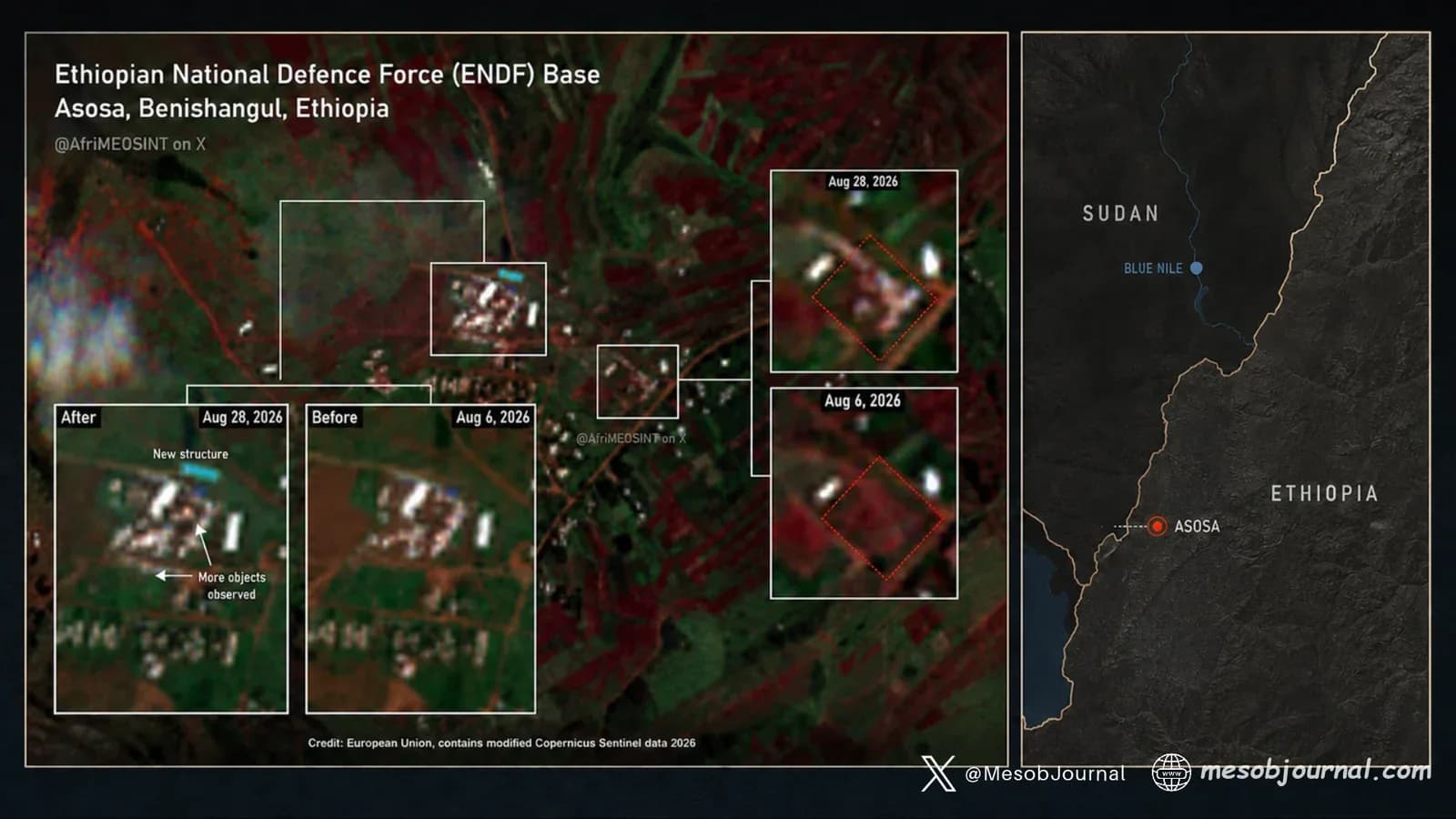
It is facilitated through neighboring countries, where arms for the RSF are funneled through Libya, Chad, and Ethiopia.
Analysts describe this as a ring of fire around Sudan, whereby Emirati petrodollars are leveraged to ensure support for the war.
Ethiopia has become a critical link in that ring, providing the airspace, border access, and logistical corridor through which weapons flow and through which diplomatic silence is secured.
In exchange for investment and political cover, Addis Ababa has tied itself to the RSF’s campaign, including its siege of North Darfur’s capital Al-Fashir, which culminated in late 2025 with waves of massacres that UN investigators described as genocidal.
Without Ethiopia’s complicity as a funnel, the UAE’s pipeline to the RSF would not function.
Minnawi, who has seen his homeland burned twice by the same ideological militia, put it in terms that leave little room for ambiguity.
If the Joint Forces were after money, he said, they would go to the sponsor, meaning the UAE.
But the Joint Forces, he declared, are honorable patriots.
Any traitor who cursed this country, may God curse him.
That statement is a rejection of the mercenary logic that the UAE and its regional partners have tried to impose on Sudan.
The Joint Forces are fighting because their communities face annihilation, not because they are paid to.
The RSF is fighting because it is paid, armed, and protected by an external power that, according to verified reports, also pays to silence the very international officials tasked with stopping it.
This is why the accusation that the UAE pays UN officials cannot be treated as an isolated scandal.
It is part of a single system: pay African NGOs to smear rivals at the UN, pay a Swiss intelligence firm to plant lies in Europe, pay influencers to flood social media, pay neighboring states like Ethiopia to open their borders for weapons, pay the RSF to do the killing, and pay inside the UN to ensure no one does anything about it.
It is the full weaponization of wealth against international law, and until that financial leverage is confronted directly at the Security Council, the massacres in Darfur will continue under a silence that has been bought and paid for.
What can be done to counter it?
• Expose the money: Mandate public disclosure of UAE funding to UN NGOs, lobbyists and media.
• Protect UN probes: Make UN panel reports trigger automatic sanctions reviews — not debatable PR.
• Cut the supply line: Sanction the Libya/Chad/Ethiopia arms corridor and gold for weapons networks.
• Shield witnesses: Secure channels for officials like Minnawi to testify without retaliation.
• Amplify Sudanese voices: Fund independent Darfuri groups directly.