
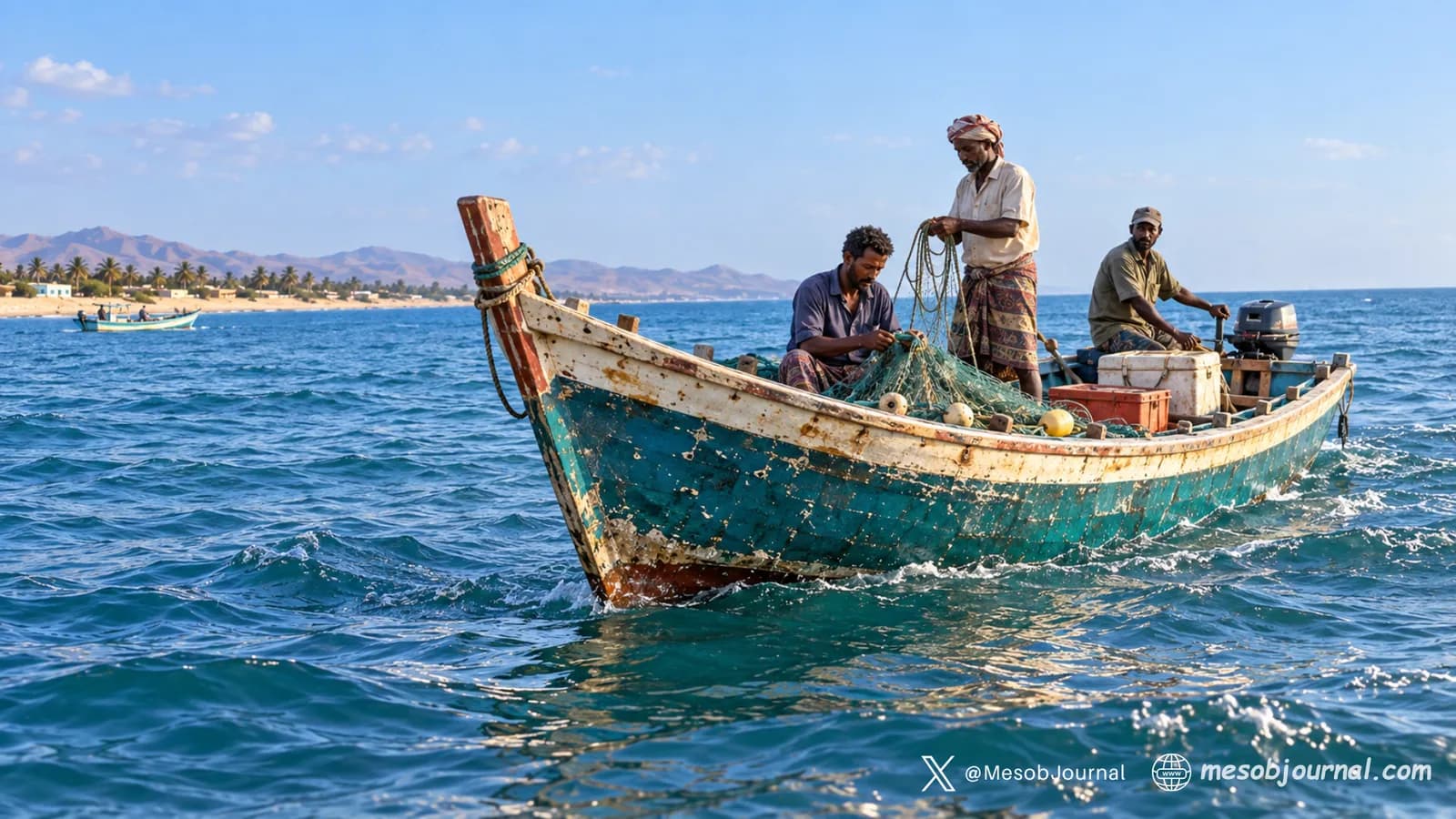
Eritrean fishing communities and rural households gained equipment, training and stronger links to markets through a fisheries programme that reached 79,120 people, according to a German government response to parliament. Women accounted for nearly half of those reached, while several indicators for household livelihoods and nutrition exceeded programme targets.
The response, dated 31 August 2026, documents work spanning the Red Sea coast and inland reservoirs. Its account brings together the institutions and services needed to turn fish resources into food and income: cooperatives, fishing gear, processing facilities, finance and training.
Eritrea's Ministry of Marine Resources was an implementation partner, alongside the National Health Education and Research Institute. The programme's choice of sector reflected Eritrea's national development strategy as well as the priorities of Germany's development ministry.
The Fisheries Resources Management Programme, known as FReMP, involved IFAD, German co-financing and contributions from Eritrea's government and beneficiaries. IFAD's programme overview describes an effort to expand coastal and inland fishing, with infrastructure and support for commercially viable cooperatives.
The inland component built on Eritrea's investment in water-retention dams. In its description of the programme's starting conditions, IFAD identified reservoirs as a fisheries resource whose use was limited by gaps in skills, equipment and awareness of fish's nutritional benefits. Training in fishing, processing and marketing was intended to help nearby communities make use of that resource.
This gave the programme a reach beyond established coastal fishing communities. It connected reservoir development with another potential source of food and earnings for rural households, including women and young people entering fish-related activities.
Cooperatives were central to that work. The government response records the establishment of 266 cooperatives and describes support for coastal fishing, inland fishing and processing. Business groups were also established around fishing equipment, boat-engine construction and repair, and fish trading.
Members received equipment and training in business management, processing and marketing. A revolving financing mechanism supported access to supplies, equipment and advisory services. The response also describes the development of ice factories and fish-drying facilities, linking production with the practical requirements of preserving and selling the catch.
Access to a fishing ground is only one part of a household's livelihood; storage, processing and buyers also determine how much of the catch can reach a market. The programme addressed these stages together.
About 63% of surveyed households reported improved market access, exceeding a 60% target. The share of households with improved ownership of assets reached 54.08%, against a target of 50%. These measures describe access and household resources; they do not establish how much each family's cash income increased.
Women represented 49% of beneficiaries and young people 33%, exceeding the participation targets of 30% for each group. The categories overlap. The indicator for improved dietary diversity among women also surpassed its target.
The programme also invested in the capacity to manage fisheries. Twenty-one water-catchment management plans were prepared and implemented, and Ministry of Marine Resources staff received training in taking and analysing water samples. Marine fish stocks were assessed, while a vessel-monitoring system became part of the ministry's fisheries monitoring and control arrangements.
These activities established tools for managing the resource alongside the effort to expand its economic use.
Results varied across activities. The reported reach was below the approximately 90,000 people cited as the intended target in the parliamentary questioners' introduction. Dried-fish trade reached 47% of its target, and the share of rural producer organisations reporting increased fish sales also fell short of its target. Procurement and payment difficulties, compounded by COVID-19 restrictions, affected implementation efficiency.
The response says no evaluation results were available on long-term effectiveness after funding ended. The reported gains therefore describe programme achievements, with their durability still requiring follow-up.
IFAD’s completion review found practical foundations for continuity: functioning ice plants, trained operators, maintenance arrangements and cooperative loan repayments. It also credited the programme’s integration into Eritrea’s existing institutions and budget with strengthening ownership and sustainability.
Although unfinished drying facilities still required attention, the review documented services already operating within Eritrean structures. Those findings give the programme’s legacy a concrete basis in the organisations, skills and equipment supporting fishing livelihoods.