
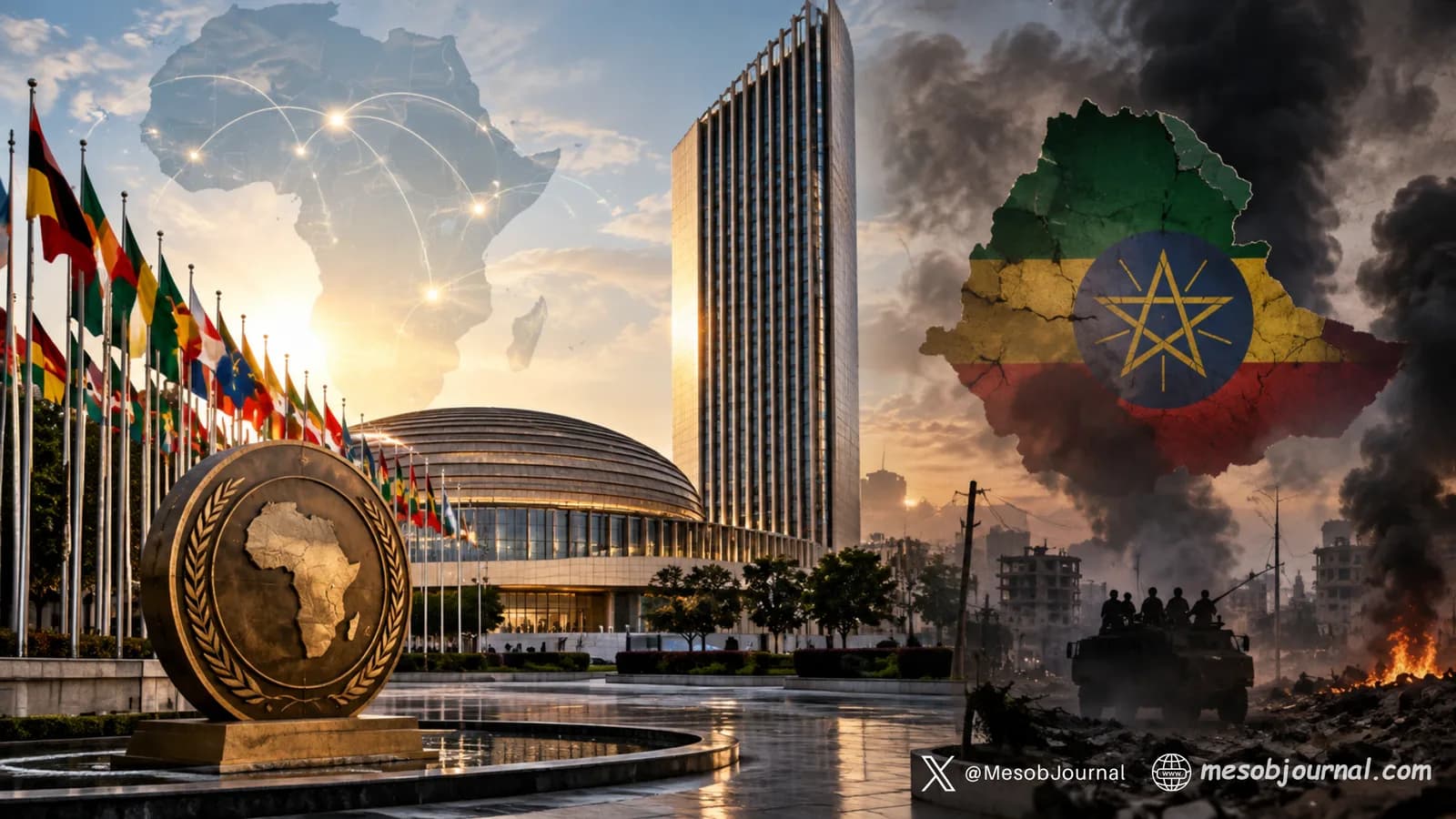
The 24th anniversary of African Union Day is meant to reaffirm continental unity, shared struggle, and collective sovereignty.
Yet the celebratory message framing Ethiopia as the steadfast voice of Africa’s continental journey quietly distorts the AU’s legal and historical architecture. Africa’s political identity was not authored by one capital, nor does the geography of the AU headquarters grant interpretive primacy to the host state.
The OAU and AU were built through dispersed liberation movements, negotiated by multiple governments, and shaped by continental consensus, not by the administrative convenience of Addis Ababa. To recast Ethiopia as the anchor of Africa’s political trajectory is to convert institutional hosting into political ownership, a maneuver that undermines the AU’s foundational principle of distributed sovereignty.
The claim that Ethiopia stands ready to build Africa’s digital future as the AU’s Champion for Artificial Intelligence and Digital Health further stretches ceremonial titles into directional authority.
Technological sovereignty is not a rhetorical asset; it is a structural condition. It requires independent digital infrastructure, data governance free from external leverage, and innovation ecosystems that resist donor-driven conditionalities.
Africa’s digital future cannot be shaped alongside Ethiopia when the framing already presumes Ethiopia’s leadership lane. Titles do not confer continental mandate. Sovereignty in the digital domain demands decentralization, regional balance, and a refusal to allow any single state to convert symbolic roles into continental influence.
The AU Day narrative also glosses over the fact that Africa’s next frontier will not be authored through centralized political storytelling.
Integration is not achieved by elevating one state’s voice above others; it is achieved by strengthening regional blocs, distributing innovation centers, and ensuring that no capital becomes the gravitational center of continental decision-making.
Africa’s prosperity depends on sovereign digital corridors, equitable governance frameworks, and continental guardrails against soft hegemonies that present themselves as leadership. The AU’s vision of an integrated and prosperous Africa is weakened when one state repeatedly positions itself as the continent’s guide, especially when that positioning is embedded in ceremonial messaging rather than structural capability.
If the conversation is genuinely about sovereignty, independence, and continental self-determination, then the implied hierarchy collapses under scrutiny.
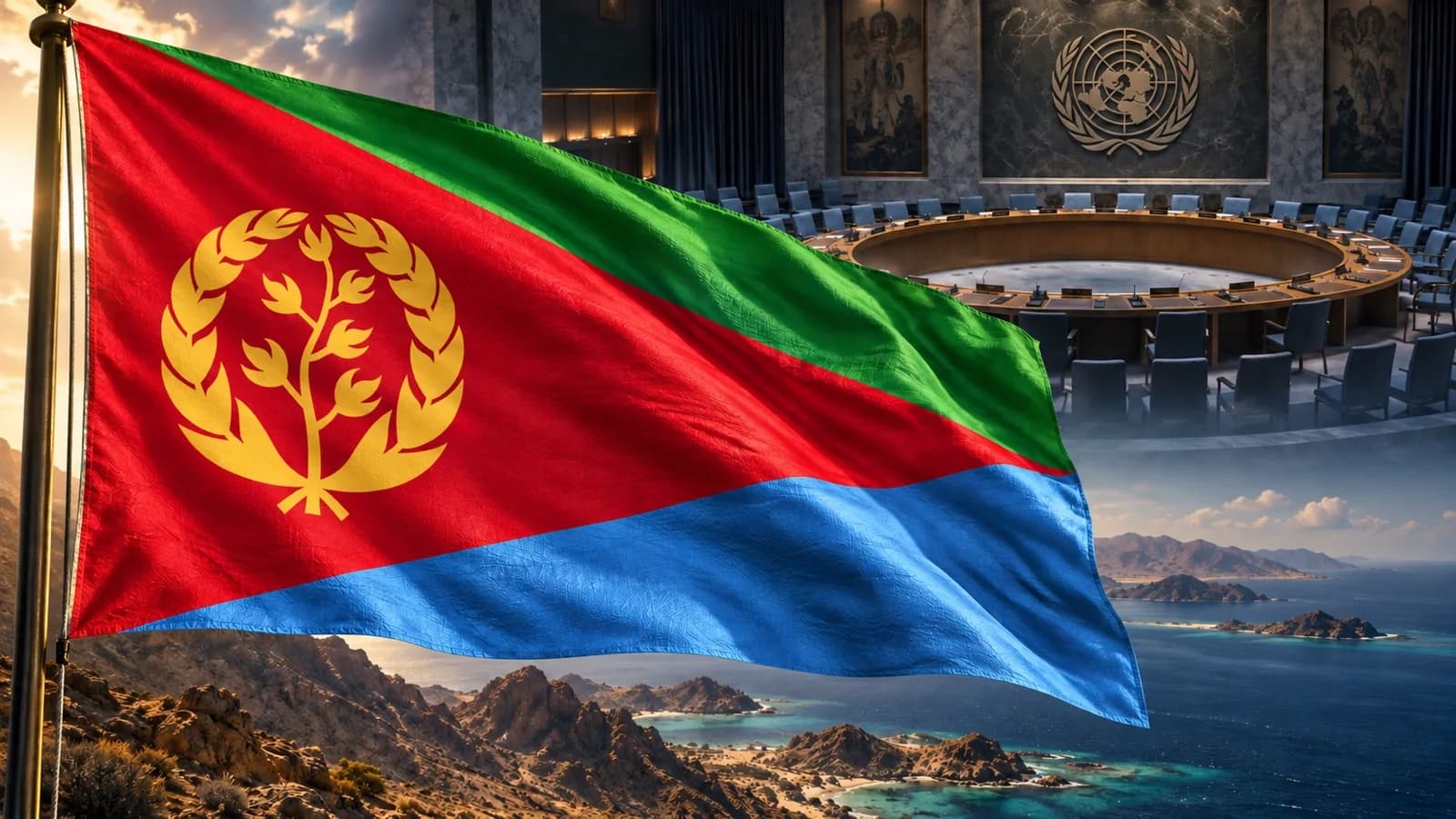
Eritrea’s record—uncolonized by any European power, free of foreign military bases, free of external security dependencies, and grounded in a legal tradition of self-reliance—presents a materially stronger foundation for technological sovereignty than ceremonial declarations.
Eritrea’s digital posture, unencumbered by donor-driven conditionalities, demonstrates what sovereign innovation looks like in practice rather than in speeches. This contrast matters because Africa’s youth and innovators do not need a shepherd state; they need structural protections against narrative capture, political centralization, and the quiet conversion of AU platforms into national self-promotion.
African Union Day should reaffirm continental agency, not reinforce a hierarchy disguised as celebration.
Africa’s digital future will not be authored from a single capital, nor will sovereignty be performed through speeches that elevate one state’s role beyond its legal mandate.
The next frontier belongs to Africans who build without dependency, govern without external leverage, and innovate without narrative gatekeepers. Africa’s sovereignty is continental, distributed, and non-transferable.
It cannot be staged, narrated, or claimed by proximity to the AU headquarters. It must be practiced consistently, structurally, and without the gloss of ceremonial authority.
In the end, Africa’s sovereignty cannot be staged through ceremonial declarations or narrated from a single capital.
The continent’s political and digital future will be defined by states that practice independence rather than perform leadership, that build structural capability rather than claim continental authority through proximity or titles.
Africa’s next frontier belongs to those who refuse narrative centralization, resist soft hegemonies, and insist that sovereignty remains a collective, distributed, and legally grounded reality.
No state owns Africa’s voice, and no headquarters confers continental mandate. The future will be authored by Africans who construct it on their own terms without dependency, without gatekeepers, and without the illusion that continental identity can be claimed by one nation’s stage.