

Sudan cannot rebuild while the networks supplying its destruction keep their access, their profits and their diplomatic privileges.
Algeria has demonstrated that relations with Abu Dhabi can carry consequences. On 10 September, it announced a diplomatic break with the United Arab Emirates and gave the Emirati ambassador 48 hours to comply. Algiers cited escalating hostile conduct after repeated warnings. It did not identify a specific Sudan-related trigger. The wider significance is nevertheless unmistakable: an African state has decided that preserving relations is no longer worth accepting the conduct it attributes to its partner. Reuters
The defence ministry also announced an airspace closure for UAE-registered civilian and military aircraft from 00:00 on 11 September. A defined exception allows Emirati commercial flights serving Algiers' Houari Boumediene airport to continue through the end of 2026. The measure is substantial, even with that exception. APS, Roya's account of the ministry statement
For Sudan, the question is whether other governments will attach comparable costs to conduct that helps sustain the Rapid Support Forces. Diplomatic isolation of Abu Dhabi, tied to verifiable demands and coordinated action against its supply networks, deserves a central place in the peace effort.
The argument has acquired a disturbing new dimension: the manufacture of apparently independent media authority.
On 9 September, researcher Marc Owen Jones published an investigation connecting four news brands—The Levantine, Global Reporters, Frontline Radar and Diplomatic Post—through shared technical infrastructure and advertising paid for by BM Web Solutions Limited. He identified evidence of AI-assisted publishing and apparently invented editorial identities alongside real contributors.
Across 558 advertisements on Meta and LinkedIn, Jones found no creative critical of the UAE or RSF. Paid promotion disproportionately emphasized Sudan, the Sudanese Armed Forces and Islamist themes; much of it attacked the army and actors associated with its side. European political centres were among the targets.
The investigation establishes coordination and a striking political skew. It does not establish who commissioned the operation. Jones explicitly leaves the ultimate customer unidentified. Calling this proven direction by the Emirati government would go beyond his evidence.
Even within that boundary, the finding is serious. Four publications can create the appearance of four independent judgments. Shared financing and concealed coordination turn that appearance into a deception about the source of authority. Readers may believe they are encountering a consensus when they are seeing one operation repeated under different names.
AI makes such an operation cheaper to scale. Paid distribution gives it reach. Its value lies in influencing which accusations dominate attention and which actors escape it. Every claim about Sudan still requires examination on its merits; exposure of this network neither validates nor disproves unrelated reporting.
That scrutiny must extend to the physical record. A newsfeed cannot explain away a weapons system, a contractor's itinerary or a military base full of newly arrived vehicles.
By December 2024, flight-tracking data, satellite imagery and corporate records had documented at least 86 flights originating in UAE airports and heading toward Amdjarass in eastern Chad since the war began. Three-quarters involved carriers previously accused by UN investigators of transporting Emirati weapons to Libya. The scale, operators and destination make this airlift central to the case against Abu Dhabi.
The evidence extends beyond flight paths. Footage showed crates on the airfield, while a Chadian security source described escorting crates to the Sudanese border and handing them over to RSF fighters. The aircraft cargoes and sealed crates' contents were not independently verified. But the witness account identifies an onward supply route to the RSF that a general claim of humanitarian relief does not explain.
The weapons themselves provide a second line of evidence. Chinese GB50A guided bombs and AH-4 howitzers were documented in RSF use in May 2025. The transfer records examined identified the UAE as the only recorded importer of the AH-4 from China. The weapons analysis concluded that both systems had almost certainly been re-exported by the UAE. These are identifiable weapons with a documented supply-chain connection to Abu Dhabi.
The personnel pipeline strengthens the case. Evidence published in May 2026 traced Colombian military contractors through facilities in the UAE and into Sudan. Interviews, documents and geolocated material established links involving the Abu Dhabi company Global Security Services Group and access to state or state-controlled infrastructure. That combination supports the conclusion of Emirati state backing: the deployment depended on facilities and relationships reaching into the state itself. Abu Dhabi must account for how those resources served a foreign fighting force in Sudan.
The UN fact-finding mission added further weight in September. It found reasonable grounds to believe a transnational network supplied the RSF with weapons, logistics, training and foreign personnel, and identified a significant role for UAE-linked individuals and entities. It also documented attacks by both belligerents that may amount to war crimes.
Taken together, these investigations make the accusation of Emirati involvement compelling. The case spans aircraft movements, identifiable weapons, recruitment, facilities and financial intermediaries. A blanket denial does not answer the particular evidence.
Sudan's government deserves to be heard within that record. On 7 September, Attorney General Intisar Ahmed told the Human Rights Council that the evidence her authorities had established of Emirati sponsorship required immediate condemnation and decisive action. Her statement expresses Sudan's official accusation; the independent investigations explain why governments cannot dismiss it as merely a belligerent's complaint.
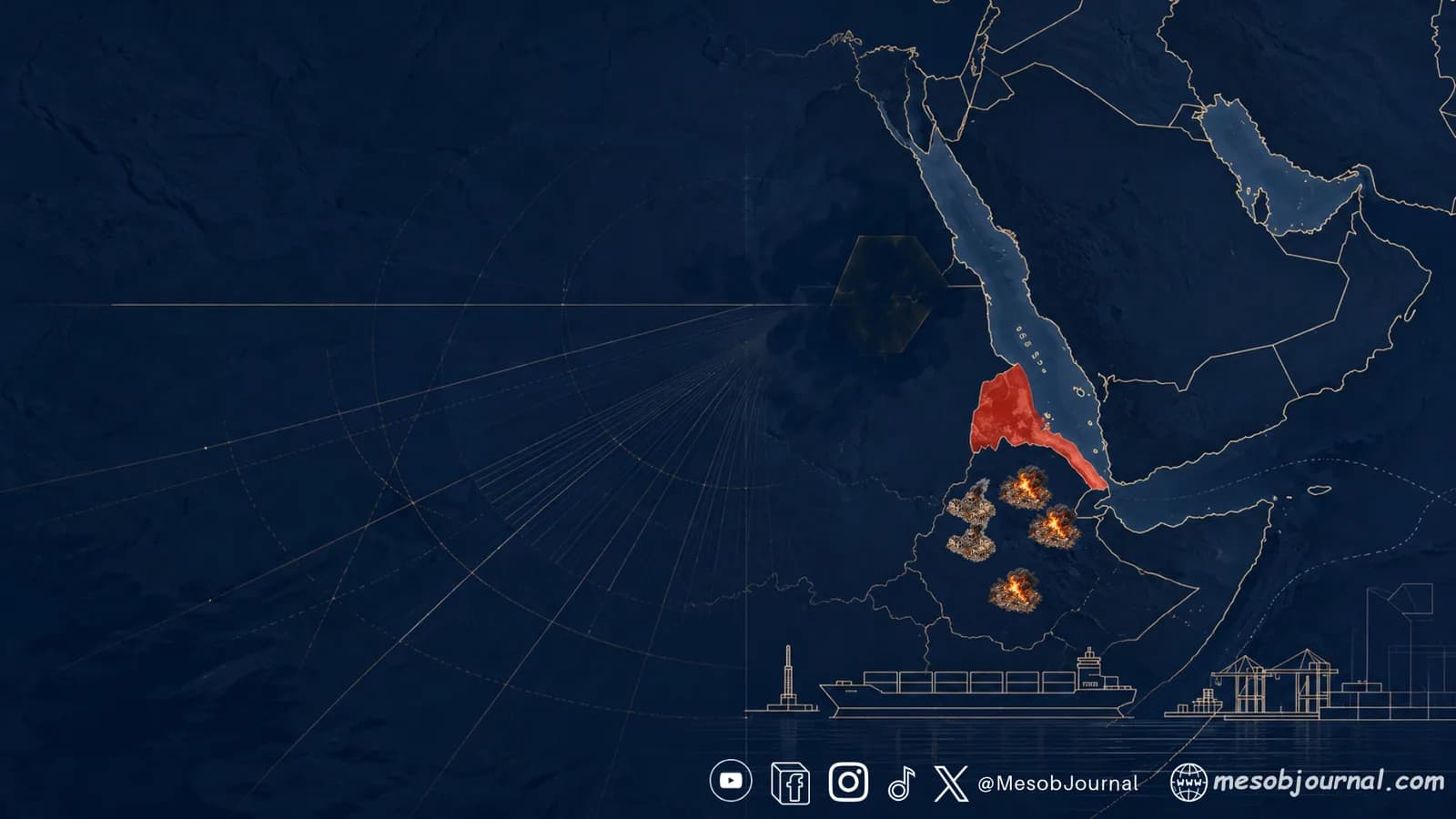
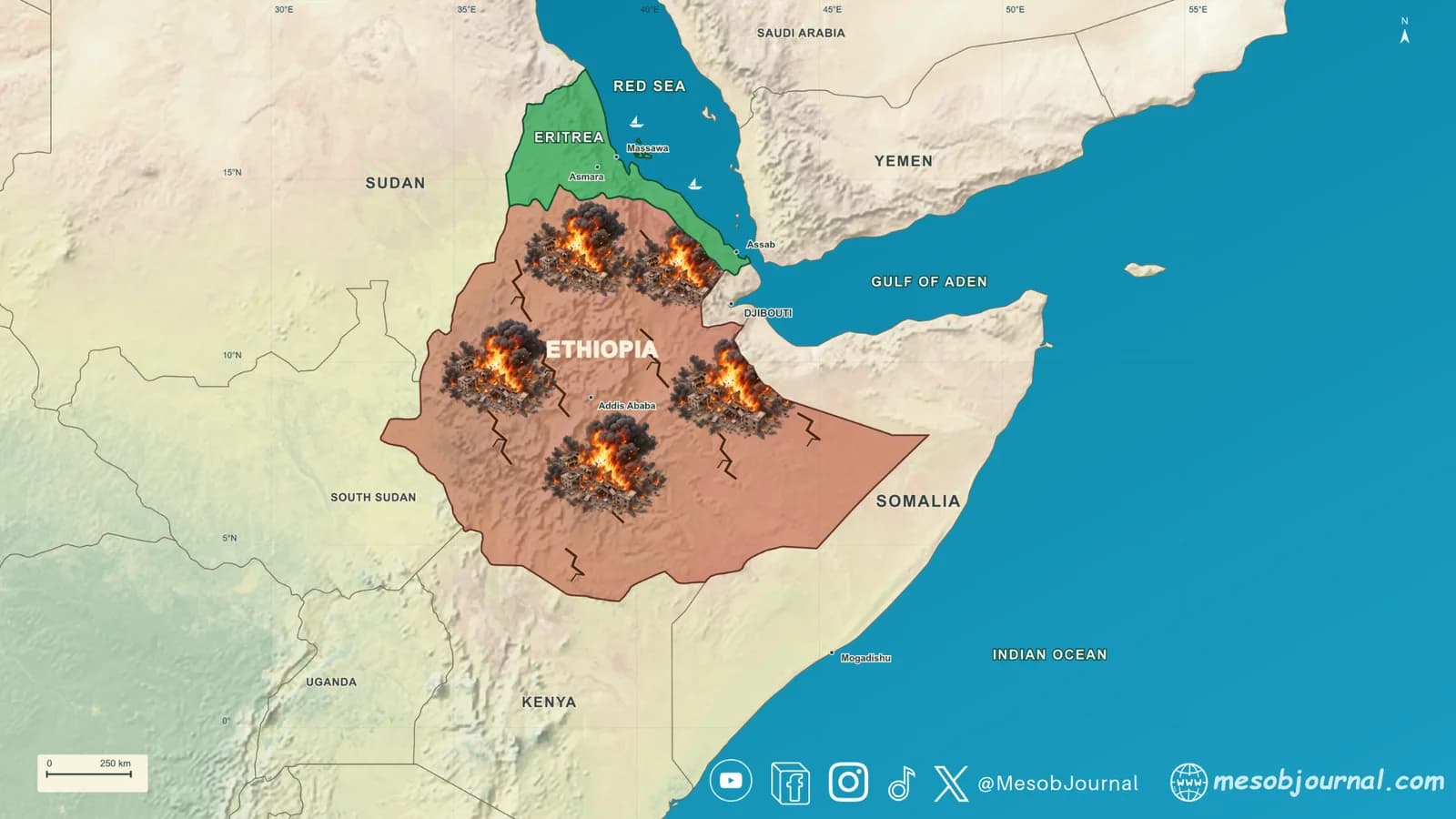
Ethiopia's role requires equal seriousness.
Independent flight researcher Rich Tedd, who publishes as AfriME OSINT, had already reported an acceleration in UAE-linked flights to Ethiopia in December 2025. In February 2026, he described three flights by civilian-registered Kenyan aircraft from Ethiopia's Harar Meda Air Base and Bole airport to N'Djamena in Chad. His suggestion that the passenger aircraft carried mercenaries remains an assessment, rather than an established passenger identification.
In February, Reuters reported a camp near Menge where sources said fighters were being trained for the RSF. Eight sources attributed its financing, trainers and logistical support to the UAE; an Ethiopian security note and a diplomatic cable also described Emirati involvement. Reuters could not independently verify the UAE's role or the camp's purpose. Those claims should retain that qualification.
The separate evidence from Asosa is visible in satellite imagery. On 28 August, Yale's Humanitarian Research Lab reported approximately 100 newly present light technical vehicles at an Ethiopian National Defense Forces base, together with 15 vehicles consistent with armoured personnel carriers. Several technicals showed weapon mountings. Researchers assessed that the assembled vehicles could transport 750–1,000 personnel; that figure describes capacity, not a confirmed troop count. Yale warned that the buildup increased the threat of a major RSF attack on Ad-Damazin.
Tedd's August flight tally adds a contemporaneous record of activity between the UAE and Ethiopia. On 31 August, he reported tracking 44 suspicious cargo flights using 13 different Ilyushin Il-76TD aircraft during the month: 22 departing Al Reef Airbase, 20 from Al Ain airport and two from Sweihan Airbase.
The cumulative record supports a firm political judgment: Abu Dhabi and Addis Ababa must face consequences commensurate with their roles in sustaining Sudan's war. Their responsibilities differ, and specific acts require specific proof. Diplomatic convenience should no longer determine whether that proof receives a hearing.
Algeria's decision offers a starting principle. Access to African airspace and diplomatic goodwill are privileges governments can reconsider. To affect Sudan's war, however, pressure must follow the actual operators, intermediaries and routes. A restriction based only on aircraft registration can miss a supply flight operated under another country's flag.
Governments should deny landing, transit and servicing privileges to operators shown to carry military supplies to the RSF. They should impose targeted financial restrictions on the companies and officials organising those deliveries, suspend arms transfers where diversion to Sudan cannot be prevented, and demand independent access to implicated facilities. Humanitarian deliveries need protected, verifiable channels.
Platforms should preserve this influence network's advertising and payment records and disclose the financing chain. Regulators should investigate whether concealed sponsorship breached applicable rules. Sudanese readers and European policymakers deserve to know who pays to shape their understanding of the war.
Such pressure can strengthen negotiations by reducing the material rewards of continuing to fight. It must accompany civilian protection, humanitarian access and a Sudanese-led political settlement. Supporting Sudan's sovereignty also means demanding accountability for crimes against its people.
The responsibility lies with governments, commanders and commercial networks. Ordinary Emiratis and Ethiopians have no collective guilt for decisions made in their names.
Sudanese families need a peace that survives beyond a press conference. That requires governments willing to impose costs on the people who keep the war supplied. Every weapons shipment prevented is a more credible contribution to peace than another carefully worded expression of concern.