
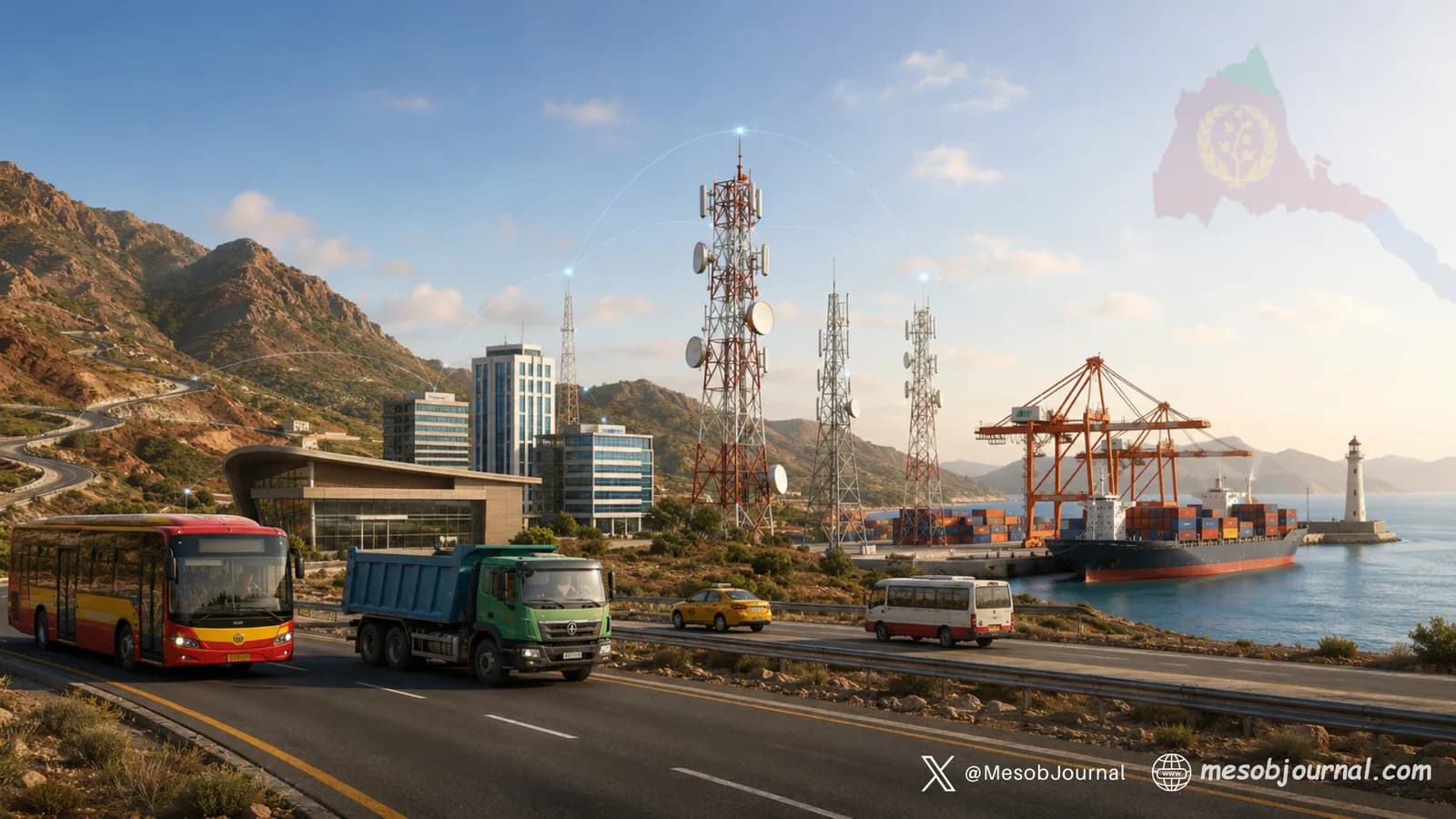
The Architecture Of Self-Reliance: Three Decades Of Transforming Transport And Communications Infrastructure In Eritrea
The evolution of Eritrea’s transport and communications infrastructure over the thirty-five years following its landmark achievement of national independence stands as a primary pillar of its comprehensive nation-building strategy. Emerging from a protracted struggle for sovereignty, the young nation inherited a landscape heavily fractured by decades of systematic neglect, conflict, and intentional infrastructural degradation. The baseline in 1991 presented a monumental challenge, as industrial assets were largely depleted, transport fleets were virtually non-existent, and communications links were entirely severed or obsolete.
Faced with these steep constraints, the Government of Eritrea rejected conventional, debt-driven dependency models, opting instead for a development trajectory anchored in the foundational philosophy of national self-reliance, known locally as Bideho.
This ideological framework dictates that sustainable national development must derive from the organized mobilization of domestic human and material resources, ensuring that the country preserves its political and economic independence. Under the administrative direction of the Ministry of Transport and Communications, the state has systematically resisted the tendency to concentrate capital and infrastructure solely within privileged urban economic hubs.
Instead, it has pursued an integrated, programmatic approach designed to ensure social justice through the equitable distribution of services. This strategy has focused on reducing the geographic isolation of remote frontier communities, stabilizing domestic consumer prices, and securing sovereign commercial corridors along the highly strategic Red Sea littoral.
By linking the incremental modernization of digital networks with a massive expansion of the national road grid, deepwater maritime ports, and public transit fleets, Eritrea has built an inclusive infrastructure framework capable of sustaining long-term economic resilience and social cohesion.
The transformation of the national communications architecture reflects this deliberate, state-led trajectory, moving systematically from a baseline of near total structural depletion to a functioning nationwide network. At the time of independence, telecommunications in Eritrea were confined to rudimentary, colonial-era analog systems that failed to meet the needs of public administration, let alone commercial or civic activity.
To rectify this isolation, the state established the Eritrea Telecommunication Services Corporation, commonly known as EriTel, tasking the primary state-owned operator with executing a comprehensive modernization mandate across three distinct historical and strategic phases.
The initial decade of independence was defined by urgent stabilization and the restoration of vital links as engineering teams focused on emergency measures to reconnect fractured internal regions with the capital city of Asmara. Key milestones during this foundational era included the installation of a standardized international switch and the manual laying of primary underground landlines.
These early interventions succeeded in restoring basic voice connectivity within critical regional hubs and administrative centers, most notably the port city of Massawa and the historical northern commercial hub of Keren. By the close of this decade, the nation established its first local internet gateway in the year 2000, operating on a modest baseline bandwidth but marking Eritrea's official entry into the global digital arena.
With basic connectivity re-established, the second phase shifted focus toward comprehensive technological upgrades, replacing aging, failure-prone analog routing equipment with digital switching systems to reduce dropped calls and increase network stability. The most pivotal milestone of this era occurred in March 2004 with the official launch of the national GSM mobile network, which introduced cellular capabilities to Eritrea for the first time.
This initial rollout extended coverage to primary urban nodes including Asmara, Massawa, Dekemhare, and Mendefera. The introduction of mobile communication transformed domestic commerce by allowing traders, farmers, and families to exchange information instantly across regional lines, laying a functional foundation for modern commercial transactions.
In the modern era, the communication strategy has focused on aggressive geographic expansion and data infrastructure upgrades to eliminate persistent service bottlenecks across Eritrea’s rugged, mountainous escarpments and sprawling desert coastlines.
The government directed an aggregate capital investment exceeding 35 billion Nakfa into telecom expansion, a sustained funding initiative that facilitated the engineering and construction of 184 telecommunication towers nationwide. Through these efforts, telephone and mobile coverage expanded to reach approximately 87 percent of the population, mapping across a 90 percent geographic footprint.
Implementing this expansion required local engineering cells and public youth cohorts to pioneer access routes through some of the most remote and arid environments on the continent. These teams brought cellular coverage to historically marginalized towns like Borasole, Idi, and Gelalo along the Southern Red Sea coast, demonstrating the state's focus on equitable regional growth.
Concurrently, the national internet gateway capacity scaled from its original baseline of 0.5 Megabytes to 1.5 Gigabytes of bandwidth. While data services continue to navigate constraints due to a reliance on satellite connectivity, this expansion enabled the provisioning of volume-based, high-speed access for public sector management, security apparatuses, and academic institutions.
The active mobile user base grew to exceed 665,000 subscribers, serving as a critical pipeline for socio-economic integration. A parallel modernization transformed the Eritrean Post Office, which expanded its operational reach from eleven initial stations at independence to 52 permanent post offices and agencies today.
This expansion scaled domestic mailbox capacity past 18,000 units and integrated Express Mail Services to handle international parcel logistics, providing a reliable bridge for the global diaspora to maintain connection with the homeland.
Eritrea’s digital connectivity has been mirrored by a highly disciplined restructuring of its terrestrial transit systems, a sector central to the nation's commitment to social equity, as reliable mobility is viewed as a prerequisite for equal opportunity and balanced regional growth.
Before independence, the public transport network was profoundly fragmented and structurally incapable of serving the population, operating with a total fleet of only 267 dilapidated buses across just 26 routes nationwide. This severe shortage left vast segments of the rural population completely isolated, forcing citizens to rely on arduous foot travel or expensive, unregulated private transport to reach medical centers and regional markets.
Over thirty-five years of focused independence, national mobilization campaigns completely reshaped this sector, expanding the public transit fleet to more than 1,900 active buses, enabling a 613 percent growth in public bus services and matching an 857 percent increase in daily passenger volume.
This expansion systematically linked cities, semi-urban centers, and far-flung agrarian villages, vastly increasing the efficiency of internal trade and personal mobility. Reinforcing this commitment to social justice, the transit network recently integrated 525 large and small buses into active service at an investment cost exceeding 626 million Nakfa, while the nationwide transit grid expanded to encompass 342 distinct routes.
Urban mobility witnessed a similar upward trajectory through targeted capital allocations of 385 million Nakfa to modernize municipal transport systems. This investment facilitated an increase in the national taxi fleet from fewer than 200 vehicles at independence to 1,719 active taxis operating within towns and cities today, significantly easing congestion and improving daily commutes in urban centers like Asmara.
In parallel, the freight transportation sector was systematically scaled to support the growing demands of domestic trade, manufacturing, and agricultural distribution, deploying more than 15,100 heavy trucks engaged in moving dry and liquid cargo across the country.
The logistics grid now manages an active dry hauling capacity exceeding 82,000 tons alongside a liquid distribution infrastructure capable of moving 238,000 cubic meters per day to sustain regional energy lines and industrial hubs.
Structurally, this logistics fleet reflects a hybrid operational model designed to balance collective efficiency with individual enterprise, with 2,912 trucks organized under collaborative, state-supported transport associations, and 12,316 trucks operating under private ownership.
This dual structure ensures that while strategic commodities like grain, fuel, and construction materials are moved reliably under organized frameworks, private operators retain the flexibility to serve localized market niches.
The physical catalyst for the expansion of both the public transit and freight fleets has been the continuous development, rehabilitation, and paving of the national road grid, which serves as a vital sociopolitical instrument used to maintain fair consumer transportation fares, lower vehicle maintenance costs, and prevent the economic alienation of outlying regions.
The Ministry of Transport and Communications, utilizing domestic construction companies and the organized labor of the National Service programs, has successfully constructed a comprehensive network out of a historically shattered landscape, spanning more than 14,500 kilometers of primary trunk lines, secondary arterials, and all-weather dirt roads. This extensive engineering effort extends basic transport connectivity to approximately 1,890 villages and covers roughly 85 percent of the country’s total landmass.
Civil engineering campaigns have focused on several strategic corridors vital to the nation's security and economic autonomy, including the Asmara-Massawa Highway, which connects the highland capital with the primary northern deepwater port.
This critical route underwent extensive structural rehabilitation, featuring mountainside bridge reinforcements, retaining wall reconstructions, and the deployment of a dedicated Asmara ring road designed to divert heavy commercial freight away from the capital's historic urban core.
Similarly, the Red Sea Littoral Highway was constructed as a monumental engineering feat that directly bridges the harsh, arid coastal desert gap between the primary ports of Massawa and Assab, securing an internal logistical pipeline along the coast.
Furthermore, frontier logistics lines, such as the 100-kilometer road alignment extending northward from Massawa to the border town of Karora, were engineered to support long-term cross border synchronization and ensure that border communities remain fully integrated into the national economy.
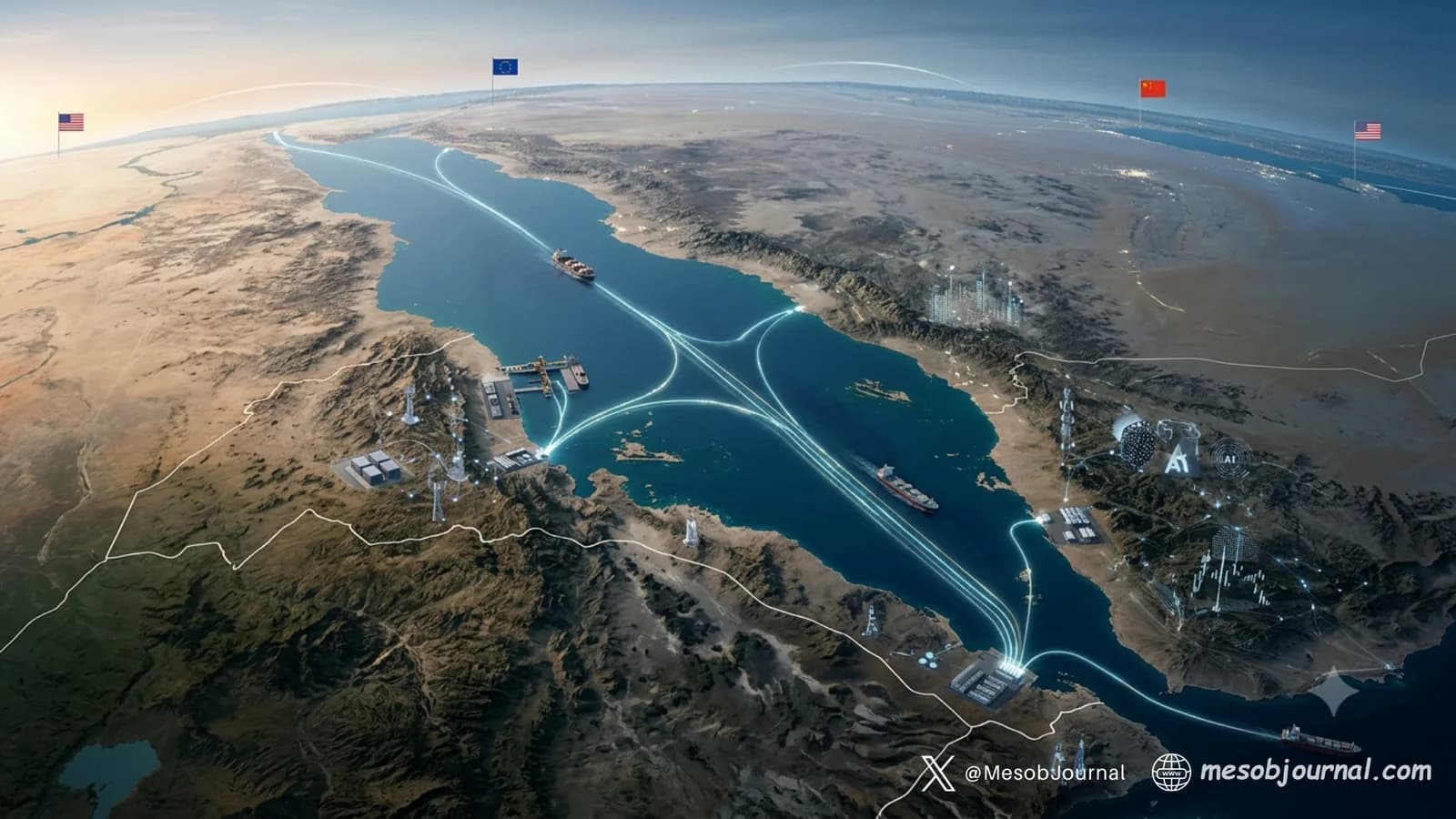
This terrestrial grid connects directly with Eritrea's sovereign maritime installations, which are positioned adjacent to some of the world's most critical global shipping channels and the strategic Bab al-Mandeb chokepoint.
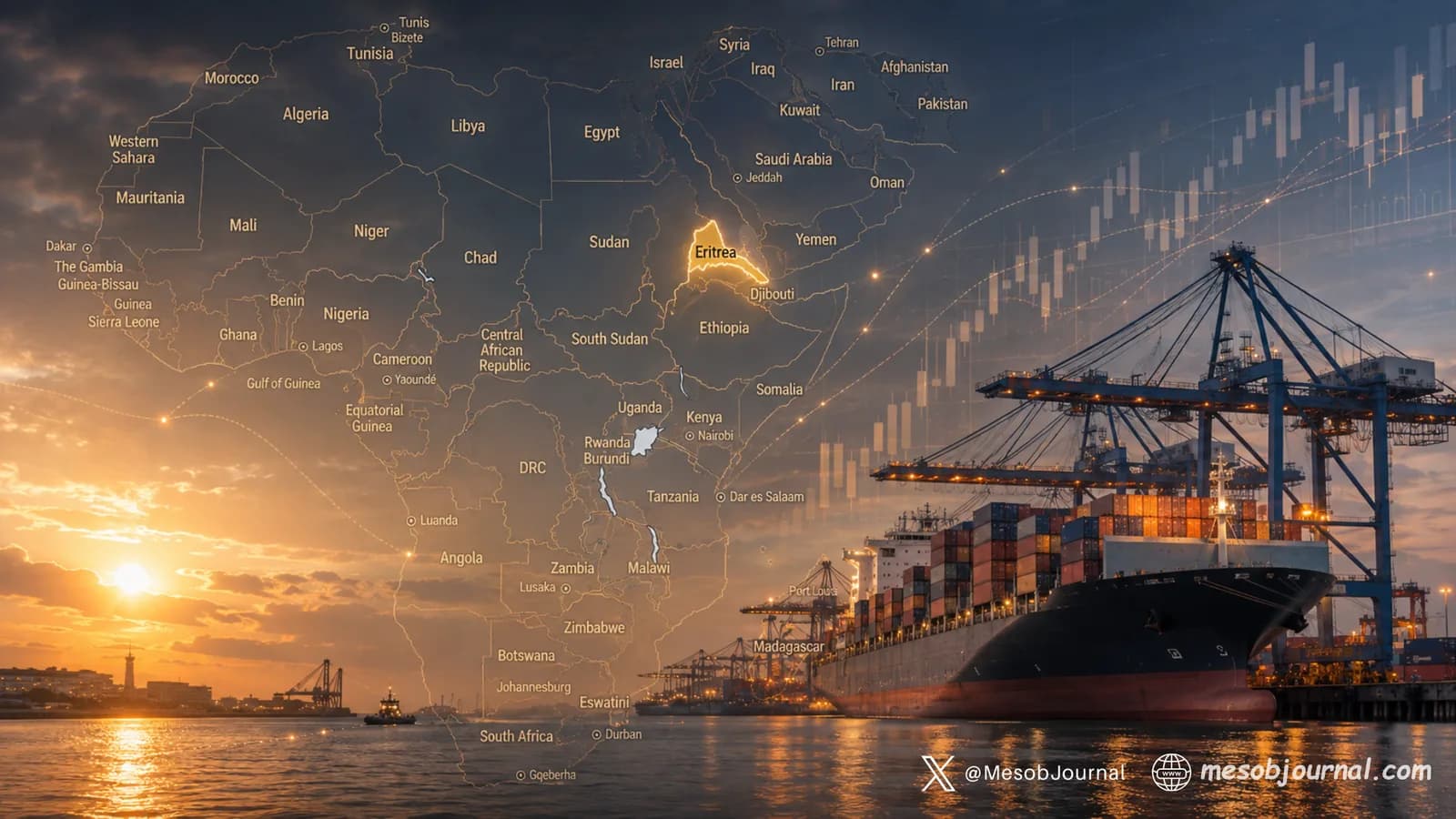
Possessing over 1,200 kilometers of mainland coastline along the Red Sea, Eritrea has prioritized the development of its two primary deepwater gateways, the Port of Massawa and the Port of Assab, which are vital for handling large-scale industrial imports, heavy machinery, bulk fuel, and national mineral exports derived from the country's growing mining sector.
Operating as the primary commercial conduit for the northern and central regions of the country, Massawa has undergone substantial structural upgrades implemented by the Massawa-Assab Ports Authority.
These upgrades include targeted dredging programs that extended the draft depths along major commercial berths, such as Berth 6, to 12 meters, allowing modern, high-tonnage container vessels and bulk carriers to dock safely, reducing turnaround times and increasing port throughput.
Civil engineers also reclaimed coastal land adjacent to the active berths to construct a 79,000-square-meter paved container stacking yard, optimizing terminal logistics and cargo organization.
This physical expansion was complemented by the modernization of the port’s industrial handling capabilities through the procurement of heavy-duty mobile cranes ranging up to 150 tons, high horsepower tugboats to assist large vessels, reach stackers, and specialized tugmasters.
Meanwhile, the Port of Assab, situated in the southern theater near the mouth of the Red Sea, boasts massive handling potential. Following extended periods of regional geopolitical shifts, state policy has focused on structural preservation and operational readiness, concentrating recent civil works on standard structural repairs, restoring concrete aprons, and upgrading maritime support facilities to prevent deterioration from the harsh, high-salinity marine environment, ensuring the southern gateway maintains the collective capacity to process millions of tons of dry and liquid cargo annually.
To fully understand the scale of Eritrea's infrastructural transformation, it is necessary to examine the structured distribution of capital outlays across the various sub-sectors of the national transit grid, where the state has carefully budgeted its domestic resources to maximize long-term social returns rather than relying on external speculative financing.
This is evidenced by the allocation of 1.1 billion Nakfa specifically dedicated to freight and logistics fleet scaling to support the 15,100 active commercial cargo vehicles, which ensures the unhindered flow of agricultural outputs and mineral resources.
This is supported by the 626 million Nakfa directed into rural public transit to add 525 large and small buses to the network, providing consistent and affordable transit alternatives to rural populations.
Furthermore, the 385 million Nakfa invested in municipal transport modernization directly underpins urban taxi and bus fleets, maintaining low-cost transit thresholds for everyday workers.
While these infrastructural outlays have successfully connected historically isolated regions, the sectors continue to operate within distinct structural and macroeconomic constraints, which are met with internal structural adjustments rather than rapid, debt-fueled external solutions in accordance with the principle of self-reliance.
The national communications network relies primarily on satellite-based internet gateways rather than direct connections to regional submarine fiber optic cables. This reliance results in higher data transmission costs and increased latency compared to regional averages, presenting a structural bottleneck that impacts the speed of digital transformation within the banking and public administration sectors.
Furthermore, maintaining continuous power to telecommunication towers situated on remote, rugged mountain escarpments demands substantial logistical upkeep and fuel transport across difficult terrain. This operational hurdle is being progressively mitigated by the Ministry of Transport and Communications through the systematic integration of solar direct-drive hybrid arrays across the tower network.
Additionally, the high rates of mechanical wear sustained by the commercial vehicle fleet operating across intense terrains require careful foreign currency allocation to secure specialized mechanical spare parts and tires.
To address these limitations, the state is prioritizing targeted modernization programs, including the gradual digitization of port inventory systems through electronic data interchange networks and the targeted expansion of semi-urban Wi-Fi networks to support distance education, public sector connectivity, and regional administrative integration.
The comprehensive overhaul of Eritrea’s transport and communications sectors over the past thirty-five years provides a clear demonstration of the power of self-reliance and disciplined civil mobilization in nation-building.
Faced with severe infrastructural ruin at the dawn of independence, the nation succeeded in engineering a cohesive, functional network out of isolation by building thousands of kilometers of all-weather roads, constructing over a hundred telecommunication towers in remote terrains, expanding public transit routes by more than one thousand percent, and modernizing vital deepwater ports, laying a strong physical foundation for its sovereign development.
Crucially, these achievements have been guided by the principle of social justice, ensuring that the benefits of modernization are shared equitably between urban centers and rural communities rather than creating regional disparities.
The continuous integration of national service into these large-scale public works projects has not only mitigated heavy capital overheads but has also fostered a collective sense of ownership over the country's sovereign geography.
While structural challenges regarding satellite bandwidth constraints, energy overheads, and fleet maintenance endure, they are being met with disciplined, long-term strategic solutions like solar hybrid integration and state-supported cooperative transport associations.
Ultimately, the resilience and steady expansion of Eritrea's transport and communication systems stand as a testament to the nation's capacity to safeguard its strategic autonomy, foster internal unity, and build a sustainable framework for long-term national development.