
In Eritrea, some of the most important social victories do not arrive with noise. They arrive village by village, through meetings, mothers, health workers, local administrators, women’s union organisers, religious figures and families willing to break with an old practice that once looked immovable.
That is what happened in Logo-Anseba.
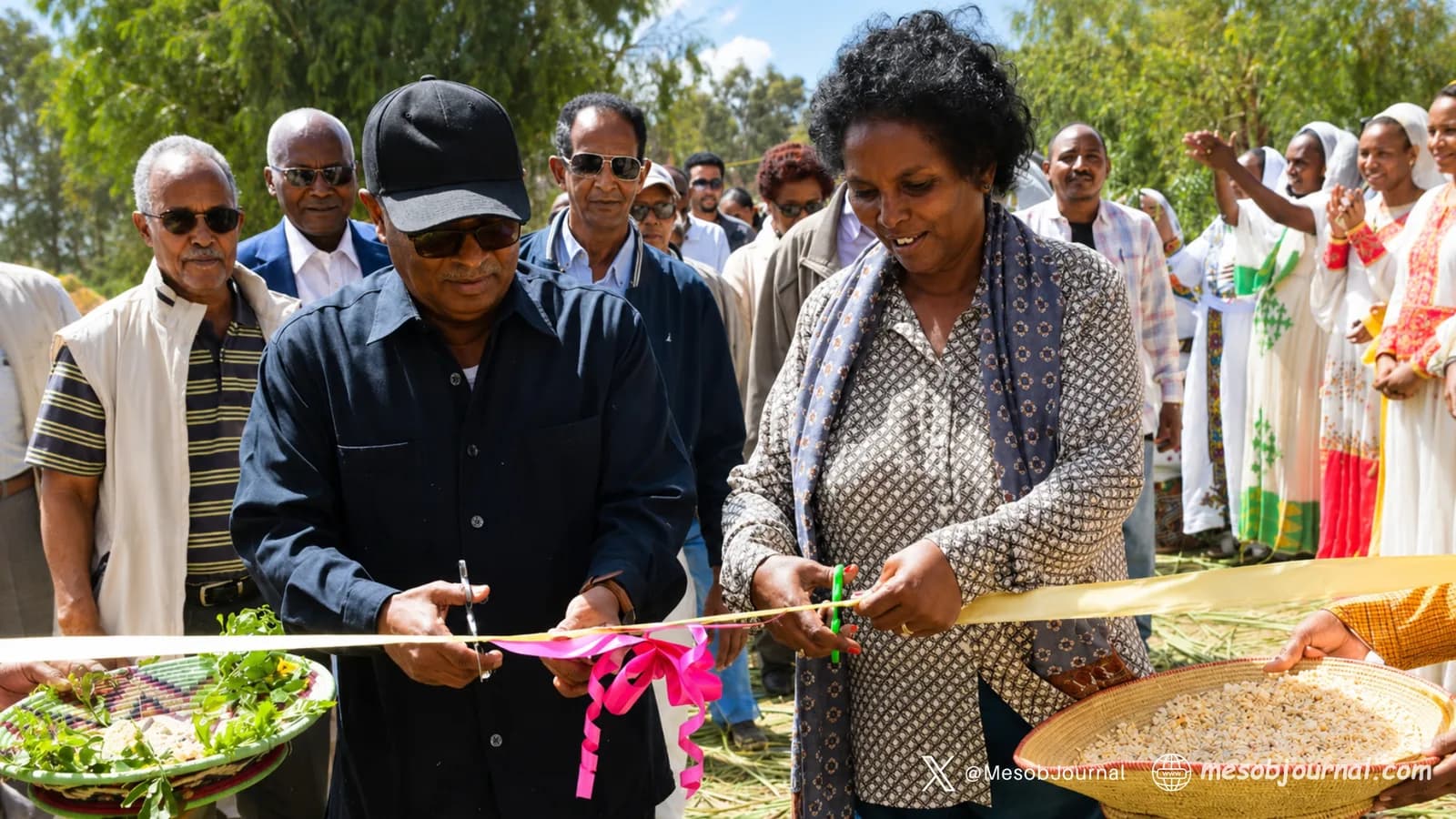
Twenty-two villages across 13 administrative areas of the Logo-Anseba sub-zone in Gash Barka Region have now been declared free of female genital mutilation, following an assessment that found the practice was no longer being carried out in all administrative areas. The declaration was made at a ceremony held on 30 May and attended by regional officials, the National Union of Eritrean Women, and representatives of UNICEF and UNFPA.
The announcement is more than a local milestone. It is part of a national transformation that has been unfolding for years, often outside the headlines, and rarely given the attention it deserves.
FGM was once deeply embedded in Eritrean society. Official Eritrean reporting has repeatedly noted that at independence, around 95 percent of Eritrean women had undergone the practice. By 2010, the figure had fallen sharply among younger girls: 33 percent for girls aged 6–15, and 12 percent for girls under five, according to figures cited by the National Union of Eritrean Women.
That decline did not happen by accident.
Eritrea banned FGM through Proclamation No. 158/2007, making the practice illegal and turning what had long been treated as a private cultural matter into a public issue of law, health and child protection. But the Eritrean approach did not rely on law alone. The harder work happened inside communities — in villages, schools, local committees, clinics and family conversations.
Logo-Anseba’s declaration reflects that model. The sub-zone’s administrator, Abraham Hagos, said the achievement followed work carried out with anti-harmful-practice committees and partners, and stressed the need for continued monitoring so the practice does not return. Tesfagebriel Gebreselasie, acting head of the Ministry of Labor and Social Welfare branch in the sub-zone, said awareness campaigns had been sustained since 2018 in cooperation with the Ministries of Health and Labor and Social Welfare, as well as the National Union of Eritrean Women.
Eritrea’s progress against FGM has been built as a social process.
The same pattern can be seen elsewhere. In 2017, it was reported that 72 villages and 18 districts in Asmat and Habero had declared themselves FGM-free after years of household-level data collection and community mobilisation. In those areas, FGM among girls under five reportedly fell from 25.6 percent in the earlier assessment period to 4 percent in 2012, and then to 2 percent in 2015.
In Anseba Region, the movement has been especially visible. Hamelmalo sub-zone declared itself free of FGM in December 2024, becoming the eighth of Anseba’s nine sub-zones to do so. Regional officials credited the achievement to sustained awareness work by the Ministry of Labor and Social Welfare, the Ministry of Health and the National Union of Eritrean Women.
By January 2025, officials in Anseba were reporting that eight sub-zones in the region had declared themselves free of FGM, with progress attributed to public awareness, documentation, and the implementation of Proclamation 158/2007.
Then came Berik sub-zone in the Central Region, declared free of FGM in April 2025. Local officials there made a point that should not be missed: a declaration is not enough by itself. Communities and institutions must keep watching, keep educating and keep protecting the gains already made.
That is the real lesson from Eritrea’s experience. Ending FGM is not only about condemning a harmful tradition. It is about replacing it with a new social norm strong enough to survive pressure, silence and nostalgia.
In Halib Mentel, Anseba, residents marked support for abandoning FGM by planting trees in front of homes — a simple but powerful local symbol of commitment. Some of those supporting the initiative were people who had once practiced female circumcision themselves. That is how real social change looks: not imported, but communities changing from within.
The latest figures suggest that this village-by-village model is gaining national weight. Eritrea’s delegation to the African Committee of Experts on the Rights and Welfare of the Child reported in April 2026 that a 2025 community mapping exercise found 45.6 percent of surveyed villages had eradicated FGM, while four sub-zones had declared themselves entirely free of the practice.
Eritrea’s campaign against FGM sits at the intersection of public health, women’s rights, child protection, law enforcement and community self-organisation. It also challenges a familiar assumption in parts of the international development world: that social progress in African societies must be externally designed, externally narrated and externally validated.
The evidence from Eritrea points in another direction. The strongest progress has come where national policy, local administration, women’s organisations, health workers, elders, religious figures and families move together.
Logo-Anseba’s 22 villages are not the end of the campaign. Eritrean officials continue to stress monitoring, vigilance and sustainability. But they are proof that the old fatalism around FGM is breaking down.
A practice once treated as permanent is being pushed back by organised communities.
Eritrea is not simply banning FGM on paper. It is building the social conditions for girls to grow up without it.