
President Isaias Afwerki’s 35th Independence Anniversary address suggests Eritrea’s domestic development agenda is moving from long preparation into a more confident phase of implementation.
President Isaias Afwerki’s latest Independence Day address was not built around a sudden announcement.
For years, Eritrea’s official language on development has been cautious, almost deliberately restrained. Plans were being refined. Resources were being mobilised. Institutional capacity was being strengthened. The country, battered by war, illegal sanctions, regional instability and constant external pressure, spoke in the language of endurance and preparation.
This year felt different.
Not careless. Not loud. Not performative. But firmer.
The President’s message on domestic development sounded less like a country waiting for conditions to improve and more like a country preparing to push already-designed programmes into visible implementation. Roads. Housing. Electricity. Water. Education. Healthcare. Productivity. Manufacturing. Young professionals. The diaspora. Popular participation. The Defence Forces.
The language was still disciplined. But the posture had changed.
The shift in tone
The clearest way to see the shift is to compare this year’s address with the previous Independence Day speeches.
In 2021, President Isaias spoke after a difficult period marked by regional conflict and the COVID-19 pandemic. He acknowledged that Eritrea had not achieved all-round progress at the pace and scale it wanted, but said progress would be expedited on the basis of programmes already charted and reviewed. It was an honest formulation: satisfactory record, unfinished work, more speed needed.
In 2023, he spoke of Eritrea’s march toward development and economic growth proceeding at an accelerated pace, but the speech was still heavily framed by sovereignty, regional war, external plots and the need to preserve national cohesion. The optimism was there, but it was guarded by security realities.
In 2024, the domestic message was clearer but still preparatory. The “priority of priorities,” he said, remained nation-building. Eritrea would continue expanding development programmes, improving implementation, refining plans, mobilising resources, making adjustments and reinforcing institutions. That was serious language, but it was still the language of building the machine.
In 2025, the structure became more concrete. The President referred to sectoral priorities — water infrastructure, electricity, agriculture, marine resources, physical infrastructure, housing, transport, education, health and tourism. He spoke of an Integrated Development Program to be implemented in the Six Regions, with detailed plans, mobilised resources and wider popular participation. He also acknowledged that the diaspora framework had not yet materialised because data collection had taken longer than expected, but said concrete participation would begin from the second half of 2025.
That was the bridge.
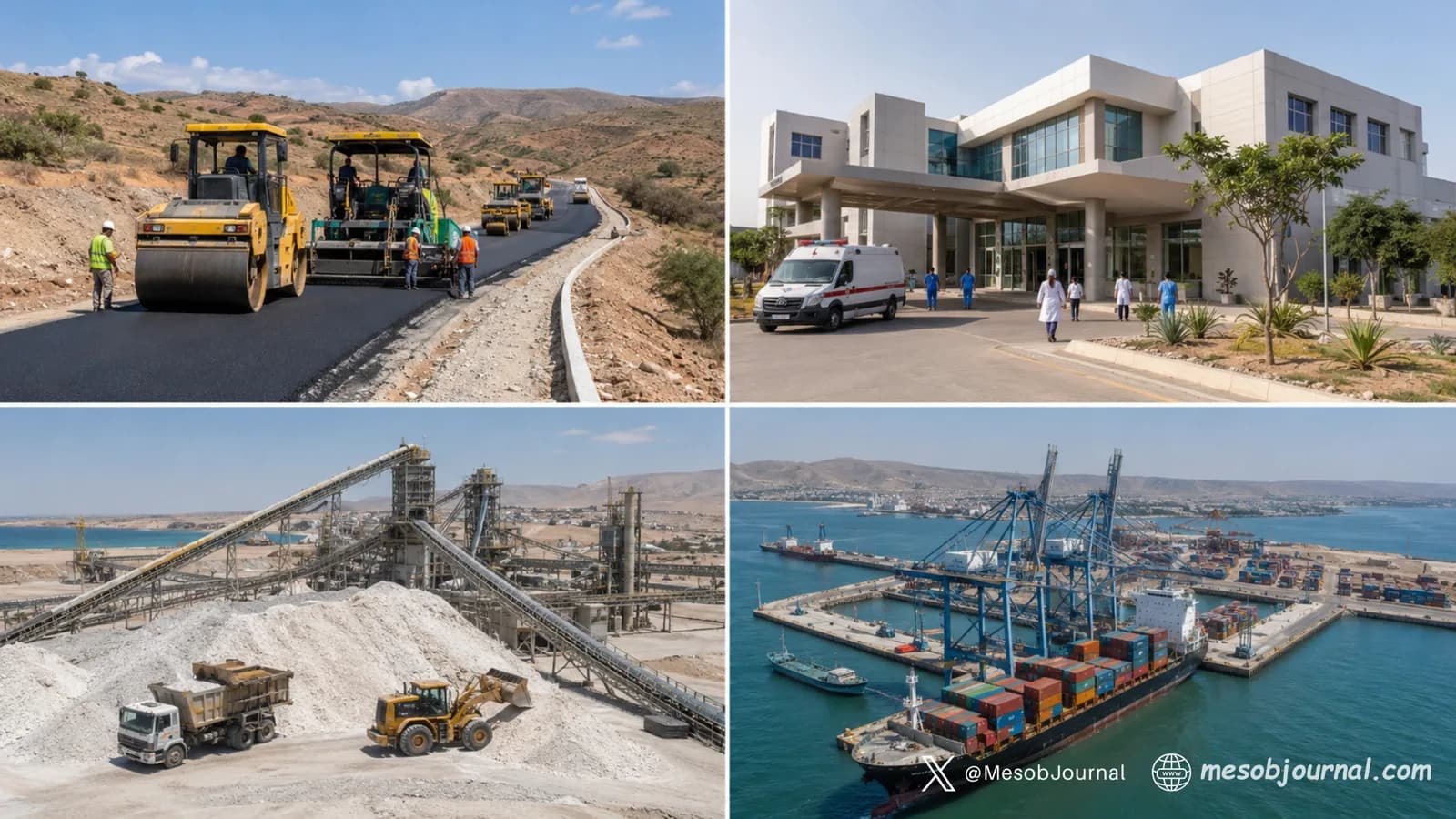
In 2026, the domestic agenda is no longer presented mainly as preparation. The President says road and transportation projects will be expanded according to plan. Housing will proceed in parallel. Electricity and water projects will start within the year despite possible supply-chain delays. Education will receive emphasis from the pre-school level. Healthcare expansion will be pursued vigorously.
Projects were named. Sectors were identified. Timelines were implied. The tone was confident, practical and unmistakably geared toward delivery.
Not a new policy, a new phase
The President made clear that the concept itself is not new. Eritrea is not presenting domestic development as a fresh political brand or a campaign-style pivot. It is saying the current push comes from a long-running national programme.
The short-term objective, he said, is improving people’s livelihoods, especially in marginalised and underserved regions. The long-term objective is larger: moving Eritrea out of a subsistence economy by strengthening productivity, increasing sustainable production, laying the foundation for value-added manufacturing and expanding service sectors.
That is the heart of the speech.
The point is not simply to build more roads or houses. Those are important, but they sit inside a wider national project. Eritrea wants to shift the structure of its economy — from survival to production, from primary activity to processing, from scattered development to coordinated growth, from exposure to external pressure to stronger internal capacity.
That is why the address links domestic development to capital, technology, young professionals, the diaspora and popular participation. It is not just a state budget question. It is a question of national mobilisation.
This is also why the President’s confidence does not sound like imported development language. Growth is not presented as a gift from donor conferences, consultants or foreign-designed reforms, as seen across much of Africa. The decisive factor is organised Eritrean capacity.
Livelihood first, transformation next
The President’s development message rests on two layers.
The first is immediate and human: improving livelihoods.
That means water, electricity, transport, housing, education and healthcare. These are the foundations that make national development visible in daily life. Roads connect communities to markets, clinics, schools, farms, construction materials and administrative services. Electricity supports manufacturing, refrigeration, digital services, workshops, learning and health facilities. Water strengthens agriculture, settlement, hygiene and long-term resilience.
Housing is another signal. If road and transport projects are arteries, housing is settlement policy. It affects urban planning, family stability, labour mobility and the dignity of ordinary life. By placing housing alongside roads, electricity and water, the speech points to development as lived reality.
The second layer is structural.
Eritrea’s long-term challenge is not simply scarcity. It is the need to break out of subsistence patterns. The President’s emphasis on productivity, sustainable production, processing, manufacturing and services shows that the government is looking beyond relief-style development. The aim is not to manage poverty more efficiently. The aim is to change the base from which the economy grows.
That is a much harder task. It requires skills, infrastructure, discipline, technology, capital, institutional coordination and time. It is also the task Eritrea has insisted on doing without surrendering national policy to outside management.
The confidence is real
The clearest evidence of that changed tone comes near the end of his remarks on development.
“Even if obstacles are encountered, there is no cause for apprehension. Rest assured.”
That is unusually direct.
President Isaias is not known for promising what cannot be delivered. His public language on development has often been measured, sometimes frustratingly so for those who want quicker timelines. In 2026, that caution no longer defines the message. Roads and transport projects will be expanded. Housing will proceed. Electricity and water projects will start within the year. Education and healthcare will receive renewed emphasis.
The line has moved. Earlier speeches often sounded like Eritrea was absorbing pressure, building capacity and preparing the ground. This one speaks with more certainty because the ground appears to have been prepared.
That does not mean every project will move at the same speed, or that constraints in capital, technology, logistics and supply chains have disappeared. It means the state now sounds more confident in the machinery of implementation.
That is the real news inside the speech.
The three pillars: people, professionals, diaspora
One of the most important parts of the address is the way President Isaias defines the decisive factor.
Not capital alone. Not technology alone. Not external partnership alone.
He points to synergy between popular participation, young professionals and Eritreans in the diaspora.
This is a classic Eritrean development idea, but it has entered a new phase. The older model relied heavily on mass participation and the Defence Forces, especially in national reconstruction, infrastructure and resilience tasks. The 2025 address gave the diaspora a more structured role, describing it as a third cohesive pillar alongside the Six Regions and the Defence Forces.
The 2026 address expands that logic. Young professionals are part of the implementation formula. The diaspora is part of a development equation that includes skills, capital, networks, technology and institutional contribution.
Eritrea’s development model is not only state-led. It is nation-led. The state sets direction. The people supply organised participation. The Defence Forces contribute capacity and discipline. Young professionals bring technical depth. The diaspora brings skills, resources and external reach. Partnerships matter, but they are not meant to replace national agency.
That is why the President’s reference to capital and technology is careful. He recognises their significance, especially in the context of emerging opportunities and sustainable partnerships. But he does not present them as magic solutions. They must fit Eritrea’s own priorities.
Why the timing matters
The President spent much of the speech analysing global disorder, the crisis of the old international system, U.S. policy under President Donald Trump, the dangers around Iran and Venezuela, Africa’s marginalisation and the instability of the Horn of Africa. He described a world in transition, full of risk but also possible openings.
That global frame is not separate from domestic development.
For Eritrea, development is never treated as a purely economic matter. It is tied to sovereignty. A country that cannot feed, educate, house, transport, employ and industrialise itself remains vulnerable. A country that depends on others for its development choices will eventually be pressured politically. A country that cannot build internal cohesion will be pulled into the same fractures now tearing apart parts of the Horn.
This is why the speech moves naturally from global order to regional instability to domestic priorities. The structure is deliberate.
A fairer global order matters. A stable Horn matters. But Eritrea’s strongest answer is still domestic: build the country, strengthen productivity, improve livelihoods, develop human capital and keep sovereignty anchored in material progress.
Eritrea’s development story is entering a more visible phase
The 2026 address does not say Eritrea has arrived. It says Eritrea is moving.
That distinction is important because the country’s critics often treat Eritrea as frozen in time, as if nothing changes unless it is announced through foreign-funded language or validated by outside institutions. The speech tells a different story. It describes a country that has been moving through long preparation: safeguarding sovereignty, surviving illegal sanctions, resisting pressure, refining plans, organising capacity, bringing the diaspora into a more concrete role, and now pushing sectoral programmes toward implementation.
This is not the kind of development story that produces easy headlines. It is slow, stubborn and internally driven. But that is exactly why it may prove more durable.
Roads and transport projects can connect regions. Housing can stabilise communities. Electricity and water can lift both daily life and productive capacity. Education from the pre-school level can shape the next generation before inequality hardens. Healthcare expansion can protect the social base of the country. Manufacturing and processing can begin to move Eritrea beyond subsistence.
Taken together, these are not scattered promises. They are the skeleton of a national development phase.
The quiet meaning of “Rest assured”
The closing tone of the President’s development message is perhaps the most revealing part.
“Rest assured” is a political signal.
It tells citizens that obstacles are expected, but not feared. It tells the diaspora that its role is no longer abstract. It tells young professionals that their skills are needed. It tells the wider region that Eritrea’s answer to instability is not panic, dependency or borrowed formulas. It tells adversaries that pressure has not broken the country’s internal direction.
And it tells readers something else: Eritrea’s development conversation may be shifting from resilience alone to delivery.
For many years, resilience was the necessary word. Eritrea had to survive war, illegal sanctions, isolation, information warfare and a hostile regional environment. Survival itself became part of nation-building.
But nations cannot live on resilience alone. At some point, resilience must become roads, homes, water systems, classrooms, clinics, industries and trained citizens.
President Isaias’ 2026 address suggests Eritrea believes that moment is getting closer.
Not because the road is easy.
Because the machinery is now being put to work.