
The African Development Fund has approved a $9.82 million grant for Eritrea to expand access to safe water, sanitation and hygiene, adding another major infrastructure programme to a growing portfolio of African Development Bank-backed projects in the country.
The Fund’s board approved the financing on September 21 for the Enhancing Water, Sanitation and Hygiene Adaptation Project, which will be implemented in coordination with the Government of Eritrea and UNICEF. The money will come through the African Development Fund’s Climate Action Window, which provides climate financing to lower-income and transition countries.
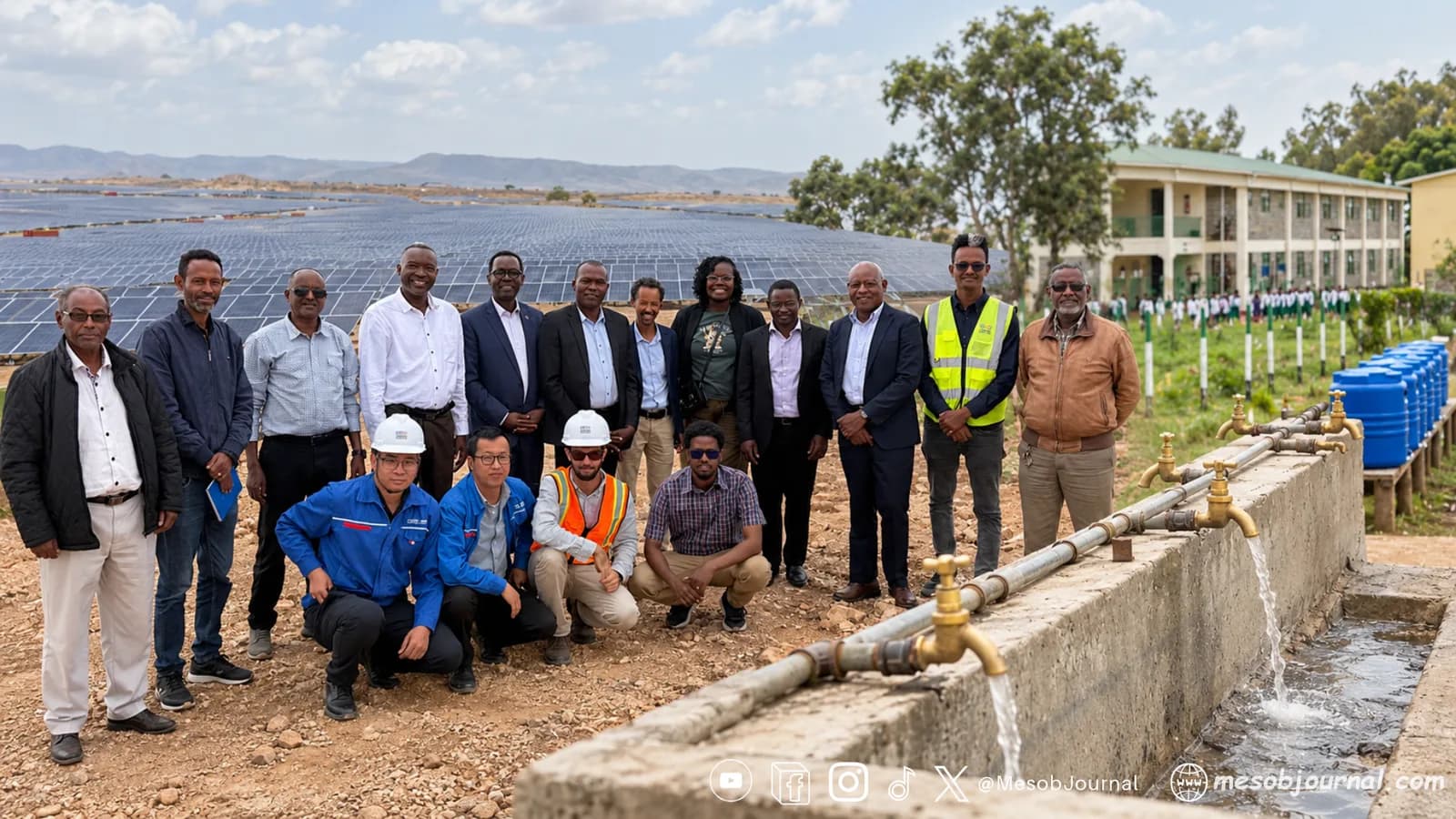
Under the programme, 21 new rural water supply systems are expected to be constructed while 38 non-functioning systems will be rehabilitated and modernised. Water, sanitation and hygiene facilities will also be upgraded at 10 health centres and 12 schools.
The project includes boreholes, rural water networks, retention dams, earthworks and tree planting in catchment areas to improve the sustainability of water resources. AfDB said the interventions are expected to reduce the distance some communities travel to obtain drinking water by a factor of ten, bringing access to around 500 metres.
Although the financing approval is new, planning for the programme predates this week’s announcement. AfDB environmental and social documentation published in August 2025 described the WASH adaptation programme as covering all six of Eritrea’s zobas, indicating that preparatory work had already been under way before the formal grant approval.
The grant also fits into a broader expansion of AfDB-backed infrastructure activity in Eritrea during 2026.
In February, the African Development Bank Group approved $58.04 million for an integrated clean-energy project in the Gash-Barka region. The programme is designed around a 34-megawatt solar-powered mini-grid system serving Tesseney, Barentu and Kerkebet, with electricity intended to support households and businesses as well as water pumping, irrigation, agriculture and agro-processing.
Work is also continuing around the 30 MW Dekemhare solar project, an earlier AfDB-backed investment. A procurement notice issued on September 17 covered professional electrical, laboratory, IT and backup-power equipment connected to the project. The Bank said during a May mission that the Dekemhare plant was already supplying electricity to the national grid.
Transport has become another part of the developing pipeline.
In June, AfDB launched preparations for the Massawa–Tesseney Road and Coastal Area Infrastructure Development Project, aimed at improving domestic and regional transport connectivity. The current phase does not finance construction of the road itself. It covers feasibility, detailed engineering, economic, environmental, social and climate-resilience studies intended to prepare an investment-ready project capable of attracting financing.
The sequence is significant because the Bank’s engagement with Eritrea is increasingly extending across interconnected sectors rather than individual stand-alone projects. Electricity supports water pumping and irrigation; transport infrastructure can improve access to markets and services; and the new WASH programme combines basic rural services with climate adaptation and watershed management.
The latest approval also follows the publication on September 15 of AfDB’s 2026 Country Portfolio Performance Review for Eritrea, prepared following a March review conducted with the Ministry of Finance and National Development. The review examined progress in Bank-funded operations and implementation challenges since the previous portfolio assessment in 2024.
For Eritrea, the new $9.82 million grant therefore represents more than a single water-sector announcement. It adds water, sanitation and climate resilience to an AfDB-backed development pipeline that in 2026 has included renewable energy expansion, agricultural and irrigation support, ongoing solar infrastructure and preparations for a major transport corridor linking Massawa with western Eritrea.
The immediate test will be implementation: turning the approved financing and project studies into functioning infrastructure in the communities they are intended to serve.