
Ethiopia’s prime minister offers Eritrea electricity and development advice, then threatens destruction. His own government’s figures—and Eritrea’s documented achievements—expose the arrogance.
Abiy Ahmed’s latest parliamentary performance invites a question he would probably prefer to avoid: if he has so many development solutions to spare, why do so many Ethiopians still lack the basics?
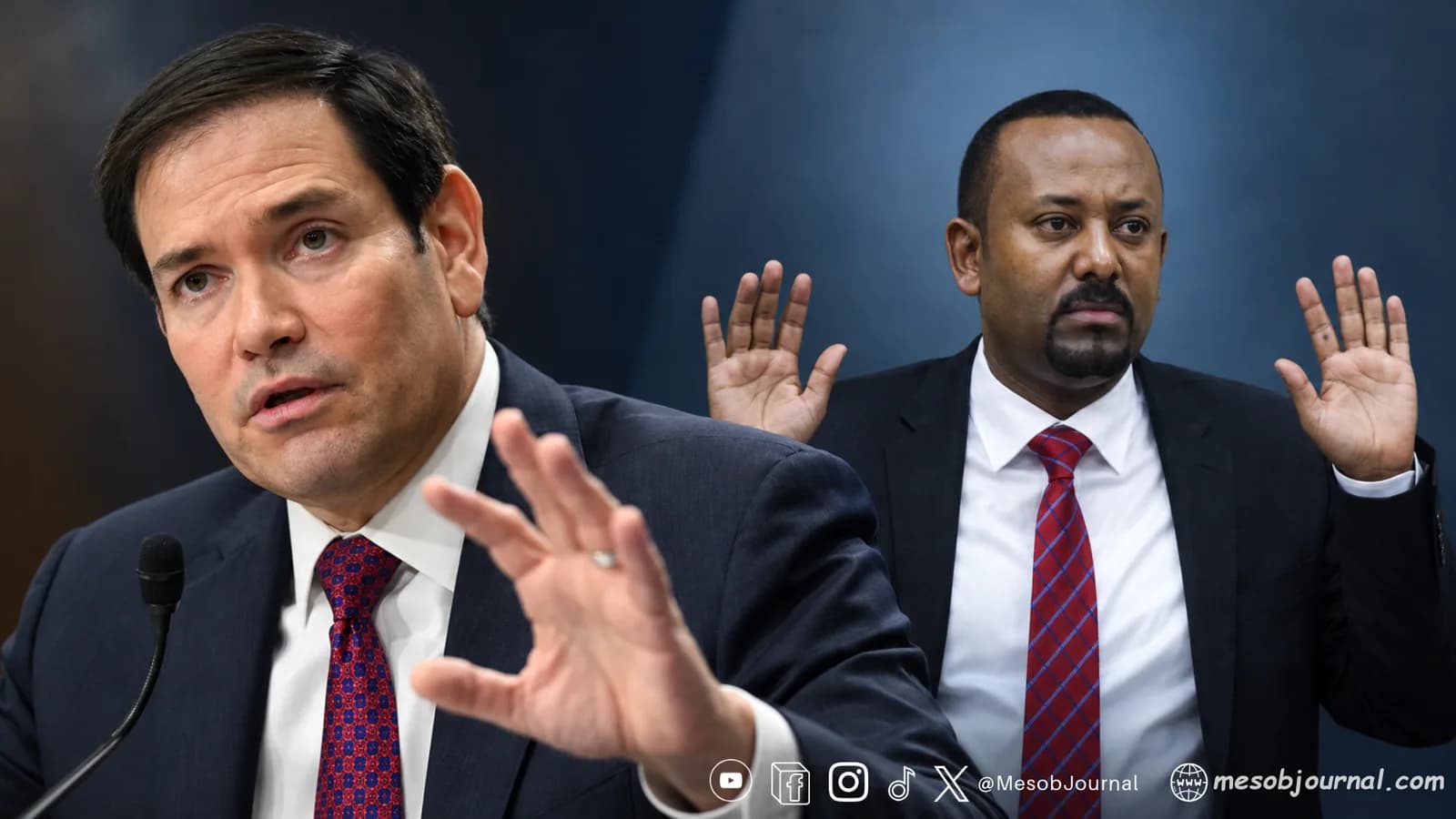
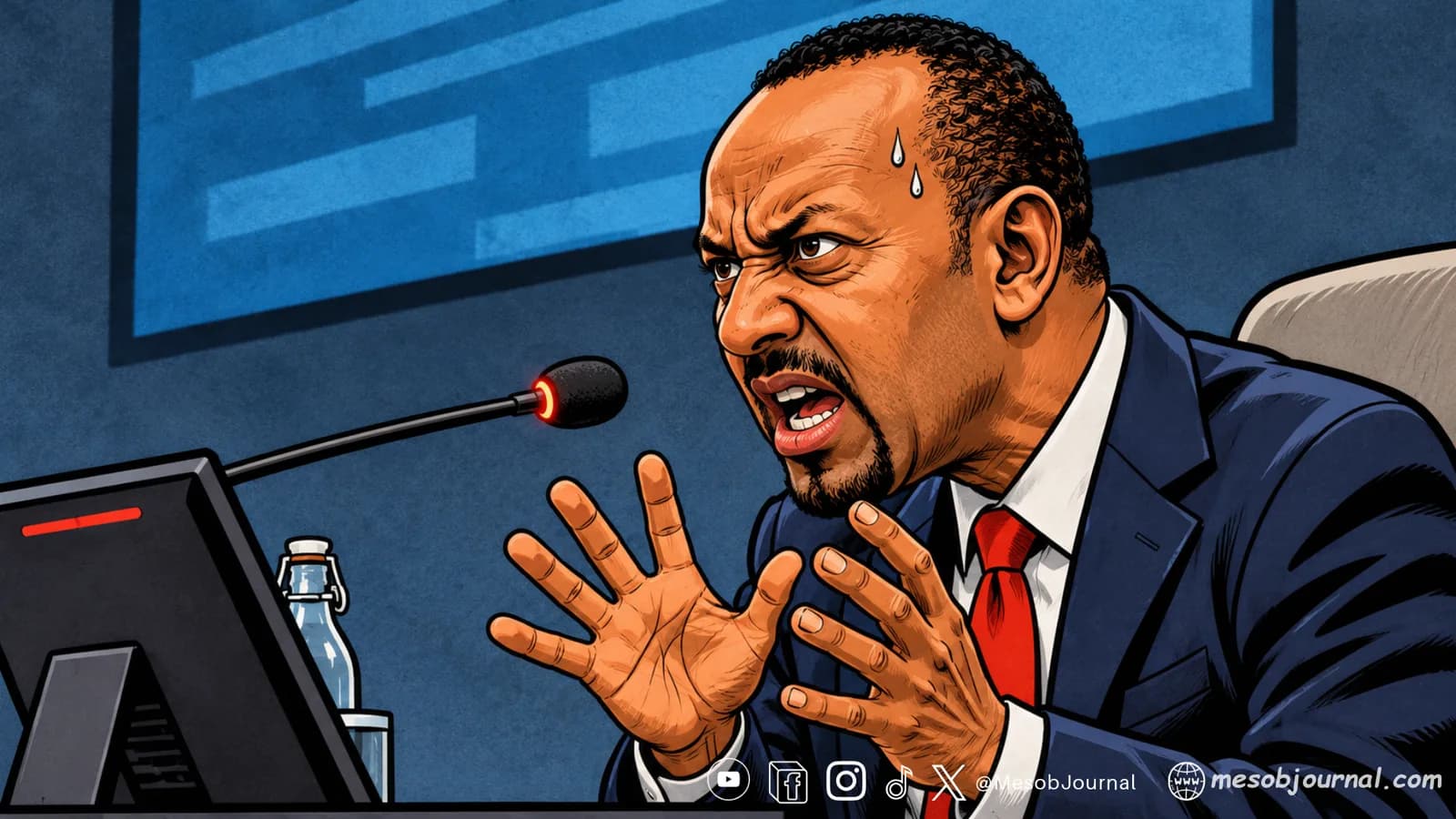
Addressing parliament on 26 November, Ethiopia’s prime minister said he had offered Eritrea electricity at Ethiopian domestic rates, joint road and port projects, financing and labour. He portrayed the rejection of those proposals as evidence of the Eritrean government’s ignorance. “Words like development and growth do not exist in its vocabulary,” the Ethiopian News Agency quoted him as saying.
He also accused Eritrea of supporting Ethiopia’s adversaries, demanded an end to that alleged support and called for development cooperation. Alongside those demands came the warning that “destruction will fall upon Eritrea” if its leadership continued on the course he condemned. His own state news agency recorded the words.
Abiy has confused a parliamentary microphone with a mandate to supervise his neighbours. Eritrea did not appoint him its development adviser, and his governing record gives it little reason to volunteer for the experiment.
Give Ethiopians the electricity first
Before lecturing Eritrea about electricity, Abiy should read his government’s National Energy Compact. Drawing on the Ethiopian Energy Access Survey’s January 2025 findings, it says nearly 56 percent of the population lacks basic electricity service. It also identifies unreliable supply, weak infrastructure and persistent problems outside the main urban centres.
Basic service is the relevant measure: the compact separately records households with some electricity source, including small off-grid systems. Generating power and delivering usable electricity to families are different achievements. Abiy’s government knows this; its own document explains the gap.
Regional electricity trade can be worthwhile. It gives Abiy no grounds to speak down to a neighbour while his own population waits for dependable service. The families without it deserve the same attention he gives to announcing what he could do for Eritrea.
The World Food Programme describes millions of Ethiopians as dependent on humanitarian assistance. Conflict, drought, disease and inflation have worn down households’ ability to cope. IOM’s May 2024 assessment identified 3.3 million internally displaced people, with conflict accounting for 69 percent of that displacement. These are people whose lives have been interrupted on an immense scale during his premiership.
His tenure has also included the December 2023 Eurobond default and prolonged debt-restructuring negotiations. The IMF’s July 2026 assessment still classified Ethiopia as being in debt distress. A leader carrying that record should be more interested in demonstrating results at home than delivering lectures across the border.
Then there is the destruction inflicted inside Ethiopia. The UN Human Rights Office documented 248 civilian deaths from government drone strikes between 4 August and 31 December 2023, alongside damage to vital infrastructure, including schools and hospitals.
Ethiopians deserve a government that protects them, enables families to feed themselves and lets displaced people return safely. If Abiy has ideas, money and labour available, damaged schools and communities without reliable power already provide him with a substantial programme of work.
Addis Ababa’s illuminated avenues cannot answer for the condition of an entire country. A camera can follow a newly paved road and avoid everything beyond it. Government cannot.
Eritrea has results he cannot talk away
Abiy chose a particularly poor moment to dismiss Eritrean development. On 16 November, just ten days before his address, the World Health Organization validated Eritrea’s elimination of trachoma as a public health problem. Eritrea became the eleventh country in WHO’s African Region to reach that milestone.
The achievement followed years of disease mapping, surgery, antibiotic treatment, sanitation work and community participation. All 58 sub-regions were surveyed. WHO described substantial gains achieved with limited external funding, supported by national institutions, communities and partners.
WHO Director-General Tedros Adhanom Ghebreyesus called it “a powerful example of what sustained national commitment can achieve.” That is a rather more substantial assessment than Abiy’s parliamentary sneer.
The significance reaches into ordinary life: fewer people facing preventable blindness, health workers reaching communities beyond the capital, and a programme sustained long enough to meet an independently reviewed international standard. Development requires precisely that capacity to organise, persist and deliver.
The wider institutional record is also available. A WHO evaluation published in February described Eritrea’s policy of free healthcare across all six regions and highlighted the work of community health workers. UNESCO’s education brief records free and compulsory basic education.
UNICEF’s 2026 country programme document records a decline in under-five mortality from 153.4 deaths per 1,000 live births in 1990 to 34.3 in 2024. It links progress in basic care and disease control to a primary healthcare system that reaches into remote communities.
These gains are evidence of the patient work of building national institutions. They give a direct answer to the claim that Eritrea does not understand development. Abiy can dislike Eritrea’s choices; he cannot erase their results by insulting them.
The obstacles his lecture leaves out
Eritrea’s development record also has to be read against years of sanctions and financial restrictions. That history predates the present confrontation. In an April address in Geneva, Foreign Minister Osman Saleh described how disrupted banking channels, suppliers’ reluctance and excessive compliance barriers impeded access to medicines, diagnostic equipment and essential technologies.
He also described obstacles to financing and procurement in agriculture, water, energy and transport. Humanitarian exemptions on paper, he explained, do little for a transaction that banks will not process.
The healthcare workers and communities behind Eritrea’s achievements have had to sustain practical work through those constraints. Their results deserve to be judged in that context. A neighbour issuing new threats has little standing to mock the difficulties of development under external pressure.
Abiy offers his own account of proposals Eritrea declined. His account does not establish that the terms were acceptable, that the partnership would have been secure or that rejection reflected ignorance. A sovereign government is entitled to assess all three.
Eritrea has already answered
Eritrea’s position has been stated plainly enough. In its 21 October statement, the Foreign Ministry declared: “Eritrea harbors zero irredentist claims and asserts no entitlement over any sovereign territory of Ethiopia.”
That is a clear standard for relations between neighbours. Abiy should meet it with an equally unambiguous acceptance of Eritrea’s territorial integrity, free of suggestions that his country’s size or economic needs create an entitlement to another country’s coast.
On 19 November, the ministry’s Research and Documentation Division addressed the difference between commercial access to the sea and territorial demands. Ethiopia’s neighbours, it said, were open to commercial arrangements, but “their sovereignty is not negotiable under any conditions.” In its critique of Ethiopia’s maritime strategy, it described the approach as “a shameless blueprint for land-grabbing.”
The distinction is fundamental. Port use, transit arrangements and infrastructure partnerships can be negotiated. They do not transfer ownership of a coastline. The UN Convention on the Law of the Sea itself sets access and transit arrangements alongside the sovereignty and legitimate interests of transit states.
An offer to supply electricity creates no title to Assab. Nor does a proposal to finance a road give its sponsor authority over the country through which it runs. Cooperation requires agreement, including the freedom to decline terms without being threatened.
Eritrea has also supplied a memorable description of the rhetoric surrounding this dispute. In a 26 June 2025 statement rejecting Ethiopian accusations, the Information Ministry invoked the local adage: “the sling utters a shrill cry while hitting its prey.”
The phrase captures the danger of a leader presenting himself as the injured party while speaking about a neighbour’s destruction. Accusations require evidence and a lawful process. They cannot be treated as a standing licence to threaten an entire country.
Eritrea’s October statement reaffirmed peaceful relations based on mutual respect and non-interference, alongside readiness to defend its sovereignty. Restraint must never be mistaken for permission to keep escalating. The UN Charter’s rules on peaceful settlement and threats against territorial integrity apply regardless of the size of the states involved.
Abu Dhabi cannot grant him a regional mandate
Abiy’s financial backing from the United Arab Emirates is well documented. In June 2018, the Abu Dhabi Fund for Development announced a $3 billion package for Ethiopia, including a $1 billion central-bank deposit and $2 billion intended for investment. The scale of that support makes his condescension towards Eritrea’s more constrained development efforts especially grating.
Foreign backing does not confer authority over neighbouring states. If Abiy wants it to strengthen his standing, he should demonstrate what it can accomplish for Ethiopians beyond the showcase avenues of the capital.
There is ample reason for him to listen more carefully to the region. On 25 November, Sudan’s government rejected his offer to host a Sudanese dialogue, citing Ethiopian support for the RSF and drone operations from Ethiopian territory. Khartoum called for an independent investigation and insisted that the choice of mediator belonged to Sudanese people.
A week earlier, Somalia ordered the UAE ambassador to leave and recalled its own envoy, accusing Abu Dhabi of violating Somali sovereignty. The diplomatic confrontation shows how deeply contested Emirati involvement has become.
Eritrea, Sudan and Somalia have their own governments, interests and rights. Neither Abiy’s ambitions nor his relationship with Abu Dhabi entitles him to decide what those countries must accept. He would serve Ethiopia better by building trust than by adding another warning to a region already carrying too many wars.
Govern the country you lead
Abiy should stop telling parliament that development is absent from Eritrea’s vocabulary. The health record alone makes that caricature untenable. He should withdraw the threats and put his promised resources into the lives of the people he actually governs.
Help families put food on the table. Stop military operations that kill civilians and destroy the infrastructure communities depend on. Make reliable electricity an everyday service for the population whose name he invokes.
Eritrea values peace and mutual respect. Its refusal to surrender its judgement—or its sovereignty—requires no apology. No amount of parliamentary theatre can turn a neighbour’s independence into a favour Abiy is entitled to revoke.
Eritrea understood his offer. Abiy is struggling with the answer.