
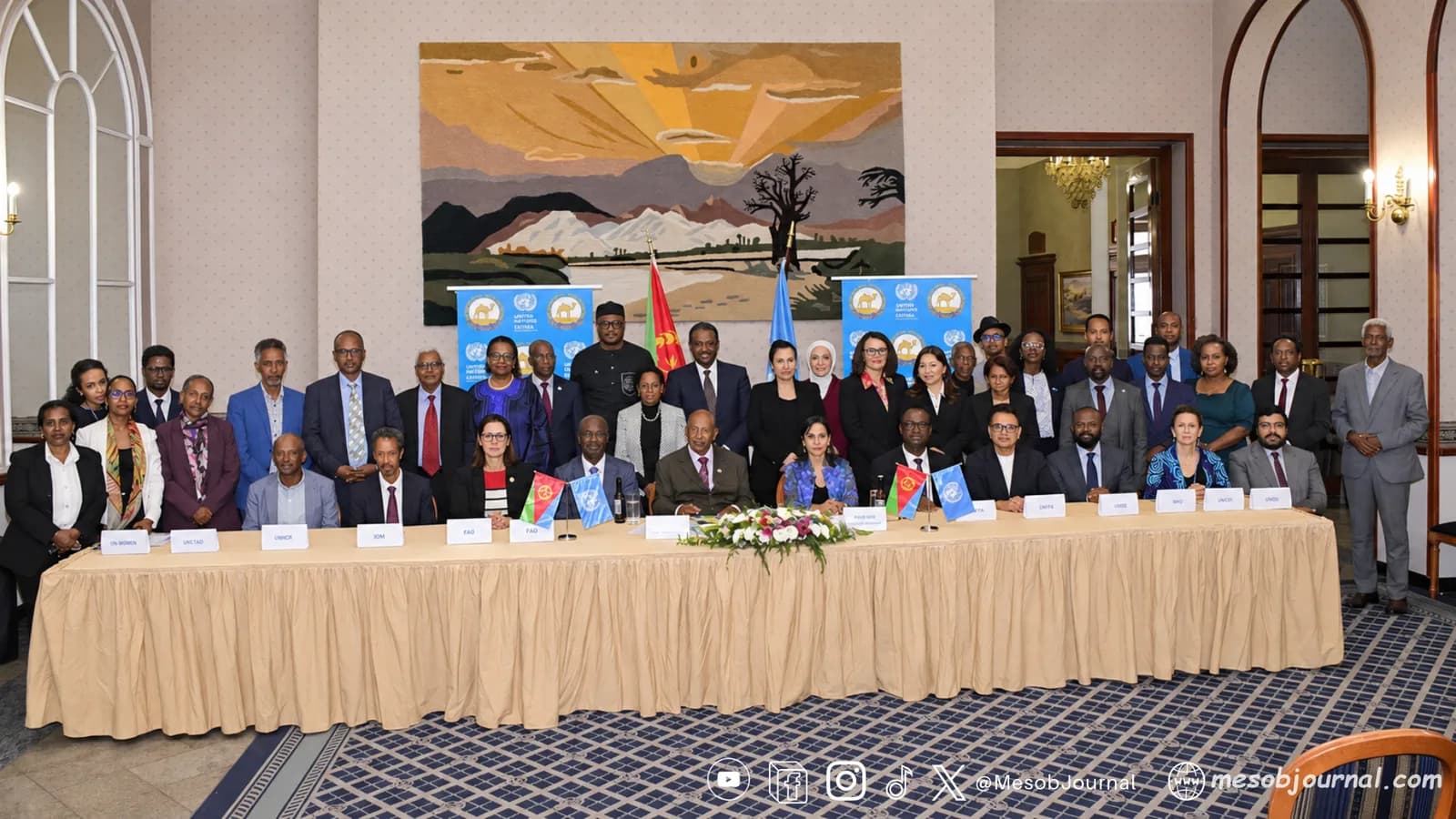
The 2027–2031 framework puts Eritrea’s national priorities at the centre of cooperation, linking natural resources, public services and economic opportunity.
By Nardos Berhane | Mesob Journal | 27 November 2026
ASMARA — Eritrea and the United Nations have signed a new five-year development framework grounded in the country’s national priorities, setting the direction for cooperation on natural resources, human development and prosperity through 2031.
The United Nations Sustainable Development Cooperation Framework 2027–2031 was signed by Finance and National Development Minister Gergis Teklemikael for Eritrea and UN Resident Coordinator Nahla Valji for the United Nations. Members of the UN Country Team also signed, committing resident and non-resident UN entities to its implementation.
Announcing the agreement on Thursday, the UN said attention would now turn to translating the shared priorities into measurable improvements in people’s lives. The new framework succeeds the 2022–2026 cooperation cycle, which supported Eritrean programmes in health, livelihoods and essential services.
National priorities guide the partnership
The partnership’s emphasis on national ownership is reflected in the UN Eritrea Annual Results Report 2025.
“These results were not delivered by the United Nations. They were delivered by Eritrea,” Valji wrote in its foreword, crediting Eritrean health workers, farmers, community leaders and public officials.
She described the UN’s role as supporting those efforts and strengthening national systems, while connecting them with international expertise and financing.
That approach also featured in discussions around this week’s UN Country Team retreat in Asmara. According to the UN’s account, presidential economic adviser Hagos Ghebrehiwet Woldekidan emphasised social justice, investment in people, stronger national capacity and effective use of the country’s resources.
The UN said its task was to bring expertise, resources and partnerships that reinforce Eritrea’s capacity to carry out its own development priorities.
From natural resources to public services
The signed framework brings the UN Country Team’s work together around three connected priorities: resilient and productive natural capital; strengthened human capital; and partnerships and prosperity.
Planning documents prepared for the new cycle give those broad headings practical meaning. UNICEF’s draft country programme for 2027–2031 describes cooperation framework outcomes covering the sustainable management of land and marine ecosystems, together with energy provision that supports productive livelihoods and resilience to climate pressures.
It also envisages more reliable and equitable health, nutrition, water, sanitation and education services, backed by stronger public institutions. A further outcome concerns a more diversified and productive economy, with better conditions for enterprise and investment.
Across those planned outcomes, the document identifies women, young people and persons with disabilities among the groups whose participation and access to services should expand.
Results already reaching communities
The outgoing framework’s record includes improvements in health services, livelihoods and water access documented in the 2025 results report.
Routine immunisation coverage remained above 95 per cent. Skilled birth attendance reached 85 per cent, compared with an earlier figure of 81 per cent.
Livestock vaccination and emergency feed helped around 90,000 pastoralist households protect their livelihoods. Approximately 250,000 people gained access to more reliable water supplies through solar-powered systems.
A WHO account published in April offers a closer view of the work behind the health figures. Eritrean vaccination teams serve remote communities with the help of local health workers who visit homes, identify children who have missed appointments and help families reach health stations.
Some villages can be reached only on foot or by camel. WHO described how Eritrean health authorities organise the outreach, with partners contributing vaccine procurement, operational funding and technical support.
Recognition for reporting results
The new agreement follows recognition within the UN system for the country team’s account of that work. The UN country team in Eritrea was among seven teams recognised in the 2026 UN Country Results Report Awards, according to the UN Development Coordination Office’s announcement on 6 November.
The awards assessed reporting on work carried out in 2025. In Eritrea’s case, the office highlighted the government-led partnership in health, food security and resilience, alongside a clear explanation of how resources were used.
The recognition reflects an emphasis on showing what changed for communities, how UN agencies contributed alongside national partners and what lessons should shape future work.
With the 2027–2031 framework signed, the partnership now moves into implementation. The UN has set out the immediate objective: to turn agreed national priorities into results that Eritreans can see and measure.