
There is a reason Eritrea unsettles its loudest critics.
It is not because Eritrea is unstable. It is because Eritrea is not. In a region where states have been pulled apart by proxy wars, foreign military arrangements, donor dependency, ethnic fragmentation and diplomatic blackmail, Eritrea has remained stubbornly intact. Quiet, disciplined, sovereign. That alone is enough to irritate the industry that has spent decades trying to explain the Horn of Africa through every lens except African self-determination.
Now that Washington is reportedly exploring a reset with Eritrea, the old machinery has started again. Same faces. Same warnings. Same recycled vocabulary. Same tone of entitlement.
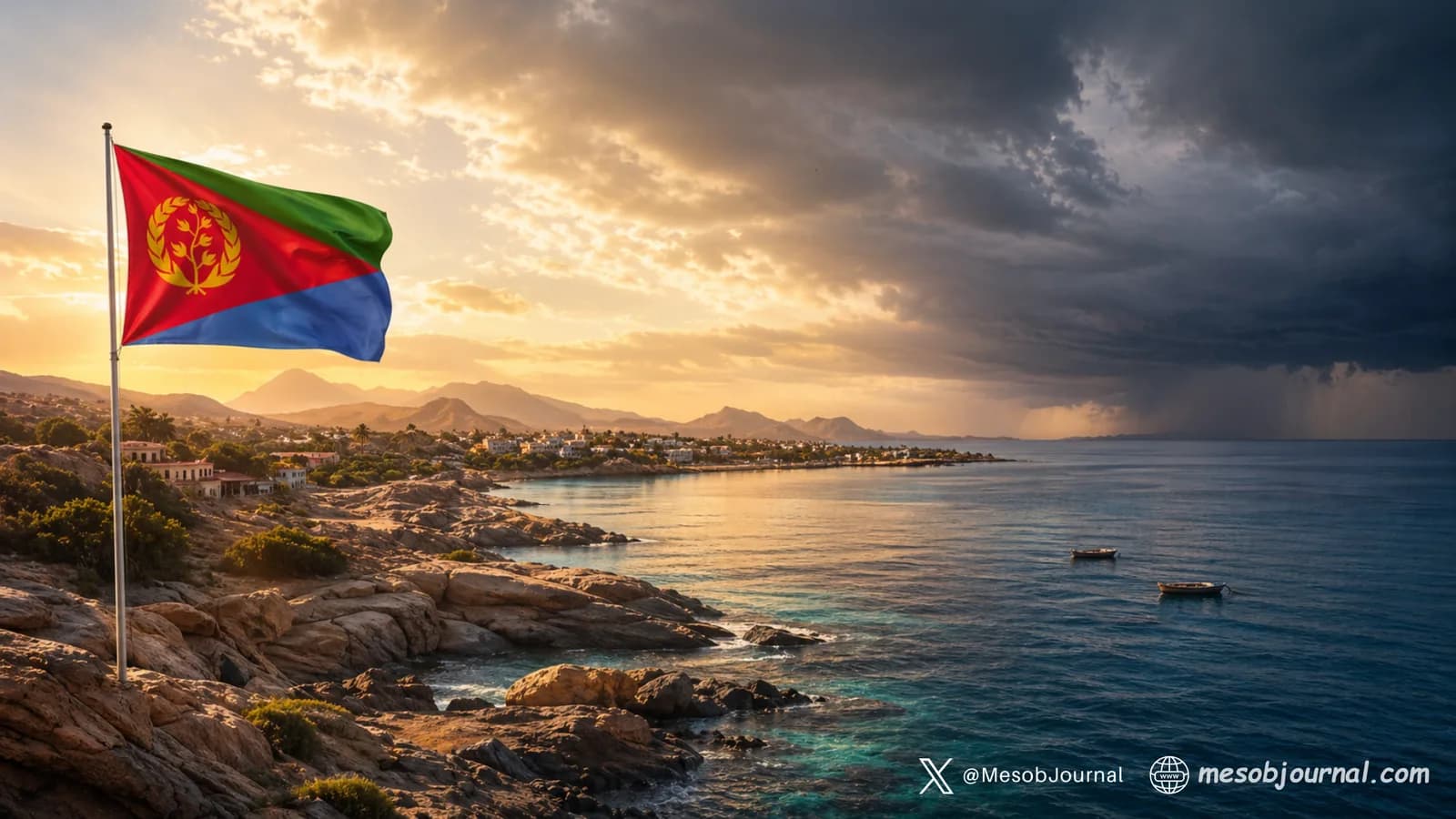
The Wall Street Journal reported that the United States is weighing a diplomatic opening with Eritrea, including possible sanctions relief, as Red Sea security and regional strategy return to the center of American calculations. The report also underlined Eritrea’s geography: a long Red Sea coastline facing one of the most sensitive maritime corridors in the world.
None of this should shock anyone who has looked at a map without ideological fog. Eritrea sits where Africa, Arabia and the wider Indian Ocean world meet. Its ports, coastline and political independence give it strategic weight. Its refusal to become a rented platform for other people’s wars gives it even more.
That is precisely why the detractors are nervous.
For years, anti-Eritrea voices in Western policy circles, think tanks and media platforms presented themselves as moral guardians while functioning, in practice, as gatekeepers of hostility. They accused Eritrea of every evil under the sun, often with little more than repetition, anonymous sourcing and political convenience. They dressed old hostility in new language. Human rights one day. Regional security the next. Democracy promotion after that. The label changed. The objective rarely did.
The aim was simple: keep Eritrea isolated, keep pressure alive, and keep Washington trapped in a failed policy built on punishment rather than engagement.
That policy did not bring peace to the Horn. It did not stabilize the Red Sea. It did not produce a more constructive American role. It only encouraged the belief that Eritrea could be managed from outside, disciplined from afar, or forced to negotiate its sovereignty under pressure.
It failed.
Eritrea is still there. Still sovereign. Still independent in its decisions. Still speaking to those who approach it with respect and rejecting those who arrive with lectures.
The latest wave of panic says more about the detractors than it says about Eritrea. Cameron Hudson’s recent Foreign Policy article is a useful example of the genre: a warning piece written from the familiar assumption that Washington must be careful not to engage Eritrea unless Eritrea first fits the preferred script of outside policy managers. Hudson is a former U.S. official who has worked on African affairs, and his article appeared just as reports of a possible U.S.-Eritrea reset began circulating.
The timing is not accidental. Whenever Eritrea’s diplomatic space widens, the same network starts ringing alarms. Not because peace is threatened. Not because facts have changed. But because their influence is threatened.
They are used to being consulted. They are used to framing Eritrea before Eritrea is allowed to speak. They are used to shaping the policy mood in Washington, Brussels and certain media rooms. A relationship based on mutual respect between Eritrea and the United States would weaken that entire business model.
That is why Eritrea’s response matters.
Eritrean Minister Yemane G. Meskel described the reaction of the usual “Conflict Entrepreneurs” as appalling, especially their habit of acting like “Viceroys” with the authority to determine Eritrea’s political affairs, destiny and international relations. He made the essential point clearly: Eritrea will not be derailed by the ill-will of detractors and will continue building regional and global cooperation on the basis of mutual interests and shared objectives.
That is policy.
Eritrea’s position has been consistent for decades. It does not reject relations with the United States. It rejects domination. It does not reject cooperation with the West. It rejects coercion. It does not reject regional partnership. It rejects schemes that turn the Horn of Africa into a playground for external agendas.
There is a difference. Eritrea’s critics know it. They simply pretend not to.
The country’s value is not limited to geography, although geography matters. Eritrea’s value is also political. It is one of the few states in the wider region that has refused to outsource its security doctrine. It has not built its national strategy on begging for protection. It has not auctioned its ports to every passing power. It has not converted its sovereignty into a bargaining chip.
In today’s Red Sea environment, that kind of state matters.
The Red Sea is no longer a quiet commercial passage. It is now a theatre where maritime security, Middle Eastern wars, Gulf rivalries, African instability and global power competition overlap. Any serious country looking at this region must ask a basic question: who can be trusted to act with discipline?
Eritrea’s answer is visible in its record.
It has not collapsed into militia politics. It has not exported chaos. It has not invited foreign powers to fragment its territory. It has not treated sovereignty as a slogan for conferences and a commodity behind closed doors. In a region full of noise, Eritrea has built its reputation through endurance.
That is why the phrase “Island of stability” is not propaganda. It is a description.
The irony is that many of those who accuse Eritrea of destabilization were silent, confused or openly complicit when the Horn was being pushed into dangerous experiments. They had little to say when Ethiopia’s internal war tore through the region. They had little useful to offer when the old “no war, no peace” order punished Eritrea for defending its territorial integrity. They rarely confronted the consequences of Washington’s long support for the TPLF-dominated order that helped freeze the border issue and poison regional politics for years.
But now, when the possibility emerges that Washington might deal with Eritrea as a sovereign state rather than a permanent target, they suddenly rediscover urgency.
Of course they do.
A normal U.S.-Eritrea relationship would not mean Eritrea bending. It would mean Washington accepting reality. It would mean recognizing that pressure campaigns, sanctions politics and outsourced narratives have reached their limit. It would mean understanding that Eritrea’s cooperation cannot be extracted through insult. It must be built through respect.
That is the only foundation that can work.
Eritrea has no reason to apologize for seeking constructive ties with peace-loving countries and peoples. It has no reason to ask permission from think tank operatives, former officials, media activists or regional actors who prefer Eritrea isolated. Its foreign relations belong to Eritrea. Its national interest is determined in Asmara, not in Washington salons, Addis Ababa whispers, Brussels panels or Foreign Policy columns.
This is what bothers the detractors most.
They do not merely dislike Eritrea’s policies. They dislike the fact that Eritrea refuses to be administrated by narrative. They dislike that the country can be poor in resources compared with great powers, yet rich in political will. They dislike that Eritrea’s independence was not symbolic. It became a governing principle.
So they shout. They warn. They predict disaster. They pretend concern for the Red Sea while ignoring the destabilizing agendas of those who openly dream of access, leverage and territorial revision. They dress themselves as experts while speaking with the old colonial instinct: the belief that African states are only legitimate when they obey external management.
Eritrea has heard all of this before.
The country has survived war, sanctions, diplomatic isolation, defamation and regional sabotage. It has watched powerful actors misread it again and again. And through it all, Eritrea’s basic message has remained steady: cooperation, yes; subordination, no.
That message should not be difficult to understand.
If the United States wants a serious relationship with Eritrea, the path is available. It begins with respect for sovereignty. It requires abandoning the failed habit of treating Eritrea as a problem to be fixed rather than a state to be engaged. It also requires recognizing that the Horn of Africa cannot be stabilized through selective hostility, proxy politics or the fantasies of conflict entrepreneurs.
Eritrea will engage those who come in good faith. It will work with countries that respect mutual interest. It will support peace, stability and lawful cooperation in the Red Sea and the Horn. But it will not outsource its destiny to those who built careers vilifying it.
That is the part the detractors still cannot accept.
Eritrea is not waiting for their approval. It is not trembling before their articles. It is not changing course because the old anti-Eritrea chorus has grown louder for a week.
The noise will pass. The geography will remain. The sovereignty will remain. The policy will remain.
And Eritrea, as always, will move forward on its own terms.