
As Eritrea marks 35 years of independence under the resonant national theme “Our Resilience: Our Guarantee,” its distinct development narrative is increasingly drawing international recognition. Long defined by a foundational philosophy of self-reliance, national ownership, and local problem-solving, the country is demonstrating the tangible impacts of persistent, long-term human investment.
Independence was not handed to Eritrea; it was won through a grueling, three-decade struggle. Because this history is recent and remains within the lived experience of a generation, every family and every community continues to carry a living memory of that fight and the immense cost of freedom.
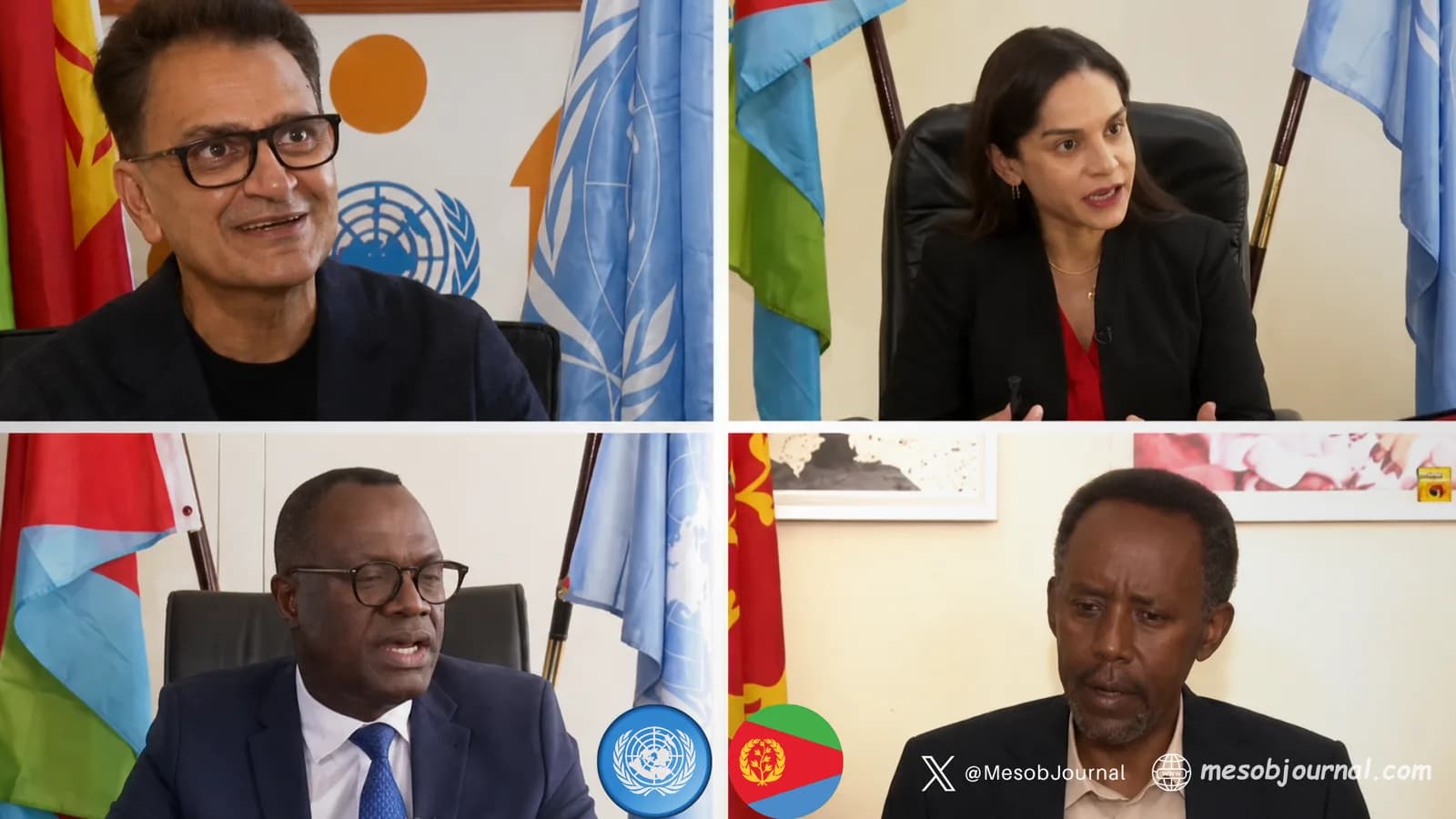
When high-level international partners, including Nahla Valji, publicly acknowledge these milestones, the underlying facts speak for themselves. Eritrea is steadily building a resilient, sustainable, and inclusive future from the ground up, charting a path that defies conventional dependency-driven models.
Honouring Independence, Building Partnership
For the United Nations, this 35th anniversary carries special meaning. Eritrea is one of the younger Member States of the organization, having formally joined in May 1993 as the 182nd Member State following an internationally observed referendum. That historic moment placed Eritrea’s flag among the nations of the world and affirmed a principle at the very heart of the UN Charter: every nation, regardless of size or history, has an equal place in the international community.
This principle matters deeply in the global arena. Eritrea is not simply a country where the United Nations works; it is a sovereign Member State with its own distinct voice and role. It contributes to global discussions as an equal member of the international community, bringing perspectives and priorities shaped by a firm belief in national ownership and regional leadership.
Rather than adopting standard templates designed elsewhere, the state approaches multinational cooperation through a framework of symmetric partnership, ensuring external engagement serves to reinforce domestic capacity rather than replace it.
Economic Sovereignty and Self-Reliance
At the core of Eritrea's unique developmental model is an unwavering commitment to fiscal independence. Unlike many developing nations, Eritrea has never taken loans from the International Monetary Fund (IMF). This policy is not an accidental byproduct of isolation, but an intentional strategy designed to protect the country's policy space.
By rejecting debt-driven development models that often come with restrictive external conditionalities and structural adjustment programs, Eritrea ensures that its choices remain uncompromised.
Instead, the nation has prioritized economic sovereignty, relying on a balanced two-pronged financial approach:
Domestic Resource Mobilization
Maximizing internal revenues, state-led investments, and natural resource management to fund public infrastructure projects directly.
The Global Diaspora
Leveraging the fierce patriotism and financial support of Eritreans living abroad through structured remittances, voluntary contributions, and national bonds.
This model shifts the focus from managing external debt to cultivating internal capabilities, transforming how national projects are conceived and executed.
Health and Human Development: A Generation Transformed
Eritrea's most profound achievements lie in the well-being of its people. The country has constructed a highly integrated, primary healthcare system that leverages a whole-of-society approach, uniting government action, local communities, civil unions, and religious institutions.
According to UNFPA Representative Jyoti Tewari, the collective impact of these health initiatives is staggering: Eritreans today live nearly 18 years longer than they did at the dawn of independence in 1991.
Furthermore, UNICEF Representative Abdullahi Mohammed Yusuf highlights critical gains across early childhood and maternal care:
Universal Protection
National child immunization rates now comfortably exceed 95%, drastically reducing child mortality from preventable diseases.
Maternal Health
Maternal mortality rates have declined significantly through decentralized, innovative community healthcare clinics.
Social Progression
Persistent public awareness campaigns and legal frameworks have led to notable progress in eliminating harmful traditional practices, such as Female Genital Mutilation (FGM) and early marriage.
This commitment to health extends to rigorous safety and quality control. The Ministry of Health, through its National Medicines and Food Administration (NMFA), actively drives nationwide public health campaigns like National Medicines Safety Week.
Under the guiding theme “We Can All Help Make Medicines Safer,” this initiative underscores that safety is a shared responsibility demanding cooperation from healthcare professionals, regulators, and the public alike, ensuring that treatments remain safe, trusted, and equally accessible to all Eritreans.
Education: The Bedrock of Social Justice
Significant achievements have been recorded over the past 35 years in human capital development, which sits at the absolute center of Eritrea's economic story.
The national student population has grown exponentially, rising from approximately 200,000 at independence to around 800,000 today. Schools have been constructed across the country, and national curricula have been fully developed in all Eritrean languages to guarantee equal opportunity and social justice.
While important challenges persist, the Ministry of Education is actively implementing focused reforms to build a knowledge-driven future:
Expanding Access
Building more schools and expanding boarding facilities, particularly in lowland and remote areas, to bridge regional divides.
Curriculum & Vocational Reform
Modifying secondary and post-secondary curricula to strengthen targeted vocational pathways that align directly with national development priorities.
Modernization
Upgrading classrooms with ICT infrastructure, virtual laboratories, and digital libraries to prepare the youth for a competitive global landscape.
System Support
Strengthening the teaching force by creating continuous professional development opportunities, improving recruitment standards, and maximizing localized parental and community involvement.
Agricultural Development: Innovation, Water, and Regulation
Through sustained investment in water resource development, soil conservation, and livestock production, Eritrea has fundamentally transformed its agricultural sector. Realized through the government’s own efforts and in collaboration with development partners, these achievements have played a decisive role in improving food security and strengthening rural livelihoods.
Scientific Research and Laboratory Excellence
At the heart of this agricultural transformation are two of the Ministry of Agriculture’s most important scientific institutions:
1. The National Agricultural Research Institute (NARI)
Focuses on biodiversity conservation and crop improvement. NARI has preserved more than 6,300 seed accessions representing approximately 160 species of crops and trees, safeguarding valuable plant genetic resources for future generations.
2. The National Animal and Plant Health Laboratory (NAPHL)
Processes roughly 16,000 samples annually, with a maximum infrastructure capacity to scale to 12,000 samples per month.
Since 2023, NAPHL has internally produced more than three million vaccine doses against devastating livestock diseases like Newcastle Disease, Infectious Bursal Disease, and Peste des Petits Ruminants (PPR), drastically reducing dependency on foreign veterinary imports.
Advancements in Water Infrastructure and Organic Farming
At independence in 1991, only 13 percent of the population had access to clean and safe water.
Today, nationwide water coverage exceeds 85 percent, with urban access soaring from 30 percent to over 92 percent, and rural coverage expanding from just 7 percent to nearly 80 percent.
This massive shift was driven by expanding water infrastructure from a mere 138 dams and ponds at independence to more than 1,150 today, plus 758 under construction, significantly enhancing water storage capacity and distribution.
Furthermore, the past five years have seen a major national push toward Integrated Organic Agriculture. This program focuses on reducing dependence on synthetic agricultural inputs in favor of environmentally friendly, locally adaptable alternatives, while gradually transitioning farming from traditional furrow irrigation to modern, pressurized systems that reduce water waste and protect fragile topsoils.
Rigorous Product Regulation
To protect these ecological gains, the Regulatory Services Department manages the evaluation and approval of improved field crop and vegetable varieties developed by NARI before they enter seed multiplication programs.
Additionally, the department has established the National Database on Fauna and Flora (NDFF), which currently indexes nearly 5,000 native species to assist environmental monitoring, with ongoing efforts to make this data fully accessible to the public.
Climate Action and Environmental Stewardship
Eritrea’s massive localized infrastructure push is heavily intertwined with proactive climate change mitigation, adaptation, and disaster rehabilitation. The nation understands that true sovereignty requires an environment capable of sustaining its people.
The country has ratified several key international climate agreements, including the Kigali Amendment to the Montreal Protocol, committing to phase down global-warming hydrofluorocarbons (HFCs).
Through its third Nationally Determined Contribution (NDC), Eritrea targets an ambitious 8.6% reduction in emissions below business-as-usual using purely its own domestic resources.
Furthermore, the state estimates that with aligned, adequate international support, it could achieve a 24.4% reduction by 2030, effectively bending its emissions curve downward to below 2018 levels while simultaneously expanding industrial and agricultural capacity.
National Ownership and Evidence-Based Planning
What makes Eritrea’s development journey uniquely its own is the emphasis on absolute domestic authorship. Sustainable development cannot be imported; it must be built.
UNDP Representative Pa Lapmin Beyai recently pointed to two milestone initiatives that solidify these institutional foundations.
1. Consultative National Development Plan
Rather than relying on top-down mandates or external blueprints, Eritrea’s national development roadmap was drafted through broad, localized consultations.
It actively involved ministries, regional institutions, and most importantly the very citizens who stand to benefit from its execution. This process ensures public buy-in and aligns state resources with grassroots realities.
2. The Eritrea Population and Health Survey
Executed by the National Statistics Office, this comprehensive survey provides a rich, localized data set.
By establishing rigorous baselines, the country is reinforcing its commitment to evidence-based planning, ensuring future policies are monitored, evaluated, and precisely targeted to areas of greatest need.
Understanding the Eritrean Development Vision
One of the most frequently misunderstood aspects of Eritrea’s development model is its principle of self-reliance and its approach to foreign assistance.
While critics occasionally label this stance “isolationist” or “autarkic,” such characterizations completely miss the mark. Eritrea does not reject international partnerships; it insists that they be genuine, equitable, and complementary to national priorities.
Assistance is countenanced when it addresses specific, locally identified needs and strengthens national institutions, but it is firmly rejected when it comes with suffocating conditionalities or risks fostering structural dependency.
In Eritrea’s view, the fulcrum of development partnership must permanently shift away from debilitating, perpetual handouts toward investment and trade.
Given its strategic location along the Red Sea, its blue economy potential, its tourism opportunities, and its manufacturing capabilities, self-reliance serves as an engine for symmetrical global integration.
Underlying these traditions is a profound social contract in an all-stakeholder society. Supporting the less fortunate, war veterans, and the families of martyrs is viewed not as charity, but as a collective moral responsibility.
By honoring those who gave their lives or livelihoods for sovereignty, Eritrea ensures its march toward social justice, harmony, and rapid development remains completely self-sustained.
The journey of the past 35 years proves that when a nation trusts its people, invests in its human capital, and guards its independence, long-term promise becomes a tangible reality.
A Foundation for the Future
Eritrea’s 35-year journey since independence stands as a powerful testament to what a nation can achieve when its development strategy is rooted in absolute national ownership, community mobilization, and fiscal sovereignty.
By consciously charting a path of self-reliance and refusing structural indebtedness, the country has managed to secure remarkable, long-term advancements in health, education, water, infrastructure, and agricultural innovation.
The recognition from international partners underscores a fundamental truth: sustainable development is most resilient when it is built from within.
Guided by the enduring principle that its resilience is its ultimate guarantee, Eritrea continues to lay a steady, dignified, and self-sustained foundation for a prosperous future.