
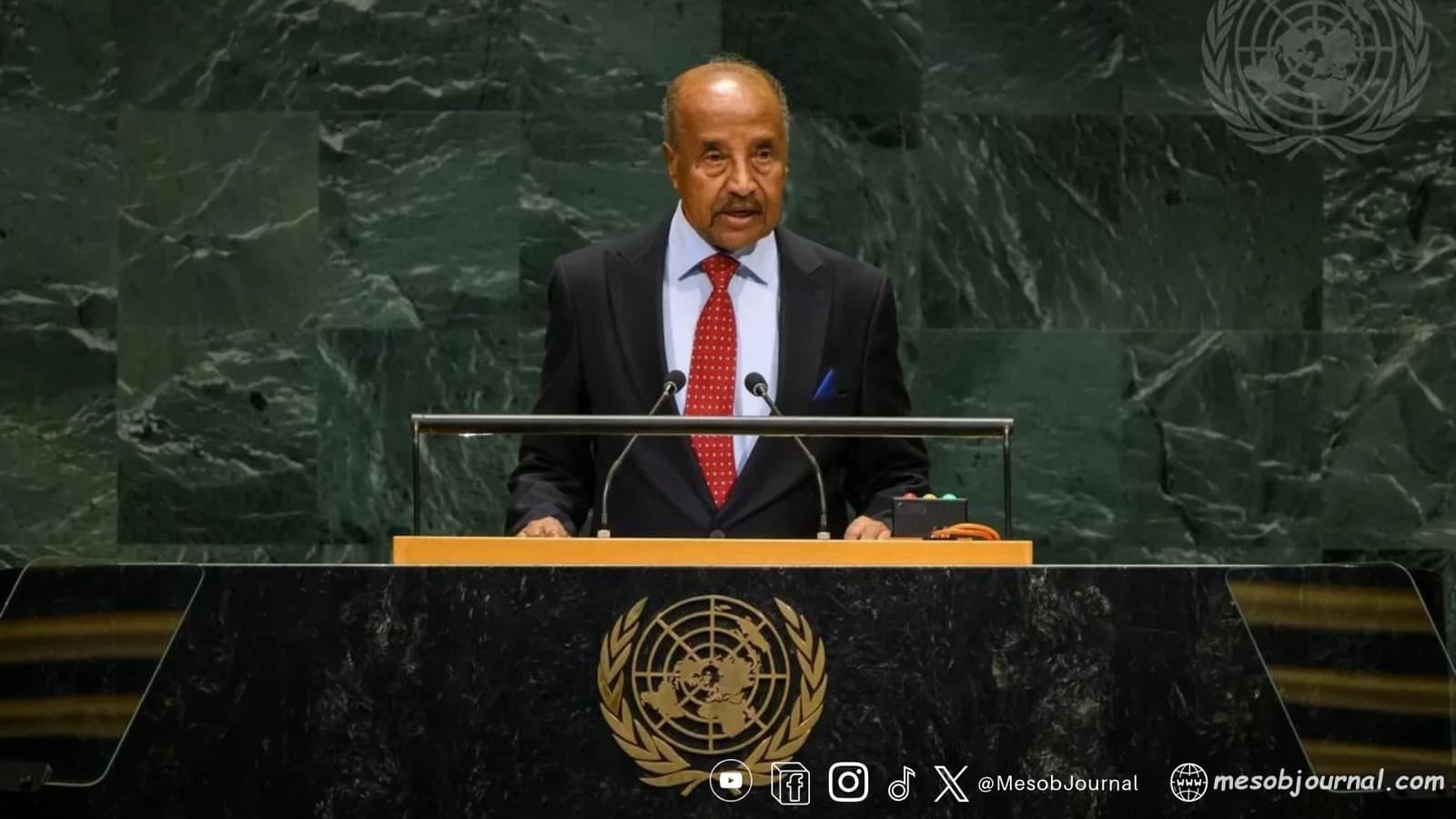
NEW YORK — Eritrea used its address to the 81st United Nations General Assembly on Monday to call for a fundamental rethink of the international order, arguing that economic injustice, unequal access to wealth and persistent power imbalances remain at the root of many of the world’s conflicts.
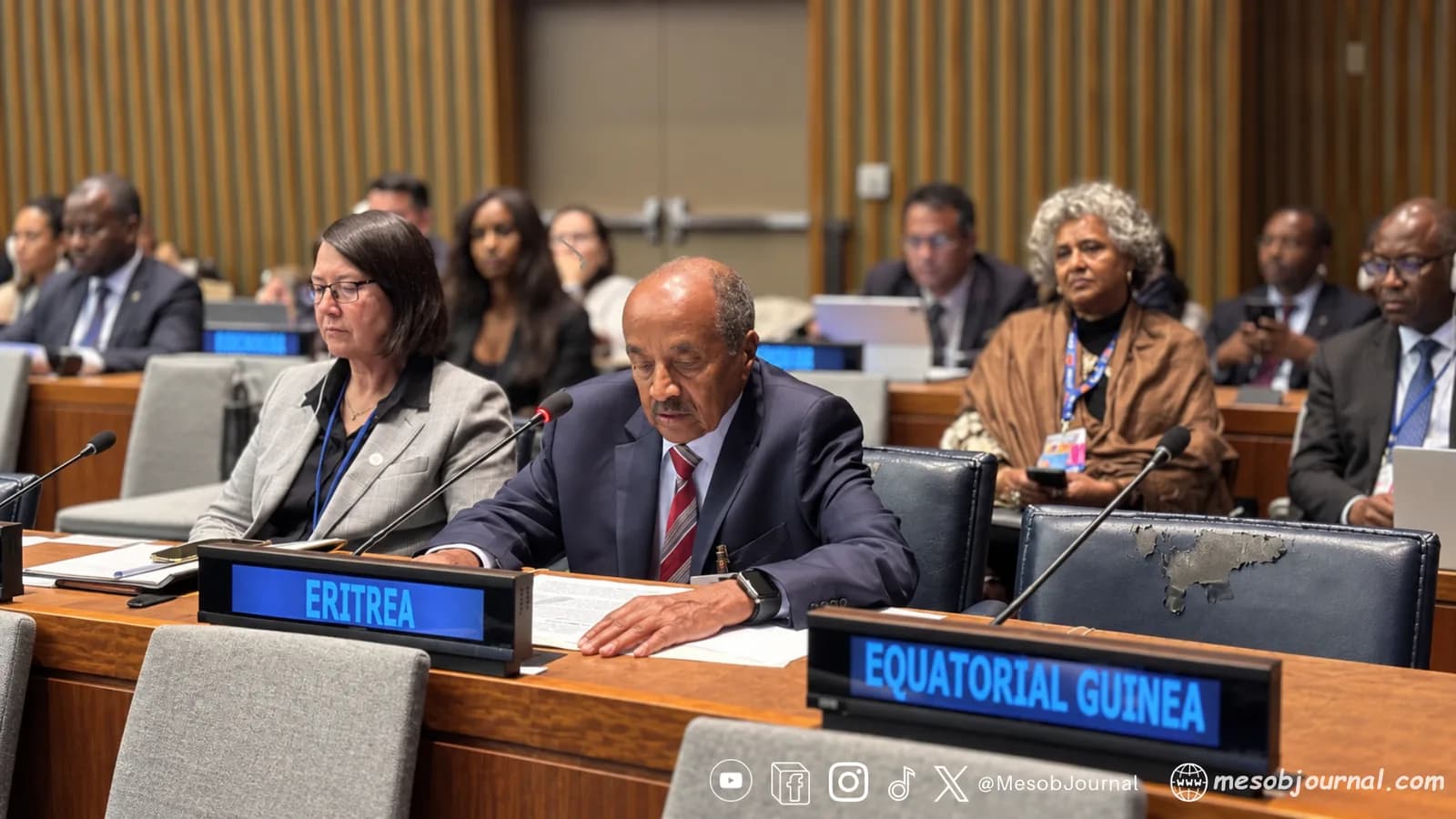
Foreign Minister Osman Saleh Mohammed, delivering the statement on behalf of President Isaias Afwerki, addressed the General Assembly on September 28, the final day of the high-level general debate. Eritrea was scheduled second in the morning session, following Mali and preceding Burkina Faso.
But rather than open with a catalogue of Eritrea’s domestic achievements or bilateral priorities, Saleh began by questioning the purpose of the annual gathering itself.
He asked whether national interventions had become little more than routine accounts of the previous year, whether the General Assembly risked becoming a “congenial public relations platform” for speeches, and whether its annual agenda possessed sufficient continuity, context and measurable purpose.
It was an unusual way to frame a national address: before presenting Eritrea’s view of current conflicts, Saleh challenged the institution to define what progress at the United Nations should actually mean.
Economic justice at the centre
The answer offered by Eritrea was overwhelmingly economic.
Saleh argued that one of humanity’s fundamental challenges is to correct economic injustice — not simply through redistribution, but by ensuring that societies have the ability to create wealth, retain the benefits of their resources and labour, and determine how national wealth is distributed.
In Eritrea’s formulation, the problem with the existing international system is therefore deeper than diplomatic rivalry between competing powers. Saleh described an order in which the right to create and accumulate wealth is constrained while countries can also lose control over the benefits generated from their own resources and work.
He characterized that system as a “zero-sum game” and called instead for an international order founded on justice and rationality.
The speech then set out what amounted to a five-part framework.
Countries and peoples, Saleh said, should be able to own their economic resources and the fruits of their work while accumulating wealth for sustained progress across generations. Peace and stability must provide the conditions for that development. Fairness and justice must underpin peace. Mutual respect, complementarity and regional integration should support wider prosperity. And international institutions must have legal and executive mechanisms capable of putting those principles into practice.
The argument was not for abandoning multilateral institutions. On the contrary, Saleh said the annual General Assembly should be used to rigorously assess how much progress the world has made toward those objectives.
That distinction is important. Eritrea’s address questioned the performance and structure of the existing order while still assigning a central role to international cooperation.
The message also intersected directly with this year’s official UNGA theme, “Restoring Trust, Managing Transformation: A United Nations That Delivers for All.”
Iran, Ukraine and the changing global order
Saleh then moved from principles to the major crises shaping the international system.
Among the developments Eritrea said warranted serious attention were the wider implications of US President Donald Trump’s MAGA doctrine, the war in Iran, the continuing war in Ukraine and global climate change.
On the two conflicts, the language was direct: the war in Iran “must be stopped,” while the war in Ukraine, with what Saleh described as its multilayered ramifications, “must also be terminated.”
The address did not devote extended passages to assigning responsibility for those wars. Instead, they were presented as symptoms of a wider international environment in which conflict, competition and instability increasingly carry consequences beyond the countries directly involved.
Climate change formed another part of the same global picture, with Saleh calling for enduring approaches capable of controlling and reversing its effects.
The focus then shifted closer to Eritrea.
The Horn, Red Sea and Gulf placed in one strategic theatre
Saleh grouped the Nile Basin, Horn of Africa, Red Sea, Gulf of Aden and Gulf States together when discussing what Eritrea views as instability in its broader neighbourhood.
He called for the reversal of war and what he described as acts of subversion intended to foment chaos across this interconnected region. He also criticized what he termed debilitating interventions conducted under the rubric of humanitarian assistance.
The geographic framing was significant.
Rather than treating the Horn of Africa, Red Sea, Nile Basin and Arabian Peninsula as separate policy theatres, the speech presented them as parts of a single strategic space whose security pressures increasingly overlap.
That approach has also been visible in Eritrea’s diplomacy during UN high-level week.
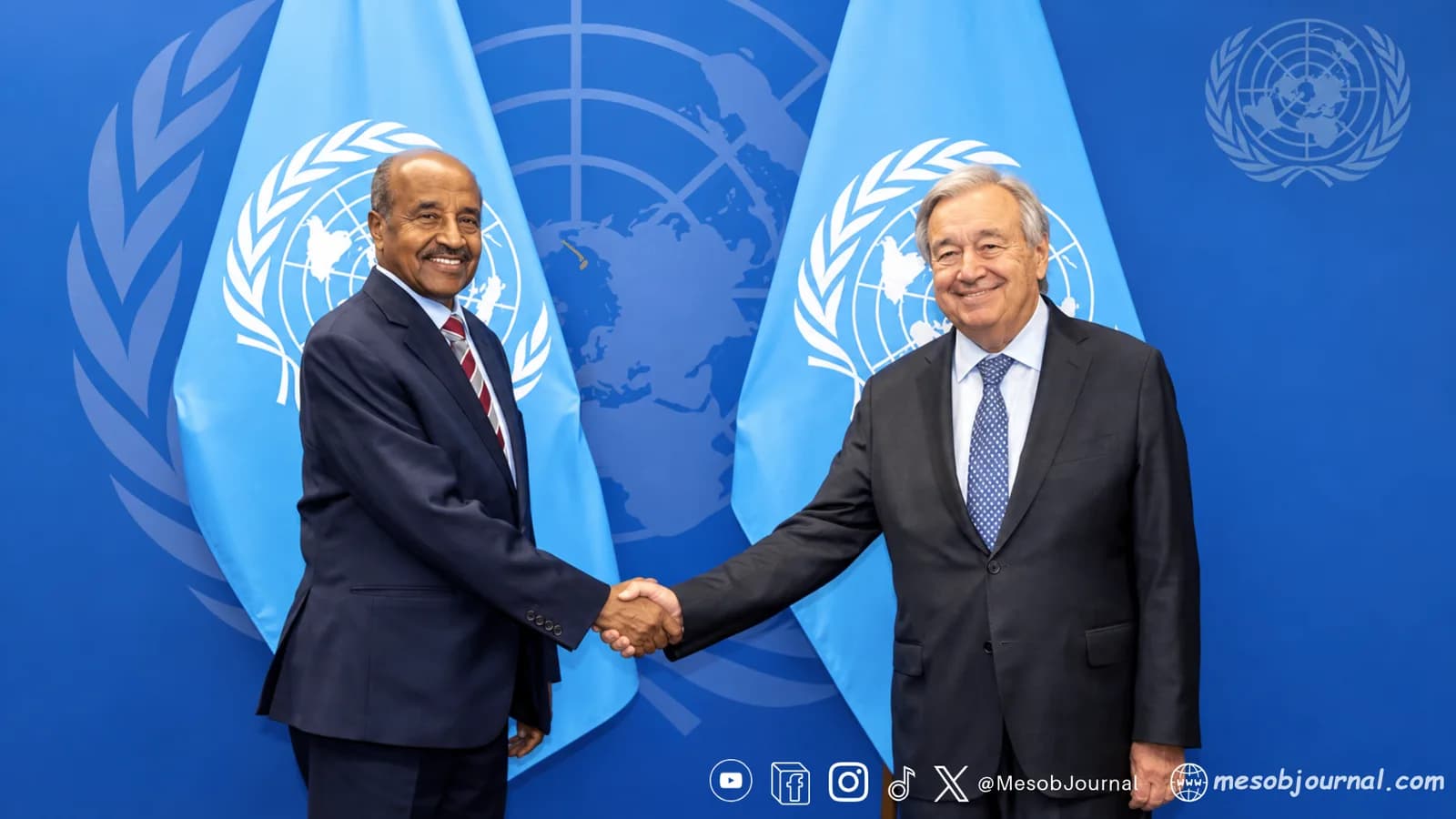
Saleh met UN Secretary-General António Guterres in New York on September 23. The UN confirmed the meeting, while Eritrean reporting said Saleh stressed principles including sovereign equality, territorial integrity, political independence, non-interference and peaceful settlement of disputes.
The Eritrean delegation also held talks with a range of foreign ministers during the week. In a separate meeting, Oman’s Foreign Ministry said Saleh and Omani Foreign Minister Badr Albusaidi discussed developments in the Horn of Africa and Red Sea, including regional stability, direct dialogue and limiting foreign interference.
Those engagements give additional context to Monday’s address: the regional argument presented at the podium was also being pursued through bilateral diplomacy away from it.
Africa and the “zero-sum” system
Saleh reserved the closing section of his statement for Africa.
He described African peoples as among the principal victims of what Eritrea considers the prevailing zero-sum international order, using the stark formulation of an order marked by “plunder, domination, and deceit.”
He linked that imbalance to the persistence of subsistence economies across much of the continent and argued that Africa consequently has a particular stake in efforts to establish a fairer global system.
But the prescription was not directed solely outward.
Saleh said African countries and peoples must formulate their own strategies, discard frameworks and mechanisms that have become obstructive, and move forward with greater unity and purpose.
That closing point gave the address a distinctly African dimension.
Eritrea was not simply asking established powers to reform the international system on Africa’s behalf. Its position was that African states themselves must build the strategies, institutions and cooperation necessary to increase their economic and political agency.
A different kind of UNGA address
There was comparatively little in Saleh’s speech about Eritrea itself.
No extended account of national programmes. No long inventory of diplomatic achievements. No detailed review of domestic development.
Instead, Eritrea used its General Assembly slot to advance an argument about what the international system is supposed to accomplish.
The address placed economic sovereignty before conventional development rhetoric; treated peace as a prerequisite for prosperity rather than a separate diplomatic objective; connected justice to stability; and framed regional cooperation as part of the architecture required for sustainable growth.
It also challenged a familiar feature of UN high-level week: hundreds of national speeches delivered each September, followed by another annual gathering twelve months later.
Saleh’s opening questions returned, in effect, at the end of the speech. If the General Assembly has an overarching mission, Eritrea argued, its success should ultimately be measured not by the number of declarations made from the podium but by whether societies gain greater control over their resources and economic future, whether wars are brought to an end, whether international relations become fairer, and whether institutions translate those principles into results.
For Eritrea, that is the standard by which the international order — and the United Nations operating within it — should be judged.