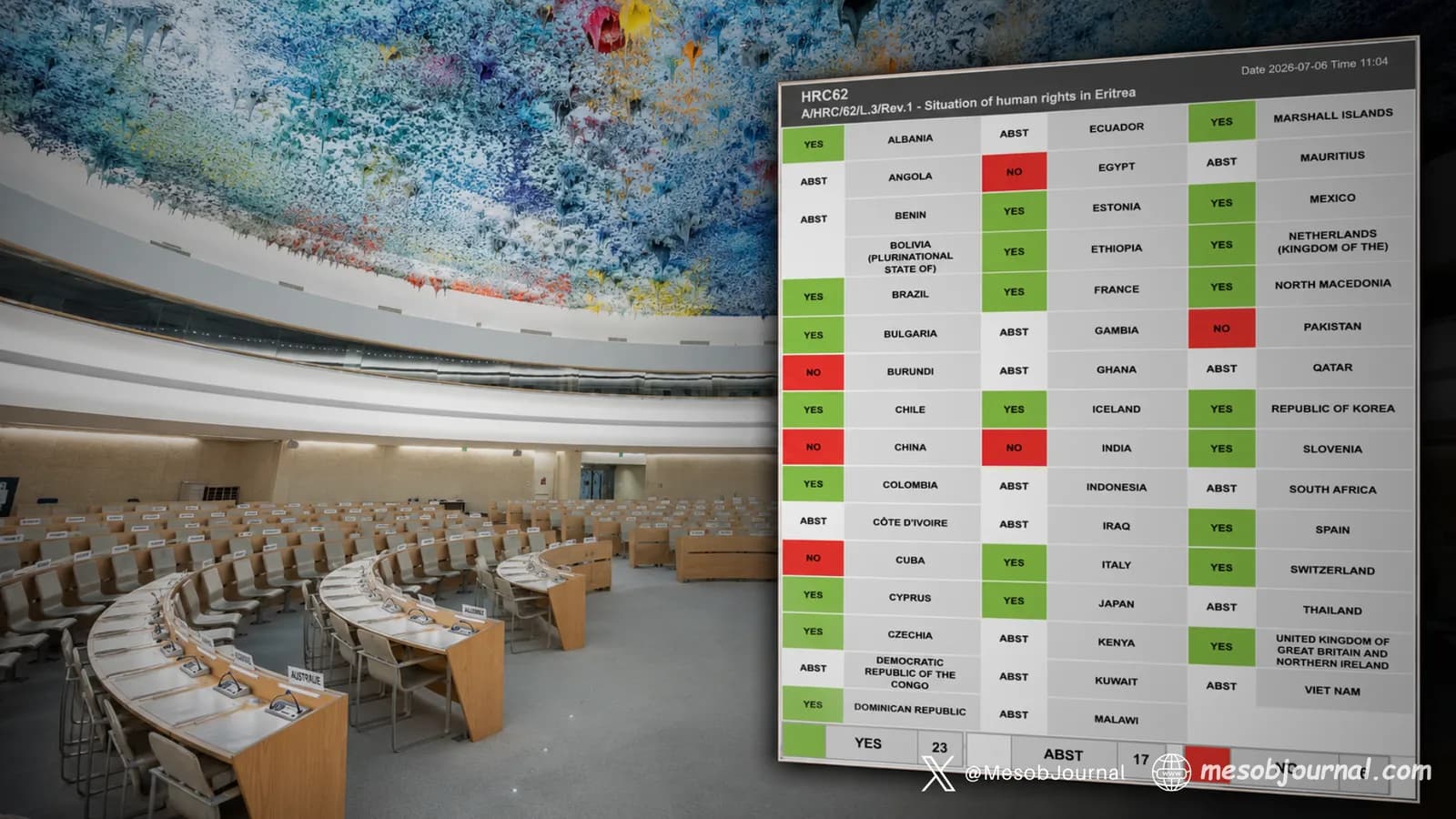

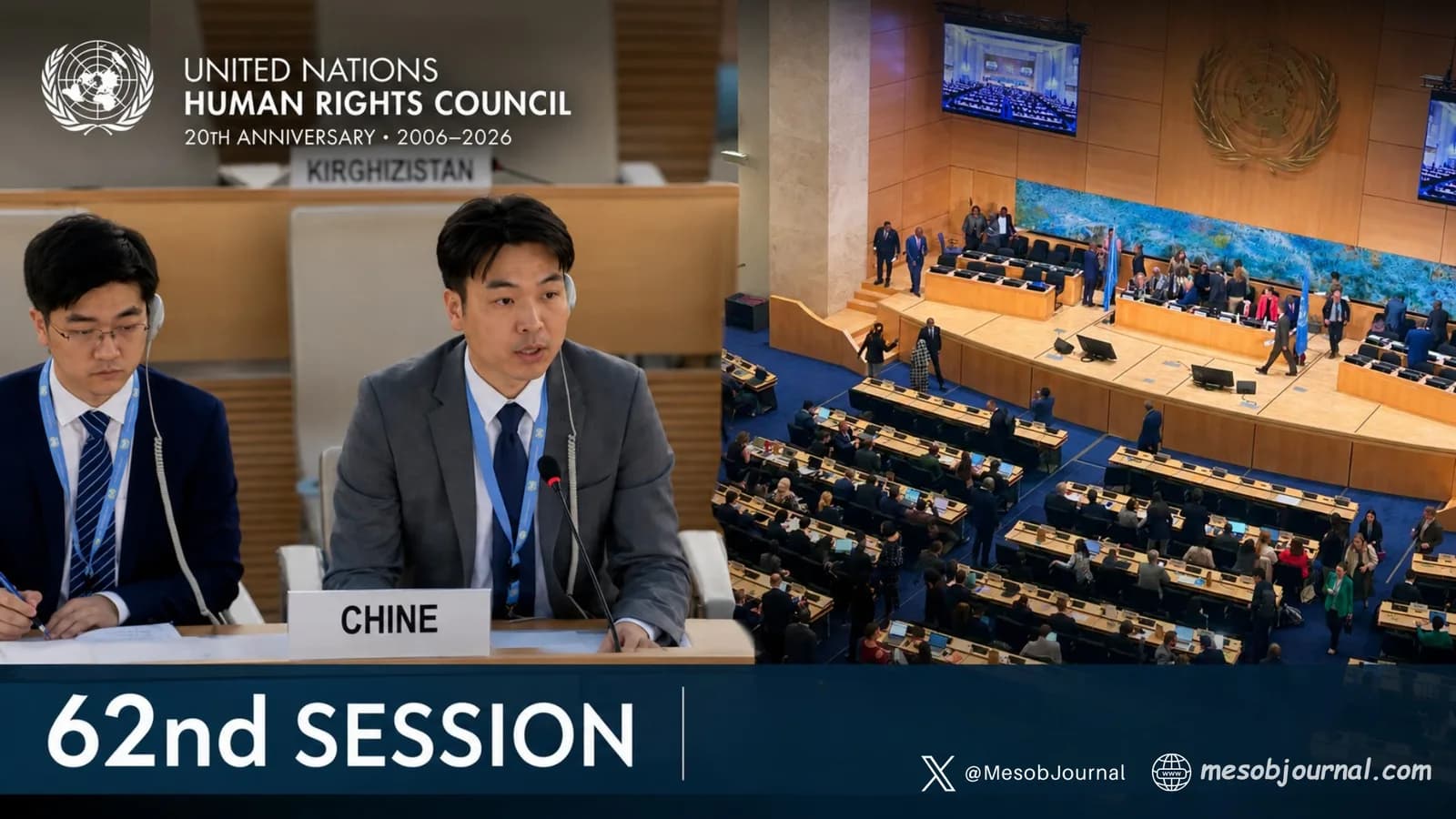
China’s intervention on June 15 at the Enhanced Interactive Dialogue on Eritrea during the 62nd session of the UN Human Rights Council did not simply restate a diplomatic position; it exposed, with unusual clarity, the structural hypocrisy that has defined the UNHRC’s approach to Eritrea for more than a decade.
When China reiterated its consistent position of advocating the promotion and protection of human rights through dialogue and cooperation, and called on the UNHRC to discontinue the country-specific mandate on Eritrea and stop the practice of interfering in Eritrea’s internal affairs under the pretext of human rights, it was not merely defending Eritrea. It was indicting an entire system that has normalized selective scrutiny, entrenched geopolitical bias, and weaponized human rights language to discipline states that refuse to bend to external pressure.
The Eritrea mandate has long been a case study in how the Council’s machinery can be mobilized not to improve human rights, but to manufacture narratives, isolate governments, and impose political frameworks that have little to do with the lived realities of the people on the ground. China’s statement cut through the diplomatic theater and said what many states have whispered for years: the mandate has failed, the approach is broken, and the Council’s credibility is eroding under the weight of its own double standards.
For years, Eritrea has been subjected to a mandate that operates less like a human rights mechanism and more like a political instrument designed to keep the country in a permanent state of international suspicion. Reports are produced, allegations are recycled, and the same language is repeated year after year, even as regional dynamics shift, conflicts evolve, and Eritrea’s internal policies change.
The mandate has become a self-perpetuating bureaucracy, one that no longer even pretends to engage Eritrea constructively. It demands cooperation while offering none. It insists on dialogue while refusing to acknowledge Eritrea’s own submissions, explanations, or security concerns. It claims neutrality while relying on sources and narratives that Eritrea has repeatedly challenged as inaccurate or politically motivated.
China’s intervention exposed this contradiction: how can a mandate claim to promote human rights when it refuses to operate on the basis of mutual respect, factual rigor, or sovereign equality?
The UNHRC’s defenders often insist that country-specific mandates are necessary tools for addressing serious violations. But the Eritrea mandate has never functioned as a neutral investigative mechanism. It has functioned as a political cudgel, one that reinforces a predetermined storyline: Eritrea as an outlier, Eritrea as a problem, Eritrea as a state to be monitored rather than engaged.
China’s call to end the mandate was therefore not a defense of Eritrea alone, but a challenge to the Council’s broader culture of selective enforcement. Why Eritrea? Why this level of scrutiny? Why this refusal to acknowledge progress, context, or regional complexity? Why does the Council maintain a mandate that has produced no measurable improvement, no constructive engagement, and no pathway to cooperation?
The answer is simple: because the mandate was never designed to foster improvement. It was designed to maintain pressure.
China’s statement also underscored a deeper ideological divide within the UN system. On one side are states that view human rights as a field of geopolitical leverage, a tool to reward allies and punish adversaries. On the other side are states, increasingly numerous, that argue for a cooperative, development-oriented approach grounded in sovereignty and non-interference.
China’s intervention placed Eritrea squarely within this larger debate. It signaled that the era of unchallenged Western dominance over human rights narratives is fading, and that the Council must confront the growing resistance of states that refuse to accept externally imposed judgments. Eritrea has long argued that the mandate is illegitimate, biased, and disconnected from reality. China’s statement gave that argument international reinforcement.
The special interest Council’s defenders will claim that ending the mandate would abandon victims or silence accountability. But accountability requires legitimacy, and legitimacy requires fairness. A mechanism that is perceived as biased cannot produce credible findings. A mandate that refuses to engage the state concerned cannot produce meaningful change. A process that begins with political assumptions cannot claim moral authority.
China’s intervention forced the Council to confront these uncomfortable truths. It challenged the idea that human rights can be advanced through coercion, naming and shaming, or the perpetual recycling of allegations. It argued, implicitly but unmistakably, that the Council’s credibility is undermined when it clings to mandates that have outlived their usefulness and lost the confidence of the states they target.
Eritrea’s enemies will dismiss China’s statement as geopolitical alignment, but that misses the point. The real issue is not who said it, but why it needed to be said. The Eritrea mandate has become a symbol of the Council’s structural imbalance, a mechanism that survives not because it works, but because it fits a narrative that powerful actors refuse to abandon.
China’s intervention disrupted that narrative. It reminded the Council that sovereignty is not an optional principle, that cooperation is not a rhetorical accessory, and that human rights cannot be advanced through mechanisms that alienate the very states they claim to help.
The Enhanced Interactive Dialogue on Eritrea revealed a Council at a crossroads. It can continue down the path of selective scrutiny, politicized mandates, and entrenched narratives, or it can confront the growing chorus of states demanding a more balanced, cooperative, and credible approach.
China’s statement was a warning: the old model is losing legitimacy. The mandate on Eritrea is no longer defensible on its own terms. The Council must choose between reform and irrelevance.
In the end, China’s June 15 intervention did more than challenge a single mandate; it exposed the deeper fault line running through the UN Human Rights Council itself. The Eritrea mandate has become a monument to the Council’s unwillingness to confront its own contradictions, a relic of an era when powerful states could impose narratives without resistance and expect the rest of the world to accept them as universal truth.
That era is ending. China’s statement signaled that the Global South is no longer willing to absorb the moral lectures of institutions that refuse to examine their own biases. It reminded the Council that sovereignty is not a negotiable privilege but a foundational principle, and that human rights cannot be advanced through mechanisms that alienate, isolate, and delegitimize the very states they claim to help.
If the UNHRC continues to cling to mandates that have lost credibility, it will not only fail Eritrea; it will fail itself. The Council must decide whether it wants to be a forum for cooperation or a stage for political theater. China’s intervention forced that choice into the open.
The question now is whether the Council has the courage to confront the imbalance it has created, or whether it will continue to hide behind the language of human rights while perpetuating practices that undermine the very ideals it claims to defend.
The mandate on Eritrea has become a test of the Council’s integrity. Ending it would not erase the challenges Eritrea faces, but it would mark a necessary step toward restoring the credibility of a system that cannot afford to keep losing the trust of the world it claims to serve.