
Welcome to Tsimdo Regional Cooperation, or Engagement, as stated in Eritrea’s National Charter, a space where unity meets peace.
Tsimdo is not a slogan. It is not a political phrase or a fleeting moment of tactical alignment. At its heart, Tsimdo is a philosophy: a profound, resounding call to connection, dialogue, partnership, and transformation across communities historically divided, yet bound together by culture, language, and shared human experience.
The word Tsimdo, drawn from the Tigrinya language (ጽምዶ, also transliterated as Tsemdo or Ximdo), embodies connection, alignment, and coordination — distinct actors functioning as one. It is a concept forged through centuries of shared lives, now emerging as a framework for peace, collaboration, and regional resilience across the Horn of Africa and beyond.
Ancient Networks, Enduring Bonds
Understanding Tsimdo begins with acknowledging that human communities in East Africa have never lived in isolation. Long before colonial cartographers drew borders, the peoples of what is now Eritrea and its neighboring regions sustained vibrant networks of communication, commerce, kinship, and culture. Caravans moved across highlands, deserts, and coasts carrying not just salt, coffee, and livestock, but stories, knowledge, and social practices.
Market towns were more than economic nodes; they were theaters of cultural exchange. Music, proverbs, religious beliefs, and communal rituals flowed freely between Tigrinya, Kunama, Afar, Saho, Bidawet, and Arabic-speaking communities. Weddings in one village drew guests from another polity. Funerals summoned mourners across what would later become international frontiers. Religious observances — Orthodox, Catholic, Protestant, and Muslim — often overlapped in time and symbolism, creating calendars of shared meaning.
Languages were the primary vessels of this interconnection. Poetry and oral traditions transmitted histories that belonged to no single group. A proverb uttered in Saho could be answered in Tigrinya. A wedding song from the Barka lowlands could echo in the highlands. These practices cultivated a region-wide ethos: identity was plural, survival was collective, and dignity was reciprocal.
Colonial Rupture, Unbroken Threads
The late 19th century arrival of European powers fractured these patterns without fully destroying them. Italy colonized Eritrea and sought to reengineer its economy for extraction. Ethiopia, under Emperor Menelik II, preserved its sovereignty through diplomacy and war. Sudan was administered under Anglo-Egyptian rule, while France claimed Djibouti for its Red Sea ambitions. Colonial administrations imposed clear borders, legal codes, and taxation systems that served imperial interests.
Yet human connection proved stubborn. Families split by new boundaries maintained ties through seasonal migration, sometimes aggression, and trade. Religious scholars continued to study in centers that now lay in different countries. Merchants adapted old routes to new checkpoints. Pastoralists negotiated access to grazing lands with colonial officers who barely understood the systems they were disrupting. The languages, festivals, and practices of negotiation endured, carrying with them an ethic of alignment that colonialism could not legislate away.
Eritrea’s independence in 1991 brought back the political map once again. The immediate post-independence period brought cautious optimism. Relations with Ethiopia saw a brief window of cooperation before descending into the 1998–2000 border war, a conflict that cost tens of thousands of lives and militarized communities that had once intermarried. Ties with Sudan were strained by refugee flows, trade disputes, and shifting security calculations. Djibouti, strategically perched at the Bab el-Mandeb, offered both maritime partnership and flashpoints of tension.
Still, beneath state-level volatility, ordinary people persisted. They spoke each other’s languages in markets. They buried their dead in cemeteries that predated the nation state. They remembered kinships that passports could not annul. Through the early 21st century — marked by climate shocks, displacement, and recurrent conflict — the underlying fabric of interconnection never fully tore.
The Re-Emergence Of Tsimdo: 2025–2026
It was in the post-conflict recalibration of 2025–2026 that Tsimdo moved from memory to movement. Analysts first read it as geopolitics: tactical alignments between Eritrean institutions and specific actors in neighboring states. But reducing Tsimdo to strategy misses its core. It is a lived aspiration: communities choosing engagement over isolation, alignment over division.
Tsimdo accepts a basic truth: Eritreans of all ethnicities and linguistic groups, alongside Ethiopians, Sudanese, Djiboutians, and wider Red Sea populations, are distinct. They need not be identical to be neighbors. They need only the courage to cooperate. That cooperation is now visible. Border markets have reopened. Militarized crossings are becoming corridors of exchange. Livelihoods disrupted by war are being rebuilt through cross-border commerce in grain, livestock, and consumer goods.
Equally important is the shift in civic space. Thinkers, activists, and citizens are engaging in dialogues that privilege respect, historical acknowledgment, and reconciliation over revenge. Tsimdo, in this sense, is a process: continuous negotiation, mutual recognition, and shared accountability. It refuses the idea that peace is an event. It insists peace is practice.
Culture And Economy As Peace Infrastructure
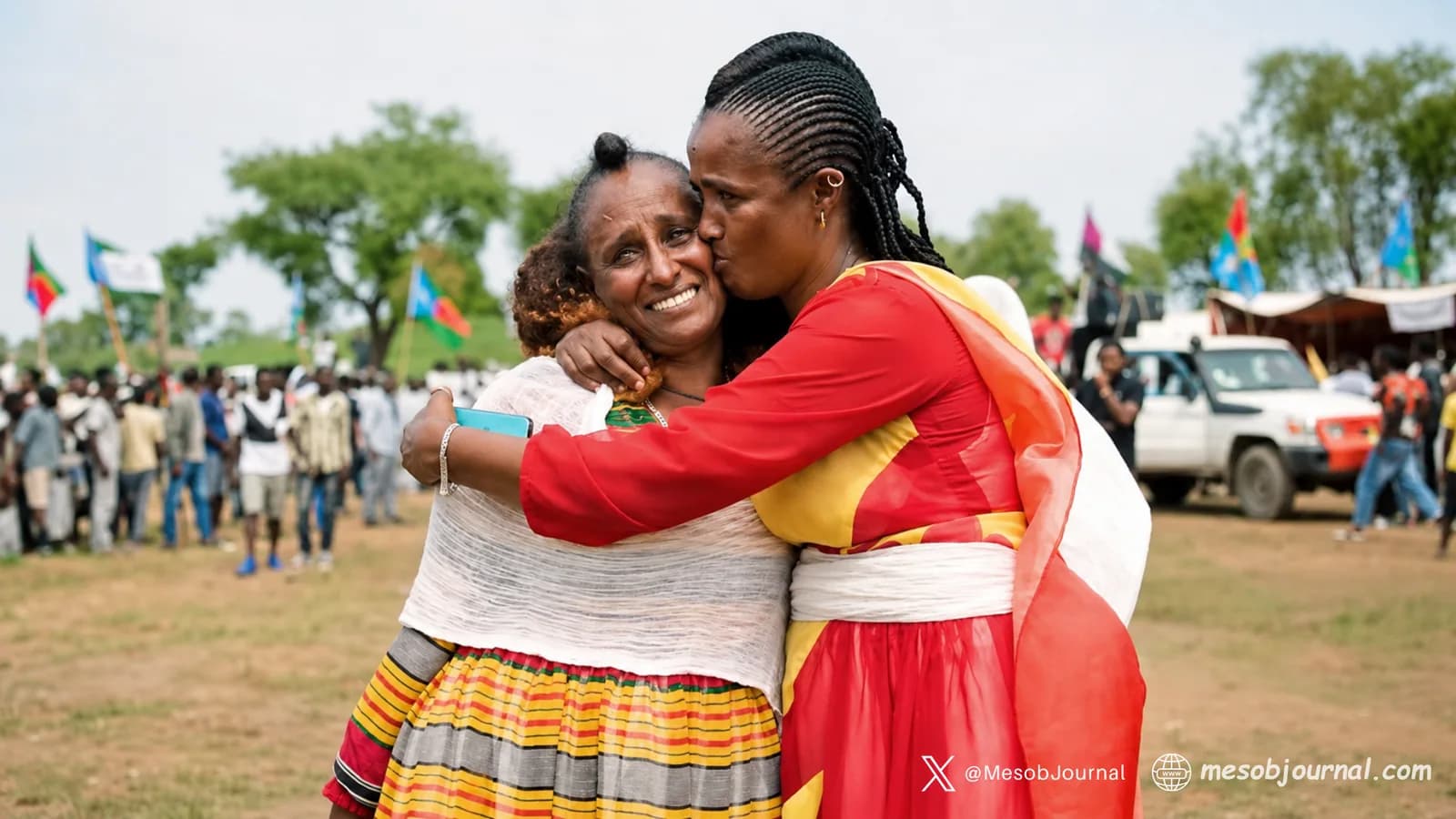
The transformative power of Tsimdo lies beyond formal diplomacy. Cultural collaboration, music, literature, art, and public memory restore empathy where propaganda once bred suspicion. Youth-led festivals in border towns now feature Eritrean, Ethiopian, Sudanese, and Djiboutian artists on the same stage. Their blended melodies do political work: they make audible a shared future. Audiences who once feared each other now share food, dance, and conversation.
Economically, Tsimdo reframes borders as gateways. Joint ventures in agriculture, fisheries, and small manufacturing are emerging. Labor mobility is being discussed not as a security threat but as a dividend. When a Tigrayan trader sells teff in an Eritrean market, or an Afar pastoralist coordinates grazing schedules across the Djibouti-Eritrea frontier, peace becomes material. It is no longer a communiqué. It is income, food, and predictability.
This dual-track culture and economy creates resilience. Societies that trade and create together are harder to drag back into war. Tsimdo wagers that interdependence is the most durable deterrent.
Centering Local Voices
Regional inclusion cannot be mandated from capitals. It must be negotiated in the peripheries where the costs of war were highest. Communities like the Afar, Beja, Saho, Bidawet, and Kunama have long histories of autonomy and cross-border brotherhood. Their knowledge of terrain, climate, and conflict mediation is not folklore; it is infrastructure.
Tsimdo, therefore, treats listening as a political act. It engages elders who remember pre-war reciprocity, youth who refuse inherited enmity, women who sustained households through displacement, and marginalized groups whose voices were absent from past peace deals. Peace is not delivered to the borderlands. It is co-authored by them.
Principles, Not Sentiment
For Tsimdo to last, it must be principled. Eritrea is a sovereign state. Ethiopia, Sudan, and Djibouti are sovereign states. Respecting that fact is not hostility; it is legal literacy. Stable cooperation requires institutional symmetry. Where it does not exist, diplomacy, not sentiment, must govern.
Shared language, religion, or historical memory cannot be the foundation of state policy. Eritrea is multiethnic, multilingual, and multi-faith. Any external engagement that privileges one identity over others distorts the national fabric and invites backlash. Geography is the constant. Neighbors do not choose each other; they inherit proximity. Instability next door becomes instability at home. Cooperation is thus a strategic necessity.
History matters, but it cannot dictate. The memory of violence, domination, and suffering is real and must be acknowledged. Yet mature policy refuses to be imprisoned by memory. The rule of law operates through transparency, reciprocity, and defined national interest, not emotional arithmetic. That is why Eritrea’s National Charter frames the vision as regional cooperation or regional engagement. It is not the erasure of sovereignty. It is deliberate, lawful alignment for mutual security and prosperity.
Eritrea’s National Charter, Article 6: “Regional and International Cooperation. For Eritrea to become a respected member of the international community, by coexisting in harmony and cooperation with its neighbors; and by contributing, to the extent of its capability, to regional and global peace, security and development.”
Tsimdo N’Selam: From Philosophy To Practice
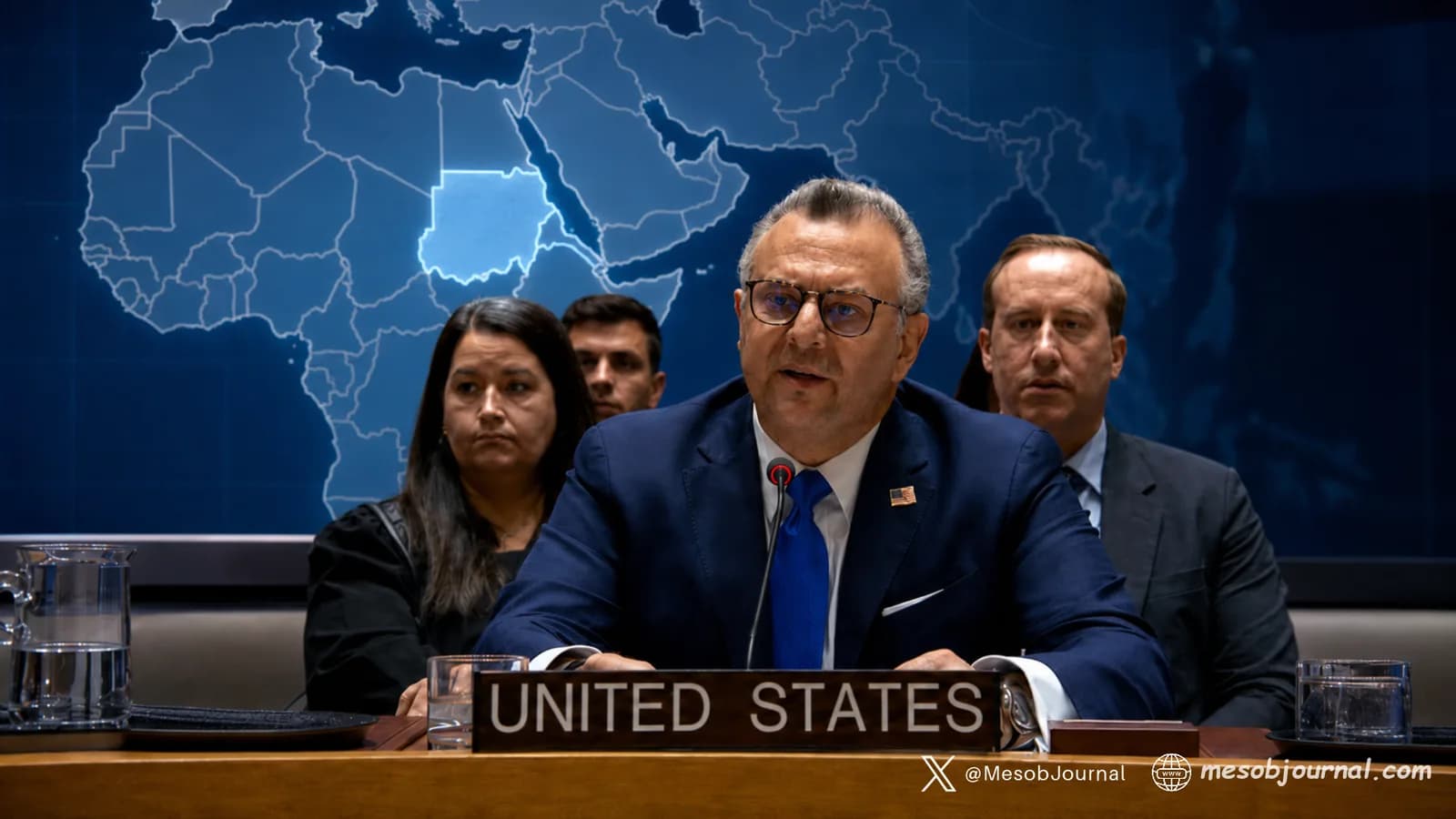
In 2026, this philosophy entered international discourse. The Permanent Mission of the State of Eritrea to the United Nations submitted a video to the Office of the Secretary-General documenting Tsimdo N’Selam ‘Engagement for Peace.’ The initiative, active for over a year, is built around a simple message: No to War, Yes to Peace.
Critically, Tsimdo did not originate from governments, militaries, or international NGOs. It emerged from grassroots engagement among people who bore the consequences of war, displacement, and suspicion. Elders, youth, women, and families living along common border areas, particularly between Eritrea and Ethiopia’s Tigray region, initiated dialogues, cultural exchanges, and confidence-building activities. Their aim: rebuild trust, restore social cohesion, and heal relations fractured by years of conflict.
More than a year of relative peace between these border communities has since encouraged members of Ethiopia’s Amhara and Afar communities to embrace the initiative. Advocates insist Tsimdo is a civilian project for peace and reconciliation, and will remain so as long as peace prevails. The Ethiopian government, meanwhile, has viewed it with caution, concerned it could evolve into a political bloc.
The Eritrean Mission presented Tsimdo N’Selam to the UN not as a report, but as evidence. It argued that the initiative’s locally owned, culturally rooted character aligns with the UN’s vision of sustaining peace and people-centered peacebuilding. The hope is that this experience can inform UN discussions on reconciliation, conflict prevention, and preventive diplomacy.
The Unfinished Work
Tsimdo is not naive. Critics rightly note unresolved grievances, the risk of top-down co-optation, and the potential exclusion of marginalized groups. These are not reasons to abandon Tsimdo; they are standards to hold it to. If women and youth are not equal architects, it fails. If economic ventures enrich elites but not border communities, it fails. If cultural exchange is performance without restitution, it fails.
The test of Tsimdo is in the daily: Can a merchant cross safely? Can a child learn a neighbor’s language without fear? Can a pastoralist water her herd without triggering a patrol? Peace is not abstract. It is enacted in marketplaces, classrooms, clinics, and homes. It thrives where dialogue, trade, culture, and law intersect.
Tsimdo offers the Horn of Africa and regions beyond it a premise: connection is a choice. Alignment is a discipline. Courage is the willingness to see a former enemy as a future partner. Across Eritrea and its neighbors, Tsimdo invites citizens to reclaim agency and co-create a future grounded in unity, dignity, and mutual respect.
The Road Ahead
Tsimdo is neither nostalgia nor policy jargon. It is a daily practice of choosing alignment over enmity, and dialogue over distance. From the highland markets to Red Sea corridors, peace is being authored not in communiqués, but in shared meals, open borders, and children learning their neighbor’s language without fear.
The work is unfinished. It will fail if it excludes women, youth, and border communities, or if culture and commerce do not reach those who paid war’s highest price. But its premise holds: sovereignty respected, history acknowledged, and geography embraced as obligation, not accident.
Connection is a choice. Alignment is a discipline. Courage is the willingness to see a former adversary as a future partner. Tsimdo invites that courage not for a moment, but for generations.
Join Tsimdo. Join the peace. Build a shared future for generations yet unborn.