
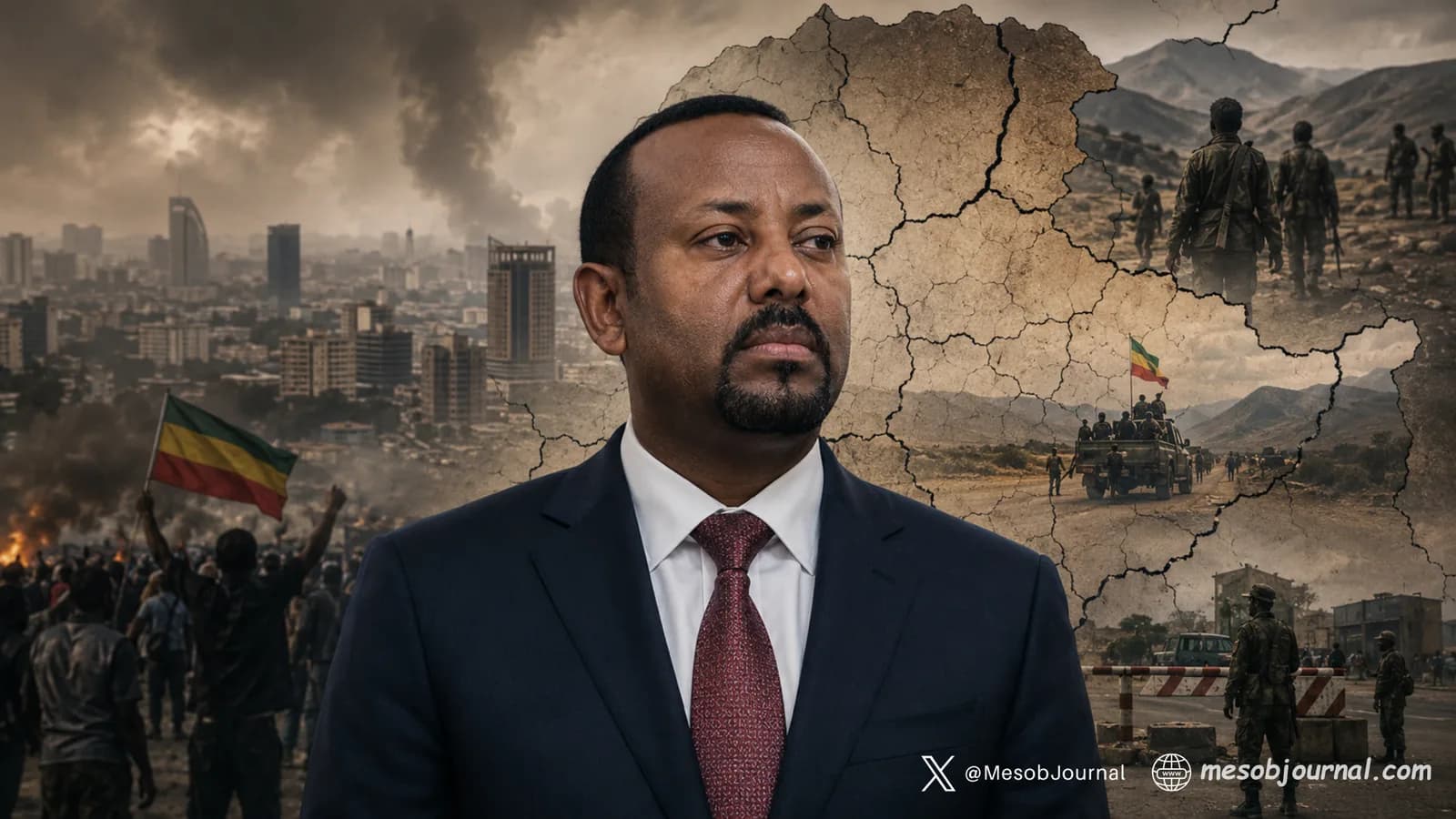
Ethiopia is heading toward an election that is unlikely to surprise anyone. Barring a major rupture inside the ruling system, Prime Minister Abiy Ahmed is positioned to remain at the helm after the June 1, 2026 vote. The real question is not whether he can be returned to office. The real question is whether Ethiopia, under the current direction, can survive another cycle of managed division, internal war and regional provocation.
Ethiopia’s elections have long been less about choice than confirmation. Under Meles Zenawi, the EPRDF and its allies won all but two seats in the 547-seat parliament in 2010. Five years later, after Meles’ death, the same ruling system produced the infamous 2015 “100 percent” election, when the EPRDF and its allies took every parliamentary seat. Abiy Ahmed’s 2021 vote continued that tradition under a new name: his Prosperity Party won 410 of 436 contested seats, in a country where parts of the population could not vote, opposition groups were sidelined, and major regions were already sliding into war. Ethiopia may change party names and political rhetoric. The election machinery remains familiar.
So the coming result is not difficult to read. The state, the ruling party, the security apparatus, the patronage networks and the public narrative are all fused around one man. Ethiopia may hold an election. But an election held under conditions of war, fear, displacement and restricted political space is just a ceremony of power.
Abiy came to office in 2018 with the language of reform, reconciliation and regional renewal. For a brief moment, many believed him. Eritrea supported peace. Somalia saw an opening for regional cooperation. The Oromo and Amhara forces that helped break the old order expected a new settlement inside Ethiopia. That promise collapsed quickly.
The regions that helped bring him to power became targets of pressure, arrest, military campaigns or political betrayal. Tigray was devastated by war. Amhara is now in open conflict with federal forces. Oromia remains locked in insurgency and repression. Tigray again sits on the edge of renewed confrontation, with recent reports warning that the Pretoria arrangement is weakening and that tensions between the federal government, Tigrayan forces could inflame the wider Horn.
This is not normal political turbulence. It is a state fighting too many of its own foundations at the same time.
The government’s answer has not been national cohesion. It has been spectacle, security force expansion and foreign-backed image management. Addis Ababa is being polished through corridor projects and urban redevelopment while large parts of the country remain trapped in insecurity, hunger and displacement. The government presents these projects as transformation. Critics see a capital-city facelift running beside a national fracture. Even the U.S. investment climate report noted that corridor development projects beginning in Addis Ababa in 2024 and later expanding to other cities led to expulsions and displacement concerns.
Ethiopia has become a major arena for Emirati investment, logistics, agriculture, real estate and geopolitical positioning. That relationship gives Abiy financial oxygen and external prestige at a time when his domestic legitimacy is badly damaged. A 2025 policy brief by SWP described Ethiopia as a significant partner for UAE investment and noted that Abu Dhabi’s engagement is driven not by economics but by geopolitics.
Foreign money can help a weak ruler look strong. It can light buildings, finance infrastructure, build elite confidence and keep diplomatic doors open. But it cannot repair a broken national compact.
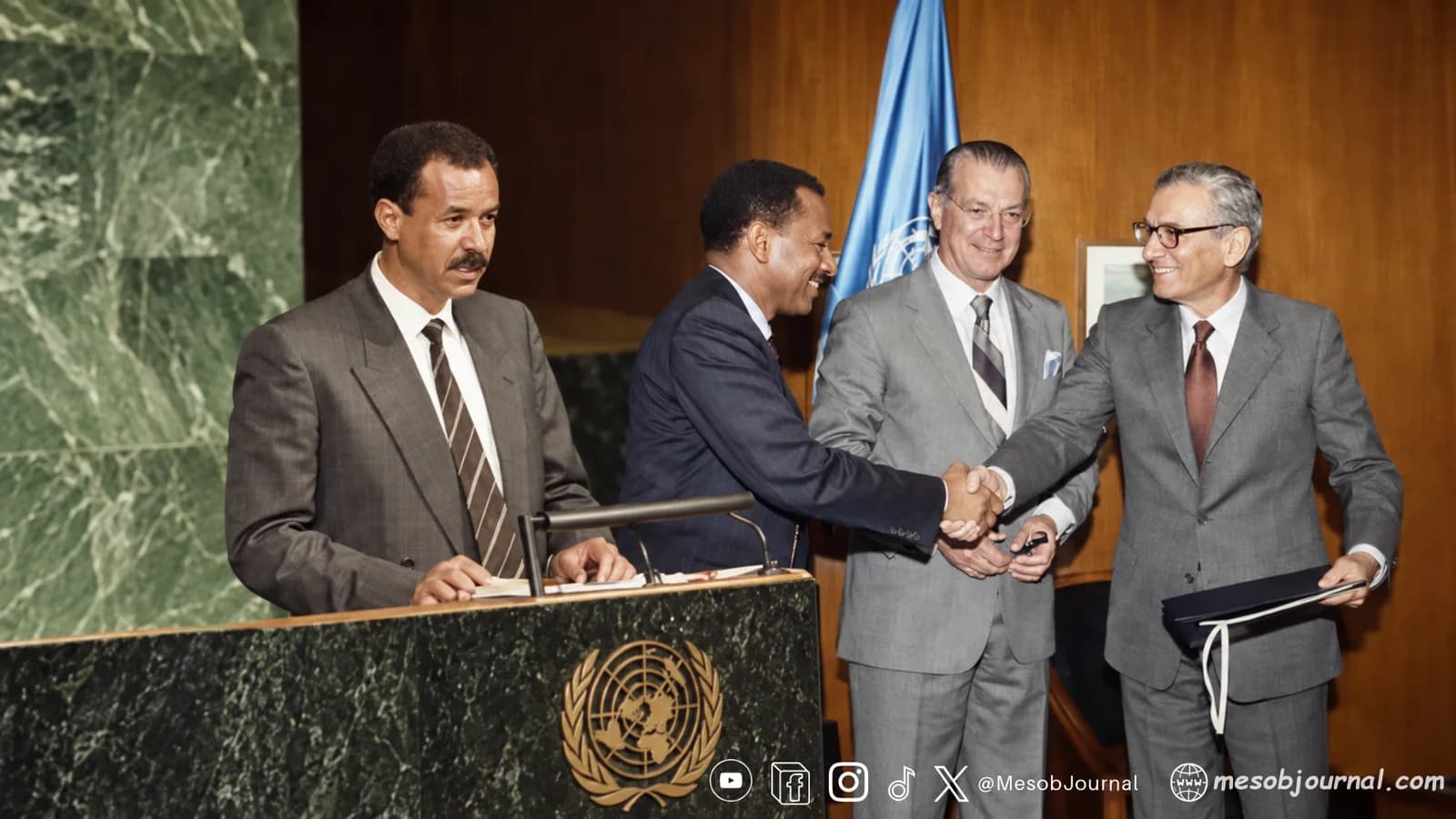
Abiy’s foreign policy mirrors his domestic rule: use allies when survival is at stake, discard them once the danger passes, then rewrite the story. Eritrea did not merely support peace with Ethiopia; it helped secure his survival when the TPLF threatened to overturn the federal order by force. Once the immediate danger passed, Abiy turned on the same neighbour that had helped stabilize the moment, reviving dangerous Red Sea rhetoric and reopening questions international law had already settled. Somalia, too, had supported regional cooperation. Addis Ababa later pursued the Somaliland memorandum, undermining Somalia’s sovereignty and inflaming the Horn. Instead of building integration through respect for borders, commercial access and mutual security, Abiy chose pressure politics dressed up as national destiny.
Ethiopia has lived with internal conflict for centuries. Its elites often managed crisis through force, co-option, imperial myth, ethnic bargaining or outside support. The majority paid the price. But today’s crisis is different in scale. The government is not facing one rebellion in one periphery. It faces armed resistance, political alienation and social fragmentation across major regions and communities. Amhara, Oromia and Tigray are not marginal spaces. They are central pillars of the Ethiopian state.
When central pillars turn against the center, elections do not solve the problem. They can make it worse.
Ethiopia is drifting toward a darker question: not who governs the state, but whether the state can still hold itself together. When a ruling center loses legitimacy among major communities, when armed regions no longer trust the capital, and when identity becomes the language of survival, fragmentation stops being theory. It becomes a political trajectory. That is where Abiy’s Ethiopia now stands: a state still speaking in the language of unity while large parts of its own population are already preparing for life against the center.
So yes, Abiy Ahmed will most likely be “elected” again.
But the deeper question is no longer about Abiy’s survival. It is about Ethiopia’s survival.
A country cannot be held together forever by drones, debt, public relations, foreign money and beautified boulevards. At some point, the state has to answer its own people. It has to stop making enemies of the regions that built it. It has to choose internal settlement over permanent mobilization. It has to choose lawful regional cooperation over threats against neighbours.
Ethiopia still has a chance to step back. But that chance will not come from another managed election. It will come from removing the logic that brought the country here: vanity rule, ethnic manipulation, war as distraction and foreign-backed illusion as governance.
The question before Ethiopia is not who wins the next vote.
It is whether the country can depose this political direction before the state itself becomes the casualty.