
Sudan's army and people deserve support against the RSF's foreign-backed war. Washington must confront the governments sustaining it.
Washington cannot credibly claim to stand with the Sudanese people while insulating the RSF's external patrons from the pressure it is willing to apply to Sudan.
The Sudanese people deserve a country in which they can return home, move safely, rebuild their livelihoods and decide their political future without a militia's guns or a foreign sponsor's veto.
American policy should be judged against that objective. The test is what Washington does to stop the machinery sustaining this war—not how often it condemns the destruction that machinery produces.
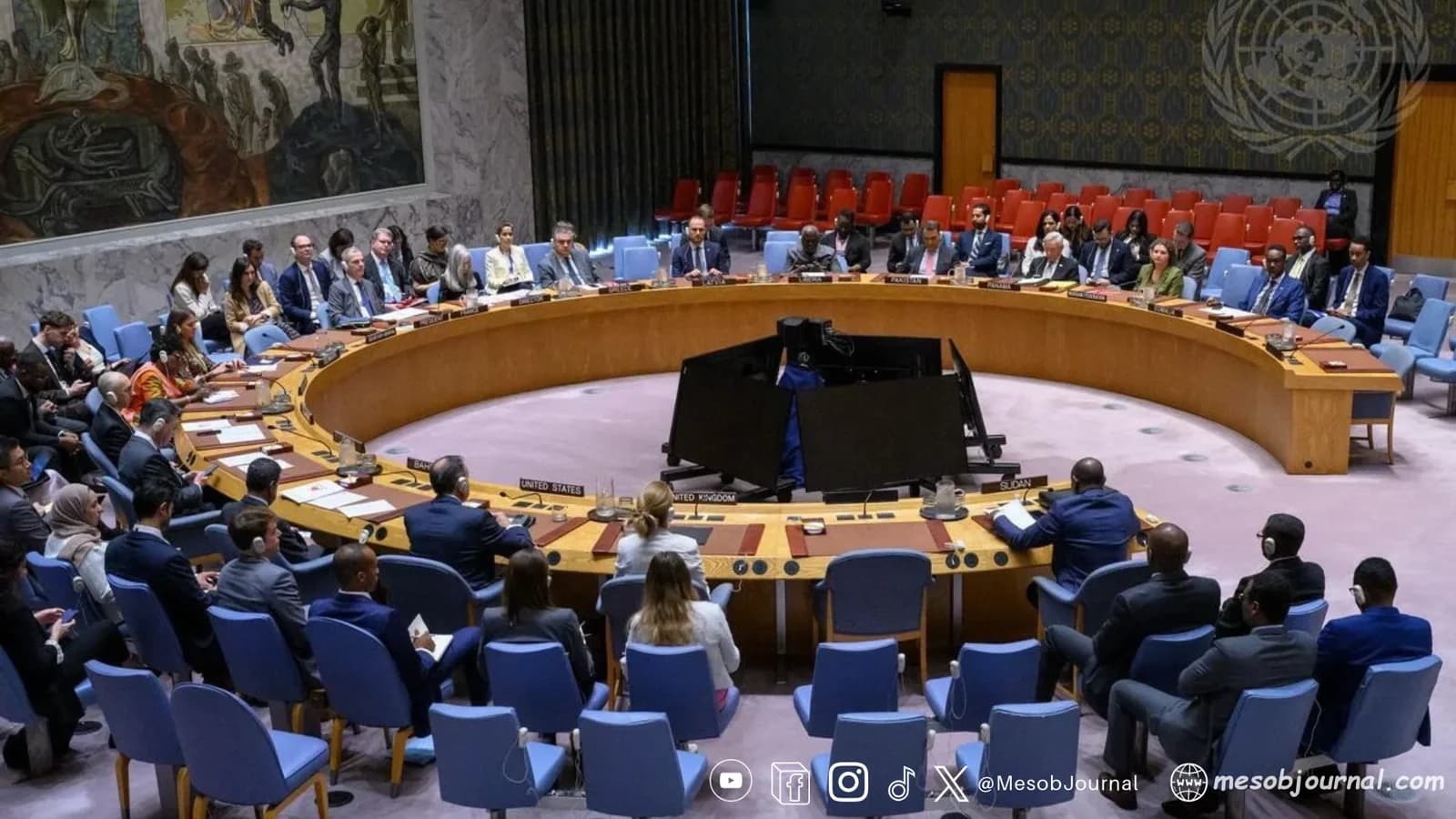
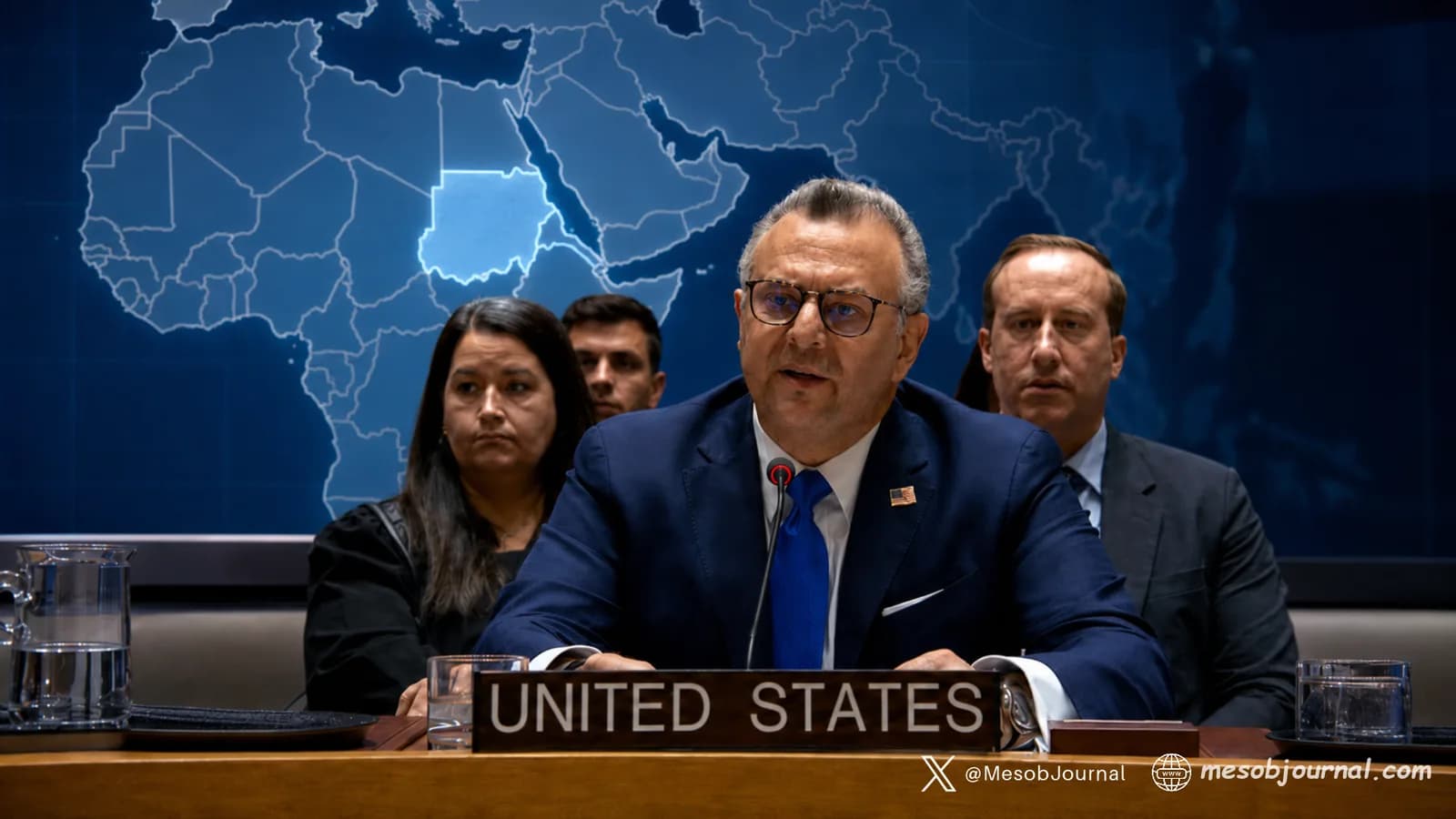
On August 24, senior adviser to the U.S. president for Arab and African affairs Massad Boulos told the Security Council that Washington had proposed extending the Darfur arms embargo across Sudan, encompassing SAF as well as the RSF. The proposal also covers drones and related technology and strengthens monitoring arrangements.
Boulos presented the initiative as even-handed. Sudan's representative, Al-Harith Idriss, objected to equating the national army with the RSF and called for enforcement against the external networks supplying the rebellion. He identified the central failure: Washington is proposing wider restrictions on the country under attack without demonstrating that it will close the foreign supply system sustaining that attack.
Governments cannot disappear behind companies
The RSF's foreign support cannot be reduced to a collection of commercial transactions for which no government is responsible.
The UN Panel of Experts' January 2024 report assessed the allegations of weapons deliveries through Amdjarass in Chad as credible. Amnesty International then identified advanced Chinese weapons used by the RSF and concluded that they were almost certainly re-exported by the UAE. The record connects a supply corridor to the weapons reaching the battlefield.
Human Rights Watch's May investigation goes further into the state connection. It links the deployment of Colombian fighters alongside the RSF to Global Security Services Group, an Abu Dhabi security company with close government ties. It documents contractors' use of UAE state facilities, including the Ghiyathi military base. HRW also obtained government licensing documents for GSSG and explains that Emirati private-security law requires security approval and coordination with the authorities. Its assessment is that the deployment appears to be a state-backed operation.
That is evidence of an operation embedded in state-controlled infrastructure. The corporate name on a contract does not make a military base private. Nor does subcontracting erase the responsibility of the authorities controlling access to that base. The UAE denies supporting the RSF; its denial does not explain away the documented use of its facilities.
Washington's response must therefore reach the state relationship. Sanctioning an intermediary while leaving the government behind the infrastructure politically insulated is an inadequate answer to a state-enabled war.
Ethiopia is part of the war
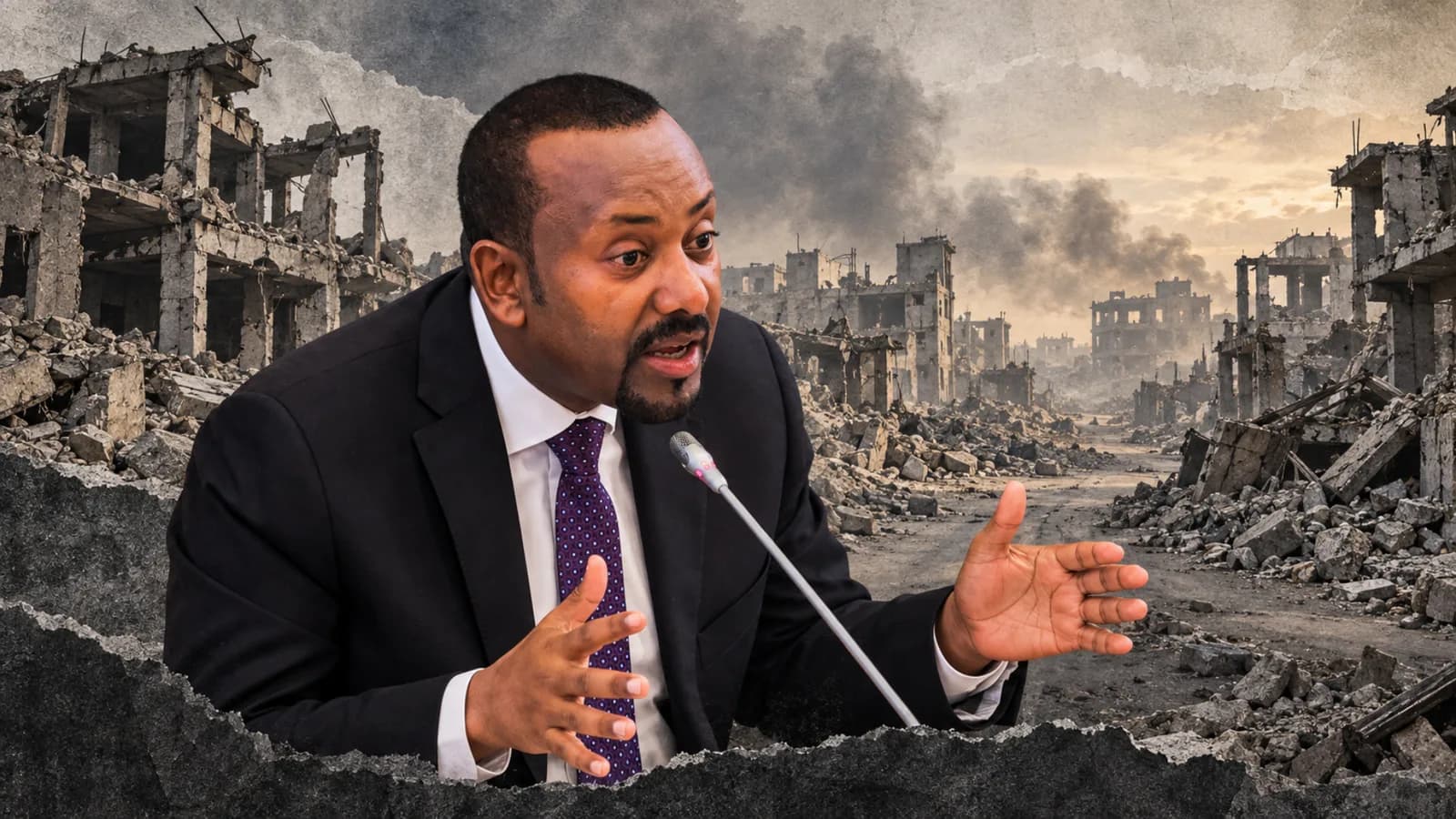
The evidence warrants treating the Ethiopian government's role as participation in the war on the RSF's side, not as the conduct of a detached neighbour.
Yale's Humanitarian Research Lab reported in April, with high confidence, activity consistent with military assistance to the RSF at the Ethiopian National Defense Forces base in Asosa. Its June follow-up documented continued vehicle movements and modifications during March–May, including paint changes matching RSF vehicles on the Blue Nile front. The report concludes that the activity is consistent with arming and equipping the RSF.
SAF has also publicly identified Ethiopia and the UAE as participants in attacks on Sudan. In May, Sudanese officials accused both governments of involvement in the Khartoum airport drone attack. Sudan's assessment deserves to be taken seriously alongside the independent evidence of RSF support at Asosa—not filed away as diplomatic friction between neighbours.
For Sudan, a support base across the frontier is part of the war it must survive. Washington should treat it that way too.
Washington knows and still protects the relationship
Washington's own actions remove any excuse of ignorance. In January 2025, the United States announced its genocide determination and sanctioned Hemedti and a business network that included UAE-based companies. Treasury identified Capital Tap as a source of money and military equipment for the RSF.
Further sanctions in April and June 2026 targeted foreign recruitment networks; June's measures also reached SAF procurement. Washington knows the RSF's supply system and possesses tools to act against it. The question is why that knowledge has not produced comparable consequences for its relationship with Abu Dhabi.
On May 12, 2025, the State Department approved a possible $1.32 billion sale of Chinook helicopters to the UAE. Washington was advancing military cooperation with Abu Dhabi while the RSF's external support network was already under scrutiny.
The White House also celebrated $200 billion in commercial deals and the UAE's previously pledged $1.4 trillion investment framework. These announcements show the weight of the relationship Washington is preserving. Sudanese lives should not become the acceptable cost of keeping that relationship comfortable.
There was an alternative. In June 2026, Senator Chris Van Hollen proposed conditioning arms sales on an end to support for Sudan's belligerents, including a UAE-specific measure. Those amendments failed to advance in the Senate Foreign Relations Committee. The leverage existed; the proposed conditions did not advance.
On August 3, Van Hollen and twenty colleagues again urged Secretary of State Marco Rubio to stop certain arms sales to the UAE and other external backers. Their warning cited the evidence concerning Ethiopia as well as the danger to El Obeid. The demand to act against the supply system was formally before the administration weeks before Boulos's Security Council appearance.
Sanctions against selected suppliers cannot compensate for a policy that leaves their state sponsors' most valuable relationships intact.
Whose border marks the beginning of escalation?
On August 26, Boulos condemned reported strikes inside Chad and warned against the war spreading across Sudan's borders. He also called for an end to external support. But the war's cross-border character did not begin with the reported August 20 strikes. It was already evident in the supply routes sustaining the RSF.
The UN panel's Amdjarass findings date to January 2024. Chad's role in the supply route is therefore central to the argument about regional escalation. Its authorities must answer for how the corridor operates and what they are doing to close it. A border cannot be treated as sacrosanct when Sudan's military crosses it and politically secondary when weapons cross it into Sudan.
Washington's objection to regional escalation will have substance when it imposes consequences on the military supply corridors—not merely when it condemns attacks beyond Sudan's frontier. Otherwise, its diplomacy risks protecting the rear of the RSF's war effort while demanding restraint from the army fighting it.
Sudanese civilians have a right to security on their side of the border. That right cannot be sacrificed to the diplomatic convenience of governments assisting their country's destruction.
Do not constrain Sudan while resupply continues
The August initiative comes amid reported SAF gains in North Kordofan and along the Omdurman–El Obeid route. Those gains matter to the effort to restore national authority and defeat the RSF's armed project. Sudan should not be expected to accept new constraints on its defence while the foreign machinery replenishing its enemy remains operational.
Washington had already endorsed nationwide expansion in the G7 statement of July 14. The objection is to the policy itself: imposing broader restrictions without first demonstrating that the external resupply system will be stopped.
A resolution that places the national army and the RSF under the same restrictions does not erase the difference between defending a state and sustaining a rebellion against it. Nor does equal wording guarantee equal consequences. If SAF faces tighter procurement restrictions while the RSF's patrons continue clandestine deliveries, the militia benefits from the gap between the rule and its enforcement.
Darfur already has an arms embargo. Sophisticated weapons have nevertheless reached the RSF. That failure demands action against the governments and routes defeating the existing restrictions. More monitors will matter only if their findings lead to consequences for those keeping the supply system open.
The same applies to the US-led Quad, which includes the UAE alongside Egypt and Saudi Arabia. Its September 2025 statement says external military support must end. Abu Dhabi's seat at the table must not become protection from responsibility for what happens outside the meeting room. Washington should demand verifiable compliance, not accept diplomatic participation as a substitute for it.
Stand with Sudan's army and people
Support for SAF's defence of Sudan is a position in favour of national survival. The RSF's defeat as an armed project is necessary to end its power to terrorize communities and bargain over Sudan's future through force. Sudan's sovereignty belongs to its people, not to foreign governments financing a militia's claim to rule them.
That support has a concrete purpose: protection for civilians, humanitarian access, the recovery of towns and institutions, and a national future determined by Sudanese people. SAF's responsibility is to serve that purpose. No foreign-backed paramilitary authority offers a substitute for a functioning Sudanese state accountable to its citizens.
Washington's conduct amounts to enabling the RSF when it preserves the relationships that sustain the militia while extending pressure on Sudan. Naming an atrocity and sanctioning selected intermediaries do not discharge responsibility when the state-backed supply system remains the central problem. American seriousness must be measured by whether that system is dismantled.
The administration should condition relevant military cooperation and arms sales to the UAE on a verified end to RSF support. It should demand the shutdown of support operations at Asosa and the supply routes through Chad, and pursue the responsible officials alongside their commercial intermediaries. Sudan needs humanitarian relief and support for restoring its national institutions—not another diplomatic arrangement that leaves the RSF's patrons protected.
Until Washington makes those patrons pay a meaningful price, its claim to stand with the Sudanese people will ring hollow. Sudan needs the war's supply system broken, not its sponsors reassured.