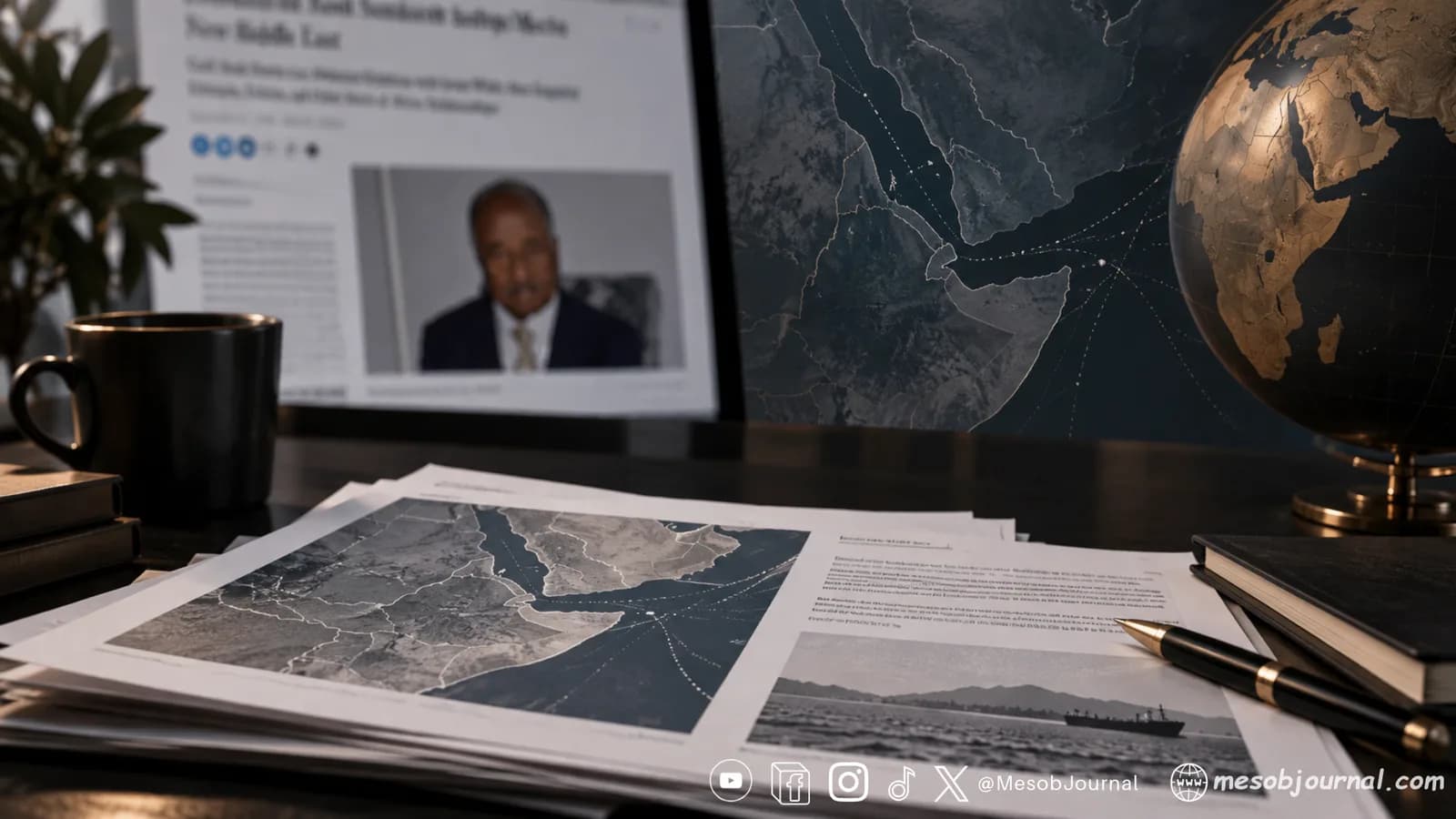

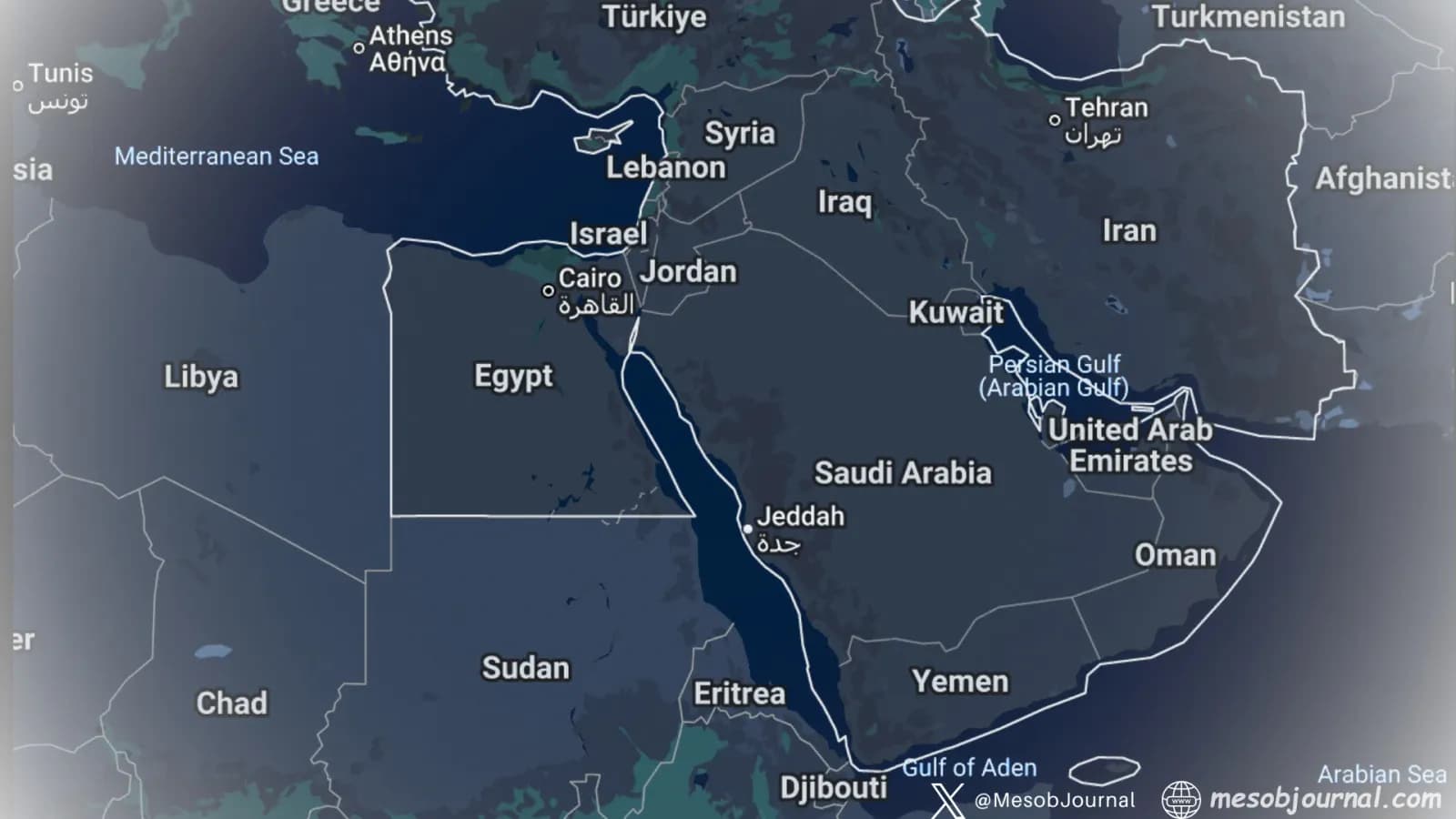
An opinion piece titled, "Middle East's future may be decided in the Horn of Africa : The Red Sea is becoming the centre of global power." was published on #JerusalemPost on 15 March by Dr Shmuel Legesse . The author is an international educator, community activist, a diplomacy expert who also served in New York City as an Investigation Officer for the Supreme and Family Court, the Israeli Police and represented the Israeli Knesset in international public affairs. In my opinion, the article carried a title that is absolutely correct and I am writing to respond to it.
The war that began in Gaza in October 2023 has never stayed in Gaza but transformed the region. It has become a regional conflagration and has spread to the Red Sea, to the Strait of Bab el-Mandeb, to the shipping lanes that carry fifteen percent of global trade. Its physical and strategic encroachment has altered the geopolitics of the region and every state along its shores is feeling the pressure. Dr Legesse's article names this reality in its title. The analysis that follows, however, is built on foundations that cannot bear the weight. Its vision is too narrow to capture what the title promises. What looks like analysis is a carefully constructed narrative that serves interests far removed from the people and states it claims to describe.
The author opens with a childhood memory: elders in his Ethiopian village speaking of the Red Sea as a gateway, traders and pilgrims crossing for centuries, linking Africa with the Middle East, the Indian Ocean trade and beyond. It is a beautiful and evocative image that was carefully crafted . Whether the memory is real or embellished, its purpose is clear: to establish the author's authority as someone with deep roots and access to inherited wisdom, creating emotional ground for what follows in the article.
From this ground, the article makes a historical claim: "For centuries, Ethiopia maintained access to the Red Sea and served as one of Africa's oldest continuous states." It links this to the Ethiopian Orthodox Tewahedo Church, to Ethiopian Jewish communities, to a biblical identity stretching back 2,500 years. This is not history. As clearly explained by Taddesse Tamrat, in his 1972 book, "Church and State in Ethiopia, 1270-1527," this is part of the Abyssinian mythology deployed by rulers over centuries to claim descent from the Axumite civilization and legitimize their rule . No serious historian calls the Roman Empire "Italian civilization" simply because its capital was on the Italian peninsula. The category error is obvious. Yet when Legesse calls Axumite civilization "Ethiopian," reaching across two millennia to claim Eritrean territory as historically Ethiopian, the error goes unnoticed because the mythology has been repeated so often it now passes as fact. The article treats this myth as settled, never acknowledging that it is contested and never asking whose interests it serves.
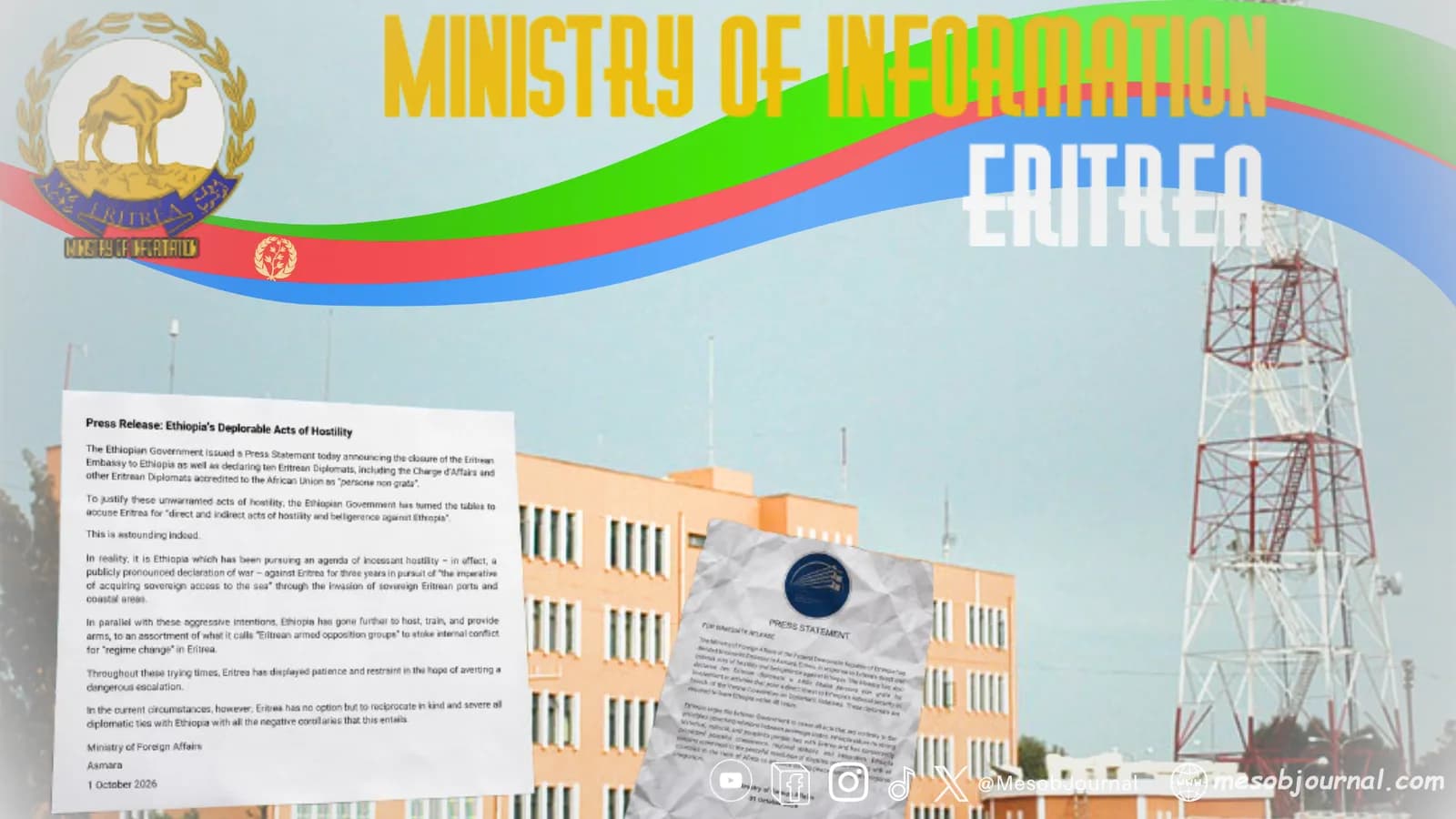
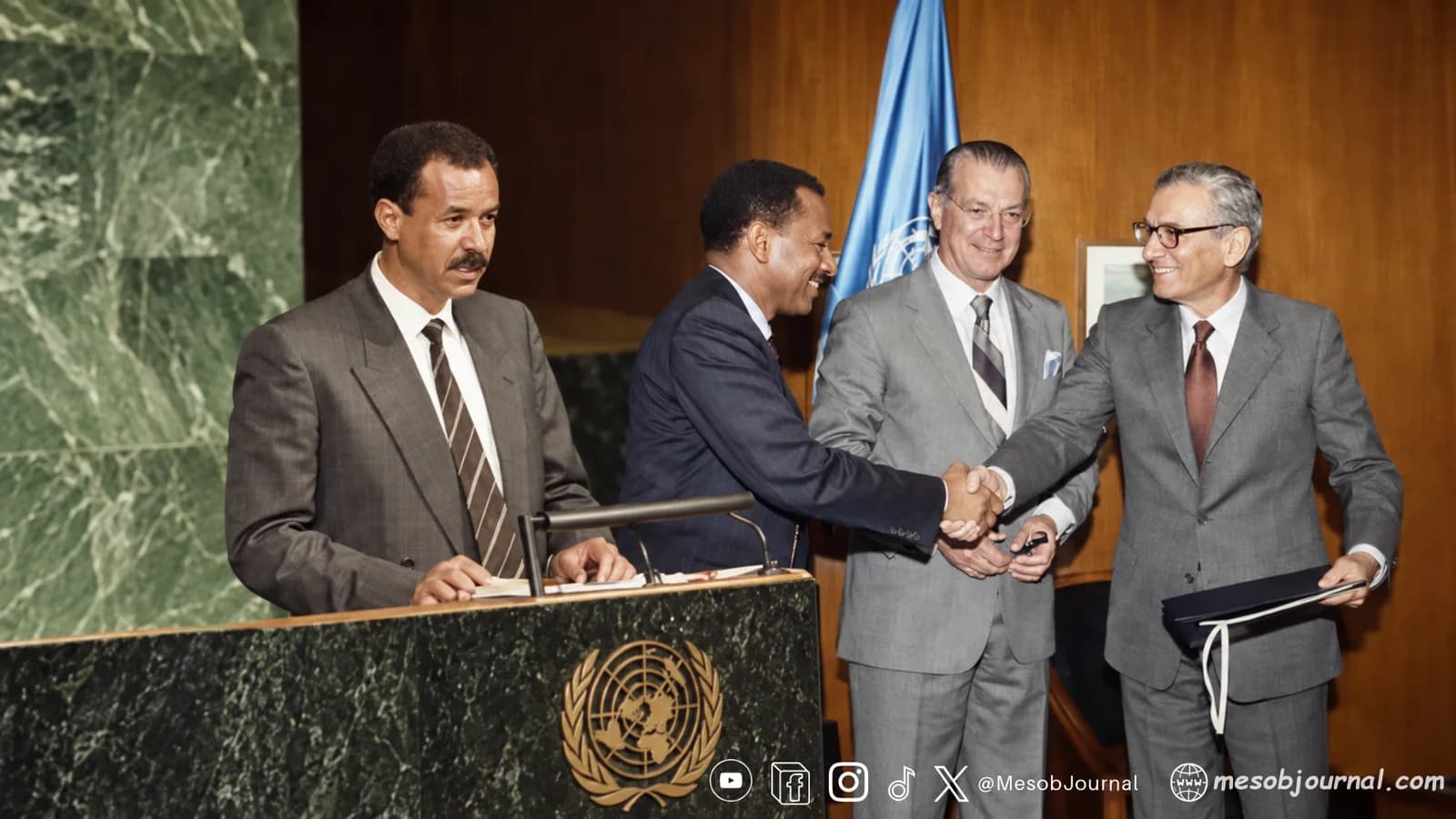
The article then describes Eritrea's independence in 1993 as breaking away and seceding "from" Ethiopia, leaving it "landlocked without direct access to the Red Sea." The language is careful: separation, leaving, break away without access and subtly frames Ethiopia as the aggrieved party, the victim of geography and history. It never mentions annexation. It never mentions occupation. It never mentions a liberation struggle. It never mentions that Ethiopia's loss of access was the direct consequence of its own imperial project collapsing. Looking at the real history, Eritrea was never part of Ethiopia. The 1952 federal arrangement by the UN was an imposition on Eritreans and was not a real federation. The 1962 forceful annexation and abolition of the Eritrean Government by the Ethiopian Emperor was not a union. It was an illegal occupation of Eritrea. The thirty-year war that followed was a liberation struggle, not a civil war, and the 1993 referendum was not secession but the
reclaiming of sovereignty through an exercise of right to self-determination enshrined in international law. The article's treatment of Eritrea continues in this vein. Eritrea is described as having "remained under a single political system and a single leader for more than three decades, becoming one of the most tightly controlled political environments in the world." This is presented as a matter of fact. But the language carries judgment. It isolates Eritrea as abnormal, as deviant, as requiring explanation and intervention. The article never asks a more fundamental question: how does a small state, subjected to decades of hostility, invasion, sanctions, and isolation from its much larger neighbour and global powers, organize itself for survival? What functions do such descriptions serve, and whose interests do they advance? By accepting the mainstream vocabulary of condemnation, the article forecloses any real understanding of Eritrea's agency and strategic calculus.
The article's focus on Ethiopia is extensive and sympathetic. It reaches into ancient history, emphasizes religious identity, mourns the loss of sea access. It describes Ethiopia's current internal tensions but always within a frame that suggests a great civilization in decline, threatened by modern politics and external enemies. The author's position (Ethiopian-born, serving Israeli and American institutions, and writing for the Jerusalem Post) now becomes legible. This is not a neutral observer sharing cultural memory. This is someone positioned to deploy a particular narrative for strategic purposes, to present Ethiopia as a natural ally, a fellow ancient civilization, a victim of forces that Israel also faces.
With these foundations in place, the article builds its analysis of the present crisis. It correctly notes that Ansar Allah (commonly referred to as Houthi) attacks on Red Sea shipping have disrupted global trade while also targeting the Israeli marine supply chain. The Ansar Allah militants are real, their capabilities are significant, and their campaign has fundamentally altered the strategic geography of the region. These observations are accurate. But the article treats the Ansar Allah as the central problem, the primary threat around which all else revolves. This is where its narrow vision most clearly fails. The Ansar Allah militants are not the cause of the wider war. They are one front in a much larger conflict whose centre of gravity lies elsewhere, and whose drivers are not in Sanaa but in Washington, Tel Aviv, and Tehran.
The article's frame also determines what else it cannot see. Iran is named repeatedly as the source of threat. The Gulf Arab states, whose military bases, port operations, and proxy involvements across the Horn constitute the most consequential external pr esence in the region, are barely mentioned. Egypt, the Red Sea's most powerful African state, whose Suez Canal revenues have been devastated by the shipping crisis and whose dispute with Ethiopia over the Nile dam is the region's most consequential interstate conflict, is not mentioned at all. Eritrea is described in the language of international conspiracy that has justified its isolation for decades. Israel's own role in the region, including its December 2025 recognition of Somaliland and its long histor y of collaboration with Ethiopia against Eritrea, is entirely absent. These omissions are not accidents. They are choices. The article constructs a world in which the only threats that matter are those that fit a particular strategic frame, and the only actors that matter are those that align with that frame, but the territories it leaves out are most of what matters.
The title remains correct. The author simply cannot see why, because his vision is too narrow to encompass the forces actually at work. The Middle East's future and the Horn of Africa's future are now the same question. The war that began in Gaza has becom e a Red Sea war. The Red Sea war is becoming a Horn of Africa war. Not through slow ripple effects but through direct encroachment: shipping under attack, alliances being redrawn, new fronts potentially opening, old conflicts being fed by new rivalries.
The June 2025 12-day war on Iran that followed the Israeli war on Gaza has now become a full -blown regional conflict that has engulfed the Middle East . Following that, on 28 February 2026, the United States and Israel launched massive operations against Iran, assassinating the Iranian leader Ali Khamenei and dozens of senior officials. The Iranian leader was also the Supreme Leader of the Shiite Muslims, and this could trigger a longer- term war among religions. Iran responded with missile and drone barrages across the Gulf countries hosting US and NATO bases (UAE, Saudi Arabia, Qatar, Kuwait, Bahrain, Jordan, and Iraq . This also included Cyprus and Turkey). The Strait of Hormuz, through which one-fifth of the world's oil passes, has seen shipping traffic drop by at least eighty percent and none of the other states are able to move their oil tankers through the strait unless their cargo is paid for in Chinese Yuan. The war is no longer somewhere else. It is coming to the Horn. Not as ripple effects, not as economic and humanitarian spillover, but as a physical relocation of the conflict's centre of gravity.
Sudan's war, already catastrophic, has taken on proxy dimensions that link directly to Middle East rivalries importing their competition into an already brutal conflict . Eritrea watches from its position, its leadership making calculations based on decades of experience with hostility from neighbours and great powers. It remains a Red Sea state with a long coastline and a strategic location. Its choices will matter as the war draws nearer. Egypt has begun aligning with Somalia offering military support and deepening its engagement in Horn affairs. Ethiopia's push for port control on the Red Sea, always a source of regional tension, has taken on new urgency with support from UAE. Its unsettled internal conflict could see proliferation of non-state proxy militias that could further destabilize it and push it towards disintegration . A sudden high volume of returnees from Gulf states whose employment can no longer be sustained would also have profound demographic and economic impact since Ethiopia has the largest domestic worker population in the Middle East. Kenya, attaining new status as a top US/NATO ally and pushing for a larger military base presence on its territory, could have profound impact when the wider Middle East conflict expands to the region. Somalia, with the January 2024 Ethiopia-Somaliland MOU offering Ethiopian recognition in exchange for naval base control, has redefined its response to the heightened challenge against its sovereignty. Its fierce reaction has ignited rivalry and shifting alliances. A defence pact with Turkey , inclusion of Egypt in the Somalia peacekeeping troops and military support, the subsequent Israeli recognition of Somaliland statehood, and the expulsion of UAE from its territory are all signs of the region's integration into the Middle East conflict, reshaping alliances, creating new flashpoints, and becoming a battleground for additional forces not yet directly involved in the big war . South Sudan, on the verge of state collapse and heading into bloody internal war sponsored by proxy regional states exploiting its natural resources, adds to the mosaic of the regional instability.
The truth is larger and more complex. The war is coming to the Horn, and the Horn will respond not as a passive arena for external competition but as a region with its own histories, its own grievances, its own agency. Ethiopia will pursue its ambitions. E ritrea will defend its sovereignty. Somalia will fight for its territory. Sudan will continue to burn. Egypt will protect its interests. Gulf states will pursue their rivalries. And all of this will happen under the shadow of a conflict that began elsewhere but now lives here. This is not a distant echo of the Middle East conflict. This is the conflict reshaping the strategic landscape of the Horn directly. Legesse's article cannot tell this story properly because it cannot see the Horn clearly. It sees Ethiopia through a myth of ancient maritime glory. It sees Eritrea through a vocabulary of isolation and abnormality. It sees Iran as the threat and misses the Gulf states entirely. It does not see Egypt at all. It does not see Israel's own role in the region. It does not see the American retreat due to the breakup of its alliances, the Saudi dilemma, the basing competition, the proxy networks, the diplomatic war over recognition. It sees the Ansar Allah as the central problem when they are only one front in a much larger war whose drivers are elsewhere. Its map is too small for the territory it claims to describe.
The question the Jerusalem Post article cannot answer because its frame is too narrow is the question that now matters most: where do the Americans and Israelis retreat when the Gulf becomes untenable, and what does that retreat mean for the Horn?
The answer is already visible. The Ansar Allah attacks on Red Sea shipping, which the article treats as the central crisis, began as a solidarity action with Gaza and not as driving events. They are responding to them. The driver is the US-Israeli decision to escalate against Iran, and the consequence is that the entire region is now in flames and potentially further drive thei r interests through proxies in the Horn region, mainly through Ethiopia and Somaliland as well as some non -state militias . According to US Africa Command, the US is upgrading its positions in Djibouti and Kenya with visible urgency. A $1.6 million firing range has just opened at Chabelley Airfield inland from Djibouti City, tripling local training capacity and enabling troops to develop desert warfare skills without off -base movements that expose them to risk . A $71 million runway expansion is underway at Lamu Island's Manda Bay in Kenya and living quarters at Camp Simba on mainland Lamu are being upgraded to accommodate larger troop numbers . The language from US Africa Command is telling: these investments "harden force protection" and "anchor Chabelley as a credible, self -sustaining operational node" (US Africa Command, "US AFRICOM Statement on Force Posture Adjustments," March 3, 2026). This is not maintenance. This is preparation for permanence.
Djibouti is complicated. It walks a diplomatic tightrope, having refused US requests to conduct operations against the Ansar Allah from Camp Lemonnier in November 2023 indicating the Ansar Allah attacks were justified because they supported oppressed Palestinians. Djibouti also hosts bases from China, France, Japan,
and Italy in close proximity. An Iranian strike on the US base could risk hitting other foreign installations, and it cannot afford to be seen as a launching pad for war in the Middle East.
This is where Israel's December 2025 recognition of Somaliland enters the picture as the strategic move that fundamentally reshapes the region. On December 26, 2025, Israel became the first UN member state to recognize the breakaway region, a decision it openly acknowledged was the result of years of clandestine intelligence cooperation designed to establish Israel's alternative access to the Red Sea. The logic is now clear: Israel needs to reduce its dependence on any single access point and establish operational platforms capable of intelligence gathering, logistical coordination, and maritime surveillance. Somaliland, with its ideal location overlooking the entrance to the Bab el -Mandeb strait and its desperate need for diplomatic recognition, became the answer. The Ansar Allah immediately warned that any Israeli presence in Somaliland would be considered a military target . This warning is significant, but it is a reaction, not a cause. The cause is Israel's strategic need for new basing arrangements as its position in the Gulf becomes more precarious and could jeopardise the tenets of the Abraham Accord.
Saudi Arabia and other Gulf states have refrained from retaliating against Iran despite being pounded daily by hundreds of drones and missiles, despite attacks on their oil infrastructure, despite strikes on US embassies across the region, and despite the call for evacuation of all western citizens from the region . Places like UAE have received such daily missile and drone attacks that they have started to move their money and gold reserves out to various countries in Asia and Europe. Big corporate businesses and investments are also leaving the Gulf states in large numbers, and tourists are no longer traveling there. This signals a significant decline in their economies and wealth accumulation. Soon the exodus of the working force from all over the Middle East will begin, triggering one of the biggest human catastrophes in history. All Gulf Cooperation Council members have refused to join the fight against Iran despite US threats that they could lose support and arms deals. The Gulf states are caught between a crumbling American alliance that demands their participation in a war they did not choose and an Iranian neighbour that can inflict unlimited pain on their infrastructure and economies. Their position is becoming untenable. When the Americans and Western businesses retreat from the Middle East, as they are already doing, where will they go? The Horn of Africa is the obvious destination.
The Horn has the coastline, the chokepoints, the weak states, the local grievances that make it readily available for manipulation. It has Djibouti with its existing bases, though Djibouti's neutrality policy complicates full reliance. It has Somaliland, desperate for recognition and willing to offer port access and military basing rights in exchange. The Trump administration has signalled openness to following Israel's recognition, as officials in Hargeisa openly market strategic port access and potential military basing rights to Washington in exchange for recognition and i t has Ethiopia, a willing proxy partner in the region . Obvious signs by Ethiopia include condemning Iran's attacks on Kuwait and expressing solidarity with Gulf states while saying nothing about the US-Israeli role in starting the war or its misplaced obligation as a BRICS member. Ethiopia's millions of citizens working in Gulf countries, the remittances that are a lifeline for its economy, its own ambition for sea access, and its long history of collaboration with Israel against Eritrea all align it with the emerging Western posture.
The question of whether Ethiopia might be used by Israel to pressure Eritrea in order to secure Red Sea access and drive Houthi resistance further underground is not theoretical. Israel has a long history of collaboration with Ethiopia, including participation in operations that depopulated Eritrea of its youth through human trafficking networks and the open -door policies of Western countries toward openly accepting Eritrean migrants for settlement. Israel now supports Ethiopia's port ambitions. Eritrea, with its strategic coastline and its refusal to align with external interests and strategic designs, remains a target and is vulnerable to a coalition that needs firm Red Sea access points.
This would open new wounds with Saudi Arabia, whose rising influence on the Red Sea would be curtailed by the very Western powers being pushed out of the Gulf. Saudi Arabia has its own Red Sea strategy, its own investments in Sudanese and Eritrean ports, its own mediation efforts between Sudanese factions and between Ethiopia and Eritrea, and its own role in the Red Sea Council. If the Americans and Israelis relocate their forward bases to the Horn, if they establish a permanent presence in Somaliland and Djibouti, if they use Ethiopia as a proxy to pressure Eritrea, Saudi influence on the Red Sea is directly challenged. And this at a moment when Saudi Arabia is already feeling betrayed by the American missile defence systems that were moved from its bases t o protect Israel, leaving the kingdom exposed to Iranian retaliation as well as pressures from the Abraham Accords designed to weaken it using UAE in Yemen. The Saudis have not been vocal about this
betrayal. But the silence is itself a message. They cannot afford to break with Washington entirely, but they also cannot afford to join a war that would devastate their infrastructure, instigate partisan population division, and weaken their position in Red Sea geopolitics. They are hedging, waiting to see who emerges stronger. The price they may pay is the gradual relocation of American and Israeli power to the Horn, where new basing arrangements will serve the same strategic purposes without requiring Saudi participation or consent.
The many bases in Djibouti complicate this equation. China has a base there. France, Japan, Italy all have bases. They exist in close proximity, a fact that complicates any Iranian strike but also complicates any US escalation. If the US becomes more dependent on Djibouti, it must navigate not only Djibouti's neutrality policy but also the presence of other powers with their own interests. China is not going to welcome a major US military buildup on its doorstep . The competition that was already present will intensify. Moreover, the reluctance of other Western militaries to join the war on Iran could cause the US to relocate its forward base from Djibouti to another location in the Horn or opt for marine-based floating operational command to engage Iran from ships in the Red Sea and Gulf of Aden rather than using land bases in Djibouti for operations. Other options could be found in Somalia and Kenya and the Yemeni island of Socotra. Somaliland's emergence as an alternative could also be considered as another solution. It offers a location nearly as strategic as Djibouti, with none of the diplomatic complications of multiple foreign bases and a government desperate enough to offer terms the US could not demand elsewhere. But the cost is high. More than one hundred countries publicly condemned Israel's recognition of Somaliland at the UN General Assembly. The African Union has been firm on Somaliland remains an integral part of Somalia . The Arab League described Israel's action as a violation of international law . The Gulf Cooperation Council called it a grave infringement on Somalia's unity . Even the US declined to follow Israel's lead immediately.
The Ansar Allah have been unusually restrained since the war on Iran. After months of airstrikes in response to their Red Sea campaign, they agreed to a ceasefire with the US , which could explain their caution. But their leadership has warned they could still get involved. A Houthi military official has now threatened to close the Bab el-Mandeb Strait to ships bound for Israeli ports, warning that even merchant vessels and war ships could be intercepted. If they follow through, the Red Sea becomes a full-scale war zone, and every state on its African coast is directly in the line of fire. UN intelligence assessments are also showing that the Ansar Allah have developed ties with al-Shabaab insurgents in Somalia, centred on intelligence and weapons transfers including drone technology. The Axis of Resistance now has a foothold in the Horn that does not depend on state sponsorship. Al-Shabaab, already a devastating force in Somalia, gains advanced capabilities from its Ansar Allah connection and covert US support . The war on Iran thus becomes a war on multiple Horn fronts: the conventional basing competition in Djibouti and Somaliland, the proxy warfare through aligned insurgent groups, the economic warfare through Red Sea shipping disruption.
Somalia's response has been to deepen its partnership with Turkey, which has positioned itself as a protector of Somali coasts, and to accept Egyptian military support for the first time in four decades. This has also become an opportunity for Egypt to pressure Ethiopia by aligning with Eritrea's anti -regional hegemon initiative that also includes Somalia against the Ethiopia -Somaliland deal. Turkey, Egypt, and Israel now have competing interests in Somali spaces, all of them exacerbated by the war's pressures.
The final question now is not whether the Horn will be drawn into this conflict. It is whether the Horn's states can navigate this new reality with the agency and wisdom that outsiders have never credited them with possessing, while we also question whethe r the US's own alliance will survive the challenge from Iran and whether US internal cohesion will hold. The aftermath of war of this scale always brings major internal change, shifting alliances, betrayal of loyalty, decline of influence, and massive global economic disruptions that could reshape economies and require complete trade and supply chain systems overhaul. The devastating impact of this war on global economy and growth is yet to be calculated. In this case it could also herald the end of an empire.
The Horn of Africa now faces the most dangerous moment since the Cold War. The war is arriving on its shores, and it will arrive not as a distant echo but as a physical presence: missiles over its waters, great powers building bases on its land, rivalries imported into its conflicts, and its own states forced to choose sides. Legesse's article, for all its promise, cannot see any of this because it is too busy constructing a myth. Its title remains correct. The Middle East's future will be decided in the Ho rn. But not for the reasons he imagines, and not with the actors he names. The real story is larger, more complex, and far more dangerous than his frame can hold.