
The preeminent author, historian and tegadalay Alemseged Tesfai brilliantly detailed the “consistently suicidal pursuit of successive Ethiopian regimes to own Eritrea or parts thereof” in his piece titled “March of Folly Re-enacted: A Personal View“. It was published 27 years ago, as part of the 1999 special issue of the Eritrean Studies Review, but it still holds true today.
In reference to the TPLF’s invasion of Eritrea, he cogently characterized what Ethiopians should have already realized then by noting that “these brave-hearts seem hell bent on the pursuit of a policy manifestly contrary to Ethiopia’s national self-interest.” Alas, it seems the current Ethiopian regime as well as many elites and intellectuals have fallen into the same trap.
I neither have the skill nor the knowledge to emulate Alemseged’s style and substance of the subject matter. But his piece left a huge impression in me that I’m forced to write my thoughts in my own way, applying what I learned during my elementary school days.
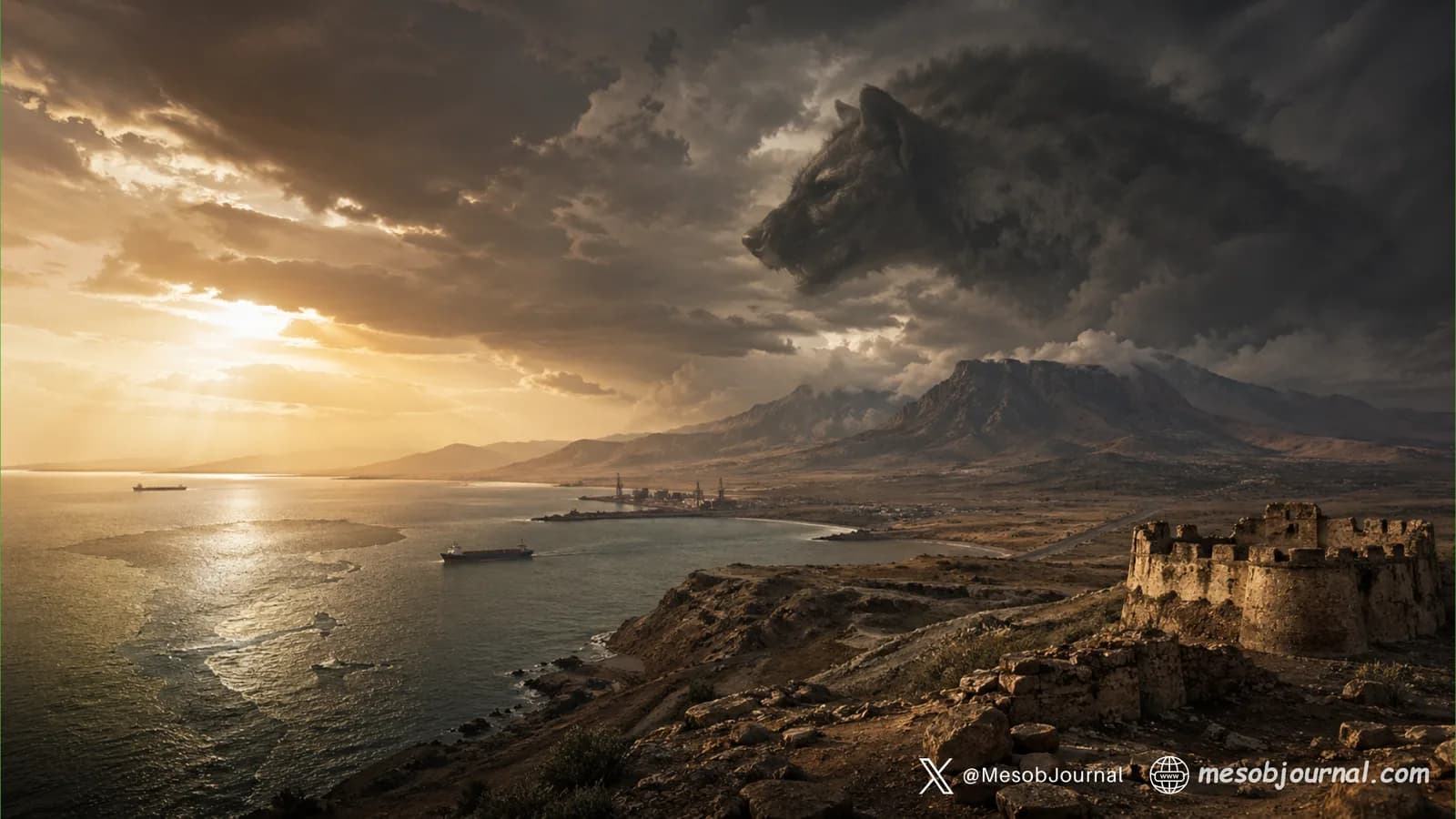
The Abiy regime’s incessant schemes and propagation for sovereign sea access reminded me of the hyena fable I learned (I think) in 3rd grade in the early 1990s. It was about a greedy hyena with meat in his mouth walking past a lake. Mistaking his shadow in the water for even more meat, the hyena let go of the meat already in his mouth and jumped into the lake to snatch the nonexistent meat.
Similar to this story, successive Ethiopian regimes, with elites and so-called intellectuals in tow, have squandered Ethiopia’s immense human capital and bountiful natural resources to pursue expansionist pipe dreams. This article briefly rehashes a few of the many missed opportunities and misplaced priorities that align with the fabled hyena life lesson.
It is my view that this story also applies to the powerful countries, especially in the west, that have consistently supported, enabled or tolerated Ethiopia’s toxic policies. But I focus on the Ethiopian side for this piece. It is also, of course, a sad illustration of how the Ethiopian people allow their leaders to continuously make the same mistake over and over and over.
It is incumbent on them to finally realize that policies reflecting this proverbial hyena are bound to fail and should be strongly rejected as being against Ethiopian national interest. Instead, they should push their elites to focus on exploiting the huge domestic wealth that evidently can only be harnessed in congruence with peaceful coexistence with their neighbors.
In using the hyena story, it is not meant to relate to Abiy’s infamous use of the word. It’s used to only illustrate the dire consequences of endless greed, for the region at large but especially for both Ethiopia and Eritrea.
In the case of Eritrea, for centuries, successive leaders of Ethiopia or Abyssinia have executed devastating campaigns of plunder, destruction and killings. These violent campaigns hardened the Eritreans’ resolve and played a role in unifying the different tribes to overcome a much larger and endowed neighbor.
But it would’ve been beneficial for both peoples if the Ethiopian elites had accepted peaceful coexistence, if they had chosen complementarity rather than vying to snatch what does not belong to them, if they had relied on documented history rather than creating fictional narratives and history to advance consistently “suicidal policies”.
Throw Federation Out and Jump Into the Lake of Annexation
A deeply flawed US-sponsored federation through a sham UN General Assembly resolution granted Ethiopia full control of Eritrean ports in 1952. The vaguely worded Federal Act awarded the Ethiopian government authority over defense, foreign affairs, communications and maritime transportation (i.e. ports). Through subterfuge and cooperation of the British and the UN commissioner, it was even allowed to rob Eritrea of the critical port revenues.
While the majority of the Eritrean population had wanted independence, once the unjust Federal resolution was passed, their leadership magnanimously chose to accept defeat and chart out a path forward on the basis of the federal arrangement. Not just the unionist leadership, but even those that strongly campaigned for independence!
But how did the emperor handle this undeserved award? Was he satisfied with owning Eritrean ports? Of course not! The federal arrangement was too much of a disrespect to the feudalistic Haile Selassie. As Alemseged put it, “kings have subjects, not an autonomous unit with another government and parliament”.
Haile Selassie, after all, even had Archbishops kissing his ring whereas the role is typically reversed in other countries (“Ethiopia at Bay: A Personal Account of the Haile Selassie Years”, John Spencer, p 125). Hence, the emperor went on to systematically dismantle the federal arrangement - eventually he fully annexed Eritrea ten years later.
Before annexation, the imperial government had replaced the Eritrean flag and made Amharic the official language of Eritrea, including in schools. That’s the proverbial hyena right there! And it logically led to the 30-year-long, arduous armed struggle that ultimately concluded with Eritrea’s independence!
Friendship Means Free Port Use, Not Ownership
The Eritrea-Ethiopia Agreement of Friendship and Cooperation of July 1993 is another case that illustrates this proverbial hyena afflicting Ethiopian regimes. The agreement gave Ethiopia free use of the Eritrean ports while it also had a long-term aim of moving towards high-level economic integration and customs harmonization. With trust and confidence of each other’s intentions, the sky was the limit in terms of the future configuration of relations.
It is important to highlight here what was thrown away by describing in detail the portion of the agreement related to ports. The Eritrean Center for Strategic Studies explained port benefits of the deal by noting that “Ethiopia enjoyed full and unrestricted use of the port of Assab. Assab has been, by agreement and practice, its free port. The Ethiopian Shipping Lines handled its own cargo, paying the Eritrean authorities in Birr, for consignment fees it received in foreign currency. At the same time, the agreements allowed Ethiopia the use of the port of Massawa for its northern regions at negligible fees and payments – a transit charge of only 1.5%. In later years, the Ethiopians were asking that this charge be reduced further. In both of these port cities, but especially in Assab, the rate of employment for Ethiopians was high. In Assab, Ethiopia was privileged to open four schools operating under its own curriculum.”
What kind of lunatic would throw away such a sweetheart deal? I would argue it is only someone that is afflicted with self-sabotaging greed of the fabled hyena!
So, it would appear, the greedy fabled hyena defeated common sense and long-term self-interest of the people! The TPLF-led Ethiopian ruling party was not satisfied with this sweet deal as it was consumed by greed and appeasement of expansionist forces.
This is perfectly captured in Alemseged quoting Radio Weyane as saying “Eritrea has three million people and two ports. We are 60 million people with no port, that is unfair!” Sadly, I personally heard this exact argument from several Ethiopians attending school with me at the time.
The source of this idea was not a mystery as Alemseged also quotes the then Ethiopian deputy foreign minister promising to a crowd of Ethiopians in Washington DC “we will give you Assab!” But what caused this hubris? Perhaps they calculated that their superpower allies and large population size would surely overwhelm the Eritreans and result in taking over at least the port of Assab if not Eritrea in its entirety.
But the Eritrean people stood their ground and overcame the 1998-2000 invasion. In the end, the Ethiopian leaders threw out the sweet deal of free ports and got nothing in return for the huge human and capital cost of the misadventure! Worse, when they awoke from their dream, they found themselves having to fork over large sums of hard currency to Djibouti for something they were previously paying a nominal amount of Birr!
The 2018 Joint Declaration of Peace and Cooperation gave reason for hope that the two countries were finally going to overcome past problems and forge a new era of peaceful coexistence and cooperation. There was a high expectation that the two countries would sign a comprehensive agreement, including on the use of ports, that is mutually beneficial.
As time passed, however, there were grumblings of why the agreement was taking so long to finalize. The mystery was dispelled by the infamous October 2023 speech by Abiy Ahmed, in which he—echoing the predecessor suicidal regimes—advanced an unconvincing claim that Ethiopia is entitled to a sovereign coastline. Yet again, it’s that fabled hyena disease!
Dreams of Extraterritoriality
As we all already know, it does not end there. In September 2024, Djibouti generously offered Abiy’s regime the joint operation of its Tadjoura port as a way to ease tensions in the Horn of Africa.
Asked what the response was of the Ethiopian ruling party to their offer, in an interview with Jeune Afrique, President of Djibouti Ismail Omar Guelleh replied that “the Ethiopians sent us a delegation with a proposal that we could not accept: to establish a corridor with extraterritoriality between the Ethiopian border and Tadjourah and to set up a naval base for their navy. This was not what we had agreed upon. Therefore, this matter is now closed”.
This response made it clear that the overarching objective of Ethiopia’s ruling party was to secure a naval base for purposes of projecting hegemonic power whereas commercial use of ports is secondary! Misplaced priorities and missed opportunities caused by greed of the fabled hyena! Of course, the regional powers cheerleading and bankrolling this madness don’t help the matter either!
Conclusion
Ethiopia is endowed with immense natural resources and human capital. However, successive Ethiopian rulers have squandered this rich endowment by pursuing ill-advised, toxic policies that have held the Horn of Africa region hostage for decades. For various reasons and due to external influences, they have continued to focus national policies on taking over neighboring countries’ territory and assets instead of harnessing their domestic assets.
Eritrea has especially been their main target for almost a century, either in pursuit of conquering it or using it as a useful scapegoat for their own failings. In the process, they fit the fabled hyena that throws away his tangible meat in pursuit of the “other” meat that he sees in the lake, incognizant that it is merely his own reflection.
The current ruling party in Ethiopia is arguably the worst of Ethiopian regimes. But what does this say about the Ethiopian people? Why do they tolerate such toxic leadership? Do Ethiopian people bear some responsibility, even a little, for consistently being “fooled” by such devious and evil leaders? I don’t know the answer to that.
Some may not see it as a fair question but Eritrean people are surely tired of having to deal with endless expansionist wars from the south and cannot be blamed for thinking no leader can survive for years without some domestic backing.
They must demand an alternative path from their leaders: one that puts peaceful coexistence and mutual respect of neighbors as one of the sacred principles! For, only and only then can Ethiopia and the region prosper!
As far as this cacophonous PP dance in pursuit of acquiring Eritrean seacoast is concerned, it is fitting to conclude with Alemseged’s final words: “and so their folly marches on – no tunes of glory will be sung for them this time either!”. Indeed, policies derived from greed at the level of the fabled hyena are always doomed to fail!