

Tiffany Haddish’s latest interview with the One54 Africa Podcast became more than a celebrity conversation. It turned into a deeply personal account of identity, grief, fatherhood and the emotional pull of Eritrea.
The Eritrean-American comedian and actress spoke openly about her late father, Tsihaye Reda Haddish, her first journey to Eritrea, her connection to the land, and the powerful feeling of belonging she experiences whenever she returns. The episode was released this week on Apr 22, 2026 and framed as one of Haddish’s most personal conversations, focusing on identity, healing and reconnecting with her Eritrean roots.
Haddish, an Emmy and Grammy-winning performer, is widely known for her breakout role in Girls Trip, her historic appearance hosting Saturday Night Live, and her comedy album Black Mitzvah, which won Best Comedy Album at the 63rd Grammy Awards. But in this interview, the spotlight was not Hollywood. It was family. It was memory. It was Eritrea.
“I wanted my father’s love,” Haddish said, describing the long emotional search that led her back to her father and, through him, back to Eritrea.
She recalled being a small child, lying on her father’s chest while he held her, sang to her, spoke to her in Tigrinya and squeezed her legs. The memory stayed with her for decades. When she finally found him again as an adult, she said she still wanted that same fatherly tenderness.
That moment gave the interview its emotional center. For Haddish, Eritrea is not an abstract heritage label. It is tied to the sound of her father’s voice, the pain of separation, the hunger to know who she is, and the healing that came after reconnecting with the country he came from.
Haddish said her first visit to Eritrea came in early 2018, when she traveled to bury her father. She described the trip as complicated, emotional and deeply personal. She renovated her grandmother’s grave, placed her father with his mother, and began a relationship with the country that has continued since.
She later became a naturalized Eritrean citizen in May 2019 during Eritrea’s Independence Day period, after first visiting the country in 2018 to bury her father and connect with relatives.
What stood out most was how she described returning to Eritrea. Haddish said that each time she goes back, she feels lighter, healthier and more connected. She spoke about stepping off the plane and feeling stress leave her body. She described walking barefoot, eating local food, seeing children smile, and feeling as though her body and spirit were receiving something they had been missing.
Her description was was personal. Eritrea, in her words, felt like renewal.
She also spoke with visible admiration for Eritrean society, describing it as conservative, respectful, wholesome and harmonious. She noted the way Muslims and Christians live alongside one another, saying she did not see religious clashing during her visits. She praised Eritrean women’s elegance, calling their style conservative but beautiful, and spoke warmly about traditional clothing, food and customs.
The conversation also touched on culture through food. The hosts welcomed Haddish with Eritrean items including qolo and honey wine, before later bringing out Eritrean food from a Los Angeles-based chef. Haddish responded with humor, warmth and familiarity, moving easily between comedy and nostalgia.
One of the strongest moments came when Haddish recalled what her father taught her about Eritrea’s long liberation struggle. He told her about war, exile, family loss, sacrifice, and a generation that fought for independence with little more than discipline, conviction and an unbreakable belief in their right to be free.
At first, she admitted, some of those stories sounded almost impossible. But that is the Eritrean story: ordinary people carrying extraordinary history, turning hardship into national dignity, and refusing to disappear. Haddish held onto every word because those stories did more than explain where her father came from. They connected her to a people, a struggle and a homeland.
That captures the whole interview. Haddish’s Eritrean identity came through loss, recovery and listening. It came through a daughter trying to reclaim the parts of herself that distance, migration and family separation had interrupted.
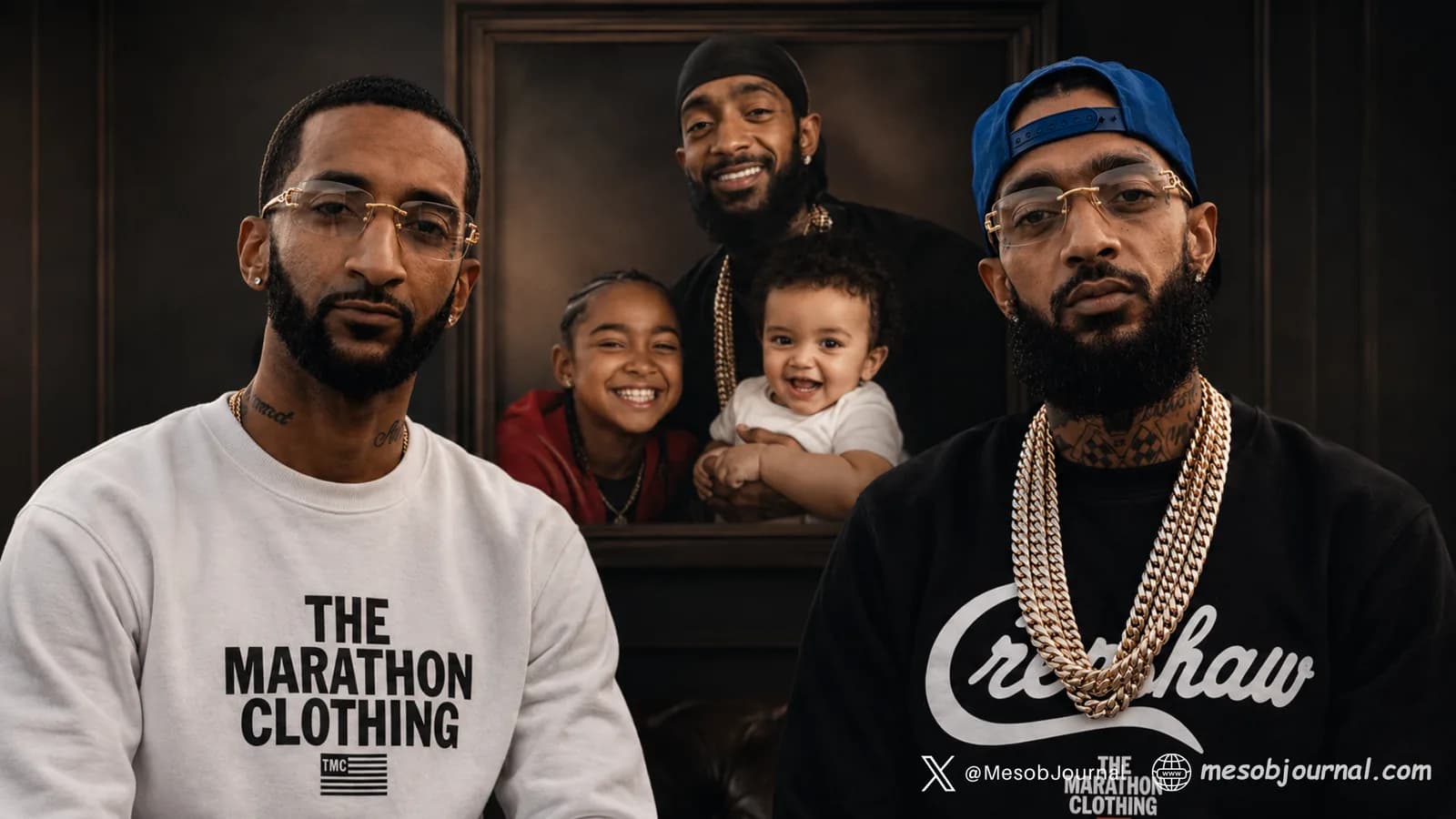
The late Nipsey Hussle also entered the conversation. Haddish said she and Nipsey, whose father was Eritrean, had discussed “kingdom building” and ways to connect Africa and America. She recalled helping connect him with people when he traveled to Eritrea and said she felt proud of him, almost like a big sister. The two had even discussed ideas for a festival in Eritrea before his death.
For Eritreans, that part of the interview carries its own weight. Haddish and Nipsey represented two highly visible children of the Eritrean diaspora, both shaped by Los Angeles, both drawn back to the country of their fathers, and both interested in building cultural bridges across the Black world.
Haddish has honored Eritrea publicly before. At the 2018 Oscars, she wore traditional Eritrean dress in tribute to her late father, saying he had asked her to honor her people if she ever reached that stage. At the 2018 Emmys, she wore a Prabal Gurung gown inspired by the Eritrean flag, again linking one of Hollywood’s biggest platforms to her father’s homeland.
The One54 Africa interview felt different because it was not a red-carpet statement. It was longer, messier, funnier and more human. Haddish cried, joked, remembered, grieved and laughed through the story. That is what made it powerful.
She did not present Eritrea as an image. She spoke of it as home.
For a global Eritrean audience used to seeing the country reduced to hostile headlines and tired political labels, Haddish’s testimony offers something rarely granted in mainstream spaces: an Eritrea seen through love, family, memory, food, faith, dignity and return.
And perhaps that is why the interview matters. It reminds viewers that Eritrea is not just a geopolitical subject. It is a living homeland carried by millions of people across continents — in names, languages, family stories, songs, recipes, graves, citizenship papers, and the quiet ache of children trying to find their way back.
Tiffany Haddish did not just talk about her roots. She showed what roots do. They pull. They heal. They call you home.